TopPodcast.com
Menu
  • Home
  • Top Charts
  • Top Networks
  • Top Apps
  • Top Independents
  • Top Podfluencers
  • Top Picks
    • Top Business Podcasts
    • Top True Crime Podcasts
    • Top Finance Podcasts
    • Top Comedy Podcasts
    • Top Music Podcasts
    • Top Womens Podcasts
    • Top Kids Podcasts
    • Top Sports Podcasts
    • Top News Podcasts
    • Top Tech Podcasts
    • Top Crypto Podcasts
    • Top Entrepreneurial Podcasts
    • Top Fantasy Sports Podcasts
    • Top Political Podcasts
    • Top Science Podcasts
    • Top Self Help Podcasts
    • Top Sports Betting Podcasts
    • Top Stocks Podcasts
  • Podcast News
  • About Us
  • Podcast Advertising
  • Contact
Not in our directory?
Add Show Here
Podcast Equipment
Center

toppodcastlogoOur TOPPODCAST Picks

  • Comedy
  • Crypto
  • Sports
  • News
  • Politics
  • True Crime
  • Business
  • Finance

Follow Us

toppodcastlogoStay Connected

    View Top 200 Chart
    Back to Rankings Page
    Health

    iProcrastinate Podcast

    Dr. Timothy A. Pychyl, associate professor of psychology and director of the Procrastination Research Group (Carleton University, Ottawa, Canada), provides a series of short talks, interviews and question/answer podcasts that explain why we procrastinate and what we can do about it. An award winning educator, Dr. Pychyl challenges his listeners to explore their daily choices to act or postpone acting on their intentions. Do we head to the gym as intended, or slouch back on the couch thinking “I’ll feel more like a workout tomorrow”? Do we tackle the task now, or do we avoid it arguing to ourselves that “I work better under pressure”? From losing 10 pounds to changing personal habits, Pychyl, a personality psychologist, focuses on the breakdown of intentional action – a problem commonly called procrastination. This series expands on three main themes: 1) irrational delay that sabotages personal productivity, 2) personality attributes that contribute to self-defeating behaviours, and 3) situational factors that undermine our ability to take or sustain action. Drawing on the research literature, topics include: self-handicapping, anxiety, self-regulation, perfectionism, will power, coping styles, effects on health and well-being, impulsivity, temporal discounting, motivation and even purpose in life. Of course, Dr. Pychyl doesn’t leave his listeners with the problem itself. Once these key factors have been established, he turns his attention to techniques that facilitate self change, habit-breaking implementation intentions, as well as strategies that help each of us to “carpe diem!â€? The emphasis is on self-understanding, practical advice and tools for change. We guarantee that you will find this an engaging series of podcasts that will provide you with tactics to increase personal productivity and well-being.

    Advertise

    Copyright: © 2005 Timothy A. Pychyl, Ph.D.

    • Apple Podcasts
    • Google Play
    • Spotify

    Latest Episodes:
    Teenagers, Identity Crises and Procrastination Jun 20, 2008
    Show notes

    What am I? Who am I? Not surprisingly, if you can't answer these questions, you're more likely to procrastinate. In this podcast, I review a recent study that explores how identity development is related to procrastination.


    Structured Procrastination: When all else fails Jun 14, 2008
    Show notes

    I am working on this podcast as a way of not doing other things that I should be doing - reading final papers, editing manuscripts, writing a letter of reference - at least that's what John Perry would argue. This is the essence of his concept, structured procrastination. Perry, a professor of philosophy at Stanford University, will even sell you the t-shirt! Learn more about how structured procrastination may allow you to harness a liability to create an asset in your life. Get some tasks done while you're trying to avoid others.


    Existentialism and Procrastination (Part 2): Self-deception and Bad Faith Apr 07, 2008
    Show notes

    Here is the second part of my thoughts on existentialism and procrastination with a focus on self-deception - "I'll feel more like doing this tomorrow." Sartre calls this bad faith as we try to escape our own freedom to choose. It's an inauthentic way of living. It certainly seems to describe chronic procrastination well.


    Existentialism and Procrastination (Part 1): The Anguish of Procrastination Apr 07, 2008
    Show notes

    At the request of many listeners, I am presenting some thoughts on existentialism and procrastination. This podcast, the first of two parts, explores how the notion of "choice" is at the heart of existentialist thought and procrastination.


    Procrastination in the Workplace: An Interview with CareerJoy.com Jan 24, 2008
    Show notes

    This podcast is a little different from the others. I am rebroadcasting an interview that I did with Alan Kearns of CareerJoy.com. Alan interviewed me last fall about procrastination in the workplace, and he published the podcast on the CareerJoy Web site. At his suggestion, I'm offering it to iProcrastinate Podcast listeners, as Alan and I covered a wide range of topics, some of which overlap with my topics in the previous podcasts. As you'll hear in this podcast, I'm using a new digital recorder, the Zoom H2, to make my recordings. I'm hoping that this technology will provide me with more flexibility so that I can use spare moments to create more episodes (life continues to be hectically busy!). Feedback would be welcome regarding the recording quality, sound volume, etc.


    Cyberslacking and the Procrastination Superhighway Dec 11, 2007
    Show notes

    Although we all believe that information technology makes us more productive - it's our belief that technology is progress - it's not a one-sided issue. Along with the benefits provided by our new information technologies, particularly Internet-based communication technologies, there are potential drawbacks. In this podcast, Dr. Pychyl discusses how email, Facebook and other Internet tools can lead us to make poor decisions about time use and cause us to procrastinate on our more important tasks. For more information on this topic, see: Lavoie, J.A.A., & Pychyl, T.A. (2001). Cyberslacking and the procrastination superhighway: A web-based survey of on-line procrastination, attitudes, and emotion, Social Science Computer Review, 19, 431-444.


    Mindfulness Meditation and Procrastination Oct 27, 2007
    Show notes

    In this podcast, Dr. Pychyl discusses how mindfulness meditation may help reduce procrastination. The focus is on the role of attention in self-regulation failure. Based on a recent thesis by Ariel Rotblatt conducted as part of the Procrastination Research Group (www.procrastination.ca), Dr. Pychyl explains how mindfulness may serve as a self-regulatory resource to manage our attention.


    Fear of Failure and Procrastination Nov 22, 2006
    Show notes

    In this episode, we explore how fear of failure has been identified as a factor in our understanding of procrastination. Specifically, Dr. Pychyl discusses evaluation anxiety, perfectionism and low self-confidence as issues related to procrastination and what we might do to address these problematic irrational thoughts.


    iProcrastinate podcasts are back! - Cognitive Restructuring and Strengthening Volition Sep 20, 2006
    Show notes

    After nearly 4 months away, finally, another episode on dealing with procrastination. We pick up where we left off in May with a discussion of two other strategies to deal with procrastination: restructuring how we think about our tasks and strengthening our volition to get the task done. Please note that I have increased the volume in the recording, but I noticed some popping sounds with my microphones. I will continue to refine the recording (I've changed some of my equipment). Thanks for the feedback. Keep it coming!


    Strategies for Overcoming Procrastination Part I: Dealing with Avoidance May 22, 2006
    Show notes

    This is the first in a three-part podcast where we begin to discuss strategies for overcoming procrastination. The content is based on a research paper published by Wendelein Van Eerde in the journal, Applied Psychology: An International Review (see www. procrastination.ca and the podcast link for reference details). In this podcast, we explore 3 strategies for overcoming avoidance with specific examples related to academic procrastination.


    Previous 1 11 12 13 14 Next

    Related Podcasts

    The Joe Rogan Experience

    1

    The Joe Rogan Experience Comedy
    Casefile True Crime

    2

    Casefile True Crime Games & Hobbies
    Reply All

    3

    Reply All Games & Hobbies
    Good Life Project

    4

    Good Life Project Education
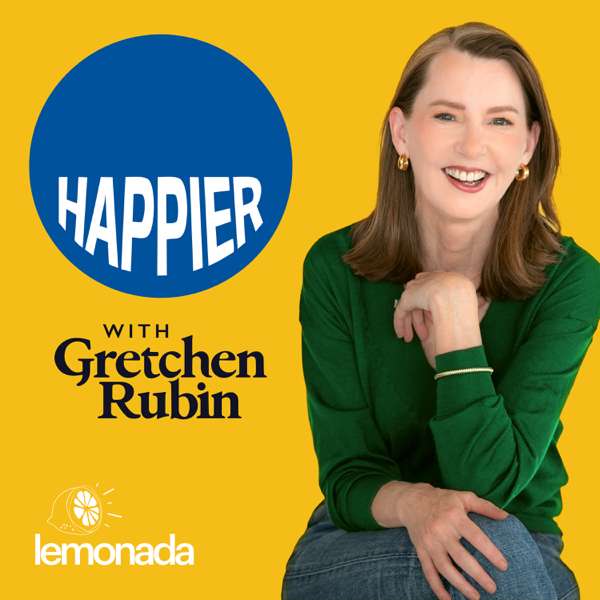
    Happier with Gretchen Rubin

    5

    Happier with Gretchen Rubin Health
    The Other F Word: Conversations About Failure

    6

    The Other F Word: Conversations About Failure Health
    footer-logo

    Contact Us

    Toll Free: 844-670-7747

    Links

    • Home
    • Top Charts
    • Networks
    • Apps
    • Independents Podcasts
    • Podcast Advertising
    • Podcast News
    • Contact Us
    • About Us
    • Analytics & Insights

    Stay Connected

      Privacy, Terms of Use & Our Code of Ethics Protecting Content Creators Copyrights