Our TOPPODCAST Picks
 Stay Connected
Some call it old country; classic country; real country. We call it traditional country, and that’s exactly what we do here at “If That Ain’t Country”.
For three hours each week, we feature the very best traditional country, honky tonk, bluegrass and western swing from the golden years ’til today. It’s pretty simple but we think you’ll like it.
Hosted by Western Red – it’s US country with an Australian twist, keeping true to the traditions that make country great.
With a genuine love and deep respect for the foundations of the genre, the legends are right alongside the best of today’s independent artists – a mix you won’t find anywhere else.
For more information, email: westernred@ifthataintcountry.net.
Become a supporter of this podcast (with thanks!!): www.patreon.com/ifthataintcountry


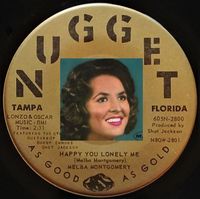 In this week's episode we're featuring Melba Montgomery's complete Nugget Records sessions from the year 1962. Shortly after having spent almost four years touring with Roy Acuff's roadshow and marginally before being snapped up by United Artists, Melba was offered a chance to record for Lonzo & Oscar's newly-relocated Nugget Records in Goodlettsville, Tennessee. The result was ten sides which have largely been forgotten by country fans who focus instead on her duets with George Jones and UA solo material. Ten hard country nuggets (pun intended) all of which feature Shot Jackson on dobro and Buddy Emmons on steel. The two co-founders of the legendary Sho-Bud steel guitar company help push these Nugget recordings on a young, fresh and distinctive Melba Montgomery to the heights of honky tonk gold. Superb listening.
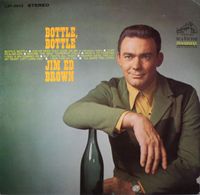 In this week's episode we're featuring a dynamite outlier from the late 60s career of Jim Ed Brown: "Bottle, Bottle" (1968). A lot of Brown's full-length albums of this era were on the slicker side and hard country gems were a little elusive. However, "Bottle, Bottle" is a full-on dive into the hard country side of the spectrum, dripping with the steel guitar of Pete Drake. Looking and sounding typically dapper, Jim Ed Brown's silky smooth vocal sounds right at home on a country shuffle (of which there are several), songs of loving and leaving and the necessary barroom laments (with a name like "Bottle, Bottle", it's expected). The likeable Arkansan cut just enough of this kind of material on this album to have this reviewer wanting to take a second look at Brown's catalogue to see what else has been missed. A-class.
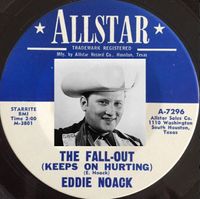 In this week's episode we're focusing on Allstar Records, a part song-poem part legitimate commercial label operating between 1953-1966 in Houston, Texas. Aside from his song-sharking tendencies, Allstar's founder Daniel James Mechura no doubt had his eyes set on recording hit country music, frequently hiring above-par backing musicians to back up Allstar's roster of artists. And that roster is all the evidence you need to see that Allstar was a legitimate commercial music operation - the talent and track records from the likes of Wiley Barkdull, Jerry Jericho and Eddie Noack (all of whom recorded for Allstar) speaks to that. In fact, we've got the microscope on the sensational hard country output of Eddie Noack on Allstar this week (1962-1966): releasing ten songs with the label during that period (many self-penned), Noack continued his Texas honky tonk ways, including a stylistic nod to the super successful Buck Owens formula on several. Noack had a long and diverse career but he was sounding honky tonk ready at Allstar!
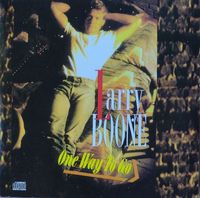 In this week's episode we're featuring an off-the-beaten-path slice of the neo-traditional era from Larry Boone: "One Way To Go" (1991). Boone's songwriting prowess was his main claim to fame, but with a solid country vocal, movie star good looks and three albums for Mercury and two for Columbia (including this one), Boone had his chances at solo stardom. It's mostly the era that's on the table this week: a time when country was country and the world wasn't so complicated (full disclosure: your host was a kid in the early 90s). Let the fiddle punctuation of Rob Hajacos, the dobro touches of Jerry Douglas and the ethereal steel guitar of Paul Franklin ease you into an enjoyable and nostalgic three hour trip back to 1991 this week with Larry Boone and "One Way To Go".
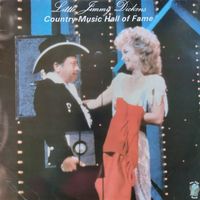 In this week's show we're featuring a later career album for longtime Opry staple and country music fixture Little Jimmy Dickens: "Country Music Hall Of Fame" (1984). The front cover indeed depicts the moment Dickens was inducted to the Hall Of Fame after four years of nominations; a plaque tucked under his arm while being greeted on stage by Barbara Mandrell and trying not to shed a tear. For a man so long in country music, Dickens was best known for his Opry appearances, razor sharp wit and for being simply a "part" of the industry. Most fans could recognise his name but Dickens' own catalogue remains overlooked. We change that this week with "Country Music Hall Of Fame": the album Porter Wagoner called Dickens' best-to-date and an appropriate slice of the 4'11" "Tater" - his versatility and sterling treatment of a good country song is on full display. From the showstopping tearjerker "Raggedy Ann" and the peppy "She'll Party At The Drop Of A Hat" to the lovelorn "Holding On To Life", Dickens' place as "part of the Opry furniture" hides a very long and fascinating career and a voice that didn't seem to age.
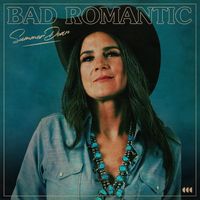 In this week's episode we're featuring the debut full-length album for Texan Summer Dean: "Bad Romantic" (2021). Born in Clay County, Texas and country as a dirt clod, there's been a lot of living in the three or more years between Dean's first EP "Unladylike" in 2016 and "Bad Romantic": growing comfortable in herself and her situation served as inspiration for many of the album's tracks (six of which Dean wrote or co-wrote). Seems to this reviewer that the first half of the LP could have been done in consultation with Waylon and Haggard, and Dean's Texas dancehall roots are showing on the second; Jess Meador's rising fiddle intro from "Hey Mister" recalls in no uncertain terms the very best of Johnny's Bush's material. Well chosen covers from modern day songsmiths Simon Flory and Brennen Leigh match beautifully with contributions from Leona Williams and Linda Hargrove, all tied together with Dean's vocal, wonderfully worn around the edges: honest and working class. A sterling shuffle in "Three Timin' Game" follows on from "Distracted" (dripping in co-producer Kevin Skrla's steel) and Hargrove's "Blue Jean Country Queen" seems to fit Dean like a glove. Summer Dean fills a gap in the greater roots music scene nationwide with "Bad Romantic": a lack of good ol' hardcore Texas country music, heavy on the attitude, fiddle and steel. And I'm sure glad about it.
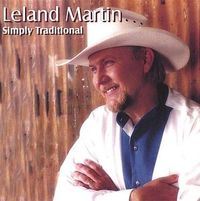 In this week's episode we're featuring a 2002 independent album whose name says it all from Missouri's Leland Martin: "Simply Traditional". Born into an impoverished family with eight siblings in the ironically named Success, Missouri, Leland Martin learned how to pick the guitar early on and wound up working some pretty rough venues with his younger brother as teens. Following his marriage at seventeen, Martin took a job at a sawmill and later as a truck driver, picking music on the weekends and building a loyal following around the area. A brief stint as lead guitarist with Freddie Hart in the early 80s revealed that a musician's life on the road wasn't for Martin, but it took another fifteen years before his first album materialised. IGO Records took a chance on the 45-year-old in 2002 and "Simply Traditional" received enough of a response for a series of follow-up albums. "If I Had Long Legs (Like Alan Jackson)" was a fun, who's-who of 90s country (and also a minor chart hit); Wanda Vick's melancholic dobro punctuates the big-rig themed "Stone Cold Fingers" (a topic Martin knows something about); the steel-dreched wordplay of "Freddie's Hart" was enough to have Martin's one-time boss join in on duet vocals. An excellent independent album from Leland Martin warrants the spotlight this week on "Simply Traditional".
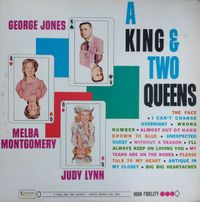 In this week's episode we've got a magnificent snapshot of the talented United Artists country roster: "A King & Two Queens" (1964). Initially conceived as a soundtrack-centric label in conjunction with it's film wing, United Artists Records later expanded to jazz and rock and roll. Furthermore, when the legendary Pappy Daily moved from Mercury/Starday to United Artists in 1962, he brought George Jones with him. Also along for the ride was the newly-signed Melba Montgomery and Judy Lynn, both fresh to UA in 1963 and 1962 respectively. Even though "A King & Two Queens" is a compilation of previously released material, pretty typical for the era, it feels slightly more cohesive in that each artist has four cuts and they rotate evenly throughout the LP. But more importantly is the quality of the material: straight ahead fiddle-and-steel honky tonk with no messing around. A snapshot of the small but mighty country roster at United Artists in 1964.
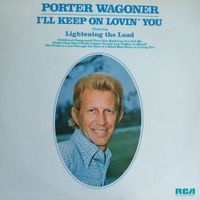 In this week's episode we're featuring a 1973 album from Porter Wagoner: "I'll Keep On Lovin' You". Porter was churning out three or four LPs a year for RCA at this point, his TV show was still as popular as ever and his duets with Dolly Parton were about near their commercial peak. The Grand Ole Opry star maintained a superb level of consistency in his traditional country output and does again here on our feature album. Buck Trent's electric banjo is front and centre on "Can You Tell Me" as is Porter's easy style of recitation (this reviewer is a sucker for those) on "Through The Eyes Of A Blind Man". And despite any working or personal differences that came after 1973, Wagoner was not too proud to use Dolly Parton's prodiguous skill as a writer on this album, cutting four from Dolly's pen including a couple of gems in "Jasper County Law" and "Talkin' To Myself". Like many Opry stars of the past, Wagoner doesn't get a whole lot of love in conversations about country music these days but as we'll discover, his back catalogue is absolutely worth exploring.
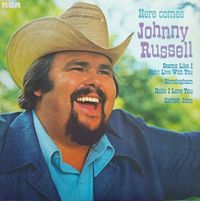 In this week's episode we're featuring the final album in Johnny Russell's six short years at RCA Records: "Here Comes Johnny Russell" (1975). A big man with a big heart and a big voice, Russell turned to songwriting in his mid-teens (mostly out of necessity) and in 1959 scored a B-side on Jim Reeves monster "He'll Have To Go". Russell's "In A Mansion Stands My Love" got the attention of Chet Atkins and it was that relationship which bore fruit many times over for the talented Mississippi entertainer. "Act Naturally" from Russell's pen proved highly lucrative when Buck Owens and a slew of others cut it in 1963 onwards, and he was soon hired to The Wilburn Brothers' Surefire Music where he worked for a number of years. Like many performers however, Russell wanted to sing - growing frustrated at his lack of opportunities he even moved back to California for a time before Atkins finally put him on RCA in 1971. Recognition in the form of several hits songs came Russell's way and his output over six years remained consistently strong. "Here Comes Johnny Russell" is an enjoyable listen and worthy of a feature this week.