Our TOPPODCAST Picks
 Stay Connected
Some call it old country; classic country; real country. We call it traditional country, and that’s exactly what we do here at “If That Ain’t Country”.
For three hours each week, we feature the very best traditional country, honky tonk, bluegrass and western swing from the golden years ’til today. It’s pretty simple but we think you’ll like it.
Hosted by Western Red – it’s US country with an Australian twist, keeping true to the traditions that make country great.
With a genuine love and deep respect for the foundations of the genre, the legends are right alongside the best of today’s independent artists – a mix you won’t find anywhere else.
For more information, email: westernred@ifthataintcountry.net.
Become a supporter of this podcast (with thanks!!): www.patreon.com/ifthataintcountry


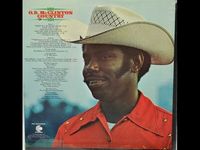 In this episode, we're featuring the debut album for an often overlooked Mississippi country star, OB McClinton: "OB McClinton Country" (1971). As a black man who sang with shades of Hank Williams, he was dubious of his chances of success in the world of country music, so he turned his prodigious singing and writing talents to R&B music instead. He scored cuts from James Carr, Clarence Carter and Otis Redding before a fortuitous trip to Muscle Shoals found him signed to Enterprise Records (a subsidiary of R&B giant Stax), who were looking to go into country after Charley Pride's proven success. This debut doesn't showcase Obie's writing ability, but rather his vocals - and that Williams twang is in fine form on tracks including the romping "San Bernardino", the cautionary tale of "Bad Guys Don't Always Wear Black Hats" and the statement of fact "Country Music That's My Thing". OB didn't have a long or prosperous career but he garnered respect and admiration from his peers in country music, and we'll explore why on this week's episode.
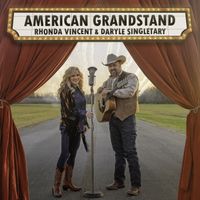 In this episode, we're featuring a good old-fashioned duet album from Rhonda Vincent & Daryle Singletary: "American Grandstand" (2017). These two have been friends since the mid-90s when they were both labelmates at Giant Records - and this album has been years in the making. Now that the timing is right, the result is sublime. Singletary's baritone takes on a surprisingly good harmony vocal role on many of these songs, while Vincent's lead is pure and simple. These duets were recorded the old-fashioned way: both singers were in studio at the same time when the tracks were laid down, which leads to a wonderful result. Strong steel guitar and fiddles lead the listener through a collection of classic duet tunes, including the Jones/Wynette staple "Golden Ring", the Twitty/Lynn collaboration "After The Fire Is Gone", a surprisingly good "Above & Beyond (The Call Of Love)" from the pen of Harlan Howard and an original, "American Grandstand", written specifically for the album by Vincent is also a highlight. A deep knowledge and respect for the traditions of country music duet stylings from both singers make this one of the best releases of 2017.
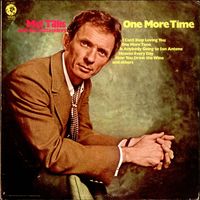 In this episode, we're featuring an album from the late, great Mel Tillis: "One More Time" (1970). Loaded with quality songwriting, including three from Mel's own pen - this was one of the last albums credited to "Mel Tillis & The Statesiders" (his famous backing band). Most releases thereafter had Mel's name solely written on the front cover, although he continued to use The Statesiders on the road. A good mix of shuffles, barroom weepers and love-gone-wrong songs, highlights include the title track, "Gonna Burn Some Bridges", "Brand New Wrapper" and "How You Drink The Wine" - the latter written by Mel's piano player Ronald McCown. We'll also hear from Mel himself about his illustrious career as a songwriter and performer, how he dealt with his famous stutter and about his firing from a well-known country music television show. Great album - get you some!
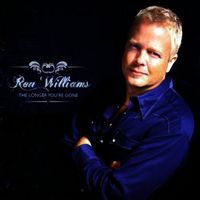 In this episode, we're featuring the second album from one of country's most unique baritones: Ron Williams, "The Longer You're Gone" (2009). Ron Williams is the son of Leona Williams - a marvellous traditional country singer herself with a long and illustrious career, and it seems as though country music was inevitable for Ron, born and raised in Nashville, Tennessee. After his mother married Merle Haggard for a period in the late 70s/early 80s, and after having lived under the same roof as Merle for about a decade - something must have rubbed off on young Ron Williams. His voice matured into one of country music's most distinctive and unique baritones: there are shades of the greats in every note he sings, but he has crafted his own style, sure enough. This album is a fun and uptempo affair for the most part, including the swinging "Her Heart Belongs To Texas" and "The F Words" (one of several Bill Anderson co-writes) - but it's on the ballads that Ron Williams really shines, including the heartfelt "Where The Tall Grass Grows".
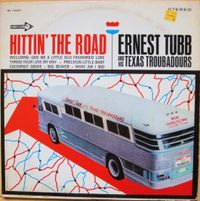 In this episode, we're featuring a sensational live album from Ernest Tubb & His Texas Troubadours: "Hittin' The Road" (1965). On this release, we meet Ernest Tubb's entire band in what many would consider the classic Troubadour lineup, as the album was recorded over several dates in ET's '65 national tour. Natural banter, good crowd interaction and authentic introductions make for good listening - but it's also on this record that ET's character truly shines - he was a man who never stopped helping others get a leg up in the industry, and some of the high points of this album are those Texas Troubadours who got to sing with him. Included are "The Singing Bus Driver" Johnny Wiggins, who finds his way around "Honeymoon With The Blues" better than his position suggests - a budding Cal Smith on "I'm A Sad Lonely Man (That Love Left Behind)" and the drummer with the big ears, Jack Greene on "Afraid To Love". Combined with a smattering of ET's hits, this is a thoroughly enjoyable album.
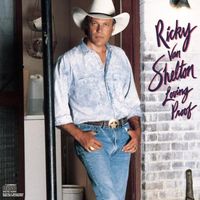 By popular demand (and because your host lost his voice this week), we're reairing a very well received recent episode: In this episode, we're featuring a ballad-driven album from Ricky Van Shelton: "Loving Proof" (1988). Shelton's second album, this release sold over a million copies and cemented the Virginia baritone at the top of the new traditionalist wave. A reliance on covers on this album pays dividends for Ricky Van Shelton - he reinvigorates the Ned Miller classic "From A Jack To A King", the Wayne Kemp tearjerker "I'll Leave This World Loving You" and the Wilburn Brothers "Somebody's Back In Town" - all to great effect. Shelton's smooth croon suited an album full of songs about eternal and undying love, heavy on the ballad side - but any slow points were easily offset by the quality songwriting, delivery and production. A stellar album, and a must have for country music fans of the period.
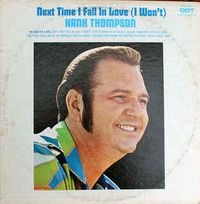 In this episode, we're featuring a late Hank Thompson album, in that vintage honky tonk swing style: "Next Time I Fall In Love (I Won't)" (1971). By this time, Thompson had firmly established himself in the legend category and songwriters were lining up to contribute: Harlan Howard, Hank Cochran, Red Lane and Ned Miller all had songs featured on this album, and Thompson delivers with vigour. Steel guitar, those iconic stuttering fiddles and all to a distinct swing beat - this is a typically strong Hank Thompson release, expertly produced by Joe Allison (who was also a top notch songwriter himself - think "He'll Have To Go"). Highlights include the title track, "Everybody Loves A Pretty Baby", the melancholic "The Mark Of A Heel" and some good advice, with tongue firmly in-cheek on "Promise Her Anything".
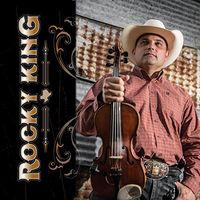 In this episode, we're featuring the self-titled debut album from Texas dance band The Rocky King Band (2015). After having picked up the bug for traditional country and western swing music early on, bandleader Rocky King took fiddle lessons as a child with the iconic Jody Nix. Years of hard work have paid off, for this album is truly a treat from woe-to-go. A better collection of dance tracks I haven't heard in some time: from a refreshing version of "Mental Revenge" and the two-step-ready "Wearin' A Label" and "You're In Love With The Wrong Man" to the romping opener "Play The Saddest Song On The Jukebox", the covers are expertly chosen - both familiar and obscure. The Rocky King Band don't miss a step: kept in check by Michael Polasek on a rock-steady shuffle drumbeat, and complimented by Kenny Grohman on steel and the magnificent Duane Wavra on upright bass and harmony vocals. Wavra's gritty vocals are a treat on "Dark Lighted Bar Rooms", which I feel is the peak of a Texas dancehall masterpiece.
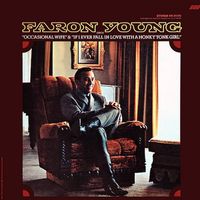 In this episode, we're featuring a 1970 album from one of country music's smoothest honky tonk voices , Faron Young: "Occasional Wife". While still influenced by the 60s sounds in country music, this is a hard country album as you'd expect from The Singing Sheriff, with plenty of uptempo numbers to make listening a breeze. "Occasional Wife" was a precursor to Faron's peak in popularity (the following year "It's Four In The Morning" was his last number one), so he's in fine form vocally. Highlights include the title track, "If I Ever Fall In Love With A Honky Tonk Girl" and the Robbins-esque western story song in "The Guns Of Johnny Rondo".
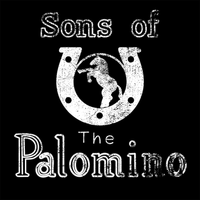 In this week's episode, we're featuring a 2017 project by Nashville supergroup Sons Of The Palomino - their self titled debut, in fact. Spearheaded by - and the brainchild of - Nashville Songwriter Hall Of Famer Jeffrey Steele, their name refers to the famous Palomino Club in North Hollywood, CA - closed since 1995, but a bastion in it's heyday for much of that West Coast traditional country twang which launched many careers - including Dwight Yoakam, Dale Watson & Lucinda Williams. It was after Jeffrey Steele accumulated a bunch of songs dubbed "too country" for country radio that he decided to make this album: thus, it's fair to say it's a melange of styles - there's shuffles, barroom weepers, raucous honky tonkers but all with impeccable musicianship.. Paul Franklin on steel, Glen Worf on bass and Gordon Mote on keys: these are some of Nashville's old hands. Some famous names liked what they heard and got involved as well: there's duets here from Jamey Johnson ("Whiskey Years"), Gretchen Wilson ("Used To Be Country Town") and Emmylou Harris ("Outta This Town") - and they're some of the best from a great release.