Our TOPPODCAST Picks
 Stay Connected
Some call it old country; classic country; real country. We call it traditional country, and that’s exactly what we do here at “If That Ain’t Country”.
For three hours each week, we feature the very best traditional country, honky tonk, bluegrass and western swing from the golden years ’til today. It’s pretty simple but we think you’ll like it.
Hosted by Western Red – it’s US country with an Australian twist, keeping true to the traditions that make country great.
With a genuine love and deep respect for the foundations of the genre, the legends are right alongside the best of today’s independent artists – a mix you won’t find anywhere else.
For more information, email: westernred@ifthataintcountry.net.
Become a supporter of this podcast (with thanks!!): www.patreon.com/ifthataintcountry


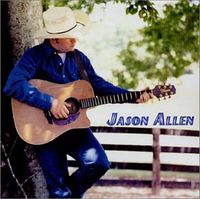 In this week's episode we're featuring the debut album of Houston area country singer Jason Allen: "Something I Dreamed" (2001). Though 25 years old at the time of recording, Allen's early influences included Lefty Frizzell, Bob Wills and Hank Williams - and it shows. After several years spent in Nashville honing his skills as a songwriter and making all-important business connections, Allen returned to Texas and it was at a local club where Wes Daily took an interest in this upcoming talent and signed to him a revived D Records in the early part of the new millennium. Wes Daily is the grandson of HW "Pappy" Daily - the man credited with bringing George Jones to fame and producing his early records in the 1950s - and other big names in the area were quick to jump on board too. Starring Bobby Flores on fiddle and harmonies, produced by Daily & Clay Blaker in Tommy Detamore's Cherry Ridge Studios (Detamore is also steelin' on this album), "Something I Dreamed" is surely one of the best debuts of the 21st Century. The Daily family still owns Glad Music Publishing as well as D Records, and taking particular aim at songs George Strait had put on hold but never recorded, Jason Allen whittled down almost fifty songs to a robust twelve track project that oozes country tradition. Highlights are plentiful, but standouts include songs written by ace team Curtis Wayne and Wayne Kemp - a splendid version of Conway Twitty's 1968 "Next In Line"; the aching "Love Don't Get Much Colder" and a piece of country wordplay mastery in "Cryin' For Their Mamas". You need this album in your collection - trust me.
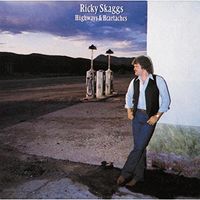 In this week's episode, we're featuring what remains Ricky Skaggs' only US platinum album, "Highways & Heartaches" (1982). A magnificent sophomore effort on Epic Records, Skaggs was once again given free rein to produce it himself - certainly an uncommon stipulation for a 28-year-old would-be star with next to no country music clout at the time. After hitting town a few years earlier armed with but a few rough mixes, Ricky Skaggs scored a meeting with Epic's Rick Blackburn, and aside from walking away with a recording contract more or less that day - Blackburn also agreed to let Skaggs produce his own stuff, pending sales. Hindsight proved that to be a wise decision, because from the get-go Skaggs - from a traditional bluegrass background - combined the acoustic and no-fuss aspects of bluegrass and old-time country music with an uncanny knack of finding timeless material which appealed to mainstream country audiences. The Kentucky high tenor had himself three number ones from 1982's "Highways & Heartaches", and cemented himself at the forefront of a rising traditional country revolt - later to be known as the new-traditionalist movement. Highlights include Guy Clark's "Heartbroke" (with one minor change); a cover of Bill Monroe's "Can't You Hear Me Callin'"; some glorious steel guitar from Lloyd Green on "You've Got A Lover" and the whirlwind picking on fellow member of Emmylou Harris' Hot Band Rodney Crowell's "One Way Rider" is simply mesmerising.
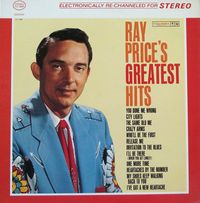 In this week's show, we're parting with tradition and featuring a compilation album from Columbia Records, "Ray Price's Greatest Hits" (1961). Encompassing the bigger hits of Price's 50s and very early 60s output, this truly is a no-duds release - documenting a style of country music that Ray Price pioneered and one which proved a massive shot in the arm for the industry at the time. Apparently formulated mid-song while The Cherokee Cowboys were playing a dance, when Ray Price added a walking bassline to a 4/4 beat, hard country music - suffering in the face of a rock 'n' roll onslaught - was handed a lifeline. That Ray Price shuffle, as it later became known, permeates every aspect of this period of his career. With Jimmy Day on steel and Tommy Jackson on fiddle making up the backbone of most of his music at this point, the honky tonk years of The Cherokee Cowboy represented by this album are the playbook by which all would-be country singers should start, in this reviewer's opinion. Price's voice is one of the finest that ever was, let alone in country, and we could easily have featured every track in this week's show. Having said that, particular standouts include "Who'll Be The First" (1960), with triple fiddles on the session (!); Roger Miller's "Invitation To The Blues" (1958) with Miller playing guitar on his own composition; and dancehall favourite "One More Time" (1960) from the pen of Mel Tillis. I tried not gush about this album. But I failed.
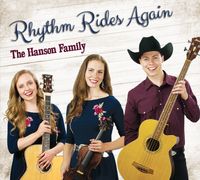 In this week's episode, we're featuring a 2019 release from Oregon's The Hanson Family: "Rhythm Rides Again". Packed full of "western swing, cowboy yodelling and blazing harmony" (as one reviewer wrote) the sibling trio add fresh life to some of western music's most revered staples. Adding an infectious western swing element to the music, Lisa, Theresa and Daniel Hanson have grown up singing together and their impeccable harmonies are testament to that fact. Their second full length album since slimming down the family band to just three - these tracks are delightfully arranged and pleasing to the ear. Hailey Sandoz joins Lisa Hanson on fiddle, Randy Travis' steeler (amongst many others) Gary Carter adds some licks to the mix and Dallas-based Rich O'Brien lends his Latin-flavoured guitar to the real gem of this album: the delightfully obscure "Beside The Rio Tonto Shore". Originally appearing as sung by "The Merry Macs" in a 1942 Abbott & Costello comedy western called "Ride 'Em Cowboy", The Hanson Family revingorate this lost but lonesome gem in what may well be the first time it's been recorded since it's '42 debut. Other highlights include a rollicking arrangement of Stuart Hamblen's "Texas Plains"; a great western medley they're calling "Trail Mix" and an original from the pen of Western Swing Authority's Shane Guse in "Swingtime Lullaby". Two words to describe this album? Bright and fresh!
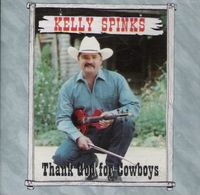 In this week's episode, we're featuring the second album from Central Texan Kelly Spinks: "Thank God For Cowboys" (1987). Spinks has left a decade or more between each of his three full length recording projects, but when he does head into the studio, the wait is always worth it. After an education learned in the dancehalls and honky tonks of Texas from some legendary teachers including Johnny Bush, Fiddlin' Frenchie Burke and Hank Thompson - Kelly Spinks has headed up his own band Miles Of Texas for over three decades. In this week's feature album, it's all fiddle and steel, as you'd expect - with a well-chosen, refreshing mix of country gold. Aside from "Mr. Record Man" and the pen of Willie Nelson, most all the rest of the tracks on "Thank God For Cowboys" are obscurities or new cuts and are expertly executed by Spinks' chosen team of musicians. Opry staff steeler Tommy White is all over this album as is Bill C. Graham on the secondary fiddle. Graham, an industry veteran and songwriter to boot, contributed four songs to Spinks' second outing here - and the fact that you might not have heard most of these songs before is really only a strength. This is mandatory listening for any fan of traditional Texas dancehall music: Kelly Spinks & Miles Of Texas know how to get it done.
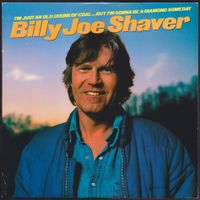 In this week's episode, we're featuring the hardscrabble, renegade raconteur Billy Joe Shaver's Columbia debut: "I'm Just An Old Chunk Of Coal" (1981). Shaver's story is one of persistence, resilience, raw talent and significant ups and downs - but his rise to a respected elder statesman of the Outlaw country scene has been almost entirely organic. With virtually no aid from the mainstream country establishment, longtime friend Willie Nelson directed Shaver to Nashville, where he found himself beating down doors until an eventual tentative hire for $50/week as a songwriter for Bobby Bare. However, after Waylon Jennings recorded almost an entire album of his songs in '73 on his seminal "Honky Tonk Heroes" album, Shaver's stock skyrocketed amongst his peers. With Jennings' success, Shaver's songwriting talent became became clear and his debut record followed in the same year. His grimy, gritty vocal that lilts and drawls from one lyric to another makes listening to "I'm Just An Old Chunk Of Coal" an "almost religious experience" (according to one reviewer) - and highlights include the driving "Fit To Kill And Going Out In Style"; some glorious three quarter time stepping to "Blue Texas Waltz" and longtime fans will recall with fondness the time that Shaver combined his unhappy marriage, very real thoughts of suicide, a whole sheet of LSD and a ragged old truck into a 20th Century country masterclass.
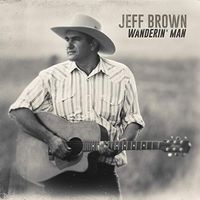 In this week's episode, we're featuring an all-Aussie release from Queensland's Jeff Brown: "Wanderin' Man" (2016). This is the first time we've featured an exclusively Aussie album in over seven years of the show's existence - so let us know if you do or don't like it! Email westernred@ifthataintcountry.net - your feedback will dictate if we do it again!
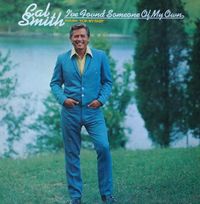 In this week's episode, we're featuring the first hit album for Cal Smith: "I've Found Someone Of My Own" (1972). After several years as rhythm guitarist and frontman to Ernest Tubb's Texas Troubadours, he departed with ET's blessing and went solo. Kapp Records was his home during and after his time as a Troubadour, but success was elusive. With a glowing endorsement on the back cover of our feature album from Mrs. Ernest (Olene) Tubb, Smith joined Decca in 1972 and by that time, the songwriters were lining up for the affable entertainer. One of those writers was Bill Anderson, who enjoyed two cuts on "I've Found Someone Of My Own", including the snarky, pointed and sarcastic "The Lord Knows I'm Drinking" - which also became Cal Smith's first chart-topper. The rest of the album combines songs from rock, pop and R&B artists but Cal Smith countrified each enough to satisfy even the hardest of country hardliners. With possibly the exception of Neil Diamond's "Song Sung Blue", Cal Smith does country justice to Otis Redding's "(Sittin' On) The Dock Of The Bay"; The Free Movement's "I've Found Someone Of My Own" as well as stone country versions of Tom T. Hall's "Ballad Of Forty Dollars" and another Anderson composition in "That's What It's Like To Be Lonesome". Very enjoyable listening.
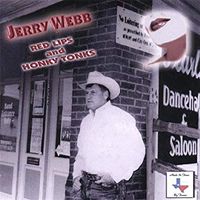 In this week's episode, we're featuring a hardcore Texas country album from Jerry Webb: "Red Lips & Honky Tonks" (2007). Originally hailing from West Texas, Webb was a schoolmate to Texas fiddle legend Jody Nix - and it was with his father Hoyle Nix that he learned many tricks of the trade, subbing as a bassist in the popular West Texas Cowboys for almost a decade. After family and career duties demanded a hiatus of some years, he cut his first album in the late 90s in Austin and later, Webb wound up in Fort Worth. There he became a fixture on the dance circuit, performing regularly at Pearl's Dancehall, fondly nicknamed "The Gem Of The Stockyards". In fact, our feature album this week features Webb in front of that venue on the front cover - and no doubt many of the songs, all but one written by Jerry Webb himself, graced the stage of Pearl's. Produced by Carl Vaughan, Chip Bricker and Gary Carpenter (also featuring Carp on steel guitar), this album is an exceptionally strong set of traditional country songs and highlights include the magnificent "Red Lips", built around a cheesy pickup line; the telling "Wrong From The Ring" and if "I Love A Texas Honky Tonk" doesn't make you crave a Crown double, I suggest you listen again. Honky tonk gold as it should be done in the 21st Century.
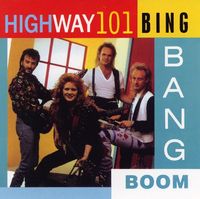 In this week's episode, we're featuring the fourth and final album on Warner for 80s twangers Highway 101: "Bing Bang Boom" (1991). "Bing Bang Boom" was also the first album for the band after the departure of lead singer Paulette Carlson, who's husky vocal had defined Highway 101's music for the first four years of their existence. Instead, they employed Nikki Nelson to take the reins - and there are plenty of pundits who say that Nelson didn't stand up in the shoes left by Carlson. Perhaps not as an identifiable a vocal, admittedly - it's this reviewer's opinion that Nelson's voice fit Highway 101's sound wonderfully. The band loses nothing as they power through a set of neo-traditional tunes on "Bing Bang Boom" that ought to have performed better on the charts. Highway 101's best commercial days were behind them, but with highlights including the rollicking "Storm Of Love"; the twangalicious heartbreaker "River Of Tears"; a stellar version of "Restless Kind" before either Travis Tritt and Trisha Yearwood got to it and the aching "The Blame" - the foursome have smoothed over any cracks left by Paulette Carlson's departure.