Hosted by Gemma Gaudette on Boise State Public Radio News, this weekday public affairs podcast serves as a gathering place where ideas are shared, stories are told and conversations thrive. Whether you’re curious about local government, inspired by the arts or invested in your community, Idaho Matters is where the voices of Idaho come together to inform, engage and celebrate the people and places that make the Gem State unique.
Send us your questions, comments or story ideas by emailing idahomatters@boisestate.edu or sending us a voicemail using the “Talk To Us” feature on the free Boise State Public Radio app.
Recent court ruling prohibits wolf trapping in grizzly territory
Mar 28, 2024
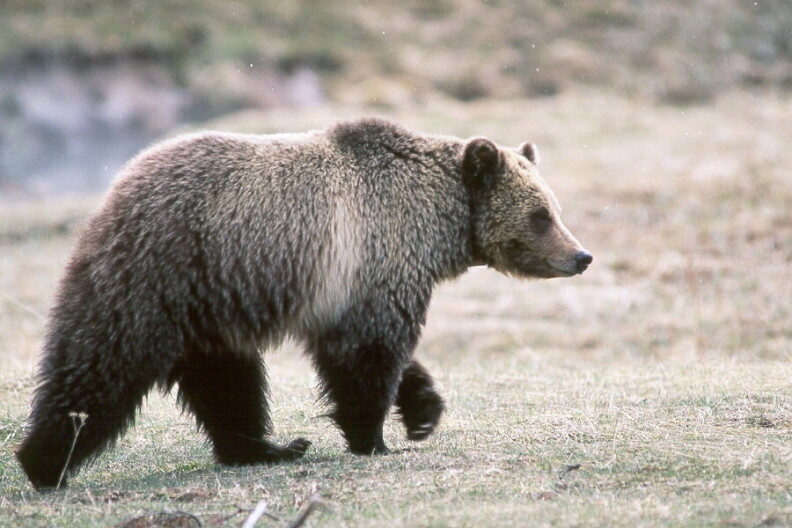
Show notesGrizzly bear in Yellowstone National Park.(Kim Keating / USGS )
Idaho is considering its options after a federal court decision last week forcing the state to change its rules for wolf trapping over concerns that grizzly bears could be caught in the traps.
Susanne Asha Stone, Director of the Idaho-based International Wildlife Coexistence Network, and Dallas Gudgell, Tribal Outreach and Environmental Policy Director with the network, joined Idaho Matters to talk more.
Northern Colorado ranchers reflect on the arrival of the wolves who migrated down from Wyoming
Mar 28, 2024
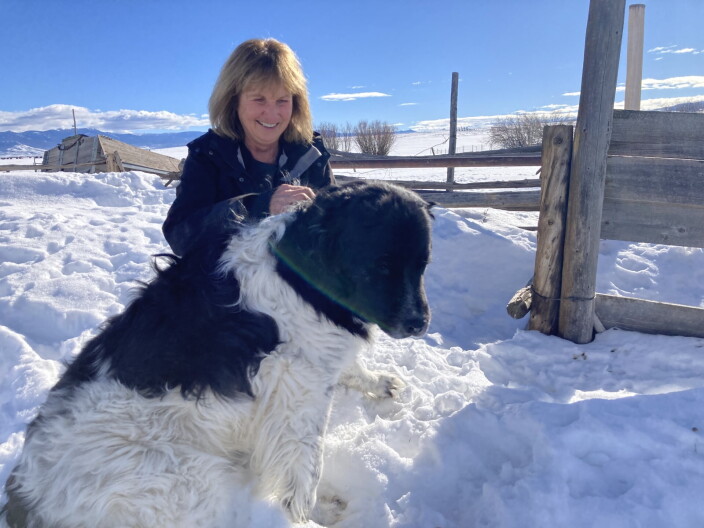
Show notes(Melodie Edwards / Wyoming Public Media)
This story is part of our ongoing I Respectfully Disagree series. You can also hear a longer podcast version of this story on The Modern West coming in April.
A recent decision to reintroduce wolves has created division between rural and urban Coloradoans. But wolves have actually been there a while. A few years ago, a couple migrated down from Wyoming to settle in the mountain valley of North Park, southwest of Laramie. It’s given the ranchers there a headstart on adjusting to a new reality.
Melodie Edwards has more with the Mountain West News Bureau.
What role has Boise's environment played in shaping our community?
Mar 28, 2024
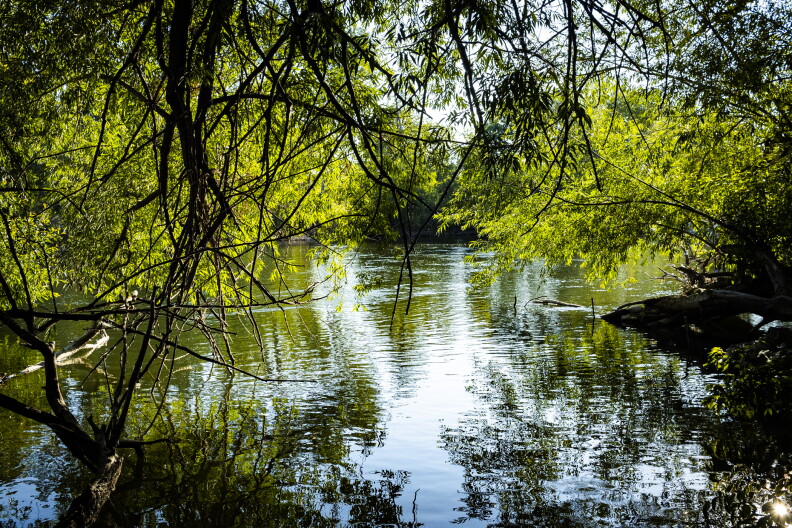
Show notes(Murphy Woodhouse / Mountain West News Bureau)
When it comes to Boise, there are many things that make the city special, from its diverse culture to its unique historical sites, but one of the main attractions has to be its outdoor recreation.
With the Boise River, foothills and surrounding mountains, it's no wonder why people are drawn to the area. But did you know that these landmarks played an important role, not just in the growth of our city but also in its political and environmental history?
That's something that Dr. Karl Brooks will be exploring next week, April 4, in his Fettuccine Forum lecture. He joined Idaho Matters for a preview.
Idaho Conservation League's Artist in Residence Program returns
Mar 28, 2024
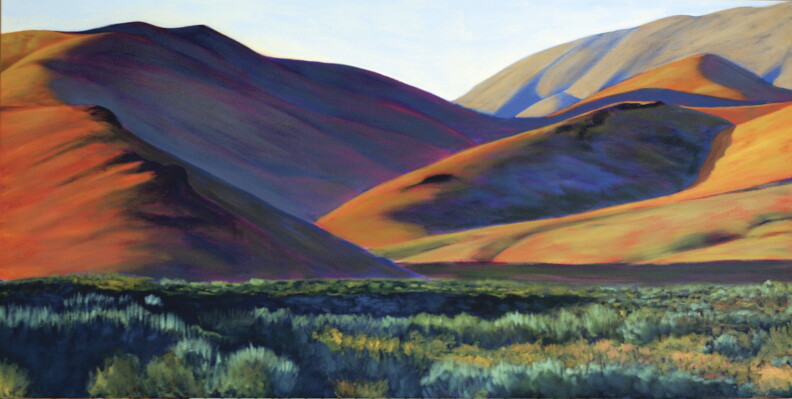
Show notes Craters of the Moon by ICL 2019 Artist in Residence, Carl Rowe.(Carl Rowe / ICL)
Have you ever looked at a painting of an Idaho landscape and been transported there in your mind?
If so, you're not the only one. Art is a powerful medium with the ability to draw you closer to topics you may not have known you were interested in, like the environment and how we can take better care of it.
That's part of the goal of the Idaho Conservation League's Artist in Residence Program, which is ramping back up.
Lexi Black, the Central Idaho Community Engagement Specialist for the Idaho Conservation League, joined Idaho Matters to tell us more.
Idaho Matters Doctors Roundtable: March 27, 2024
Mar 27, 2024
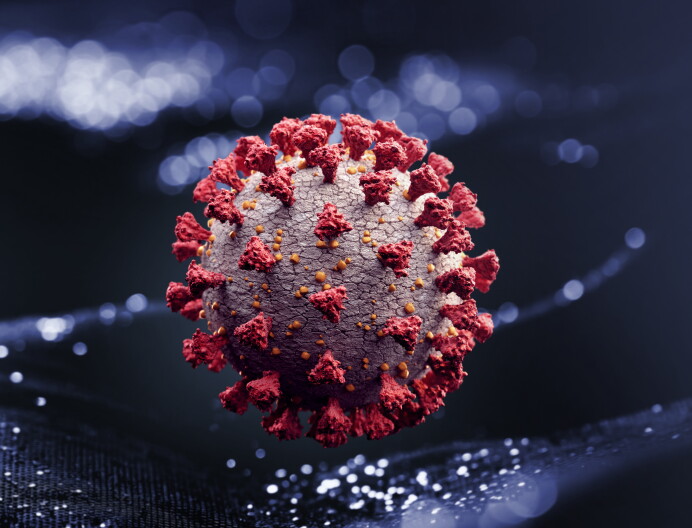
Show notesA computer rendering of SARS-CoV-2, the virus that causes COVID-19.(Radoslav Zilinsky / Getty Images)
As we enter the fourth year of a world with COVID and the disease continues to spread, scientists are looking at how the virus works and why it's different from diseases we're used to, like influenza.
Dr. David Pate is the former CEO of St. Luke's Health System and has been taking a deep dive into the science of COVID, even as it continues to evolve. He joined Idaho Matters to talk more about this and other public health concerns.
Investigation opens following racial harassment of visiting basketball team
Mar 27, 2024
Show notes(Jaakko Laurila / Flickr)
Police and the FBI are investigating racial harassment allegations in Coeur d'Alene after an incident reported by basketball players and staff from the University of Utah.
The team was in the city as part of the NCAA Women's Basketball Tournament in Spokane.
The story gained traction this week and is now making national news. Troy Oppie, reporter and host of All Things Considered, joined Idaho Matters to tell us more.
Idaho's racist history: How the state got here and why it matters after another racist incident
Mar 27, 2024
Show notes( Canva)
Idaho is back in national headlines after the Utah women's basketball team experienced a racial harassment incident in Coeur d'Alene while participating in the NCAA tournament.
This isn't the first time Idaho has made national headlines for racist incidents. And some are now asking: How did we get here? When did Idaho's racism begin? How has the Aryan Nations in north Idaho been allowed to grow?
Now almost four years after our country was grappling with racial injustice and questions about white supremacy in 2020, it's still important to examine our roots so we can better understand how we got here today and what steps we can take to be a more inclusive and equitable place for everyone.
These interviews originally aired in the summer of 2020 after the murder of George Floyd as we looked to unpack Idaho's complicated racist history.
The benefits of forest bathing
Mar 27, 2024
Show notes(Luis / Flickr)
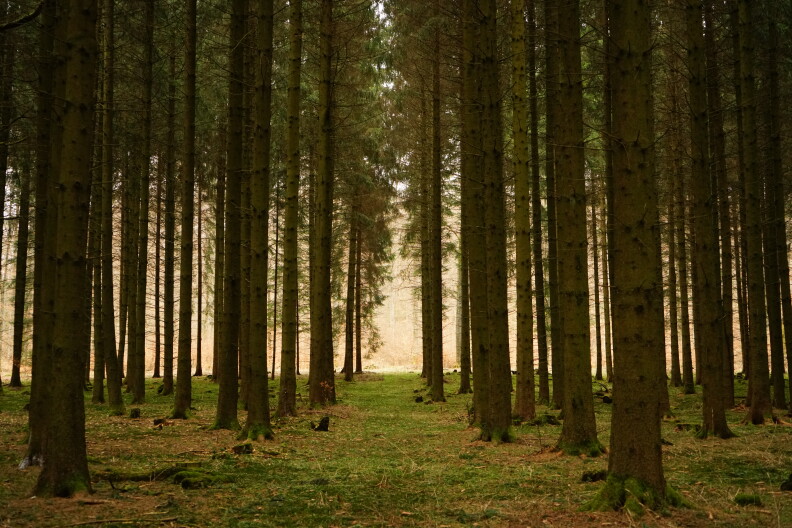
For many, spending time outside can be a relaxing experience, but did you know it can also be therapeutic?
While forest therapy may not be as well known as other healing practices, it is one that is growing in popularity, offering both physical and mental benefits.
And starting in April, certified nature and forest therapy guide Casey O'Leary will be leading weekly forest bathing walks for those interested in slowing down and connecting with the local environment.
From Sun Valley to Helsinki: Meet Idaho’s Douglas Hickey, U.S. Ambassador to Finland
Mar 27, 2024
Show notes Douglas Hickey of Sun Valley is the United States Ambassador to Finland(U.S. Department of State, 123rf)
When President Biden selected Idaho’s Douglas Hickey to be the United States Ambassador to Finland, Hickey knew it would be honor and challenge. But those challenges mount with every day, beginning with the Russian invasion of Ukraine and the fact that Finland shares NATO's largest land border with Russia – 800 miles.
“I've had the opportunity to visit the border on a couple of different occasions,” said Hickey. “It’s just striking how long it is. The Finns do an extraordinarily good job of managing the border. But things have changed.”
Speaking from the U.S. Embassy in Helsinki, Hickey visited with Morning Edition host George Prentice to talk about his daunting assignment, Finland’s membership in NATO, and the Finnish people’s complicated relationship with Russia.
Read the full transcript below:
GEORGE PRENTICE: It's Morning Edition. Good morning. I'm George Prentice on this broadcast, as we do every morning, we visit many corners of the world and more often than not, we consider freedom, the cost of freedom, the fight for freedom, the choices we make with the freedoms we have. We recognize how all of our dots connect across the planet. And this morning we visit a nation at a turning point. Finland has sworn into office earlier this month, a new president who said the Nordic country is facing a new era after becoming a new member of NATO. We are pleased to welcome to this broadcast the United States Ambassador to Finland, Douglas Hickey. And we're pleased to remind our listeners that Ambassador Hickey and his family, when they're not in Helsinki, call Idaho home, Sun Valley in particular, much to talk about. But first joining us live from Helsinki is Ambassador Douglas Hickey. Ambassador. Hello.
AMBASSADOR DOUGLAS HICKEY: Well good morning. Good morning to you. I'm thrilled to be with you here today and talk to my friends back in in Idaho. I miss you all.
PRENTICE: We should note that there is a nine-hour time difference… that's already well into the afternoon in Finland. Ambassador, I, I have to ask you about that experience of being in Finland. Here we are in March. It's a time of transition. But what is it like there? We hear that winters are a bit longer, but then we hear about the midnight sun in the summer. What has that been like?
HICKEY: Well, it's spectacular. The, uh, you know, having spent so much time in Sun Valley, I'm used to a lot of snow. I'm used to spring showing up late, which it, uh, it does in Sun Valley. I can remember it having a Memorial Day party in Sun Valley. And one day we were the Friday we were swimming in our pond. And then the next day we got six inches of snow. So, Finland is very similar to what we see in Sun Valley for sure.
PRENTICE: Ambassador, could you speak to the ever-increasing importance of our relationship with Finland? These are, to put it mildly, very interesting times.
HICKEY: Yeah, definitely. The, uh, you know, when I took this position, I had actually talked to John Kerry about it, and this was well before the invasion, the Russian invasion into Ukraine. And he said, “All you need to know is Russia, the Arctic environment and NATO.” And again, this was well before the invasion and well before Finland even had considered to, uh, to join NATO. So, it's been a really interesting, uh, interesting time for us here and a very productive time. The relationship that exists between Finland and the United States, the bilateral relationship, I don't think could be stronger, quite frankly, and not just from a NATO or military perspective. But if you look at the technologies that are being developed here on quantum, on secure wireless networks, environmental, uh, technologies, it's pretty extraordinary. So, the kind of relationship we have here at virtually all levels, is really extraordinary and continuing to grow.
PRENTICE: Ambassador, could you remind us… I think it would be appropriate for our listeners to remember that Finland has NATO's longest land border with Russia.
HICKEY: It's really pretty amazing. You know, before the invasion, uh, there were a number of Russians that came into Finland. There were a bunch of Finns that were going into Russia to visit in Saint Petersburg and other places. Uh, so there was a fair amount of transit, uh, that took place on both sides and very positive, quite frankly.
PRENTICE: Yeah. An 800-mile border. Here we are, half a world away. It's difficult to comprehend how personal this must be. How do you best describe that delicate balance that the Finnish people live with every day?
HICKEY: And the reason I say that is the Finns have had a relatively contentious relationship with Russia for a long time. And even during peace time, uh, the Finns have built up their defense forces. So, to give you an example, every male in Finland, uh, is required to serve in the military. And, uh, that's something they all take in a very prideful way. Now, many more women are serving as as well on a volunteer basis. And then the Finns, when other countries were taking what was called at the time, the peace dividend, the Finns continued to invest in their military infrastructure. So, they have a purpose-built Navy for the Baltic. Uh, our navy is really a blue ocean kind of navy. They just ordered F-35s from the United States. Those F-35s will make Finland one of the most advanced air forces in all of Europe, if not the world. And the Finns have more available soldiers than Italy, France and Germany combined. So if you look and that's with a country of 6 million people think about that. So it's really pretty extraordinary that the Finns have built up a default defense mechanism for years and years. And they're not an offensive nation. They're a defensive nation. They want people to understand that they're going to secure their border and secure their democracy, and they do it in a very serious and thoughtful way.
PRENTICE: Ambassador, let's talk about Idaho. You have lived and worked all over the world, but you made a decision in the, I think, was it the early 2000, uh, to work and to live here? Can I assume that you do miss Sun Valley and Idaho?
HICKEY: I love Idaho, and I've traveled all over the state and hiked all over the state and skied all over the state and biked all over the state. So I love it. And it's great for my family and for my kids. So I feel blessed that we live there. And it happened by accident. Um, I was in San Francisco. I ran a venture firm there, and one of my partners, uh, had a house in Sun Valley, and he said, hey, come on up. This was, I think, in 99 or 2000. And he, he we flew up to Sun Valley and I think we had like, six feet of snow. I've never seen such great snow. And within two weeks I bought a house in Sun Valley. So yeah, I love it. Uh, I love going back, whether it's winter or summer. It's really an extraordinary, extraordinary place.
PRENTICE: Okay, so we know now that you missed the fresh powder. Can I also assume that you miss a burger at Grumpy's evenings at the limelight? Uh, all of those things, too.
HICKEY: Well, you know, uh, you mentioned Grumpy's. I mean, that's my that's my go-to place in Sun Valley. Winter or summer. I was looking in my tray the other day where I keep cufflinks and a couple other things, and I actually had some grumpy dollars that were, uh, were there. So yeah, I love Grumpy's and I've met some just amazing people from literally all over the world in Grumpy's.
PRENTICE: What an important time to solidify our commitment to Finland. This must be quite heady for you. Do you ever take a moment to breathe and think about….these are very historic times for the people of Finland and for our relationship. And then there you are right there.
HICKEY: Yeah. And believe me, I think about it often. But I have to tell you, you couldn't have better partners than the Finns. And you mentioned that there's a new president that was just sworn in the other day. And the previous president, President Niinisto was in office for 12 years. We had an extraordinarily good relationship with him. The new president, Alex Stubb, is world class. And, you know, we could not be more honored to be working with him. So, we really feel like we have great, great partners. We're lucky to have them. As much as I think they feel like they're lucky to have us. And so that relationship is incredibly strong. But I don't minimize the era that we live in for sure. These are very interesting and sometimes very dangerous times. So, we need to be really mindful of that and make sure that we have strong partnerships around the world. And there isn't a better one than Finland.
PRENTICE: Douglas Hickey is our United States Ambassador to Finland, and he joined us this morning from Helsinki. Ambassador to your family, be safe, be well. Thank you for your service every day, and we are so grateful for you to give us some time this morning.

 Our TOPPODCAST Picks
 Stay Connected