Hosted by Gemma Gaudette on Boise State Public Radio News, this weekday public affairs podcast serves as a gathering place where ideas are shared, stories are told and conversations thrive. Whether you’re curious about local government, inspired by the arts or invested in your community, Idaho Matters is where the voices of Idaho come together to inform, engage and celebrate the people and places that make the Gem State unique.
Send us your questions, comments or story ideas by emailing idahomatters@boisestate.edu or sending us a voicemail using the “Talk To Us” feature on the free Boise State Public Radio app.
Mountain West works to protect wildlife from wind turbines
Jun 07, 2024
Show notes
Wind energy is a big part of the transition from fossil fuels. But that comes with consequences, including the potential for more deadly collisions between birds and turbines. Researchers in our region art trying to solve that problem.
Wyoming Public Radio's Will Walkey reports for the Mountain West News Bureau.
'The Mother Act:' An author interview with Heidi Reimer
Jun 06, 2024
Show notes( Random House Canada)
Have you ever thought about abandoning it all and prioritizing yourself?
That's the topic author Heidi Reimer delves into in her debut novel, "The Mother Act." She joined Idaho Matters to talk more.
The art of weaving
Jun 06, 2024
Show notes Internal Body II, 2023, cotton rope and low-fire terracotta, aluminium armature courtesy of Tanya Aguiñiga and Volume Gallery, Chicago.(Tanya Aguiñiga / Sun Valley Museum of Art)
As one of the oldest art forms, weaving has a place in many cultures.
Tanya Aguiñiga, one of the featured artists in the exhibit, joined Idaho Matters to talk more.
How to measure an asteroid
Jun 06, 2024
Show notes Asteroid "Jenny."( <a href="http://asteroidoccultation.com/">asteroidoccultation.com</a>)
How big is an asteroid? It's not like you can just run out with a tape measure and figure that out.
It turns out, if you can find it and you know when it might pass in front of a star, it's not that hard to do. And a lot of students and citizen scientists like to do it.
Upcoming panel offers tools to help support the mental health of Idaho youth
Jun 05, 2024
Show notes(Robin Grant / Flickr)
Idaho is seeing what many say is a youth mental health crisis. Teens face depression and anxiety, and parents are struggling without the tools they need to help their kids.
That’s the premise of the Navigating Teen Mental Health panel Thursday night, June 6, at the Boise Centre Boise, sponsored by Boise State Public Radio and KTVB TV. The hope is to spark conversation and give parents better tools to connect with their family and community.
Vashti Summervill is on the panel. She’s a certified parent coach with her company, Family Healing Pathways, and a therapeutic consultant with a practice called Educational Connections, and she joined Idaho Matters to talk more.
Using less of the Colorado River takes a willing farmer and $45 million in federal funds
Jun 05, 2024
Show notes
Leslie Hagenstein indicates where the New Fork River flows through her property on Mar. 27, 2024. She signed up for a program that pays her to pause irrigation on her land in order to save Colorado River water. Some experts say the System Conservation Pilot Program, or SCPP, is costly and may not be the most effective way to save Colorado River water.(Alex Hager / KUNC )Wyoming native Leslie Hagenstein lives on the ranch where she grew up and remembers her grandmother and father delivering milk in glass bottles from the family’s Mount Airy Dairy.The cottonwood-lined property, at the foot of the Wind River Mountains south of Pinedale, is not only home to Hagenstein, her older sister and their dogs, but to bald eagles and moose. But this summer, for the second year in a row, water from Pine Creek will not turn 600 acres of grass and alfalfa a lush green.On a blustery day in late March, Hagenstein stood in her fields, now brown and weed-choked, and explained why she cried after she chose to participate in a program that pays ranchers in the Upper Colorado River basin to leave their water in the river.“You have these very lush grasses, and you have a canal or a ditch that's full of this beautiful clear, gorgeous water that comes out of these beautiful mountains. It’s nirvana,” Hagenstein said. “And then last year, it looks like Armageddon. I mean, it's nothing, it's very sad, there's just no growth at all. There's no green.”The Colorado River basin has endured decades of drier-than-normal conditions, and steady demand. That imbalance is draining its largest reservoirs, and making it nearly impossible for them to recover, putting the region’s water security in jeopardy. Reining in demand throughout the vast western watershed has become a drumbeat among policymakers at both the state and federal level. Hagenstein’s ranch is an example of what that intentional reduction in water use looks like.In Sublette County, Hagenstein said it’s rare for people to make a living solely on raising livestock and growing hay anymore. In addition to ranching, she worked as a nurse practitioner for more than 40 years before retiring. And when she looked at her bank accounts, she realized she needed a better way to meet expenses if she was going to keep the ranch afloat in the future. Hagenstein said it was a no-brainer. She signed up for the System Conservation Pilot Program (SCPP) in 2023. Through the federally funded program, she was able to make 13 times more than she would have by leasing it out to grow hay.Since its inception as a mass experiment in water use reduction, the program has divided farmers and ranchers. Concerns over the high cost, the limited water savings, the difficulty in measuring and tracking conserved water, and the potential damage to local agricultural economies still linger. But without fully overhauling the West’s water rights system, few tools exist to get farmers and ranchers — the Colorado River’s majority users — to conserve voluntarily.“I’m a Wyoming native,” Hagenstein said. “I don’t want to push our water downstream. I don’t want to disregard it. But I also have to survive in this landscape. And to survive in this landscape, you have to get creative.”SCPP participation doubles in 2024Driven by overuse, drought and climate change, water levels in Lake Powell fell to their lowest point ever in 2022. The nation’s second-largest reservoir provided a stark visual indicator of the Colorado River’s supply-demand imbalance. Those falling levels also threatened the ability to produce hydroelectric power and prompted officials from the U.S. Bureau of Reclamation to call on states for an unprecedented level of water conservation. The agency gave the seven states that use the Colorado River a tight deadline to save an additional 2 million to 4 million acre-feet of water. (An acre-foot is the amount of water needed to fill 1 acre of land to a height of 1 foot. One acre-foot generally provides enough water for one to two households for a year.)States gave the federal government no plans to save that much water in one fell swoop, instead proposing a patchwork of smaller conservation measures aimed at boosting the reservoirs and avoiding infrastructural damage.The Upper Colorado River Commission (UCRC), an agency that brings together water leaders from Colorado, Utah, Wyoming and New Mexico, offered up the “5-Point Plan," one arm of which was restarting the SCPP.In 2023, after the federal government announced it would spend $4 billion from the Inflation Reduction Act (IRA) on Colorado River programs, the Upper Colorado River Commission decided to reboot the SCPP, which was first tested from 2015 to 2018. The program pays eligible water users in the four Upper Basin states to leave their fields dry for the irrigation season and let that water flow downstream.But a hasty rollout to the SCPP in 2023 meant low participation numbers. Only 64 water-saving projects were approved, and about 38,000 acre-feet of water was conserved across the four states, which cost nearly $16 million. Water users complained about not having enough time to plan for the upcoming growing season and said an initial lowball offer from the UCRC of $150 per acre-foot was insulting and came with a complicated haggling process to get a higher payment. UCRC officials said the short notice and challenges with getting the word out about the program contributed to low participation numbers in 2023.A University of Wyoming study surveyed the region’s growers about water conservation between November 2022 and March 2023. Eighty-eight percent of respondents in the Upper Basin were not even aware that the SCPP existed.UCRC commissioners voted to run the program again in 2024, but said this time projects should focus on local drought resiliency on a longer-term basis. UCRC officials tweaked the program based on lessons learned in 2023, and the 2024 program had nearly double the participation, with 109 projects and nearly 64,000 acre-feet of water expected to be conserved.“I view the doubling of interest and participation from one year to the next as a significant success,” UCRC Executive Director Chuck Cullom said.What happens to conserved water?Despite one of its stated intentions — protecting critical reservoir levels — water being left in streams by SCPP-participating irrigators is not tracked to Lake Powell, the storage bucket for the Upper Basin.In total, across 2023 and 2024, the program spent $45 million to save a little more than 1% of the Colorado River water allocated to Colorado, Utah, Wyoming and New Mexico.Although engineers have calculated how much water is saved by individual projects, known as conserved consumptive use, officials are not measuring how much of that conserved water ends up in Lake Powell. And the laws that govern water rights allow downstream users to simply take the water that an upstream user participating in the SCPP leaves in the river, potentially canceling out the attempt at banking that water.These types of temporary, voluntary and compensated conservation programs aren’t new to the Upper Basin. In addition to the pilot program from 2015 to 2018, the state of Colorado undertook a two-year study of the idea of a demand management program by convening nine work groups to examine the issue.System conservation and demand management, while conceptually the same, have one big difference: A demand management program would track the water so that downstream users don’t grab it and create a special pool to store the conserved water in Lake Powell. With system conservation, the water simply becomes part of the Colorado River system, with no certainty about where it ends up.This lack of accounting for the water has some asking whether the SCPP is accomplishing what it set out to do and whether it is worth the high cost to taxpayers.Even if all the roughly 64,000 acre-feet from the SCPP in 2024 makes it to Lake Powell, it’s still a drop in the bucket for the reservoir; last year, 13.4 million acre-feet flowed into Lake Powell. The reservoir currently holds about 8.2 million acre-feet and has a capacity of about 25 million acre-feet.“I still haven’t really seen evidence of total water savings or anything like that,” said Elizabeth Koebele, a professor of political science and director of the graduate program of hydrologic sciences at the University of Nevada, Reno. Koebele wrote her doctoral dissertation on the first iteration of the SCPP. “As far as getting water to reservoirs, I’m not sure that we’ve seen a lot of success from the System Conservation Pilot Program so far.”And the program has been expensive. For the 2024 iteration of the program, UCRC officials offered a fixed price per acre-foot that applicants could take or leave — no haggling this time. Colorado, Utah and Wyoming paid agricultural water users about $500 an acre-foot; the Navajo Agricultural Products Industry, New Mexico’s sole participant in 2023 and 2024, received $300 an acre-foot. Projects that involved municipal or industrial water use were compensated on a case-by-case basis, and those that involved leaving water in reservoirs were paid $150 an acre-foot. The majority of projects in both years involved taking water off fields for the whole season or part of the season, known as fallowing.The UCRC doled out nearly $29 million in payments to water users in 2024. The program paid about $45 million to participants in 2023 and 2024 combined. Some participants are using these payments to upgrade their irrigation systems, Cullom said, which helps maintain the vitality of local agriculture.But even with this amount of money spent, Koebele said it may still not cover the costs to participants for things such as long term impacts to soil health that come with taking water off fields for a season or two. After the infusion of IRA money runs out, it’s unclear how such a program would be funded in the future.“I also worry that we don’t have an endless supply of money to compensate users for conservation in the basin,” Koebele said. “And perhaps we need to be thinking about — rather than doing temporary conservation — investments in longer-term conservation beyond what we’re already doing.”Western Slope water managers critical of SCPPSome groups have concerns with the SCPP beyond its issues with accounting for how much water ends up in Lake Powell.The Glenwood Springs-based Colorado River Water Conservation District represents 15 counties on Colorado’s Western Slope. Their mission is to protect, conserve, use and develop the water within its boundaries, which has often meant fighting Front Range entities that want to take more from the headwaters of the Colorado River in the form of transmountain diversions. Sometimes, that means voicing concerns about conservation programs that it thinks have the potential to harm Western Slope water users.River District officials have been vocal critics of the SCPP, pointing out the ways that it could, if not done carefully, harm certain water users and rural agricultural communities. Because of the way water left in the stream by participants in the SCPP can be picked up by the next water user in line, some of which are Front Range cities, at least two of the projects this year could result in less — not more — water in the Colorado River, according to comments that the River District submitted to the state of Colorado. (One of these projects dropped out in 2024.)“Without significant improvements, it would be hard for the River District to support additional expenditures on system conservation,” said Peter Fleming, the district’s general counsel.The River District had also wanted a say in the SCPP process in 2023, going as far as creating their own checklist for deciding project approval, but UCRC officials said the commission had sole authority to approve projects.Water users from all sectors — including agriculture, cities and industry — are allowed to participate in the program, but, in practice, all of the 2023 and 2024 projects in Colorado involve Western Slope agricultural water users. That’s partly because the price that the SCPP offered was less than the market value of water on the Front Range.“If you’re simply basing it on a set dollar value per acre-foot, you’re going to result in disproportionate impacts to areas of the state where the economic value of water is not as high as others,” Fleming said. “You’re going to end up with all the water coming from the Western Slope. … You shouldn’t create sacrificial lambs.”Upper Basin facing increased pressureThe Upper Basin’s conservation program is playing out against the backdrop of watershedwide negotiations with the Lower Basin states (California, Arizona and Nevada) about how to share the river after the current guidelines governing river operations expire in 2026.After failing to come to an agreement, the Upper and Lower basins submitted competing proposals to the U.S. Bureau of Reclamation. Lower Basin officials committed to a baseline of 1.5 million acre-feet in cuts, plus more when conditions warrant. They also called for the Upper Basin to share in those additional cuts when reservoirs dip below a certain level.Upper Basin officials have balked at the notion that their water users should share in any cuts, saying they already suffer shortages in dry years. The source of the problem, they say, is overuse by the Lower Basin.Plus, without ever having violated the 1922 Colorado River Compact by using more than the 7.5 million acre-feet allotted to them, they say there’s no way to enforce mandatory cuts on the Upper Basin.But under increased pressure from the Lower Basin, and facing a drier future as climate change continues to rob the Colorado River of flows, Upper Basin water managers have made one small concession. In their proposal, they have offered to continue “parallel activities” like the SCPP, but said these programs will be separate from any post-2026 agreement with the Lower Basin. The congressional authorization for the SCPP expires at the end of 2024, and it’s unclear whether water managers will implement a program in 2025 or beyond.Inherent in the Upper Basin’s stance is a contradiction: Why maintain that both the source of the problem and responsibility for a solution rest with the Lower Basin, but then agree to do the SCPP or a conservation program like it?“I think that they're basically saying that the Lower Basin needs to get their act together before we actually really need to come to the table in a realistic way,” said Drew Bennett, a University of Wyoming professor of private-lands stewardship. “I think they feel like, ‘We don't actually really need to do anything.’ That the SCPP is actually above and beyond what they need to be doing. Is that reality? I don't know. But I think that’s sort of the message they're trying to send in negotiations.”Grower attitudes key to program successSome experts say the program’s real value is not getting water into depleted reservoirs. It is testing out a potential tool to help farmers and ranchers adapt to a future with less water. They frame it as an experiment that provides crucial information and lessons on how an Upper Basin conservation program could be scaled up. It also continues to ease water users into the concept of using less should a more permanent water conservation program come to pass.“This program kind of, I think, helps grease the skids for that process that gets people comfortable for how it operates,” said Alex Funk, who worked for the Colorado Water Conservation Board in 2019 and helped to guide the state’s demand management study with regard to agricultural impacts. “Just seeing the doubling of the amount of acre-feet conserved under the second year and then the interest shows that, yeah, I think there could be some longevity to the program. … I think one has to be optimistic because I don’t see how the Upper Basin navigates a post-2026…
'Sad Happens:' An author interview with Brandon Stosuy
Jun 05, 2024
Show notes The cover of "Sadness Happens: A Celebration of Tears," by Brandon Stosuy.( Simon & Schuster)
Have you ever seen someone crying in public? Maybe in their car or on a run or perhaps in the bathroom?
It turns out sadness happens all the time, and author Brandon Stosuy has been watching people cry everywhere he goes in New York, and he started tweeting about it, not realizing it would go viral.
He's put together a book of essays from dozens of folks called "Sad Happens: A Celebration of Tears," and he joined Idaho Matters to talk about it.
City of Weiser works to bring people together with new community space
Jun 04, 2024
Show notes(Blue Cross of Idaho Foundation for Health )
The city of Weiser is hoping to transform its park land to create a space that brings more people together, and they're doing it thanks to The Community Project, which is the brainchild of the Blue Cross of Idaho Foundation for Health.
Mayor Randy Hibberd and Courtney Frost, senior program officer at the Foundation for Health, joined Idaho Matters to talk more.
Shed hunt season opener draws hundreds of Cowboy State residents
Jun 04, 2024
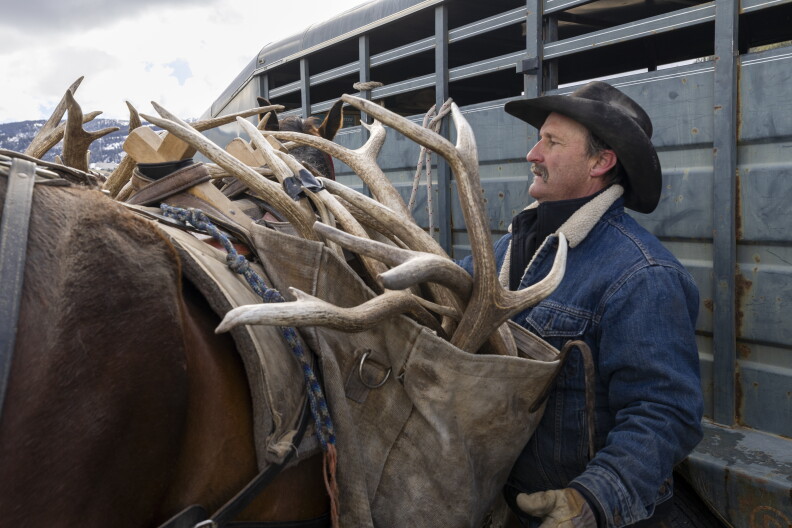
Show notes(Natalie Behring / KHOL)
The sun had yet to rise and over a hundred cars, trucks and trailers sat idling in the county fairgrounds parking lot and down the neighboring street. Hunters were drinking coffee, reaching for their toes to limber up and some — saddling horses.
Then, 20 minutes before the 6 a.m. start of Wyoming’s annual shed hunt, flashing police lights led the motorcade out of town toward the elk refuge.
(Natalie Behring / KHOL)
Brady Rivenes and his five shed-hunting passengers were 23rd in line. As he drove, his black truck’s headlights shined on herds of elk. The 24-year-old from Gillette says the rush — or the chaos as he put it — is hard to explain.
“Especially since it’s over something stupid like elk horns,” Rivenes said.
But this is his fifth year driving the six and a half hours from Gillette for the shed hunt, and he knew where he was heading.
He quickly hung a right leaving the motorcade, peeled down a gravel road, veered over the edge of it and lurched into park beneath looming canyon walls just outside of the refuge boundaries.
The group leaped out of the truck, swung packs over their shoulders and broke into a sprint alongside other hunters — like the start of an Easter egg hunt for grown men clad in camo.
“It’s exhausting — this is the definition of type two fun,” Rivenes said.
(Dante Filpula Ankne / KHOL)
Shed antler hunting season in the state opened on May 1 and the annual shed hunt in Jackson usually draws hundreds of vehicles from around the country. They come to search for antlers, which elk shed around this time every year.
But, this year, only Wyoming residents can participate for the first week — because of a new state law. The legislation was largely spurred by calls from Wyoming shed hunters who felt they’d been pushed out by swarms of out-of-state hunters in recent years as the sport has grown in popularity. While competition was still fierce, there were fewer people this year.
Wyoming Game & Fish’s Brad Hovinga said the legislation cut the number of registrations in the Jackson area in half, from around 300 to about 120.
“And quite honestly it was about as low-key as an antler collection opener than we’ve seen in years,” Hovinga said.
That’s because, in years past, Game and Fish has found hunters trying to get an advantage by sneaking out early, which is illegal. But this year, Hovinga said, law enforcement didn’t cite anyone for jumping the gun. He added that they checked licenses sporadically and didn’t find anyone violating the new law.
The law has been largely celebrated amongst Wyoming shed hunters, but he said the department has heard from many non-residents who felt the law — making them wait — is unfair because the large majority of antlers, at least in Jackson, will already be collected.
“Non-residents that show may have to hunt quite a bit harder than they have experienced in the past when they were allowed to start on the first of May,” Hovinga said.
Jase Romrell from Star Valley was out on opening day. He said he’s a fan of the law.
“It’s more special this year because we can actually benefit from being Wyoming residents,” Romrell said. “It makes me feel proud to come and pick up the antlers that you watch all winter and see on the refuge.”
Sitting atop his horse with multiple antlers slung to its side, he said this year is also special since his sons are joining him for the first time.
(Dante Filpula Ankne / KHOL)
“My goal was to get the twins, my two boys, an antler and they both succeeded in that,” Romrell said. “I just wanted to put a smile on their faces and make them enjoy the outdoors as much as I do.”
He’s been shed hunting in Jackson for about 10 years.
“We enjoy looking at them, we enjoy using them in home decor,” Romrell said. “They’re special to us because it’s a western living style.”
Brady Rivenes, the 24-year-old from Gillette, said he has mixed feelings about the new law.
“Yeah I kind of go both ways,” he said. “It’s cool getting to see all the Wyoming guys get their first pick on horns but also kind of bittersweet because you don’t get to see all of your out of state buddies you’ve made from coming to this over the years.”
Back on the mountain, Rivenes ran up a rocky cliff to a ridge line that plateaus. The chaos he had prepped for earlier had come to fruition. He occasionally tripped on the uneven game trails as he scanned the hillside for antler points. The sunrise cast a pink glow above the Tetons and glistened off the thin snow crust.
“They’re hard to see in snow,” Rivenes said as he tried to catch his breath.
Moving fast, with no plans of stopping, he knew other hunters were right behind him. He was looking for pockets, or clusters of many antlers he had had luck finding in previous years.
“Some years you find it, some years you don’t,” Rivenes said, “but either way, we’re not stopping.
Then, his pace quickened and he yelled as he spotted one — then two. He scrambled to their side, threw off his pack, strapped them in and, with no time to celebrate, kept moving.
He was unsatisfied.
“Not good enough,” he said. “From where we went through and to only have two — it’s surprising.”
By the end of the day he’ll have added two more. His friends, who had all spread out, found another four.
Ultimately, it was “not too shabby,” Rivenes said.
(Dante Filpula Ankne / KHOL)
He’s had better years, but ultimately it’s not just the thrill, the sheds or the scenery that keeps him coming back.
“A lot of it’s the people,” he said. “We like to shed hunt, there’s sheds on this hill, everyone else gets to come together that likes to shed hunt and you get to see all those guys pick up horns, it’s just a good time in general.”
Rivenes returned to his truck and threw down his sheds, considered their size alongside the others and debriefed the day cordially with other returning hunters. The competition was over.
He drove the gravel road out until he met the paved streets in town, grabbed a quick lunch at a local restaurant and then hit the road back towards Gillette — all before noon.
Copyright 2024 Wyoming Public Radio
What's at stake as Idaho evaluates mussel eradication effort
Jun 04, 2024
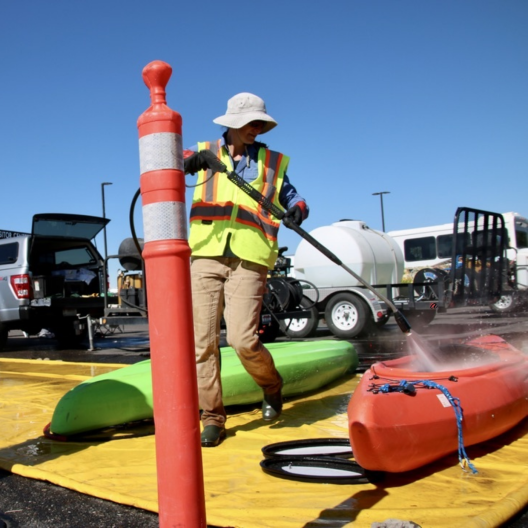
Show notesAfter quagga mussels were detected in the Snake River, ISDA set up boat decontamination stations in Twin Falls. It asked everyone who had been in the water during a month-long stretch to get their boats, kayaks and fishing gear cleaned.(Rachel Cohen / Boise State Public Radio )
Invasive quagga mussels were found in Idaho for the first time last fall. The state has been trying to get rid of them, but if it’s not successful, the mussels could have widespread and expensive consequences.
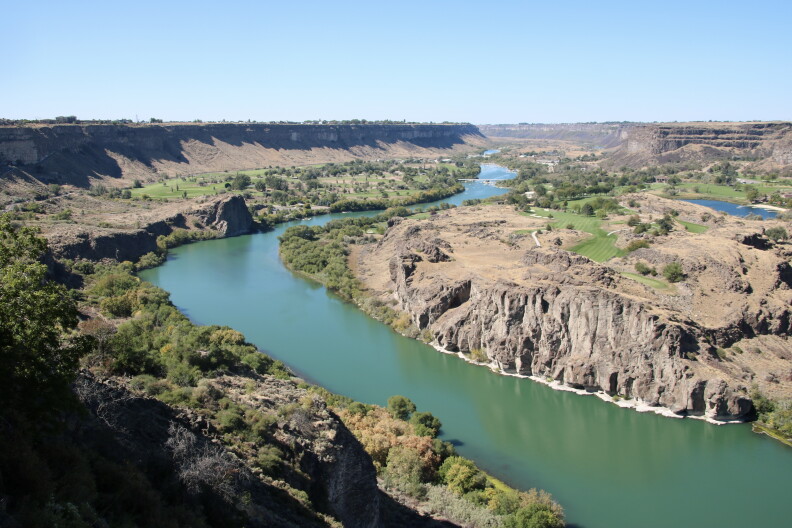
Michael Stephenson has spent years worrying about a tiny invasive creature smaller than a fingernail. Then, last fall, they arrived. The larval form of quagga mussels and one adult were found in the Snake River near Twin Falls.
“I’m feeling very anxious about it,” said Stephenson, who works as a biologist at Idaho Power. The company operates 17 hydroelectric plants on the Snake River and its tributaries, 15 of which are downstream of where quagga mussels were detected.
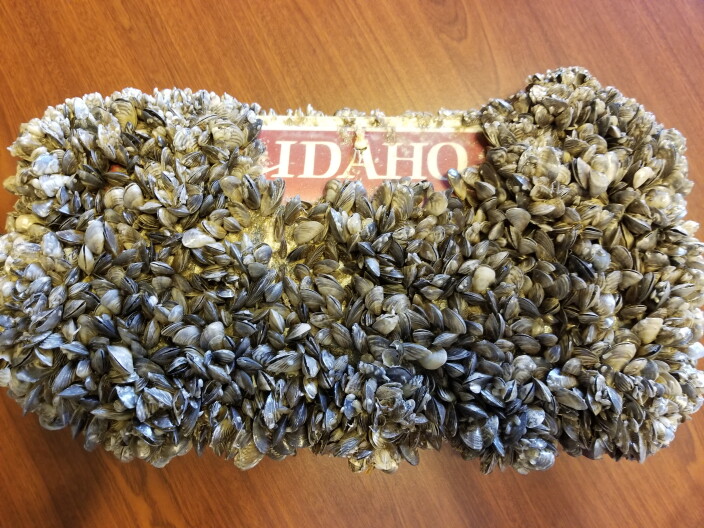
Stephenson said the small bivalves are a big problem. They spread rapidly – a female can produce a million eggs each year – and they attach to pretty much any surface in the water. They can clog intakes for drinking and irrigation water systems, and hydroelectric turbines.
The Columbia River Basin is the only major river system in the country without an invasive mussel infestation. The Pacific NorthWest Economic Region estimates it would cost the Northwest $500 million a year to deal with.
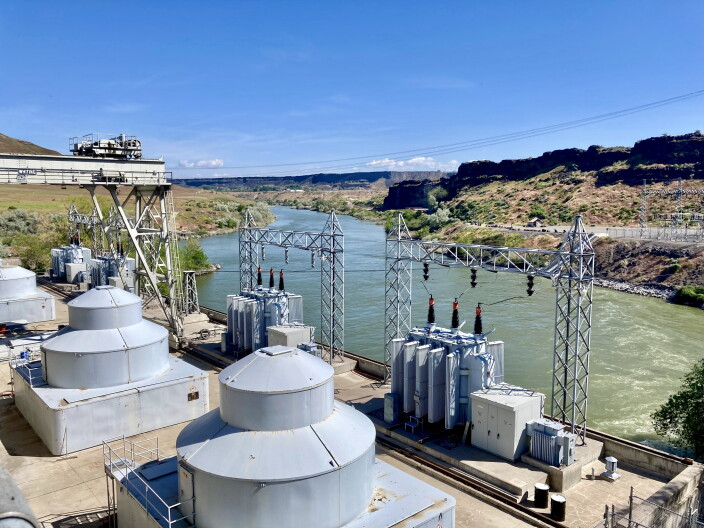
On top of an Idaho Power dam near Hagerman, Stephenson points to a metal filter where water flows from the reservoir into the power house. It’s one of the initial points where quagga mussels could interfere with the system. They’d start to encrust the steel bars, Stephenson said, reducing the amount of water entering the dam.
The company currently uses a mechanical rake to keep sticks and vegetation out, but prying quagga mussels off could require scuba divers. The mussels could also target other pipes that bring in water to cool the system as the turbines are spinning; without the cold water, they could overheat.
After a visit to the southwest to see how the operators of Hoover Dam handle quagga mussels in Lake Mead, Idaho Power is considering buying special ultraviolet lights to kill baby mussels floating through its facilities.
“If we get an infestation in the Snake River, it may be the biggest problem we've dealt with yet, as far as infrastructural issues,” Stephenson said.
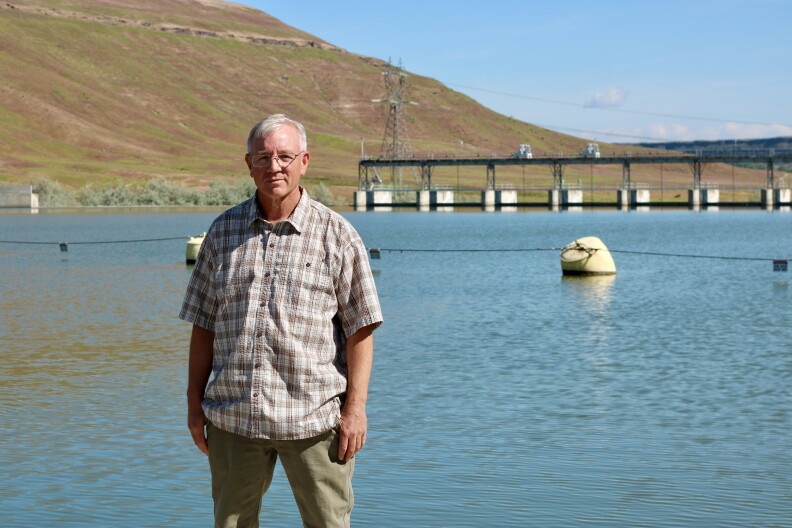
Michael Stephenson, a biologist at Idaho Power, is investigating how quagga mussels in the Snake River could affect hydropower operations and how the company can prepare.(Rachel Cohen / Boise State Public Radio )
Last fall, Idaho poured a copper-based chemical into the river to try to eradicate the mussels. Similar toxins have worked to kill mussels elsewhere, but this treatment, in a major river, was unprecedented.
“That’s been weighing quite a bit on my mind,” said Nic Zurfluh, the invasive species bureau chief for the Idaho State Department of Agriculture. “Just gauging how effective the treatment was last fall.”
Zurfluh said it’s been a long winter of waiting to see if the mussels are gone. They stop reproducing in colder months so they’re not easily detectable then. As the temperatures warm, Zurfluh’s team will begin collecting water samples around the state with an emphasis on the Snake River near Twin Falls, searching for signs of mussels.
Quagga Mussels infesting an Idaho license plate.(Sen. Michelle Stennett<br/> / Jeremy J. Gugino)
Thanks to money from the legislature, those efforts will double in scale this summer. But Zurfluh cautions that answers might take time.
“Not having detections, I would take that as really great news,” he said.”But just knowing that's not going to tell the full picture until we go quite a little while with non-detects.”
The tiny mussels are hard to find. It might take a few months, even a few years, to get an “all-clear.”
ISDA hopes the chemical treatment will eradicate the quagga mussel before a population takes hold in the Snake River.(Rachel Cohen / Boise State Public Radio )
If the mussels are still around and float downstream they could pose a big threat to anadromous fish that migrate from inland spawning grounds to the ocean and bring vital nutrients back – nutrients the quagga mussels absorb. The mussels are expert filter feeders, said Anthony Capetillo, an invasive species biologist with the Nez Perce Tribe and a tribal member.
“If the quagga mussels are sucking all the oxygen and all the nutrients out of the water, then that takes away from the fish, so they're not able to grow as they usually would,” Capetillo said.
Salmon in particular, he says, are already suffering because of dams and climate change, and quagga mussels, with their sharp shells coating fish ladders, could make their migration journeys more treacherous.
“All the money that we've been putting into all these projects to get these salmon and steelhead and lamprey back into these waters,” Capetilo said. “All of that could potentially be for nothing if we allow these invasives to come and take hold.”
A lot is at stake, he said, for a region that values clean water and access to the outdoors, but perhaps even more so for tribal communities.
“If we do lose parts of our identity,” he said, “lose our resources, we can't really measure what those losses are.”
Even further downstream, Justin Bush, the aquatic invasive species policy coordinator for the Washington Department of Fish and Wildlife, said it could take as little as a week for floating veligers to make it from Twin Falls to that state’s borders.
“We feel like this threat is right on our doorstep,” he said. “It's causing us to think about a new timeline, new actions, and new levels of funding that will be required in both the short and long term.”
Last fall, as soon as the mussels were detected in Idaho, Washington deployed its monitoring crews closer to the border. They didn’t turn anything up.
Now, the state will have a specific Snake River mussel monitoring team, fully-staffed boat check stations in the southeast region and a new mussel-sniffing dog.
“All eyes are on Idaho and we're waiting for more information,” Bush said.
Idaho officials hope their eradication efforts have staved off an infestation, Zurfluh said.
At the Twin Falls waterfront, the state is requiring all boats entering and leaving the river to be washed down to contain any remaining mussels from spreading to other water bodies. Plus, prevention is still key, Zurfluh said. It would just take a single boat or kayak carrying new mussels to spark another introduction tomorrow.

 Our TOPPODCAST Picks
 Stay Connected