Idaho Matters is a wonderful way to stay up to date, meet people and understand there’s much more to this great state. Hosted by Gemma Gaudette on Boise State Public Radio News, it features arts and politics, growth and education, and the interesting stories that make Idaho unique. Send us your questions, comments or story ideas by emailing idahomatters@boisestate.edu or sending us a voicemail using the “Talk To Us” feature on the free Boise State Public Radio app.
A conversation with Debbie Critchfield: The impact of education policy on Idaho schools and kids
Apr 08, 2024
Show notes
Idaho's Superintendent of Public Instruction has been watching the Idaho legislature closely this year as lawmakers consider giving public schools a giant chunk of the state budget.
Debbie Critchfield is in her second year as the head of Idaho's public K–12 school system, and now that the legislature is wrapping up, she's about to go on a statewide tour to talk with school officials about education policy coming out of the legislature this year and how it will affect schools and kids.
She agreed to give Idaho Matters a preview and we started the conversation with the roughly $2 billion school facilities bill that passed this session.
'The Bump:' An author interview with Sidney Karger
Apr 08, 2024
Show notes
Last year, we introduced you to a rom-com novel called "Best Men," which explored what it was like for one gay man looking for love in New York City.
The book was met with much-deserved buzz, being featured on Good Morning America, the Today Show, and Bravo's Watch What Happens Live.
Now Sidney Karger is back with his latest novel, "The Bump," which comes out on May 21, and he joined Idaho Matters to talk about the new release.
Idaho Matters Reporter Roundtable: April 5, 2024
Apr 05, 2024
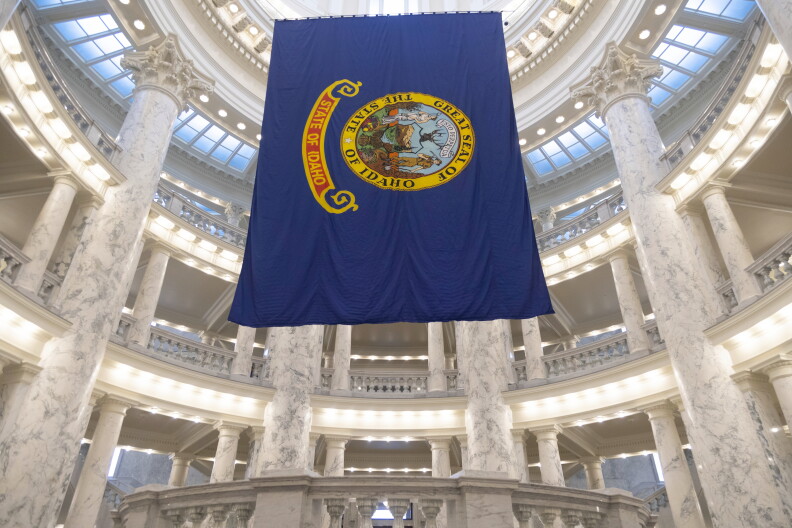
Show notesThe Idaho state flag hangs in the State Capitol in Boise, Idaho.(Kyle Green / AP)
It’s Friday, which means it's time for our Reporter Roundtable when Idaho Matters gets you up to date on all the news that made headlines this past week.
Idaho primaries: Everybody pays for them, far from everyone votes
Apr 05, 2024
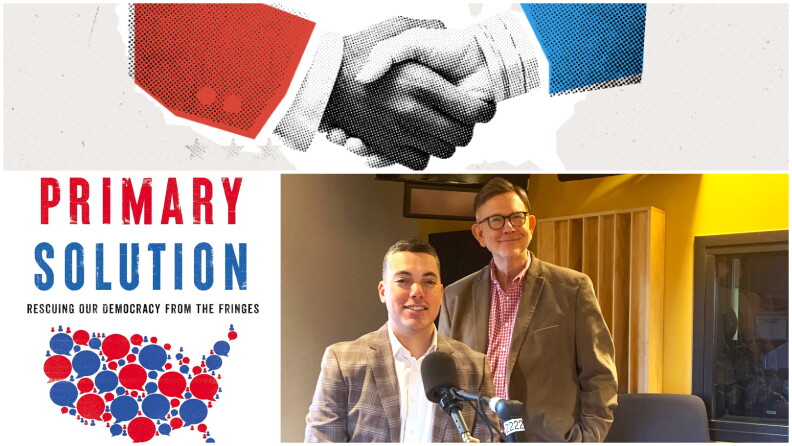
Show notes Nick Troiano is founding executive director of Unite America and author of The Primary Solution.( George Prentice, Unite America)
Idaho is inching toward another primary season. But that also means an election that is defined, in large part, by who’s inside and who’s outside. The “closed” GOP primary means a good many Idahoans don’t participate in who might end up governing the Gem State. That said, those same citizens pay for those primaries, whether they’re allowed to participate or not.
“All citizens of Idaho and across the country are paying for the administration of these primary elections. These are government-run and taxpayer-funded,” said Nick Troiano, founding executive director of Unite America. “And that's the reason every voter should have the freedom to vote for any candidate in every election.”
During his recent visit to Idaho where he participated in a Hackfort panel discussion on Idaho’s primary system, Troiano visited with Morning Edition host George Prentice.
Read the full transcript below:
GEORGE PRENTICE: It's Morning Edition. Good morning, I'm George Prentice. We're going to wade back into political waters for the next several minutes. Nick Troiano is here. He is the founding executive director of an organization called Unite America, which looks to foster what it calls a more functional government. Mr. Troiano is in Idaho to participate in one of Treefort's many events. In fact, it's part of Hackfort, and the event poses the question “Could Opening Idaho's Primaries Improve Governance?” Mr. Troiano, good morning.
NICK TROIANO: Great to be with you, George.
PRENTICE: The title of this event...It's almost hypothetical because my sense is, what you advocate for on a regular basis, on a daily basis, is to have more open government and more open primaries.
TROIANO: Yes, yes. And I recently wrote a book called The Primary Solution that makes an argument that party primaries have become the biggest solvable problem in our politics today.
PRENTICE: Solvable?
TROIANO: Yes. Emphasis on solvable because there are many problems, but this is the one. I believe that not only can we fix, but if we do, we'll make a significant impact on improving government.
PRENTICE: Do you have a sense of why we haven't fixed it, or is it that we've gotten to this space where we are more divided and…quite possibly dysfunctional in the process?
TROIANO: Well, a couple of things have shifted over the past two decades in particular, that have made party primaries a big driver of political division and dysfunction. You know, the first is that there has been a dramatic decrease in how competitive legislative districts are. The overwhelming number of them are lopsided so that they entirely favor Democrats or Republicans.
PRENTICE: Well, welcome to Idaho…. where we have a supermajority and the Republican Party has a closed primary
TROIANO: Which means that the November election is over in most places before it even begins.
PRENTICE: For certain. Our upcoming primary, quite frankly, has become a lot more critical.
TROIANO: So that's challenge No. 1: that the primary is the whole ball game. And challenge No. 2 is that fewer people are able to participate in these elections by virtue of the way that they are registered to vote. As you know, about a decade ago, Idaho closed its primaries. It used to be open so that anyone can participate. Today, it's only those that are registered with the Republican Party, which not only locks out the other party, but it also locks out the growing number of voters that are unaffiliated with either party, which happened to be close to a majority of veterans, a majority of young people, which means that these elections are not representative of a true majority.
PRENTICE: But the Constitution doesn't say anything about how parties choose their candidates, and the parties basically pick the rules. So how do you punch through that bag?
TROIANO: Yeah, the Constitution doesn't even talk about political parties. You know, the founders didn't imagine that there would be the parties, but they developed over time. And then they had to choose a way of selecting their standard bearer, which is how we invented the direct primary a century ago. But in the modern era, the challenge is that all citizens of Idaho and across the country are paying for the administration of these primary elections. And by virtue of that, these are not elections that are solely for these private organizations. These are government run and taxpayer funded. And that's the reason why we believe that every voter should have the freedom to vote for any candidate in every election.
PRENTICE: Is the intention to codify this, because, again, the party is going to do what the party is going to do.
TROIANO: And they ought to have their own discretion in the way that they recruit, support and endorse candidates. What the government does in its own election should be a separate question. And right now, across the state of Idaho, there are 2000 volunteers gathering over 60,000 signatures to put an initiative on this November's ballot that would open the primaries so that every voter can vote for any candidate in every election.
PRENTICE: I'm guessing you may have also heard that it's becoming increasingly difficult to put initiatives on ballots.
TROIANO: But the state, as many Western states do, has a proud tradition of the initiative process, where if the legislature is not being responsive to the will of the majority, there is a way for citizens to rise up and demand that kind of accountability. And that is how other states, including Alaska and Nevada in recent years, have pursued changes similar to what we're now seeing in Idaho. So it's entirely possible, and it's necessary if people are displeased with the outcomes that they're seeing in government and that and the options they're seeing on their ballot. The solution to that is to address the systemic cause of that, which is our party primary system.
PRENTICE: I don't think it's a big secret that a fair amount of people register as Republicans who are nowhere near identifying themselves truly as Republicans, just so they can participate in that primary. That's probably not too uncommon, but I'm also going to guess that's kind of a side door or a back door way of getting into this, right?
TROIANO: Yeah. And it's also one of the reasons why, when those opponents claim, oh, we can't do this, because then others are going to be trying to select our candidate. Well guess what? It's already happening and it's not producing good outcomes at that. And so the system that the state would move. Two under this proposed initiative would be the parties can use their own process to nominate a candidate, but the citizens of Idaho and their taxpayer funded elections ought to have a process by which every voter has a right to vote for anyone. And then secondly, and importantly, a majority winner is selected. Right now in our elections, you only need to win the most votes one more than your opponent, not a true majority. And our government was founded on the idea of a representative republic where we would elect leaders who would represent a majority of voters. We don't have that today. So that's the other part that this would initiative would do.
PRENTICE: And again, this effort... am I hearing you right? This effort is a state-by-state effort. It's not necessarily some national campaign.
TROIANO: Exactly. Which is part of the reason why I believe this problem is so solvable is that it doesn't require a constitutional amendment. It doesn't require an act of Congress. Every state, the Constitution says, can set the time, place, and manner of their elections. And so states have done this legislatively. States have done this at the ballot of changing their laws to better represent the true will of the majority.
PRENTICE: He is Nick Troiano, and he is the founding executive director of Unite America. Mr. Troiano, have a good time in your visit here to Idaho. We hope you come back often, but for now, thanks for giving us some time this morning.
We hear about companies getting hit by hackers every day and it often becomes background noise because we aren't always directly affected.
But the Washington Post has reported that as many as 50 percent of the medical claims in the U.S. go through Change Healthcare, including claims by many Idaho hospitals and doctors.
Doctors, hospitals, and patients have been impacted, causing confusion over claims getting processed and even delays in approvals for medical care.
Wes Trexler, the Deputy Director of the Idaho Department of Insurance, joined Idaho Matters for an update on this issue.
How death doulas are assisting people at the end of their life
Apr 04, 2024
Show notesBubbie holding Adam's hand and looking at photos
(Getting Better Shots / Flickr)
Dealing with the loss of a loved one is never easy, even when you know it's coming. And it can be even harder when you're the one leaving people behind.
Which is why some families choose to enlist the help of a death doula, a person who provides guidance and support for those facing their final moments.
While this role is not necessarily a new one, it is part of a still-growing field, one that is becoming more popular as end-of-life care continues to evolve.
End-of-life doulas Karen Midlo, and Alex Glynn join Idaho Matters to talk more about this profession.
Lack of snow threatens the sport of skijoring
Apr 04, 2024
Show notes(Jessica Robinson / Northwest News Network)
Each winter, the sport of skijoring brings lots of money and visitors to small communities in our region. But this all depends on snow, and this year, it's been tricky. Wyoming Public Radio's Caitlin Tan reports for the Mountain West News Bureau.
What to Watch: Movies to see and movies to avoid
Apr 04, 2024
Show notes(ciaraanicolee / Flickr)
There are some new movies out in theaters; we'll tell you what's worth checking out and what to avoid, plus one of TV's best comedies is signing off for the last time.
Resident movie critic George Prentice joins Idaho Matters to help us figure out What to Watch.
The history of hate groups in Idaho
Apr 03, 2024
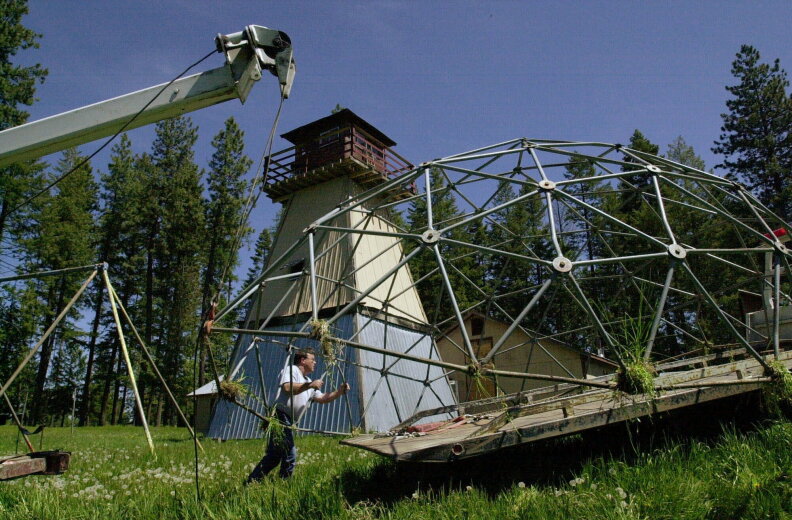
Show notesFILE - In this May 22, 2001, file photo, a worker moves children's play equipment away from a watch tower and off the property of the former headquarters of the neo-Nazi Aryan Nations, near Coeur d'Alene, Idaho. Nearly two decades after the compound was demolished, far-right extremists are maintaining a presence in the Pacific Northwest. White nationalism has been on the rise across the U.S., but it has particular resonance along the Idaho-Washington border. (AP Photo/Elaine Thompson, File)(Elaine Thompson/AP / AP)
Police in Coeur d’Alene are still investigating allegations of racial harassment against the University of Utah basketball team. According to reports by the team last month, racial slurs and a Confederate flag were part of the incident.
Two years ago, 31 members of a group called the “Patriot Front” were arrested and charged with conspiring to riot during a Pride Festival event also in Coeur d’Alene.
Four years ago, Boise’s Anne Frank Memorial was defaced with swastikas.
Racial hate is not new to Idaho, and the Aryan Nations are a big part of the history of hate in the Gem State.
Alisha Graefe has been studying the Aryan Nations in Idaho for years. She’s an archivist at the Albertsons Library at Boise State University, and she’ll be giving a talk on April 11th at the Osher Lifelong Learning Institute in Boise. She joined Idaho Matters for a preview.
Boise Foothills trails reopen for spring
Apr 03, 2024
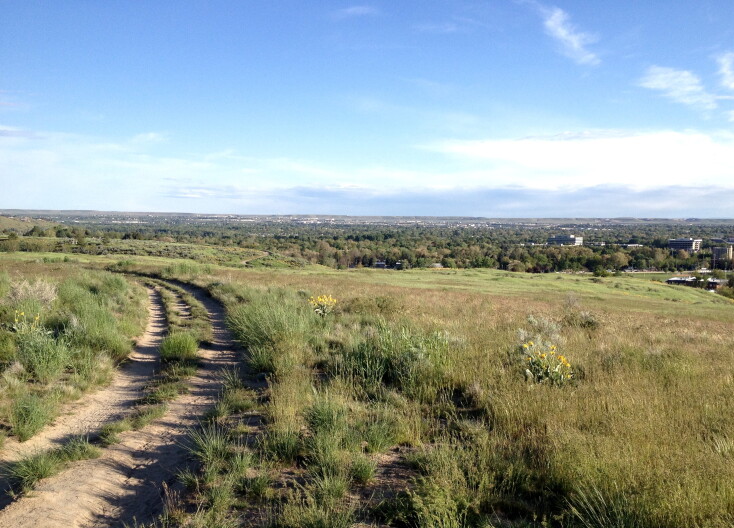
Show notes(Frankie Barnhill / Boise State Public Radio)
Now that the days are getting warmer, hiking trails are opening back up in the Boise Foothills.
So, as more people start to spend time outside, we thought we'd invite David Gordon, the Ridge to Rivers Trail Manager, to tell Idaho Matters about the popular recreation spots that are once again accessible.

 Our TOPPODCAST Picks
  Stay Connected