Hosted by Gemma Gaudette on Boise State Public Radio News, this weekday public affairs podcast serves as a gathering place where ideas are shared, stories are told and conversations thrive. Whether you’re curious about local government, inspired by the arts or invested in your community, Idaho Matters is where the voices of Idaho come together to inform, engage and celebrate the people and places that make the Gem State unique.
Send us your questions, comments or story ideas by emailing idahomatters@boisestate.edu or sending us a voicemail using the “Talk To Us” feature on the free Boise State Public Radio app.
Idaho Elections: How Prop 1 might change our voting system
Oct 15, 2024
Show notes
(Robyn Beck / AFP/Getty Images)Since 2011, political parties in Idaho have been able to choose to close their primary to voters who are not affiliated with their party. For example, only registered Republicans can vote in the Republican primary. The Constitution Party and libertarian primaries are also closed; only the Democratic primary is open to any voter.Some say that disenfranchises a lot of people. About one million Idahoans are registered to vote, but almost 300,000 of them are not affiliated with any political party, which means right now they can only vote in the democratic primary.In November, voters will be faced with Proposition 1. It’s a citizen initiative that will do two things if passed: it would open up all primaries in Idaho, and it would create a new voting system known as ranked choice voting.This week, we’re looking at the open primary side of Prop 1. Next week we’ll tackle ranked choice voting.Luke Mayville with the Idahoans for Open Primaries Coalition and Jason Mercier, the Vice President and Director of Research at the Mountain States Policy Center, joined Idaho Matters to talk more about Proposition 1. Read the full transcript belowGAUDETTE: More Idaho Matters now from the studios of Boise State Public Radio News. I'm Gemma Gaudette. Since 2011, political parties in Idaho can choose to close their primary to voters who are not affiliated with their party. For example, only registered Republicans can vote in the Republican primary. The Constitution Party and the libertarian primaries are also closed. Only the Democratic primary is open to any voter. Now, some say this disenfranchizes a lot of people, about 1 million Idahoans are registered to vote, but almost 300,000 of them are not affiliated with any political party. Which means right now they can only vote in the Democratic primary. In November, though, voters will be faced with proposition one. It's a citizen's initiative that will do two things. If passed, it would open up all primaries in Idaho, and it would create a new voting system known as ranked choice voting. So this week we're going to only look at one part of proposition one. We are going to look at the open primary side of proposition one. Next week we will tackle ranked choice voting. So be sure you tune in then. So here to talk about prop one is Luke Mayville with the Idahoans for Open Primaries Coalition. This is the group that gathered enough signatures to put proposition one on the ballot. Welcome back to the show, Luke. MAYVILLE: So good to be with you, Gemma. GAUDETTE: So, Luke, how did the idea to open up Idaho's primaries come to pass in your organization?MAYVILLE: Well, it's important to understand that we've only had closed primaries for the last 12 years. Prior to 2011, Idaho had an open primary system for over 40 years, and really, ever since the system was closed back in 2011, a lot of people have been very dissatisfied with it all across the political spectrum. And the idea for this current initiative really bubbled up when a number of community leaders around the state came together across the political spectrum, including the former speaker of the House, Republican Bruce Newcomb, who was, you know, one of the founders of this campaign, who really who came together with me and others and really started thinking about how could we restore everyone's right to vote in primaries, how can we open up the system and make sure that everyone has a voice? GAUDETTE: So as I mentioned, Luke, right now since 2011, we have closed primaries. So if you are a registered Democrat, um, you can you vote in the Democratic primary. If you are a registered Republican, you you vote in the primary as a Republican, you cannot vote. Only Republicans can vote in the Republican primary. And as I said, we have hundreds of thousands of Idahoans who don't affiliate with any party. So therefore, the only primary they can vote in is is the Democrat primary. So under proposition one, how would our state's close primary system change?MAYVILLE: Proposition one would create a nonpartisan, open primary where all voters have a right to participate. So anyone who is legally eligible to vote would be free to participate, no matter how you're registered. Uh, all candidates would appear on the same ballot. So it would no longer be separate party primaries, where you have to figure out which party to register for in advance of the election. You just show up. And if you are legally eligible to vote, uh, you can and you can make sure that you're registered to vote and you vote in the primary and that's it. And, um, all candidates would appear on on that same ballot. Uh, and, and we'll talk more about this, uh, in the future. But, but the, uh, the top four candidates from that primary would go on to the general election. And it doesn't matter what party they come from, it's just whichever four candidates receive the most votes will go on to the general election. GAUDETTE: So basically, the primary ballot would look the same as the general election ballot looks currently if proposition one were to pass. MAYVILLE: Not quite, because, uh, there could be there won't just be, you know, one Republican running and one Democrat running. Um, a typical primary election ballot, say, if you're voting for governor, could be four Republicans, two Democrats, two independents. All on the same ballot as a as a voter. And this is really important because we talk a lot about ranked choice voting in the primary. There's no ranking in the proposal. In this proposal, in the primary, you just show up and choose your favorite candidate. So say you're voting for governor. There might be several Republicans, a few Democrats, a few independents. You just choose. You just show up and you and you pick your favorite candidate. It's really about the simplest type of primary election that you could imagine.GAUDETTE: So I want to talk about being disenfranchized, because you have said that a quarter of Idaho's registered voters are being left out of three of our left out of our primaries, at least three of our primaries. Because because they're closed. Why can't folks just register for whatever primary they want to vote in? MAYVILLE: What we're hearing from voters all across the state is that it is just not right. That if you're an independent voter, you're an independent minded citizen, and, uh, and you want to be an independent, you should not be forced to join a political party just to exercise your right to vote. You should be free to participate in that primary election. And now I know opponents will come back and say, well, if they don't want to vote in the primary, they can still just come back and vote in the general election. Well, that's really not good enough for for people across the state who have this complaint, because we all know that it is the primary elections that really matter in Idaho. Um, because in Idaho we are, you know, mostly a one party state where where one party dominates. And that means that whoever wins the primary and in this case, the Republican primary, uh, almost always wins the general election. So we have a situation where there are these 270,000 independent voters who are being shut out from voting in the election. That really matters, which is the primary election. And it's not good enough to tell them, oh, you can just come back and vote in November. They want they want to be able to freely participate in the election that really matters. GAUDETTE: So, Luke, there has been concern by some that proposition one might be unconstitutional because some say it puts two different issues on one ballot. You have open primaries and you have ranked choice voting. We are going to talk more in our next segment with another guest about that. But I'm curious about how you respond to those concerns about this being unconstitutional, because given there could be deemed two separate issues on the ballot. I mean, on this initiative.MAYVILLE: Well, there are a number of there are a number of different claims that are made of how proposition one could be unconstitutional. We're not we're not concerned about those claims, because the fact is that in both federal courts and state courts around the country, those claims have been taken up and rejected by the courts. And these reforms have been upheld over and over again in court. When it comes to the single subject rule and the claim that proposition one is two separate subjects and therefore might be unconstitutional. There's a long history in Idaho of the Idaho Supreme Court looking closely at cases like this and finding as long as there's one broad, unifying subject, a proposal is perfectly constitutional. So in this case, whether it's open primaries or ranked choice voting, everything falls under the subject of elections. So the broad subject of elections is the single subject. And it's perfectly okay to have two different reforms of elections in one initiative. The courts have made that very clear. So we are 100% confident that if the voters passed proposition one in November, it will be upheld by the Idaho Supreme Court. GAUDETTE: So, Luke, um, for folks who may not be familiar, you helped lead a successful citizen campaign to put the question of Medicaid expansion on the ballot. You have a history with Idaho Citizen Initiative process. What are you hearing? What have you seen on the ground from folks about Idaho's closed primaries? Because I will just anecdotally say this. When I walk around my neighborhood, I see vote yes and I see vote no signs.MAYVILLE: We're seeing more excitement and engagement around this initiative than any of the previous initiatives. I think people believe strongly that the stakes are high, that that this initiative really matters. And it's not that. Previous campaigns. Previous campaigns we did that were about really important issues as well. Um, but one way to think about proposition one and this whole issue of open primaries, it's really getting all the way to the root of the problem. Uh, other issues we've taken on have been, you know, you could you could talk about them more as like, you know, we're we're trying to hack away at some of the rotten branches in the system. With this initiative, we're really going to the root and we're going to the root cause of so many problems in Idaho, because the root of the problem is that so many voters do not have a voice in our current political process because of the closed primary elections that shut out so many independent voters. And it's not just that voters are denied a voice. It's that when so many people are shut out, we end up electing officials who don't represent the broader community and don't respond to the needs of a broader group of voters in the state. And that means we end up with politicians getting elected who aren't accountable to every voter. Instead, they're only accountable to a small slice of the population that participates in one closed primary election. That's part of why people are so excited about this opportunity to vote yes on proposition one. GAUDETTE: Well, I want to thank you for taking time to talk with us, Luke. We've been speaking with Luke Mayville with Idahoans for Open primaries coalition about proposition one and open primaries. And we're continuing our discussion about proposition one and open primaries with Jason Mercier. He is the vice president and director of research at the Mountain States Policy Center. Jason, welcome to the program.MERCIER: Good afternoon. Thank you for having me on. GAUDETTE: So for folks who aren't familiar, can you briefly tell us what the Mountain States Policy Center is? MERCIER: Yes. Mountain States Policy Center is a nonpartisan public policy research organization were headquartered in Idaho. We have a regional focus. We cover Idaho, Montana, Wyoming and Washington and providing analysis on legislation and in this case, ballot measures in those states. GAUDETTE: So you said you're a nonpartisan organization. So does that mean you do or do not take a stand or a side on initiatives like proposition one? MERCIER: Yeah. We are not in the business of telling voters how they should vote. That's up to them to do after doing their research and analysis. Well, the role that we play in this example of proposition one is we reviewed the review, the ballot language. We looked at how primaries and ranked choice voting occurs nationally, dug into some of the case law, and then looked at some of the fiscal thing and then tried to put all that information in one resource for voters. So as they go through it, they can decide what's best for them.GAUDETTE: So I want to talk about open primaries specifically. Right now, all primaries in Idaho are closed with the exception of the Democratic primary. Does that system work right now? MERCIER: Every state is a little bit different. So Idaho is one of nine states right now with those closed primaries. And I was actually partially closed because it's up to the private parties if they want to accept those nonaffiliated ballots, as you indicated, the Democrats do. The Republicans don't. There are states with open primaries that are Partizan, and then there are just a handful of states, examples being Washington, California, Alaska, Nebraska, and Maine that have what are truly open primaries. They're nonpartisan multi party primaries. And those are kind of the options you have across the country. GAUDETTE: So according to Boise State's Public Policy survey, 57% of people either somewhat or strongly favor a top four primary system. However, many members of political parties say the parties should be able to decide who votes in their primary. And I know that your policy center has a discussion online about proposition one and how it covers two issues. Open primaries and ranked choice. Ranked choice voting. In your center's opinion, are those two distinct issues?MERCIER: They are. And in fact, the ballot summary itself indicates that when you look at the official ballot summary for proposition one, it says the measure is to replace voter selection of party nominees with a top four primary. Number two require ranked choice voting for general elections. And then it says this measure proposes two distinct changes. So the summary itself already kind of tips the hat that these are two different issues that are being combined into one proposal. And I think that's somewhat of a frustration as we analyze this, because there's a lot of arguments to be made for open primaries, in our opinion. There's a lot of arguments against ranked choice voting, but Idaho voters don't get an option with them being combined into one. And I think when you look across the country, there's a similar debate happening right now in Montana. They're also having a debate about top four primaries and what happens if you enact that type of system. But they have two separate ballot measures. They have one ballot measure for a top four, and then they have one ballot measure about requiring 50% to win an election. And I think the reason why they've done that is because Montana's Supreme Court has consistently struck down ballot measures for single subject violations. GAUDETTE: Okay, so with that said, though, our Supreme Court here in Idaho did not strike that down. And as Luke Mayville mentioned in our last segment, you know, our Supreme Court has basically said it's it's it's about voting. So it's it's one issue. MERCIER: Yeah. So the Supreme Court ruling earlier this year was not on the merits of single section. It was on it being a pre-elec…
Supporting at-risk dogs with the Meridian Canine Rescue, Boise Bully Breed Rescue
Oct 15, 2024
Show notes(<a href="https://www.flickr.com/photos/crozefeet/">Pauline</a> / Flickr)
For years, Meridian Canine Rescue has been working to help at-risk dogs, providing important community education and resources to caregivers.
Like many animal nonprofits though they're in need of support, which is why they've partnered with the Boise Bully Breed Rescue to host an evening of music bingo that will not only help to make a difference but also be a lot of fun.
Karinna Lozano, the Board President of Meridian Canine Rescue, joined Idaho Matters to talk more about the event.
New community radio station joins the airwaves in Boise
Oct 14, 2024
Show notes(DT / Flickr)
A new community radio station recently joined Boise's airwaves.
It is Tropico FM and their mission is to uplift diverse voices through music, where you can find everything from salsa, samba, disco and Tejano music on the dial.
Kyle Scheffler is the founder and president of Tropico FM and he joined Idaho Matters to talk more.
'What the Constitution Means to Me' comes to BCT stage
Oct 14, 2024
Show notes( Boise Contemporary Theater)
Jessica Morris is the star of the show, and she sat down with our Morning Edition host George Prentice for a preview.
Growth in McCall: Why residents are creating a space for the community
Oct 14, 2024
Show notes An artist rendering of the Ponderosa Center(The Ponderosa Center)
McCall, like the rest of Idaho, has seen skyrocketing growth, and open parcels of land are being snapped up at record prices for future development.
But one piece of lakefront real estate remains undeveloped between the marina and hotel McCall. The property is potentially worth millions, and a group of residents is hoping to turn the land into a combination community space and arts center.
But first they have to raise enough money to buy the property.
Hayley Johnson, the Executive Director of the Ponderosa Center, and David Carey, the owner of Hotel McCall, joined Idaho Matters to talk more.
Supporting Boise neighborhoods through community
Oct 14, 2024
Show notes(<a href="https://www.flickr.com/photos/roadsidepictures/">Roadsidepictures</a> / Flickr)
Community is important, particularly when it comes to our neighborhoods.
It’s Friday, which means it's time for our Reporter Roundtable when Idaho Matters gets you up to date on all the news that made headlines this past week.
Art, healing and hope: Wassmuth Center opens up a new education center in Boise
Oct 11, 2024
Show notes The new education building covers 6,000 square feet and cost $6.4 million to build.( The Wassmuth Center for Human Rights)
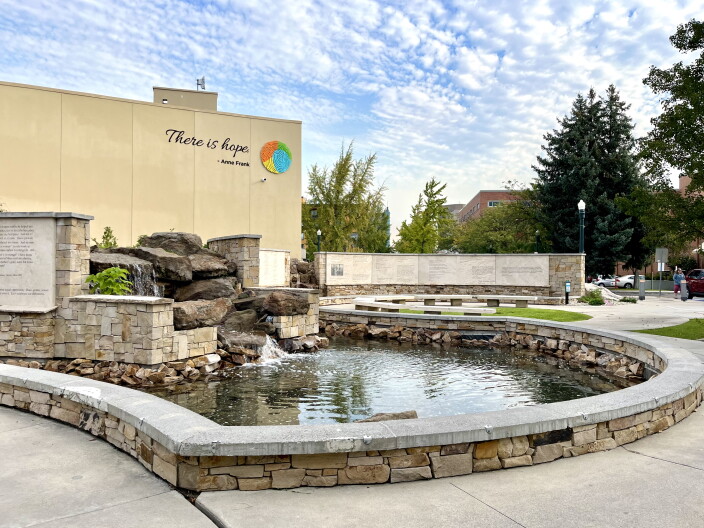
Nestled between the Anne Frank Memorial and the library in downtown Boise sits the Wassmuth Center for Human Rights. It was founded 22 years ago to build the only memorial on U.S. soil dedicated to Anne Frank.
Since then, the Memorial has continued to expand, and Thursday it opened a new 6,000 square foot education center.
Wassmuth Center for Human Rights opens its doors in downtown Boise
Oct 10, 2024
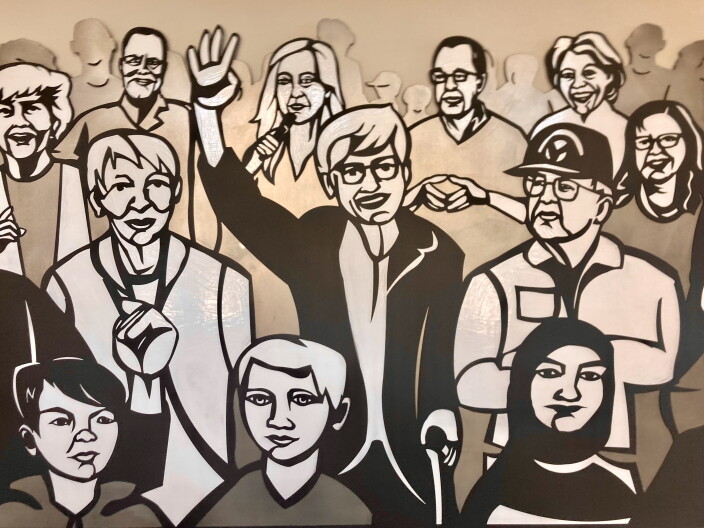
Show notesThe mural "Defenders of Dignity" by Addie Boswell is one of the artwork featured at the Wassmuth Center for Human Rights. In the center, with arm raised, is the late Marilyn Schuler, a prominent human rights activist in Idaho. (Julie Luchetta / Boise State Public Radio)
The education nonprofit behind Boise’s Anne Frank Memorial is getting its own building in downtown Boise. The Wassmuth Center for Human Rights will now reside in a brand new space downtown.
The center was first founded 22 years ago to build the only monument on U.S. soil dedicated to the young victim of the Holocaust. Since then, the center has been offering classes, lectures and trainings in the community.
“As the demand for programming grew, it really became apparent that having a space ideally adjacent to the memorial was kind of the dream,” said Director Christina Bruce-Bennion ahead of the grand opening on Thursday. “And here we are.”
(Wassmuth Center for Human Rights / Boise)
Bruce-Bennion said the center’s goal is to promote human dignity through education. The new space will be a place for the public — both adults and children — to engage with local artists, attend classes and reflect on Idaho’s history of human rights. It offers access to a library collection, an interactive display featuring testimonies of holocaust survivors and various reflective art pieces.
But the center does not focus on particular human violations, Bruce-Bennion added.
“It's really more about, 'how do we give people the information, how do we learn from history and connect it to today? How can that lead to informed action?'” she said. Instead the center offers programming to identify what it calls the “Spiral of Injustice.”
“That spiral looks like a tornado,” Bruce-Bennion explained. “The top level is language. And that's where it starts, right? It's how we begin with othering, how we talk about other groups. And then if we don't interrupt the spiral at that point, it can continue to avoidance, discrimination, violence and elimination.”
The center was funded by roughly 650 donors and cost $6.4 million. It opens its doors to the public on Thursday.
A Colorado Springs school is making students ditch cell phones. It's a trend in the Mountain West.
Oct 10, 2024
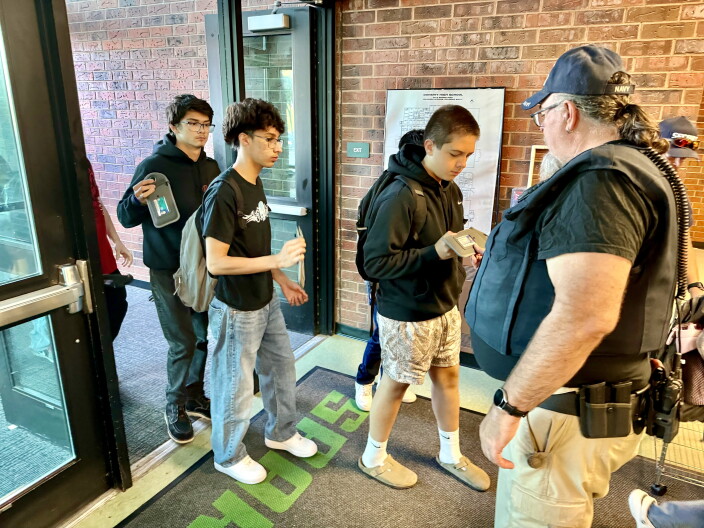
Show notesStudents at Doherty High School in Colorado Springs show their IDs and their phones inside Yondr pouches to security guard Lonny Barrett. The school district started a new policy this year banning cell phones for middle and high schoolers.(Rachel Cohen / KUNC )
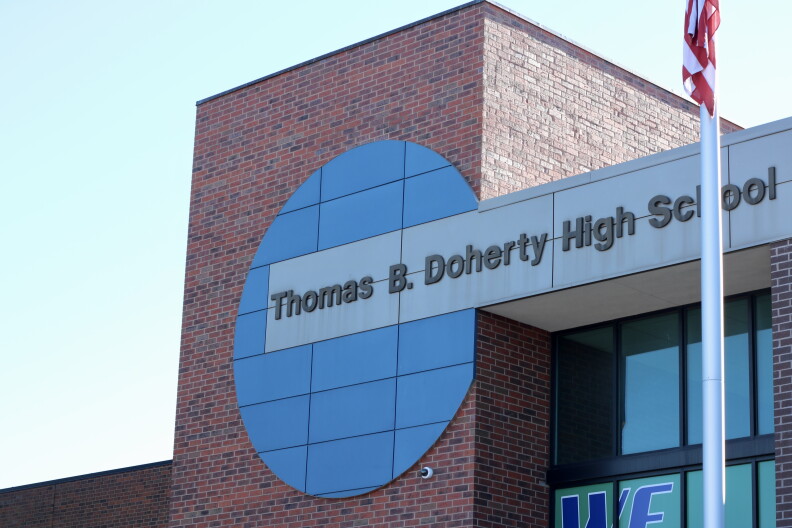
It's the third day of school at Doherty High in Colorado Springs. 1,700 teenagers file through the doors as security guard Lonny Barrett checks IDs.
This year, he’s also inspecting cell phones. According to a new policy, students need to put their phones away all day inside special pouches.
Barrett checks each one. Only a few minutes into the morning rush, he’s found a pouch that’s suspicious.
“What is this?” Barrett asks a student. “This isn't a phone. This is a box of Extra gum.”
He hands the student the gum stuffed inside in place of a phone. Barrett said this happens a few times each morning.
"They'll put like empty cases, or even like an old broken phone that doesn't even work anymore, they'll try to put that in there and sneak it past us,” he said. “It's been entertaining."
Many kids simply tell him they left their phones at home. He has his doubts. He reminds them there are consequences if they're caught with their phones – starting with getting them confiscated, up through suspension.
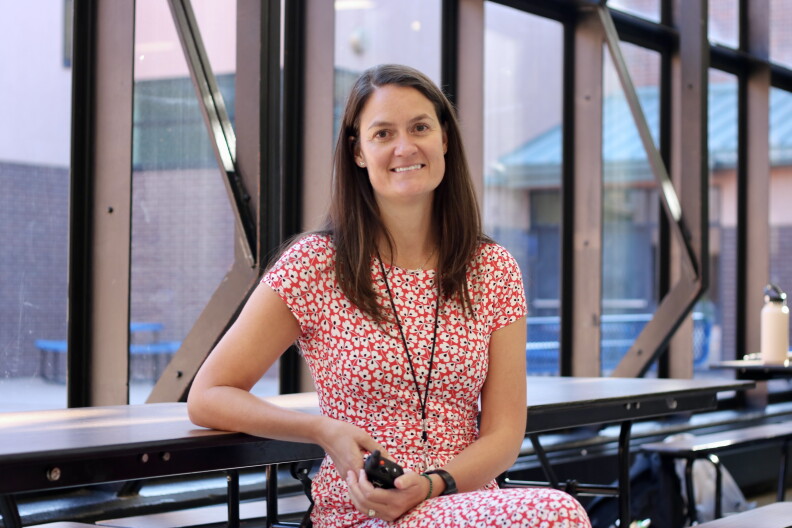
Standing near the entrance is the principal, Hillary Hienton.
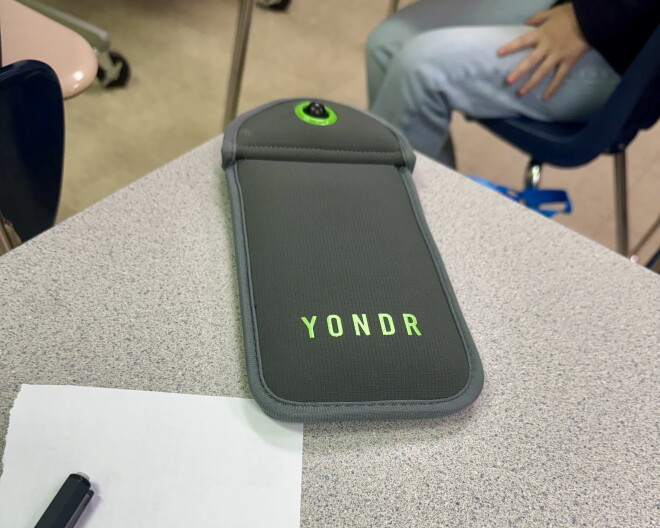
At the end of the school day, administrative staff rolls out carts of Yondr magnets to unlock the phone pouches.(Rachel Cohen / KUNC )
She explains how the system works. The gray fabric pouches are designed by a company called Yondr. Buying one for each middle and high school student cost the district more than $300,000. The pouches magnetically lock so the phones are trapped all day. At the end of the day, students pass through special magnet stations by the front office to unlock their pouches.
Hienton said after students returned from learning at home during the pandemic, rampant cell phone use in schools reached a new level. Doing something felt necessary.
"They’ve just been so glued to them,” she said. “In classrooms, it turned into a lot of power struggles. Students didn't want to put their phones away or give up their phones."
A Pew survey last year found 72% of high school teachers nationwide said students being distracted by cell phones was a major problem in their classes.
When making the decision to implement a cell phone policy this summer, district leaders in Colorado Springs also cited a plethora of research showing phones and social media can be harmful for young people’s mental health, and can lead to cyberbullying and poor sleep.
Principal Hillary Hienton said the Colorado Springs district felt it necessary to address cell phone use in schools. “In classrooms, it turned into a lot of power struggles," she said.(Rachel Cohen / KUNC )
Lots of districts around the region arrived at a similar conclusion. This year, schools in the Salt Lake City, Las Vegas and Boise areas are declaring campuses or classrooms phone-free.
Others ditched them last year.
"This is the best policy change we've ever made in my career of 28 years," said Jim Foudy, a superintendent of the Blaine County School District in Idaho, which banned cell phones in classrooms last year, though without the pouches.
He said the first year went smoothly. The district didn’t have to confiscate as many phones as expected and situations where the schools had to get involved in cyberbullying issues declined. Teachers reported higher classroom engagement.
“We actually had hired a teacher who had a few different job offers and said that he chose to work for Blaine County because this policy was in place,” Foudy said.
At Doherty High, students in Erin Ahnfeld's English class passed around a ball of yarn for a lesson about connections -— between each other and books they'll read.
Ahnfeld said he feels like he did when he began teaching, before smartphones were everywhere.
"I think it's a courageous move,” he said.
In the first week, he said he’s already noticed a difference. Last year, when he gave students a break between lessons, they'd pick up their phones. This year, it’s different.
“They just talk to each other,” he said. “That makes the feel and community in a classroom way more powerful."
District 11 in Colorado Springs is one of several school districts in the region implementing no-cell phone policies for the first time this school year.(Rachel Cohen / KUNC )
Some students feel differently.
"I hate this new phone system a lot,” said Eli Howard, a junior. He doesn’t think the policy will prompt students to pay more attention in class — those who were distracted by phones before are putting their heads down on their desks.
Howard also worries about safety. Earlier in the morning, the school was put on a "hold" during a potential emergency. That means students are asked to stay in their classrooms and clear the halls to limit commotion, typically during a medical situation. It turned out to be fine, but in the moment, Howard was scared.
"I was like, ‘Dude what if there's someone in here and I can’t — my mom and dad — I can't talk to them,” he said.
Many parents opposed to cell phone bans say they have similar concerns about reaching their kids in an emergency. Doherty High said staff are extensively trained in emergency protocols and that the district will continue to communicate with parents via mass communication systems.
On the other hand, some students, such as Dante Click, say they understand where the school is coming from by limiting cell phone use.
"I don't think adults are crazy for this one. Kids are definitely on their phone too much,” Click said. “But I think it's going to backfire on them."
Click said some kids are frustrated and are breaking the pouches.
Many ask Principal Hienton why the school is doing this.
"I say, ‘I care about you, and I care about your education, and I want to make sure that you have the tools and the skills and the competencies that are going to make you successful in life,’" she said.
Hienton said phones are a distraction from that success, so, for now, the solution is to remove them from the equation.
This story was produced by the Mountain West News Bureau, a collaboration between Wyoming Public Media, Nevada Public Radio, Boise State Public Radio in Idaho, KUNR in Nevada, KUNC in Colorado and KANW in New Mexico, with support from affiliate stations across the region. Funding for the Mountain West News Bureau is provided in part by the Corporation for Public Broadcasting.

 Our TOPPODCAST Picks
 Stay Connected