Idaho Matters is a wonderful way to stay up to date, meet people and understand there’s much more to this great state. Hosted by Gemma Gaudette on Boise State Public Radio News, it features arts and politics, growth and education, and the interesting stories that make Idaho unique. Send us your questions, comments or story ideas by emailing idahomatters@boisestate.edu or sending us a voicemail using the “Talk To Us” feature on the free Boise State Public Radio app.
Idaho State University and AmeriCorps team up to fight poverty and food insecurity in Idaho
Jul 17, 2024
Show notes( ISU AmeriCorps Programs)
More than 20 years after the 9/11 terrorist attacks in the United States, September 11 has become the biggest day of service in America. It’s a day when many give back to their communities to honor those lost that day.
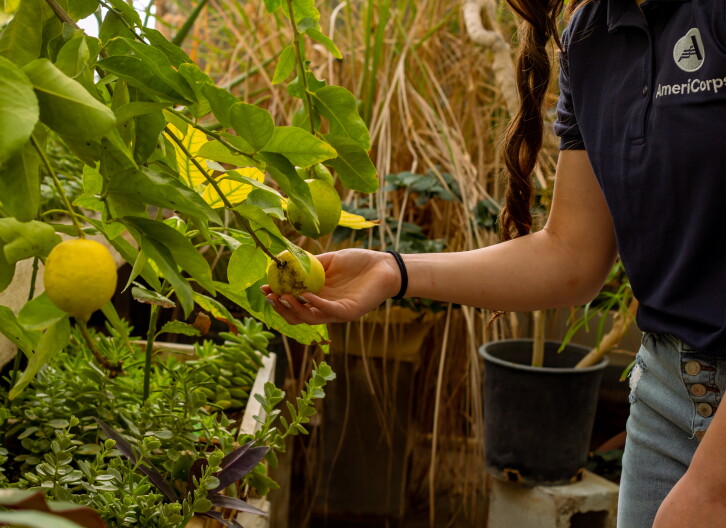
So far this year, on ISU's 9/11 Day of Service, AmeriCorps program volunteers have already built bunk beds for those in need and given out hygiene kits for folks experiencing homelessness and isolation kits for seniors, and they’ve just gotten started in their mission to fight poverty, food insecurity, isolation and help communities with disaster preparedness.
Program assistant Olivia McCandless and project coordinator Kayla Fielder joined Idaho Matters to tell us more.
How Idaho's new director of Health and Welfare plans to make change
Jul 16, 2024
Show notesAlex Adams and Idaho Governor Brad Little after Little signed the “Promoting Families and Protecting Children Act,” on June 7, 2024.(Idaho Governor's Office)
After past struggles with Idaho lawmakers over federal funding and the department pulling out of the Boise Pride Parade two years ago, Health and Welfare has weathered some controversy. So how will he work to heal relationships in the Idaho legislature and in the community?
Director Adams joined Idaho Matters for a full hour to talk about his new role at Health and Welfare.
Boise Rescue Mission weighs in on recent U.S. Supreme Court homelessness ruling
Jul 15, 2024
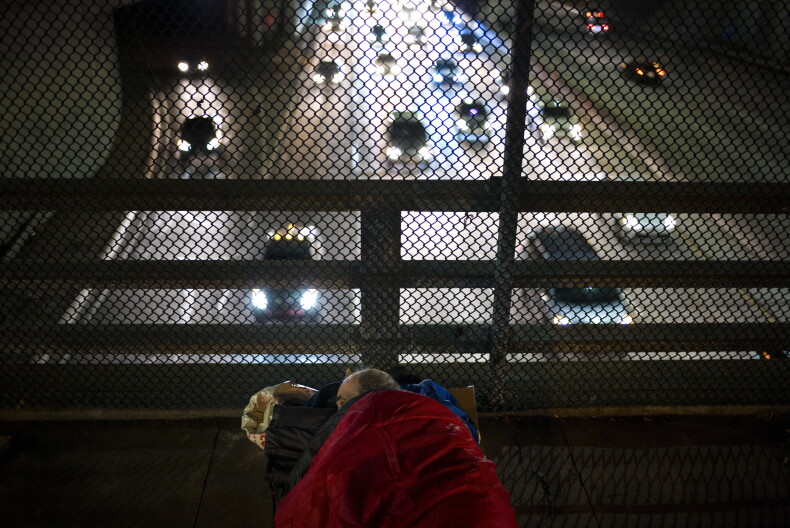
Show notesFILE - In the Sept. 21, 2017, file photo, tucked in a sleeping bag, Danny, a 60-year-old homeless man who only gave his first name, lies on an overpass above the 101 Freeway, one of the nation's busiest freeways, in Los Angeles. A federal appellate court says cities can't prosecute people for sleeping on the streets if they have nowhere else to go. In a ruling handed down Tuesday, Sept. 4, 2018, the 9th U.S. Circuit Court of Appeals sided with six homeless Boise, Idaho residents who sued the city in 2009 alleging that a local ordinance that bans sleeping on the streets amounted to cruel and unusual punishment. The ruling could impact several other cities across the western U.S. (AP Photo/Jae C. Hong, File)(Jae C. Hong / AP)
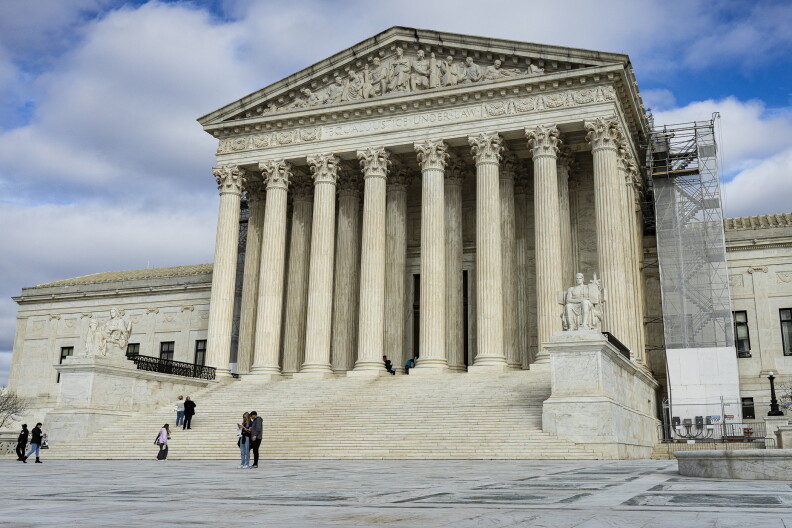
Last week, we told you it’s legal again to give someone a ticket for sleeping or camping on public property. This comes after the U.S. Supreme Court ruled on the Grants Pass vs. Johnson case.
The city of Oregon wanted to fine people sleeping in public parks and possibly put them in jail if they refused to comply, and the court said that was not "cruel and unusual" punishment.
This case has its roots in Boise, and Mayor Lauren McLean came out against the Supreme Court’s ruling, saying criminalizing homelessness won’t solve the problem.
Addressing Alzheimer's in Idaho
Jul 15, 2024
Show notes(Thanasis Zovoilis / Getty Images)
Here in Idaho, there are nearly 30,000 people living with Alzheimer's, a disease that many are calling a public health crisis.
And as that number continues to grow, experts are working to raise awareness. Which is why the Alzheimer's Foundation of America will be hosting an educational conference this week, providing important resources and tools for those most impacted.
Chris Schneider Director of Media Relations with the Alzheimer's Foundation of America, and Judy Taylor, with Idaho's Commission of Aging and the Chair of the Idaho Board of Nursing, join Idaho Matters to talk more.
Snake River Stampede returns to Nampa
Jul 15, 2024
Show notes(Snake River Stampede )
This weeklong event brings thousands of cowboys and spectators to Nampa for everything from bull riding to barrel racing to mutton busting!
The stampede is a big money-maker for Canyon County and a tradition for families that spans generations. Clint Child, the president of the Snake River Stampede, joined Idaho Matters to talk more.
Idaho athlete aims to compete in 2024 Paralympics
Jul 15, 2024
Show notes(<a href="https://www.flickr.com/photos/43201156@N06/">cdn.slacker</a> / Flickr)
Boise native Annie Carey could be heading to the Paralympics in Paris this August.
She currently holds the long jump world record in her classification as well as the U.S. record in the 200 meters, and last year she competed in the Parapan American Games, bringing home bronze medals in the 100 meter, 200 meter and long jump.
And later this week, she'll head to Florida to compete in the Paralympics track and field, with the goal of heading to Paris for the Paralympics. Annie joined Idaho Matters to talk more about her journey.
Idaho Matters Reporter Roundtable: July 12, 2024
Jul 12, 2024
Show notes(Murphy Woodhouse / Mountain West News Bureau )
The Open Primary Initiative is headed to the ballot, there's a petition from the Attorney General's office to hear the Hecox v. Little case, Boise Mayor Lauren McLean has voiced her support for President Biden and we a look at firework laws.
It’s Friday, which means it's time for our Reporter Roundtable when Idaho Matters gets you up to date on all the news that made headlines this past week.
New collaboration shows way to get help with ‘insatiable’ prescribed fire need
Jul 12, 2024
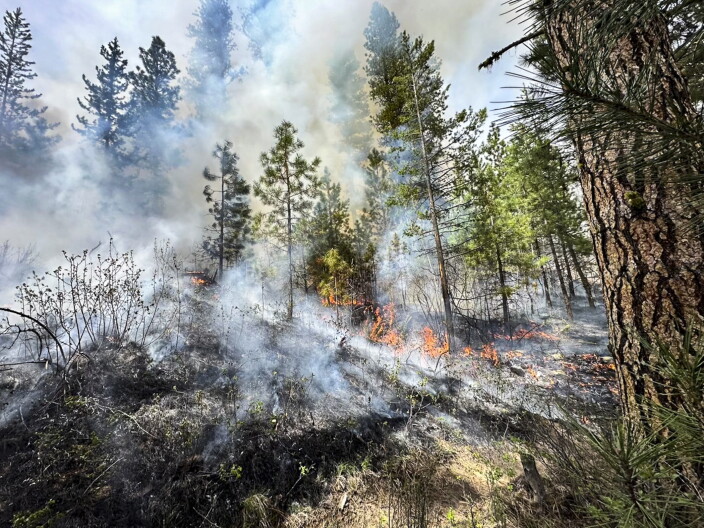
Show notes A low-intensity burn on the recent Crawford prescribed fire near Cascade, Idaho(Steve Vigil / The Nature Conservancy )
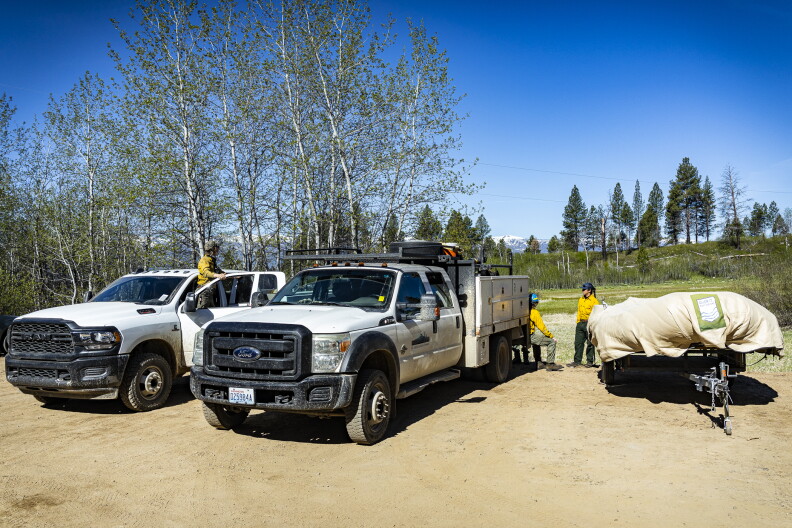
On a Thursday morning in May, Forest Service staff and crew leaders gathered in the Cascade Ranger District Office for a briefing. They were putting a plan together for the nearby, nearly 100-acre Crawford burn on the Boise National Forest.
Matt Haupt, the district’s senior fuels technician, read out the weather: sunny, 70-75, relative humidity in the upper 20s to lower 30s, low winds.
“Today is looking fairly good, a little hotter and drier,” he summarized.
The burning has already taken place earlier in the week, and this day’s work would be mostly mopping up and checking lines. After crew members got their marching orders in the parking lot below, they headed east toward the burn. I jumped in with Haupt, who’s overseeing it.
“The last time it was burned was the spring of 2018,” he said, driving to the project site. “It's mostly ponderosa pine, which typically needs five- to 15-year fire intervals.”
Many ecosystems and species — like the ponderosa pine — are dependent on regular fire. Prescribed fire can bring a number of ecological benefits, as well as significantly reduce the risk of catastrophic wildfire.
Haupt is with the Forest Service, but that day everyone else was working for The Nature Conservancy — or TNC — an environmental nonprofit.
A Nature Conservancy fire crew gets ready to head out to check the Crawford prescribed fire's lines.(Murphy Woodhouse / Boise State Public Radio )
“The Forest Service still has their overhead structure,” he explained. “The supervision still needs to be there, but it's a lot of the manpower could be taken care of with TNC coming in.”
Federal agencies have committed to dramatically accelerating the pace of prescribed fire. In its 2022 Wildfire Crisis Strategy document, the Forest Service set a goal of treating 50 million additional acres of federal, state, tribal and private land. But last year, a major federal wildfire commission said that the current federal fire workforce — some 19,000 strong — is “not sufficient for the scale of wildfire risk reduction, response, and post-fire recovery work required now, let alone into the future.”
“Federal investment is urgently needed to create new and expanded workforce capacity that is focused on, and tailored to, mitigation, planning, and post-fire response and recovery for communities and landscapes,” the commission’s report read. Efforts to build that workforce, it recommended, should include the public, private and non-governmental sectors.
‘Insatiable need’
Jeremy Bailey, TNC’s North America prescribed fire training director, said forests and grasslands’ need for fire is insatiable.
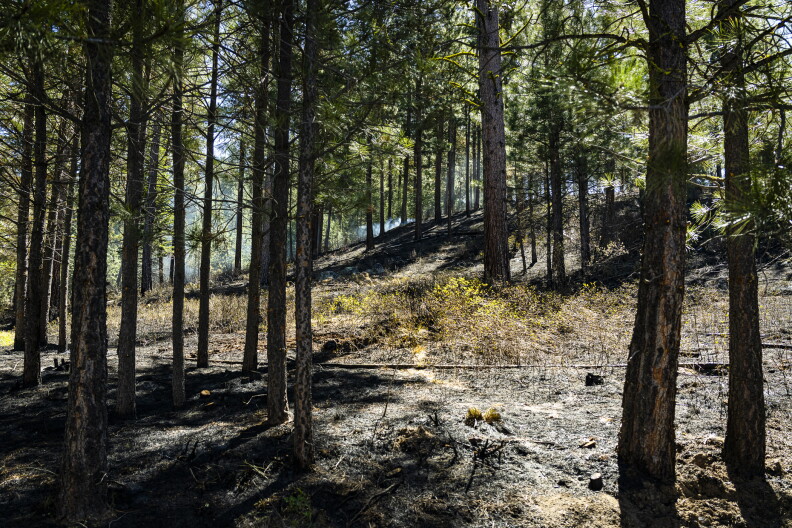
A day after burning operations on this section of the Crawford prescribed fire, the ground is a clean black, and some smoke is visible from the line. (Murphy Woodhouse / Boise State Public Radio )
“And so is the need for a workforce that can do that work,” he said. “Back of the envelope, I estimate we need 10,000 employees nationwide.”
Last year, his organization received $45 million over five years from the Forest Service — money he said came out of the 2022 Inflation Reduction Act. They hired some 50 people on top of existing fire staff, and they have 20 to 30 folks out on Forest Service priority projects — like the Crawford burn — on any given day. His TNC colleague Matt Ward said workforce constraints are probably “biggest issue that is complicating everybody's ability to do more projects.”
“We’re adding needed capacity,” Ward said.
‘Instantaneous effect’
In a video shared by TNC crew boss Steve Vigil, you can see a snaking line of short flame burning steadily through pine needle duff earlier in the week, the sort of low-intensity fire that prescribed burns often try to create. When I visited, some smoking stumps were still visible from the fireline, but it was mostly clean, blackened forest floor.
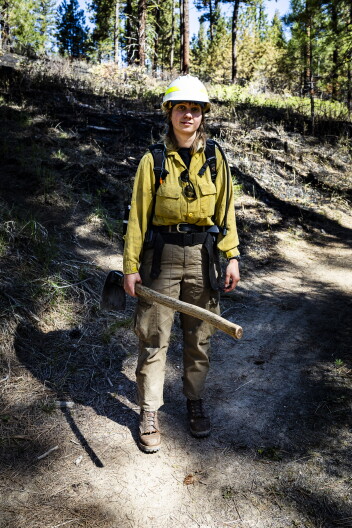
“So we are looking at a post-burn landscape,” said TNC crewmember Slug Kaltenbach, my guide on the burn. “This was actually burned yesterday, if you can believe it.”
Kaltenbach, who uses they/them pronouns, is from Eugene, Oregon and is in their fifth year of fire, much of which has been suppression work. But for Kaltenbach, prescribed fire hits different.
“I think that prescription fire is one of the best feelings in the world to have as a job,” they said. “In one day of burning … you're going to have a larger effect than maybe like two weeks of work doing other kinds of initiatives, like thinning or piling. Fire is such an instantaneous effect on the ecosystem.”
TNC crewmember Slug Kaltenbach(Murphy Woodhouse / Boise State Public Radio )
They’re also drawn to the way TNC operates. Wildland fire has a reputation for brutal work schedules and long, unpredictable stretches away from friends and family. Poor work-life balance was one of the barriers to recruitment and retention in the federal fire workforce identified by the Government Accountability Office in 2022. TNC gives its workers fixed schedules, meaning they know exactly when they’ll be home.
That’s allowed Kaltenbach to be an active part of the Moon Mountain String Band back in Eugene, hard to imagine in other corners of fire.
Kaltenbach identifies as non-binary, and said they appreciate the near gender parity and diversity they see in their TNC colleagues, which contrasts sharply with federal counterparts. In fiscal year 2021, 84% of federal firefighters identified as men, and 72% identified as white. Limited workforce diversity was another challenge faced by federal fire agencies cited in the GAO report.
“We're super excited to have 50% of our workforce represented by women because that is not that is not the norm in the wildfire workforce,” TNC’s Bailey said.
Slug and their colleagues are also able to complete trainings and get professional qualifications on burns. All of these things together, they said, point toward a more sustainable, attractive way to do fire. And there’s always the most basic draw.
“Playing with fire is fun,” Kaltenbach said. “In a controlled way, of course.”
‘We need help’
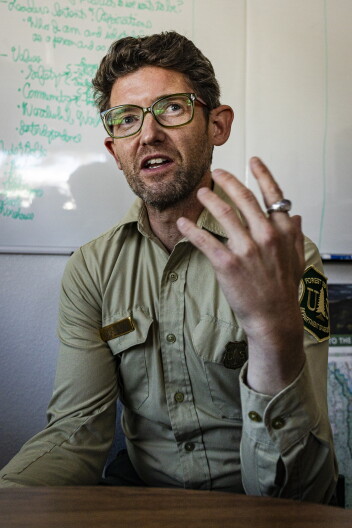
Back at the district headquarters, Ranger Chris Bentley said that the TNC partnership is “exactly the direction we need to go.”
Chris Bentley, ranger on the Boise National Forest's Cascade District, explains how TNC crews fit into his agency's goals for prescribed fire. "It's just absolutely vital that we bring in these types of agreements and these types of partnerships. We can't do it on our own. We wouldn't want to even if we could."(Murphy Woodhouse / Boise State Public Radio )
“We're still going to try to attract the traditional firefighter workforce for ourselves, for the Forest Service,” he added. “But we need help. We're not going to be able to do the work on our own. We're just not. There's too much work to be done, it’s too important that we succeed.”
He readily acknowledged that the TNC crews are a drop in the bucket compared to the needed workforce.
“But, you know, every drop counts,” he said.
This story was produced by the Mountain West News Bureau, a collaboration between Wyoming Public Media, Nevada Public Radio, Boise State Public Radio in Idaho, KUNR in Nevada, KUNC in Colorado and KANW in New Mexico, with support from affiliate stations across the region. Funding for the Mountain West News Bureau is provided in part by the Corporation for Public Broadcasting.
Could making schools phone-free improve our kids mental health?
Jul 11, 2024
Show notes(Canva )
Across the country, many parents and educators are struggling with the same question: "Should cell phones be kept out of school?"
Well, for more than 200 families in the Boise School District, the answer may be yes.
As more research emerges linking technology and social media to poor mental health, parents are in search of solutions, looking for ways to help their kids. Which is why one local group is working to make changes with a new set of initiatives.
Local parents Kim Washington, Tara Coffland and Nicola Blair joined Idaho Matters to talk more about this effort.
What to Watch: Movie recommendations that will help you cool down
Jul 11, 2024
Show notes(Louis A Habash<br/> / Flickr)
If you're hoping to stay out of the heat, a good movie or series may be the answer! Our resident movie critic, George Prentice, joined Idaho Matters to help us figure out What to Watch.

 Our TOPPODCAST Picks
  Stay Connected