Idaho Matters is a wonderful way to stay up to date, meet people and understand there’s much more to this great state. Hosted by Gemma Gaudette on Boise State Public Radio News, it features arts and politics, growth and education, and the interesting stories that make Idaho unique. Send us your questions, comments or story ideas by emailing idahomatters@boisestate.edu or sending us a voicemail using the “Talk To Us” feature on the free Boise State Public Radio app.
How studying Grouse DNA, and a kinder approach to research, may help declining birds survive
Nov 19, 2024
Show notesA Columbian Sharp-Tailed Grouse displaying its feathers and performing a rhythmic mating ritual. (Stephanie Galla / Boise State )
Many bird species around the world are struggling, trying to adapt to a world that’s changing around them, as humans encroach on their homes. The West is seeing this happen with the Columbian Sharp-Tailed Grouse, where birds can only be found on 5% of the habitat where they once roamed.
Meanwhile in the Arctic, Gyrfalcons are getting more bird flu, as warmer weather brings more insects and disease in Alaska and Greenland. Are birds like these able to adapt to change? How can we predict if they’ll be resilient enough to survive?
Conservation Genetics Lab at Boise State University is made up of researchers who are using DNA to map the story of bird decline.
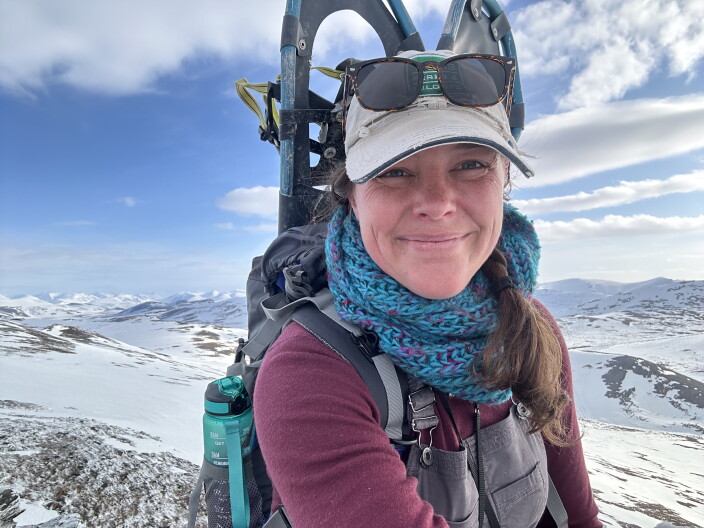
“Our lab group uses many different genetic and genomic tools to better understand the story of the diversity of birds and how they may be adapting to a changing world,” said Galla.
She’s been studying Columbian Sharp-Tailed Grouse and says they are a very colorful and rhythmic species.
Grouse leave footprints in the snow after their mating dance.(Stephanie Galla / Boise State )
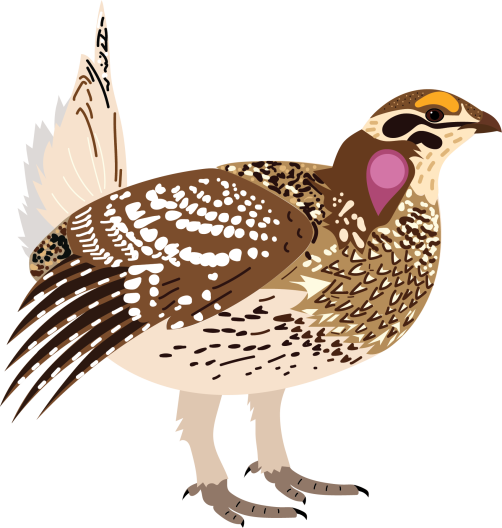
“The male grouse will stomp their feet on the ground, put their wings out wide, rattle their tail, and inflate air sacs on the sides of their necks that are bright purple,” said Galla. “They also have eye combs, sort of like eyebrows, that are bright yellow. So these are incredibly charismatic birds that are found here in Idaho and one of the best dancers that you'll see.”
Galla said that the grouse has seen significant decline in Idaho and Washington and it’s important to study them now.
“We have a really precious resource here that we can manage, and we can make sure that they stick around for as long as they can.”
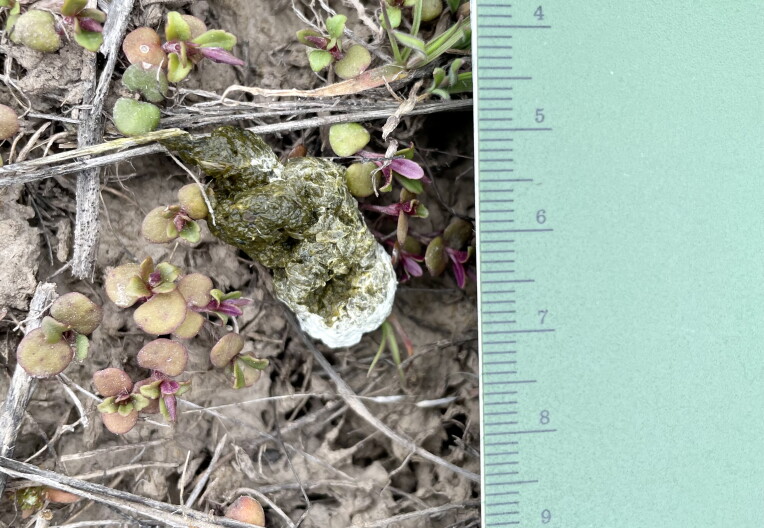
Stephanie Galla uses Grouse poop to identify DNA for her research.(Stephanie Galla / Boise State)
Avian researchers are utilizing DNA to identify diversity in different grouse populations.
"We often use DNA to understand what diversity looks like to identify populations that have lower diversity and may be less resilient and in need of conservation prioritization in a changing world,” Galla explained.
She said grouse DNA can be painlessly sampled through their poop.
“Within a single fecal pellet, we can understand the diversity of what birds are eating and how they're responding to changing habitats over time. We can also get a good idea of their gut microbiome, or all of the diversity of microbes that live in their gut.”
Galla calls it a noninvasive approach to research.
“You don't need to catch a bird to find their poop. You can find it by looking at the areas where they congregate or the areas where they sleep at night, their roosting spots.”
Stephanie Galla also creates illustrations many of the birds she studies.(Stephanie Galla / Boise State )
Galla built a diet database of what the birds eat in Idaho and Washington.
“We're really interested in seeing what the diet looks like across space and time,” she said. “We've discovered roughly 120 different plant species across their range so far.”
That’s important because “if we know what populations are doing well and what they're eating and how that might compare to populations that aren't doing well. We can figure out whether or not food might be a contributor to population success, or population decline, or fitness of birds over time.”
Gyrfalcon chicks in Iceland.(Stephanie Galla / Boise State)
Stephanie Galla and her Conservation Genetics Lab at Boise State are also studying Gyrfalcons in the Arctic and how they’re adapting to a warming climate. And she’s a co-founder of the Kindness in Science project, a project that started when she was in Aotearoa, New Zealand as a PhD student.
“We started this initiative to define a culture where we are prioritizing diversity and maintaining diversity of people and science over space and time. Where maybe we have single individuals that are prioritized more than a group,” Galla explained.
Although Columbian Sharp-Tailed Grouse are not federally threatened or endangered yet, they are currently experiencing a steep decline.
“We have an opportunity here to step in and actually make a difference, make a difference so that we don't end up with just a few hundred left. If there are tens of thousands of them here in Idaho, we have an opportunity to characterize their diversity, understand it better, and work with conservation practitioners,” Galla said.
Galla says studying birds in three different parts of the world can bring not only conservation efforts together, but people as well.
“They give us a really great sense of wonder and connection and home,” she said. “The great part about studying DNA is that every bird has it, no matter where in the world you are, so we can take lessons learned from other countries, from other systems.”
She said researchers and resource managers can apply those lessons locally in Idaho.
“The more we come together as a global community with these different approaches, the better we can be equipped to address these big challenges and biodiversity loss that we're seeing around the world.”
Illustration by Stephanie Galla(Stephanie Galla / Boise State )
Thousands turn out for Boise’s first Open Streets event, highlighting the appeal of a global car-free movement
Nov 19, 2024
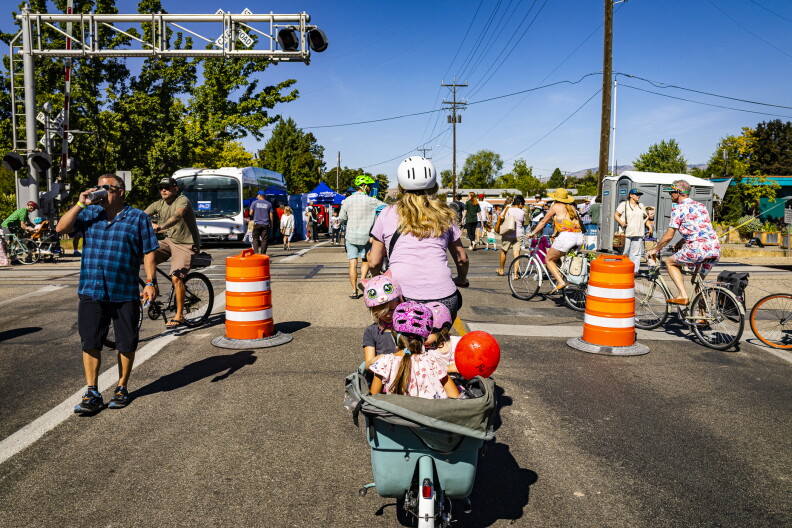
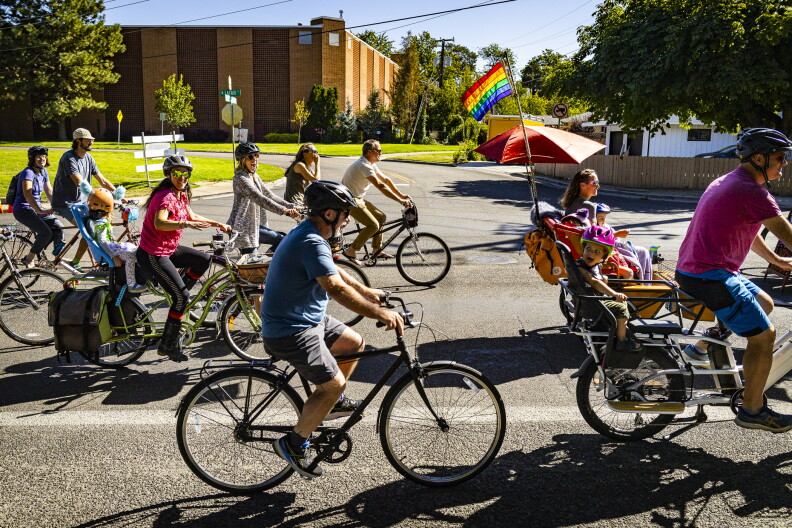
Show notesCyclists and pedestrians take over Latah near the railroad crossing. (Murphy Woodhouse / Boise State Public Radio )
Right around noon on a bluebird September Sunday in Boise, a pack of cyclists dozens strong turned south onto Latah Street, a chorus of bike bells sounding.
A large group of cyclists cruises south on Latah around noon on Sunday, Sept 22, when Boise held its first Open Streets event.(Murphy Woodhouse / Boise State Public Radio )
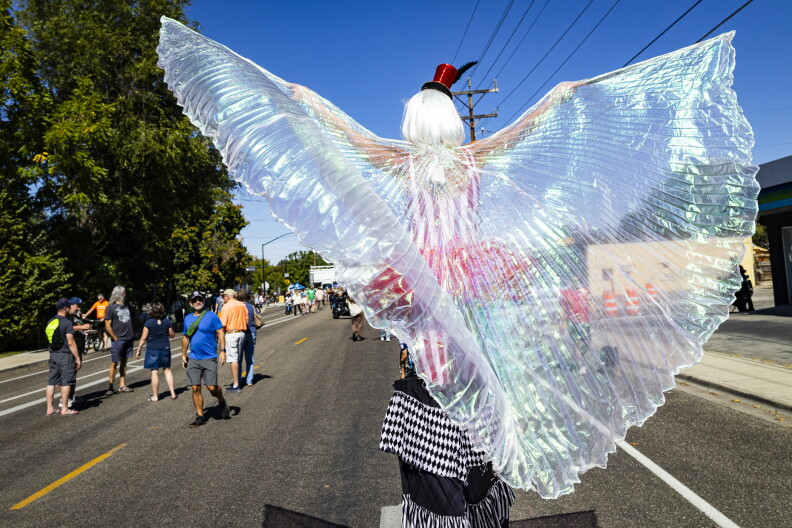
They cruised past a barricade, where police and volunteers were turning motorists away. Several hundred yards in, the Boise Good Times Street Band welcomed riders with a jaunty rendition of Give My Regards to Broadway. Wide, business-lined Latah is soon packed with bikers, walkers, roller skaters and at least one person on stilts.
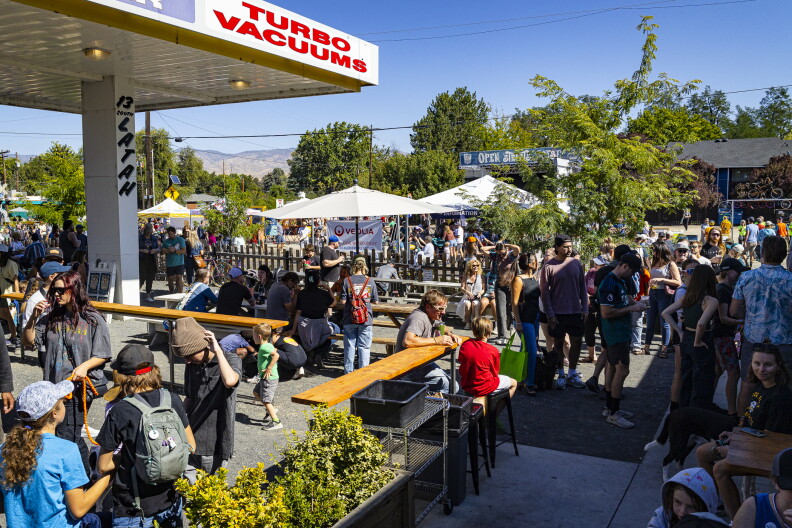
Food trucks and other stands line the one-mile segment of the street, and long lines stretch out of the cafes and restaurants on the route.
Long lines stretched out of the cafes and restaurants on Latah during the event.(Murphy Woodhouse)
Lindsey Lind and her family – husband Eric, their two young children, and two dogs – had walked from their nearby home. They’re standing in line for some birria tacos.
“It's kind of weird,” she said, standing in the middle of the road. “Like, I feel like I keep needing to move over to the side.”
Eric described Latah on a normal day.
“It's busy, and usually people aren't doing 30 miles an hour,” he said. “It's, you know, 35, 40.”
“Or more,” Lindsey interjected.
They loved the vibrant sense of community surrounding them, and the promotion of green alternatives to driving.
“I think it helps people slow down a little bit and see kind of what's out here as far as businesses and, you know, it kind of puts maybe some of these businesses on the map,” Eric said.
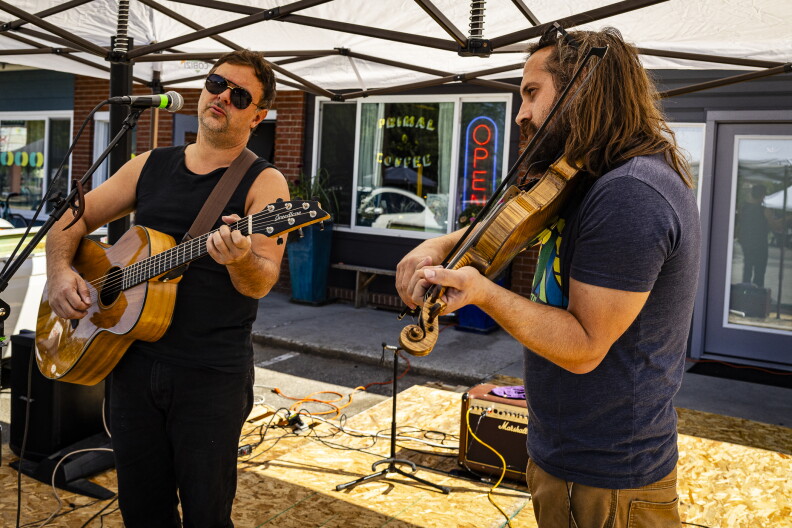
Austin Clark, owner of Primal Coffee on Latah, plays fiddle with his friend Matt Hopper's band The Roman Candles in front of his cafe during the Open Streets event. "I think I knew it would be a good coordinated event, so I was happy to be a part of it and see where it goes," he said.(Murphy Woodhouse / Boise State Public Radio )
“I think it's really awesome for Latah’s business, this kind of exposure,” said Austin Clark, owner of Primal Coffee, located on the street. “Maybe a lot of people don't come up onto Latah ever, you know, because there's no reason to. But now they've got a reason to come.”
Sending a message
These are exactly the sorts of sentiments organizers of Boise’s first Open Streets event were hoping to inspire.
“All the chips fell into place. It worked out really well. And here we are today with close to, I would say like 3000 people,” said Nina Pienaar, advocacy director at the Boise Bicycle Project (BBP). Several days after the event, organizers later provided an updated figure of over 6,000.
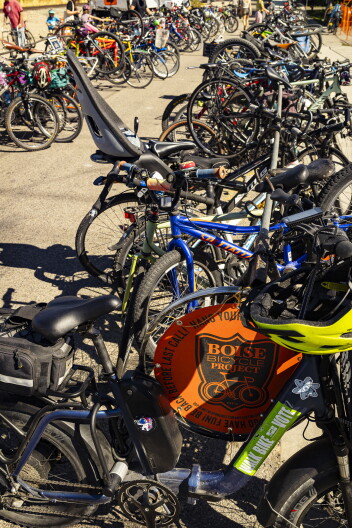
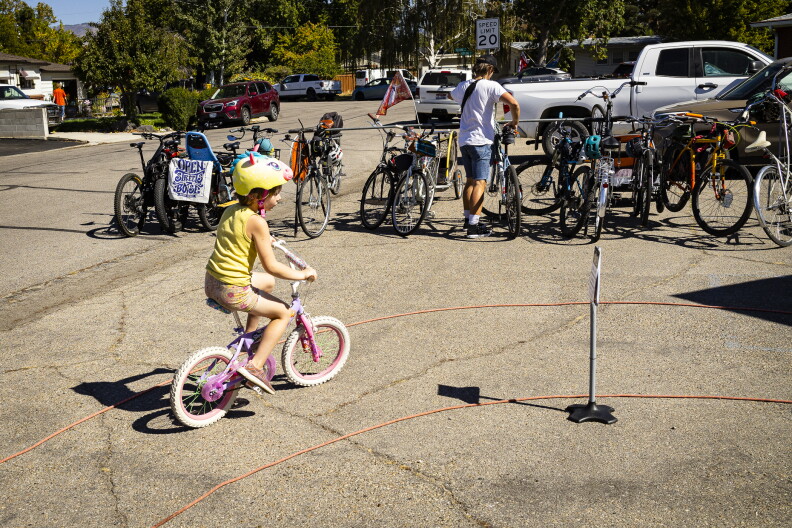
Bike racks were packed tight on Latah Street during the event.(Murphy Woodhouse / Boise State Public Radio )
BBP worked closely with Ada County, Boise, and other local officials to develop location criteria, then surveyed neighborhoods to find a spot with local buy-in. They ultimately landed on Latah.
Pienaar said the strong turnout “sends the message loud and clear that like, ‘Hey, the Boise community, we're out biking, we're out walking. We want to see more infrastructure. We want to be able to choose to bike and to walk rather than choosing to get into our vehicles.’”
The second Open Streets event is already planned for next year, according to an official with the City of Boise, which sponsored the event. But with thousands in the street for the first event, Pienaar said there’s huge potential for a more regular schedule, perhaps even biweekly during the summer, adding: “The more the better.”
Social animals
“The concept is really, really simple. You open streets to people and you close them to cars. And the magic happens,” said Gil Penalosa. “You get young and old and rich and poor and fat and skinny, and you get everybody.”
Penalosa is an urban planner who now lives in Toronto, where he was the runner-up in the 2022 mayoral election. But as an official in the Colombian capital of Bogotá in the late 1990s, he helped dramatically expand the city’s weekly ciclovía program, credited as the seed of the global Open Streets movement. Every Sunday some 1.5 million Bogotanos cruise around 80 miles of car-free roads.
“Why is it spreading?” he asked. “I think because humans are social animals, and we want to be with other people.”
A winged stilt walker makes their way down Latah. (Murphy Woodhouse / Boise State Public Radio )
The many benefits of Open Streets are best achieved with frequent repetition, especially the health benefits, Penalosa argued. But in a time of often ugly divisiveness, he said anything that brings a diverse swath of a community together is good.
“The possibility of people meeting as equals is really, really, really important,” he said.
He acknowledges that some officials and businesses can blanch at shutting down significant stretches of roadways to cars, but encourages cities that haven’t tried it to be gutsy.
“I've seen it [be] successful … in cities of 50,000 people or 500,000 or 5 million, 20 million. It works everywhere,” Penalosa said. “I've seen it in poor cities, in wealthy cities, and it makes everybody happier and healthier. And also to keep in mind that this is low-risk, this is low-cost and has very high benefits.”
Terra Reed, an organizer of the Albuquerque Open Streets event Ciclovía – now in its 10th year – similarly encouraged other cities to give it a go, saying that it doesn’t have to be huge to be a success. From their experience, she said “having strong ties” with local governments is especially important to start and maintain such efforts.
“Try to build those relationships early,” she advised.
Just keep pedaling
In a parking lot off Latah, young kids are buzzing around a bicycle skills course.
6-and-a-half-year-old Margot Mace makes her way around a bicycle skills course.(Murphy Woodhouse / Boise State Public Radio )
Margot Mace, who’s 6-and-a-half years old, is getting frustrated trying to ride her bike over a teeter-totter obstacle.
“You can do it, keep pedaling,” her mom, Beth Edwards, encouraged.
“It doesn't let me do it,” Margot shouted in frustration after another failed attempt.
Beth said they had ridden to Latah with dozens of others – and got a taste of the danger cyclists face in the city.
“We were trying to get across Orchard (Street) and a car almost ran us down,” she recounted. “We were a big group of bikers, so we weren't just one cycling family or one person. There was 40 of us and a car still almost ran us down.”
Edwards had heard of Open Streets, but didn’t really know much about the idea until that Sunday. She loved its emphasis on safety for all road users.
“We are just kinda constantly living with that ‘Llook out! Look out!’” she said. “Coming here and being free and seeing her just riding safely and freely is a pretty awesome feeling.”
After three failed attempts, Margot backed up to give it one more go. She rolled up and over to the applause of spectators.
“I just love how she never gives up,” Beth said. “That's all it takes.”
This story was produced by the Mountain West News Bureau, a collaboration between Wyoming Public Media, Nevada Public Radio, Boise State Public Radio in Idaho, KUNR in Nevada, KUNC in Colorado and KANW in New Mexico, with support from affiliate stations across the region. Funding for the Mountain West News Bureau is provided in part by the Corporation for Public Broadcasting.
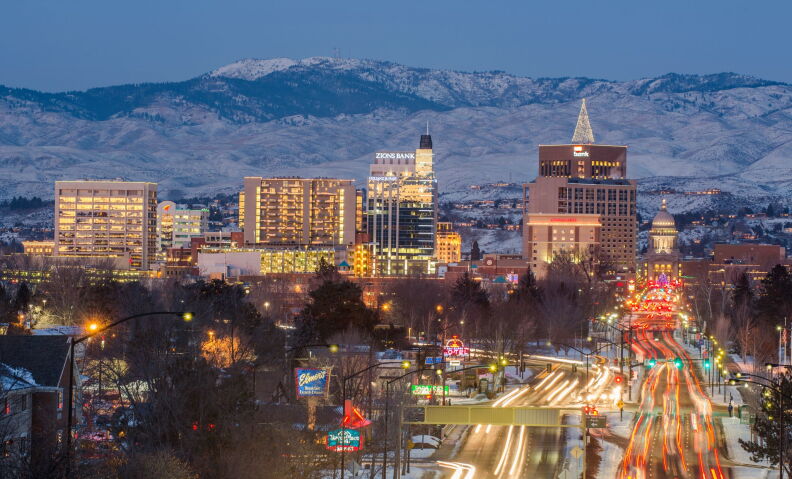
Best Places to Retire: Boise climbs the list
Nov 18, 2024
Show notes(Downtown Boise / Facebook)
Last year, Boise was number 80 on the list of 150 cities. The new numbers have just come out, and Boise has jumped to number five!
Dawn Bradbury, Senior Real Estate Editor with U.S. News, joined Idaho Matters to talk more about this year's list.
How U of I students are helping farmers in Bolivia
Nov 18, 2024
Show notes U of I students gather data on water flowing through a spring in Bolivia.(University of Idaho)
Thousands of miles from Idaho, in a small, rural community in Bolivia, people struggle to get irrigation water to their crops during a very long dry season.
Because it often doesn’t rain for six months of the year farmers rely on dams and pipes to move water around, pipes that often clog up, putting crops and even drinking water in jeopardy.
The University of Idaho’s College of Engineering’s Humanitarian Engineering Corps traveled to Potreros to help farmers find ways to get the water where they need it.
The Corps is run by students whose goal is to make real, lasting change in the communities it partners with.
U of I students arrive in La Paz Bolivia before heading to the rural community of Potreros.( University of Idaho)
“It's to help those in need and use our skill set as engineering students to to bring that service to them,” said Dr. Michael Lowry, a professor of civil engineering at U of I.
Angelica Vazquez Martinez is a Civil Engineering senior who went to Potreros.
“It's an arid region, very mountainous, very rural, and we worked with about 200 people, maybe 100 families, to get clean water yearlong to them.”
The area around Potreros.( University of Idaho)
The community only gets about three months of rain, which it has to survive on for the rest of the year.
“It's really unfortunate and very different than we have here,” said Korvin Jones, another Civil Engineering senior who is part of the project.
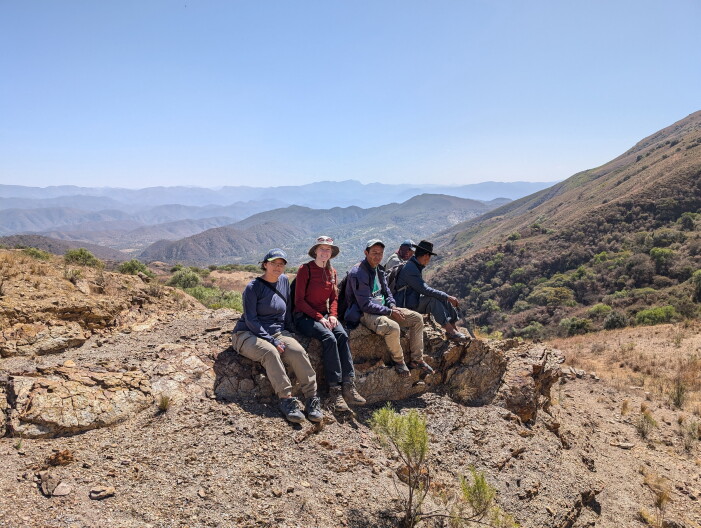
The U of I team hiked to four different streams to take measurements, including a three-mile hike to find the first water source.
“They did measurements and calculations. They did water quality tests and gathered information about potential at each of the springs,” said Lowry.
Getting to mountain springs required a lot of hiking in the rugged landscape.( University of Idaho)
Working with the people who live in Potreros is key to finding solutions that will work for them.
“If we don't have a very clear understanding of what the community needs, we may not be helping them at all,” said Martinez.
U of I students sit down for lunch with residents of Potreros.( University of Idaho)
Jones said the community welcomed the students with open arms and lots of food.
“It felt like we were helping the community out and we were learning from them while doing it. It was a fantastic experience,” said Jones.
One of the valve boxes that the farmers of Potreros, Bolivia use to get water from mountain streams to their homes and crops.( University of Idaho)
“They all seemed very excited to have us there and collaborate with us on this project. That could be life changing to them,” said Martinez.
Jones said it was his first trip abroad.
“I really enjoyed being able to immerse myself in this culture that was unlike anything I've ever been in before,” said Jones.
Martinez says she’s always been passionate about working abroad and it was a great way to get hands-on experience.
“I think it not only reinforced my engineering skills, but also reinforced the vision for my future.”
Jones also said it was a good way to hone his engineering skills.
“So beyond just helping others, it was helping myself grow as an engineer,” Jones said.
Dr. Lowry says it’s a multi-year process. This was the first trip to Potreros to gather data and start finding ways to help. The Corps is working throughout the year with a group called Engineers in Action on the ground in Bolivia and plans to go back to Potreros in 2025.
60 years wild: celebrating the Wilderness Act
Nov 18, 2024
Show notes
This year marks the 60th anniversary of the Wilderness Act, the law that gives Congress the authority to establish wilderness areas. Some of the most beloved outdoor recreation spots in our region are wilderness areas. Decades later, land managers and advocates say it’s still a valuable tool to protect landscapes and hope to expand its legacy.
Aspen Public Radio’s Caroline Llanes, reporting for the Mountain West News Bureau, joined Idaho Matters to talk more about the Wilderness Act and what it means 60 years later.
'Pickleballers:' An author interview with Ilana Long
Nov 18, 2024
Show notes(Dennis Amith / Flickr)
Pickleball is our nation’s fastest-growing sport; in fact, pickleball courts seem to be popping up everywhere. Even major pro athletes, like Lebron James and Tom Brady, have invested in the growth of major league pickleball.
Author Ilana Long has taken on this latest craze and made it a main character in her debut novel, “Pickleballers.” She joined Idaho Matters to talk more about her book and the growing sport.
Idaho Matters Reporter Roundtable: November 15, 2024
Nov 15, 2024
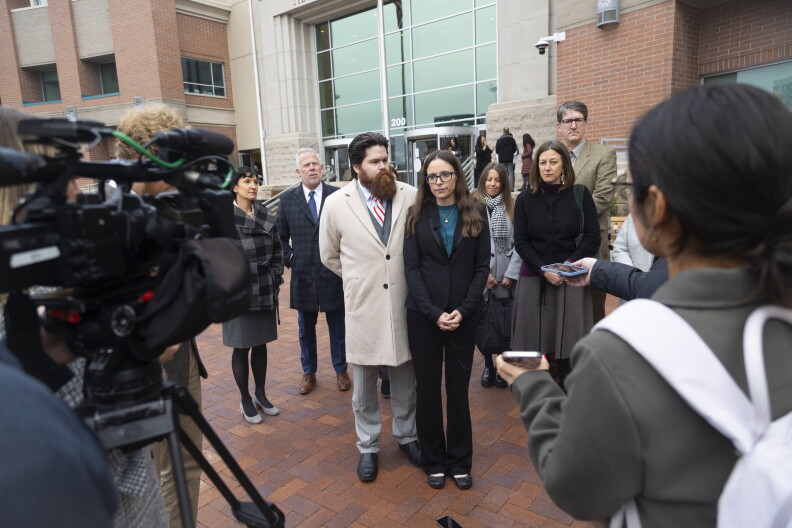
Show notesFILE - Jennifer Adkins and her husband, John, from Caldwell, Idaho talk to the media outside the Ada County Courthouse, Dec. 14, 2023, in Boise, Idaho. (AP Photo/Kyle Green, File)(Kyle Green/AP / FR171837 AP)
It’s Friday, which means it's time for our Reporter Roundtable when Idaho Matters gets you up to date on all the news that made headlines this past week.
Tragedy exposes flaws in Idaho's coroner system
Nov 14, 2024
Show notesTaylor’s office doubles as the county morgue. The property is flanked by rental houses. Next to the building is a trailer-sized garage where Taylor parks the Chevrolet Suburban that he and his employees use to transport bodies.(Natalie Behring / <a href="https://www.propublica.org/" target="_blank" link-data="{"cms.site.owner":{"_ref":"00000176-cd8c-dd4d-a7f6-fdbc82e80000","_type":"ae3387cc-b875-31b7-b82d-63fd8d758c20"},"cms.content.publishDate":1731608406439,"cms.content.publishUser":{"_ref":"00000192-d3d5-d08a-ad9a-f3f571c30000","_type":"6aa69ae1-35be-30dc-87e9-410da9e1cdcc"},"cms.content.updateDate":1731608406439,"cms.content.updateUser":{"_ref":"00000192-d3d5-d08a-ad9a-f3f571c30000","_type":"6aa69ae1-35be-30dc-87e9-410da9e1cdcc"},"cms.directory.paths":[],"anchorable.showAnchor":false,"link":{"attributes":[],"cms.directory.paths":[],"linkText":"ProPublica","target":"NEW","attachSourceUrl":false,"url":"https://www.propublica.org/","_id":"00000193-2be7-d5fd-a7fb-bbf753400000","_type":"ff658216-e70f-39d0-b660-bdfe57a5599a"},"_id":"00000193-2be7-d5fd-a7fb-bbf7533f0000","_type":"809caec9-30e2-3666-8b71-b32ddbffc288"}">ProPublica</a>)
It was a cold morning in February when mom Alexis Cooley woke up to find her newborn baby wasn’t breathing; he was pronounced dead a short while later at the Eastern Idaho Regional Medical Center.
His parents wanted to know why Onyxx, who seemed to be a healthy baby, had died suddenly in the night, yet the Bonneville County Coroner did not order an autopsy.
Audrey Dutton is the Idaho-based reporter for ProPublica in the Northwest. She did a deep dive into this case and into Idaho’s coroner system.
She found that Idaho coroners are elected to office, do not have to have any medical or legal background, and have very few rules they have to follow in Idaho when it comes to investigating deaths like this. She also found that coroners’ responses to cases vary widely from county to county in the Gem State.
Dutton joined Idaho Matters to talk more about this story.
Standard ITD road project turns into cultural discovery
Nov 14, 2024
Show notesMcArthur Lake Cultural Discovery project.( Idaho Transportation Department)
It was a standard road project in Northern Idaho. Take US Highway 95 near McArthur Lake and straighten out the curves to make it safer, and also add a small bridge so animals could travel under the roadway instead of over the busy highway.
But when crews began digging on the project, they ran into something unexpected, hundreds of cultural artifacts that may change our idea of how long people have lived in this area of Idaho.
The Idaho Transportation Department brought in a team of experts and partnered with the Kootenai Tribe of Idaho to gather and catalog the artifacts, which can now be studied.
Jyl Wheaton-Abraham, an archaeologist and member of the Kootenai Tribe of Idaho, and Carrie Ann Hewitt, project manager with Idaho Transportation Department joined Idaho Matters to talk about the discovery.
City of Boise calls on creative community for feedback in new survey
Nov 14, 2024
Show notes(<a href="https://www.flickr.com/photos/29853806@N08/">Talo Pinto</a> / Flickr)
Here in Boise there is no shortage of art—from traffic boxes to sculptures to murals, there is a splash of color on almost every corner of the community, and that’s not by mistake.
The Boise City Department of Arts & History has made it their mission to add value to our public spaces, and part of that includes planning for the future. Which is why they’re asking for your feedback in a new survey that will help to update the city's 2017 Cultural Master Plan.
Cultural planner Tilley Bubb, with the Boise City Department of Arts and History, joined Idaho Matters to talk more.

 Our TOPPODCAST Picks
  Stay Connected