Idaho Matters is a wonderful way to stay up to date, meet people and understand there’s much more to this great state. Hosted by Gemma Gaudette on Boise State Public Radio News, it features arts and politics, growth and education, and the interesting stories that make Idaho unique. Send us your questions, comments or story ideas by emailing idahomatters@boisestate.edu or sending us a voicemail using the “Talk To Us” feature on the free Boise State Public Radio app.
Lessons learned after two years of COVID-19 in Idaho
Mar 14, 2022
Show notesDr. David Peterman, CEO of Primary Health Medical Group(Primary Health Medical Group)
As the Chief Executive Officer of Primary Health Medical Group, Dr. David Peterman is on a mission to change the way we react to the next pandemic. He talks with Gemma Gaudette about his thoughts on what went wrong with the process.
A study of sagebrush in the Boise Foothills could help preserve the plant across the West
Mar 14, 2022
Show notesBoise State EPSCoR GEM3 project, Bittleston Lab group field work in Dry Creek collecting sagebrush, photo by Priscilla Grover(Priscilla Grover/Boise State University)
Sagebrush is on the decline in the west including Idaho, thanks in part to wildfires and loss of habitat.
Leonora Bittleston is an assistant professor in the department of biological sciences at Boise State University and she's studying the bacteria and other microscopic "bugs" that live on the leaves of the sagebrush plants in the Boise foothills. She's here to talk with Gemma about the study.
Idaho Matters Reporter Roundtable: March 11, 2022
Mar 11, 2022
Show notes(Idaho Republican Party / Facebook)
Idaho Matters Doctors Roundtable: March 9, 2022
Mar 09, 2022
Show notes(biologycorner / Flickr)
From long COVID to the BA.2 variant, there's a lot to talk about on Idaho Matters with our medical experts. We take a deep dive into the symptoms of long COVID and a new study that shows damage in brain scans of people who had a mild case of COVID-19.
Joining Idaho Matters today are:
Dr. David Pate, former CEO of St. Luke's Health System and a current member of the state's COVID-19 task force
Dr. Ryan Williams, the medical director for Direct Covid Care, a monoclonal antibody clinic in Boise. He’s also a hospitalist at Saint Alphonsus in Boise and manages several skilled nursing facilities throughout the Treasure Valley
Everything you didn’t know about Boise’s winged residents: Canada geese!
Mar 08, 2022
Show notes( Boise State Public Radio)
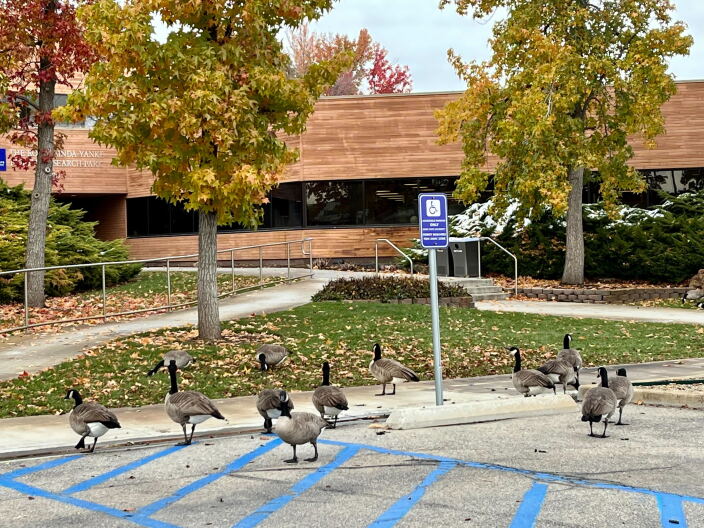
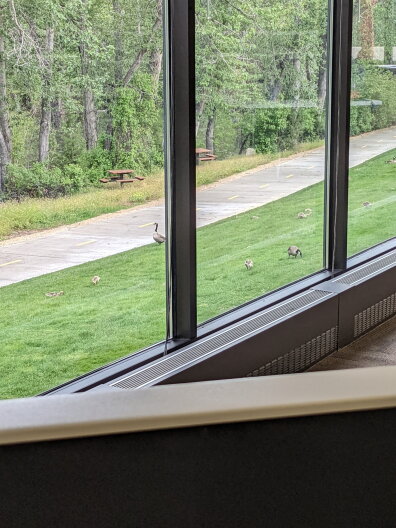
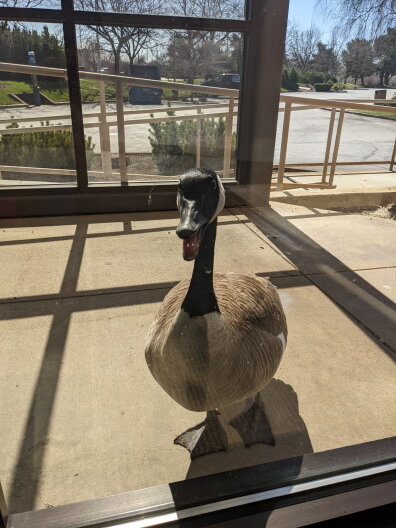
If you've gone by any park, golf course or pond in Boise you've seen them: Canada geese are everywhere. Honking, sometimes hissing, walking down the Greenbelt and yes .... pooping.
Idaho does see four different types of geese, most commonly the Canada goose, which is both a migratory and a resident species here in Boise. Canada Geese tend to migrate twice a year, in September or October to avoid the cold and back to the breeding sites in April, May or early June.
Snow geese also make their way through Boise on the migratory journey, either coming south or heading north. You can usually see them near the Snake River, according to Victoria Runnoe with Idaho Fish and Game and the MK Nature Center.
We also see greater white-fronted geese and Ross's geese.
Year-round geese in Boise
But back to Canada geese. Here in Boise, we have pretty much planted the welcome mat with all the grass in our area, as Canada geese are grazers.
"So your soccer fields, and our parks and backyards and green spaces are pretty much a buffet," said Runnoe. "And they allow these resident geese to just hang out. They've got the habitat, the food, water and shelter in a specie that they need to survive. And so why leave?"
(Boise State Public Radio )
While they do eat grass, Canada geese do not have teeth. All members of the waterfowl family have serrated edges on their bills, called lamellae. The lamellae helps geese to pluck the grass and other plants to pull them up.
How geese fly
When geese do fly, you notice that they fly in a V shape as an energy saving maneuver. Runnoe said Canada geese can migrate 1,500 miles in 24 hours, so the more energy they can save, the better. In the V formation, the goose in front has air spiraling off the wingtips, creating a tip vortex that makes a little bit of lift for the bird behind it.
"So each bird behind the leader of that flock benefits by the tip vortexes from the birds in front of it," said Runnoe. "They can save 20 to 30% of their energy by flying that way."
The geese do shift positions so everybody gets a turn being the leader. They also beat their wings exactly the same, allowing them to take advantage of that tip vortex.
Goose poop
Everybody and everything poops ... especially geese. If you've walked down the Boise River Greenbelt, you know this as fact.
Canada geese can produce about a pound of poop a day. Runnoe says this is because the grass passes through their system quite quickly.
( Boise State Public Radio)
With an increased number of resident geese and the added migratory population, this can lead to an increased amount of poop during certain times of the year.
Geese protections
The Canada goose is protected under the Migratory Bird Treaty Act of 1918. The act does allow for the legal harvest of geese, but it's hit or miss on if you will like the taste of goose or not.
You should also try and move away from geese, especially if you notice it is nesting or has babies nearby. They will hiss and sometimes chase you if you get too close, but it is a protective thing, said Runnoe.
And if you notice a goose is injured, Idaho Fish and Game recommends you call Animals in Distress, a local nonprofit that helps injured wildlife recover.
BSU scientists record the Hunga Tonga eruption in Stanley, Idaho!
Mar 08, 2022
Show notesWork in cryoscience requires accessing remote field sites in winter. Zach (middle) visits his instruments with skis.(Boise State University)
Earlier this year, Boise State PhD geophysics student Zach Keskinen was studying very low frequency sounds up at Banner Summit not far from Stanley. As part of his research…he buried special microphones in the snowpack to record the sounds of things like avalanches. It just so happens those mics also captured the sound made by an erupting underwater volcano in the island nation of Tonga. Zach joins Samatha Wright along with Volcanologist Dr. Jeffrey Johnson…who co-operates BSU’s infrasound lab…and spends his time studying volcanoes to talk about their experience.
Helping Treasure Valley families keep a roof over their heads
Mar 07, 2022
Show notes(Ashley Brown / Flickr)
Last year, the non-profit group Jesse Tree helped 668 families at risk of losing their homes and that's more than double the number they were able to help in 2020. They have a 95% success rate when it comes to keeping the folks they help in housing. Ali Rabe is here to talk more about the dramatic growth of the organization.
Idaho Matters Reporter Roundtable: March 4, 2022
Mar 04, 2022
Show notes(Kennedy Library/Flickr)
Why the Oscars are boring and red pandas: What to Watch on Idaho Matters
Mar 03, 2022
Show notesNo, not this red panda. We’re talking about Pixar’s new movie “Turning Red.”(Mathias Appel / flickr)
March is the month for the Oscars and this year's ceremony is set for Sunday, March 27. According to our resident movie expert & Morning Edition host George Prentice, this year's broadcast will be dramatically different.
Homelessness, Ukraine, compassion; Idaho faith leaders talk about matters of faith
Mar 03, 2022
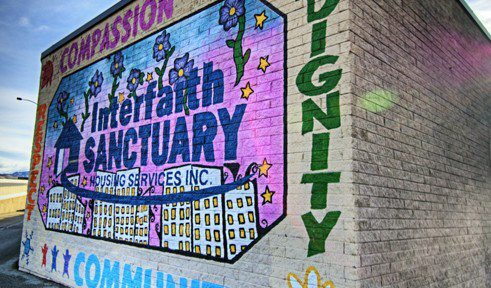
Show notes(Interfaith Sanctuary / Facebook)
Next month the Boise City Council will decide whether Interfaith Sanctuary can move from downtown Boise to a new building on State Street. A group of 39 clergy and lay leaders of faith from around the Treasure Valley have written a letter in support of Interfaith's move. Today we've invited three of those leaders to join us to talk about homelessness in the Treasure Valley along with the impact of COVID-19, the war in Ukraine and about matters of faith.

 Our TOPPODCAST Picks
  Stay Connected