Idaho Matters is a wonderful way to stay up to date, meet people and understand there’s much more to this great state. Hosted by Gemma Gaudette on Boise State Public Radio News, it features arts and politics, growth and education, and the interesting stories that make Idaho unique. Send us your questions, comments or story ideas by emailing idahomatters@boisestate.edu or sending us a voicemail using the “Talk To Us” feature on the free Boise State Public Radio app.
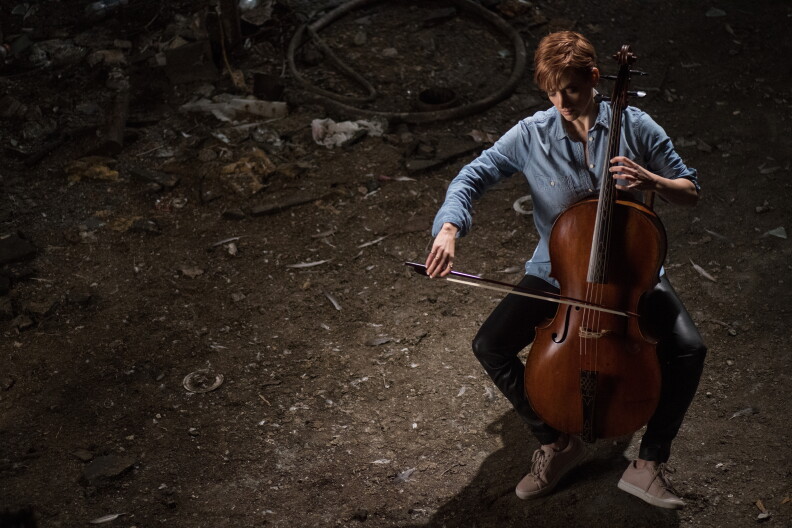
In her music she uses ‘Historical Ornamentation,’ improvising around classics written for the cello by composers like Johann Bach. She believes the notes that Bach wrote are not static instructions, but living works of art.
Juliana joins Idaho Matters to demonstrate exactly what this sounds like and talk about what inspired her to want to play.
Looking for movie and tv recs this weekend? George Prentice has you covered.
Apr 13, 2022
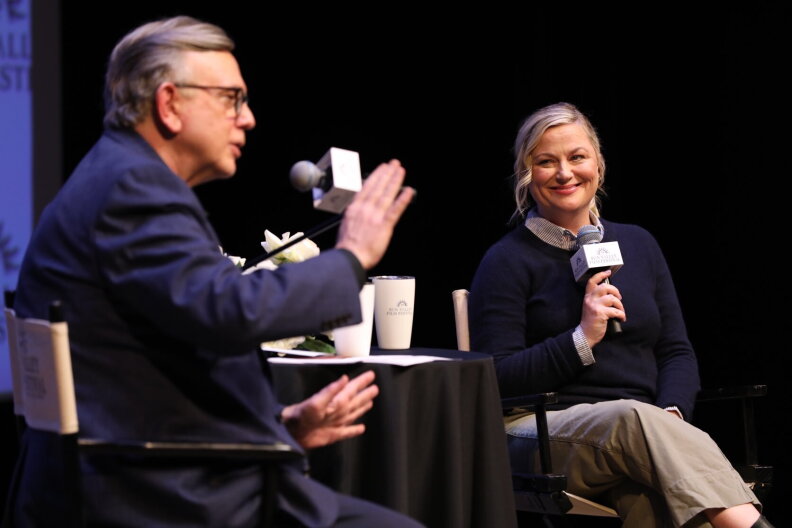
Show notes George Prentice and Amy Poehler talk on stage at the Coffee Talk event at the Sun Valley Film Festival.(Sun Valley Film Festival )
Even though it’s spring it still feels like winter outside, which means you might be looking for new films or tv shows to occupy your evenings. Well, look no further! Idaho Matters catches up with resident critic George Prentice on what to watch and his time at the Sun Valley film festival.
Idaho Matters Doctors Roundtable: April 13, 2022
Apr 13, 2022
Show notes The Lantana Flower can look like the COVID-19 virus at some stages of development.(Jim & Robin Kunze
/ Flickr)
The BA.2 variant of the omicron strain of the COVID-19 virus has become the dominant strain in more than 60 countries, including the U.S.
Dr. David Pate, former CEO of St Luke's Health System and a current member of the Idaho coronavirus task force, told KTVB-TV this week that BA.2 is the dominant strain on the west coast and in Canada, which is already seeing a surge in coronavirus patients.
More than 4,000 Idahoans have officially tested positive for omicron, including BA.2 and the variant is the dominant strain in Idaho.
Idaho kids face a mental health crisis made worse by the COVID-19 pandemic
Apr 06, 2022
Show notesStudents wear masks May 17 outside a school in the Israeli city of Modiin. Israeli students in all grades went back to school last month.(Xinhua News Agency/Getty Images)
According to the Associated Press, since the start of the COVID-19 pandemic, experts have been warning of a mental health crisis that will face American children.
That crisis is now playing out.
We are seeing increased depression, anxiety, panic attacks, eating disorders and even suicidal ideations. This is all according to teachers, administrators and education officials, as well as mental health experts.
Dr. David Peterman is CEO of Primary Health and also a practicing pediatrician. He joins Gemma Gaudette to talk more about this.
Idaho Matters Doctors Roundtable: April 6, 2022
Apr 06, 2022
Show notes(After Clinic Hours / Flickr)
From the BA.2 surge to kids and boosters there’s a lot to talk about on Idaho Matters with our medical expert.
Joining Idaho Matters today:
Dr. David Pate, former CEO of St. Luke's Health System and a current member of the state's COVID-19 task force
New Caldwell distribution site to help Canyon County food insecurity
Apr 05, 2022
Show notes(Samantha Wright / Boise State Public Radio)
The COVID-19 pandemic and rising inflation have put a strain on many households in the Treasure Valley. Many have found some relief in the form of food distributions put together by various groups.
One of those groups, WICAP, had been holding these free events in Caldwell until they lost their distribution site. After a short hiatus, they will be back in action soon.
Idaho Foodbank's director of programs and partnerships, Jamie Hansen, is here to talk more about the need in Caldwell and Canyon County.
Read the full transcript below:
Gemma Gaudette: The COVID-19 pandemic and rising inflation have put a strain on many households in the Treasure Valley. A lot of families have found some relief in the form of food distributions put together by various groups. Now one of those groups, WICAP, had been holding these free monthly events in Caldwell until they lost their distribution site. After a short hiatus, though, WICAP will be back in action with a food distribution one week from today at the Church of Jesus Christ of Latter-day Saints in Caldwell. So joining us today to talk about the need in Caldwell and in Canyon County as a whole is the Idaho Food Bank's director of programs and partnerships, Jamie Hansen. Jamie, nice to have you on the program.
Jamie Hansen: Thanks for having me, Gemma. I appreciate it.
Gaudette: So for folks who may not be familiar, can you just quickly explain what food insecurity is?
Hansen: Absolutely. And there's two definitions that we operate under. One is food insecurity and one is nutrition insecurity. So food insecurity is defined more as the lack of consistent access to enough food, and that's for every person in the household. Sometimes this is a temporary situation. Maybe they had medical bills that month or a one time expense, or it could be a longer lasting period of time in their life. Nutrition insecurity is is kind of where we're heading as a nation to describe access and timeline, just like food insecurity, but also to concentrate on the overall health and well-being of individuals, to live an active, healthy lifestyle. So roughly last year in the £30 million that we distributed, 87% was considered nutritious. We're really working towards that nutrition security goal.
Gaudette: So I know before the pandemic, progress was really being made in reducing food insecurity here in our state. However, can you talk about how COVID-19 impacted that progress?
Hansen: Oh, my goodness. Just like everything else, right? So we saw a dramatic increase in costs. Transportation and food costs went up significantly. Right now, transportation costs are holding steady about 35% higher than they were before the pandemic. So this extends to Idaho families as well, as you know. So we're super grateful for our agriculture and manufacturing food donors and everyone else that has contributed to the food bank. All of that food goes to our 466 partners across the state, including the wonderful WICAP in Caldwell, who offers their monthly distribution to the community. But we're starting to see the numbers change a little bit. We saw a dramatic increase when COVID hit, specifically in 2020. We're starting to see the numbers of people needing food decreasing and we're looking at why is that? What is the change, what's the shift, especially as other expenses continue to hold strong.
Gaudette: So there are so many people that experience food insecurity, but they don't qualify for assistance programs. Right? So what is why is it so important then to to fill that gap? And then how do organizations like WICAP and the Idaho Foodbank help do that?
Hansen: Great question. Yes, some folks don't qualify for social service resources like SNAP or food stamps, as they used to be called. And so it's going and again, in the short term or long term, going to a food pantry, local food pantry, it can really help them offset their expenses. So some food pantries offer government-based programming, which does have an income eligibility. Oftentimes here in Idaho, that's called TFAP or The Emergency Food Assistance Program. But there's also a bunch of donated items that are purchased by our warehouse for pantries to distribute, that does not require income verification. So it's a really great avenue for folks who may be again, in that one-time food insecurity moment or in a long time food security issue.
Gaudette: So I think it's worth pointing out that rural communities experience much higher rates of food insecurity. And people might be surprised by that. But according to the Idaho Foodbank website, 75% of our state's 44 counties are considered rural. So, Jamie, have you seen that need growing in in more of our rural areas areas in particular during the pandemic?
Hansen: It's so fascinating. Yeah. National data, we have about 63% of the United States considered rural and 91% of those counties have the highest rates of overall food insecurity. And like you said, about 75% of Idaho's is labeled rural by our government. But what we see is all of the barriers of infrastructure. So when we think of really healthy, fresh food, it's oftentimes fresh produce, fruits and vegetables. It could even include frozen items, protein, vegetables, again, across the board. We need a diverse diet in order to be healthy. And it takes a lot of infrastructure to house and support in a food safety way. So the Idaho Foodbank has a network of refrigerated trucks that can help deliver these items to rural communities. But the pantries have to have coolers and freezers and square footage to store these items in the long term. Oftentimes, delivery to these rural communities is only once a month, or they may only be able to get down into the Meridian warehouse once a month, or the Pocatello or the Lewiston warehouse once a month. So the infrastructure is extreme, but yet we see the need greater in the rural areas. It's an unfortunate barrier to food access.
Gaudette: If you're just joining us, let me reintroduce our guest. We're talking with Idaho Foodbank director of programs and partnerships, Jamie Hansen. So what are some of the needs that we're seeing in our communities?
Hansen: Sure. I mean, this isn't a surprise to anybody listening or to you, Gemma. Housing, childcare and food costs have continued to rise, and that has a really large impact on folks' wallets right their, their monthly budget. Here in the Treasure Valley, we see our numbers really shifting. So our mobile distributions have maintained their popularity and their access points. That would be Mountain Home, Nampa and Caldwell. And it looks like we're still serving about 500 households at the Caldwell distribution every single month through WICAP. Again, phenomenal partner of the Idaho Foodbank. And that's next Tuesday, April 12th, as you said, Gemma and the Church of Jesus Christ of Latter-day Saints parking lot off of Kimball Avenue there in Caldwell. And how that distribution supports the community is it's a mobile distribution, so folks can drive-through and grab a prebuilt box or select fresh product from the line that would work well for their household. And this is an extremely important aspect because choice is how we ensure food is getting consumed, it's getting used and it's nutritious and what the household needs and wants. So as folks drive through, they're able to grab the items that they're able to use, and they only have to give us a little bit of information, roughly the ages of the households and the number of people in their household and no other information is connected. So that means there's some anonymity. That means that there's less opportunity for potential judgment or speculation, and it's a very comfortable distribution. And so that's one of the ways that we've seen the needs shift, is rather than going into a pantry where folks are shopping, which is an awesome setting, folks are feeling more comfortable, whether that's because of health reasons or exposure to COVID potentially in that drive-thru model.
Gaudette: And why is the distribution site in Caldwell so, so important? And I mean even more important now that it had been closed for a little while?
Hansen: Absolutely. WICAP has done a phenomenal job. Again, my hat is off to them. It is so difficult to find a location that serves the mobile distribution need. And again, 500 households, imagine 500 cars lined up. That is no easy feat. And in a window of time that's fairly narrow. This distribution runs from 11 a.m. until to or when the food runs out. And what they do is they have an opportunity to work directly with individuals and also work for them to other resources. So other pantries in the area that folks may be able to visit, maybe other health resources such as mental health or housing, child care needs. And they also are able to provide services translated into Spanish. So they do have some opportunity to communicate with folks who have Spanish as their first language. And that really increases access for our neighbors as well.
Gaudette: How can people get involved if they're interested in volunteering or donating? Because I also know that that's a big part of the need as well.
Hansen: Absolutely. Oh, my goodness. I can't stress that enough volunteers make this happen. We are really encouraging folks to check out the Idaho Foodbank dot org website. There is a food map locator not only where you can find or share with your friends and family where to find food, but also where you can find local food pantries to volunteer at. And I believe WICAP would be welcoming of any volunteers that would like to help out at the mobile distribution or in their pantries. They have pantries all over Canyon County. If they if folks are unable to volunteer, it is a physical job lifting boxes in and out of of trucks or into coolers or storage units. Of course, donations are always welcome. We say that every dollar counts. A dollar to the Idaho Foodbank can provide enough food for up to four meals. And those meals are distributed again across the state. We have 466 food distribution points in the state of Idaho that we support through the food bank.
Gaudette: Well, I want to thank you so much, Jamie, for coming in and talking to us more in-depth about this. We've been speaking with Jamie Hansen, the Idaho Foodbank director of programs and partnerships about food insecurity in Canyon County. The community collaborative known as WICAP will hold a food distribution next Tuesday in the parking lot of the Church of Jesus Christ of Latter-day Saints in Caldwell from 11 a.m. to 2 p.m. or until food runs out.
How one woman used Porcupine Caribou to explain climate change in the West
Apr 05, 2022
Show notes"There are thousands and thousands of caribou moving in elegant harmony and balance with the swift-moving seasons here in the far north," says Dr. Sara Dant.( Dan Flores)
In 2019, Dr. Sara Dant took a two-week float trip on the Hulahula River north of the Arctic Circle.
Here she realized what wild America once looked like and as thousands of "Porcupine Caribou" flowed around her tent she suddenly knew how to write about climate change in the West.
Gemma Gaudette: More Idaho Matters right now. I'm Gemma Gaudette. In 2019, Dr. Sara Dant took a two-week float trip on the Hulahula River north of the Arctic Circle. And as she stood staring across a huge landscape that has never been touched by cars or cows or buildings, she realized what Wild America once look like and as thousands of porcupine caribou flowed like a river around her tent, she suddenly knew how to write about climate change in the West. Dr. Dant is the Brady presidential distinguished professor and chair of history at Weber State University. She'll be speaking about her trip to the Arctic and about her book, Losing Eden: An Environmental History of the American West at the City of Boise's Fettuccine Forum this Thursday evening. And she's joining us live now. Welcome to the program.
Dr. Sara Dant: Thank you so much for having me. I'm looking forward to this.
Gemma Gaudette: So, Dr. Dant, where was this trip that you took back in 2019?
Dr. Sara Dant: So we were on a trip in the Arctic, so above the Arctic Circle, right over the solstice, which was equally incredible. And it's kind of on the northern tip of Alaska. And the Brooks Range is one of the northern mountain ranges in Alaska. The Hulahula River, which is the river we were on, flows north out of the Brooks Range, out across the coastal plain to the Beaufort Sea, literally the last edge of North America before you get to the pole. So that's where we were.
Gemma Gaudette: Okay. Can we stop for a minute? Because I am so curious to know how the Hulahula river got its name.
Dr. Sara Dant: Well, indeed. I mean, that's that's a great story when you're up in Alaska and you're talking about the Hulahula. But.
Gemma Gaudette: Yeah.
Dr. Sara Dant: It's not a surprise, actually. It was Hawaiian whalers who had followed whale hunting over to the Beaufort Sea, which is where a lot of whales go to fatten up. And they put on a lot of their blubber there. And so these whalers from Hawaii were there. They saw the river. They explored it a little bit and they named it the Hulahula.
Gemma Gaudette: So describe the landscape on this trip, because you were looking at thousands of acres where, I mean, literally there's been no evidence of human beings.
Dr. Sara Dant: It was it was a great privilege of my life, I think, to to have this experience. And so we we started actually the headwaters are pretty close of the Hulahula are pretty close up in the Brooks Range. So we actually start in the foothills of the Brooks Range. And then it was a 12-day float trip on the river. And about the halfway point or so we flushed out of the mountains and out onto this vast coastal plain where you can see for scores of miles in every direction, basically until you you can't see any farther because of mist or the curvature of the earth. And and so, yeah, it was this astonishing sort of juxtaposition of jagged, gorgeous peaks and then this coastal plain that just spread out until you felt like almost literally at the end of the earth was to the north.
Gemma Gaudette: So you've called the porcupine caribou the life force in that area. What was it like when they started flowing around your tent?
Dr. Sara Dant: You know, the the porcupine caribou migration, it's a 1500 mile annual circuit that they make every year. And they come out of the mountains and they flow out onto the coastal plain because they need to drop their calves. And the reason they do that is because they need to get away from the wolves that are in the mountains that that also have young to feed. And so it's a it's this very ancient ritual that all of this ecosystem has developed over time, so that everyone gets to do what's necessary to advance their species in the time that's allotted to them. And so, I mean, literally, there's there's tens of thousands of them flowing out of the mountains, along the river corridors. They their ankles make this interesting clicking sound as they go past. So, I mean, that was one of the ways I knew in the middle of the, I'm going to use the word night, but there's no such thing at the solstice above the Arctic Circle. But at some point when I was trying to sleep because it was quote-unquote night, I could hear this this clicking and chuffing and huffing and unzip the door of the tent. And there they were, just moving past grazing, walking. It was unbelievable.
Gemma Gaudette: Let me reintroduce you for folks who are just joining us. We're talking with Dr. Sarah Dant. She is chair of history at Weber State University. She'll be talking about climate change in the West this coming Thursday at Boise's Fettuccine Forum. So how did you go from watching these porcupine caribou migrate to writing a chapter on climate change in your book, which is called Losing Eden: An Environmental History of the American West?
Dr. Sara Dant: For me, it was a chance to think about the West that there once was this this vast landscape teeming with with life and with possibility. And in some ways, the last frontier of Alaska is what primal America must have once been. And so as I was watching this caribou migration, these ancient patterns, I was also really keenly aware that all of this is in flux because of climate change. And we had the privilege before we started the trip. We flew into Arctic Village, which has an entire population of 152 people. And one of the people one of the one of the 152 is this incredible woman named Sarah James. She is a Gwich'in tribal elder, and she has long been an advocate for the caribou and her people who are called, the Gwich'in's are what that means is basically caribou people. And she was talking about the kinds of climate change and development threats that were facing her people, their land and the caribou. And I couldn't help but see the strong parallels between many of the challenges she was describing here in what seemed to be so far remote north, where we're not that dissimilar really from what we're facing in the west today. So it was kind of this, aha, here's how I here's here's how I can get at this idea in the West.
Gemma Gaudette: So your book also covers you cover numerous topics, including the environmental legacy of Idaho Senator Frank Church. Can you talk just a little bit about that chapter and why it was important to put that in the book?
Dr. Sara Dant: To me, Frank Church is one of those remarkable individuals who manages to make a difference. And any time I can find an example for class or for talks or even for my own personal experience of of how one person really does matter and how one person really can make a difference. I like to feature that if I can. I think of Rachel Carson, for example, or Aldo Leopold and Frank Churches is right in there. And the thing that's striking to me is that a lot of people don't know this about Frank Church. His environmental legacy is really powerful. And yet to me, what's as powerful about Church's legacy is not just what he got accomplished: Wilderness Act, Wild and Scenic Rivers, Land and Water Conservation Fund and on and on, but also the way in which he went about doing it. Church was all about consensus. Let's find the middle 80% and let's work together cooperatively to find the common ground that can lead us all forward. And I just feel like that's an incredibly powerful model.
Gemma Gaudette: Before I let you go, one of the things that you'll be talking about at Boise's Fettuccini Forum is how to balance the environment and the economy. I mean, can we really do that?
Dr. Sara Dant: I absolutely think so. And this idea of sustainability is exactly that. It's not that we aren't going to continue to use resources. We are. But we have to realize that we need to do so responsibly and that there are ways that our species can coexist with all of the other species on the planet in a way that is beneficial for all. I really do think that a healthy economy is a healthy environment, and a healthy environment brings a healthy economy.
Gemma Gaudette: Well, I want to thank you so much for the really interesting conversation. We've been talking with Dr. Sara Dant. She is the Brady presidential distinguished professor and she is chair of history at Weber State University. She will be speaking about climate change and her trip to the Arctic at the City of Boise's Free Fettuccini forum this Thursday night. Thank you so much for the conversation.
Dr. Sara Dant: Thank you. It's my pleasure.
Gemma Gaudette: Absolutely. Up next, we find out why so many people are quitting their jobs.
How one woman used Porcupine Caribou to explain climate change in the West
Apr 05, 2022
Show notes"There are thousands and thousands of caribou moving in elegant harmony and balance with the swift-moving seasons here in the far north," says Dr. Sara Dant.( Dan Flores)
In 2019, Dr. Sara Dant took a two-week float trip on the Hulahula River north of the Arctic Circle.
Here she realized what wild America once looked like and as thousands of "Porcupine Caribou" flowed around her tent she suddenly knew how to write about climate change in the west.
She will be speaking about her trip and her book, "Losing Eden: An Environmental History of the American West, at the city of Boise's Fettuccine Forum on Thursday night.
Week of the Young Child
Apr 05, 2022
Show notesGroup of kindergarten kids friends arm around sitting and smiling fun(Rawpixel.com - stock.adobe.com / 157478360)
The value of early childhood education continues to be debated here in Idaho. Research is showing that it's more than only preparing for a child for primary school. It aims to develop a child's social, emotional, cognitive and physical needs so a solid foundation can be built for lifelong learning and well being. Today we're joined by Beth Oppenheimer and Shearlynn Bauder with the Idaho Association for the Education of young children to talk more about the Week of the Young Child.
Generation Sleepless: Why Teens & Tweens aren't sleeping enough
Apr 05, 2022
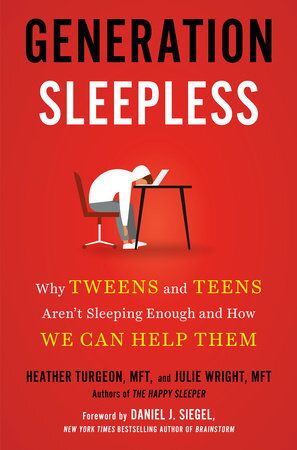
Show notes(Penguin Random House Publications)
A new book called, "Generation Sleepless", uncovers one of the biggest threats to our teens physical and mental health...sleep deprivation. One of the authors, Heather Turgeon, is here to talk more about what's impacting our kids sleep and what we can do to help them get better rest.

 Our TOPPODCAST Picks
  Stay Connected