Idaho Matters is a wonderful way to stay up to date, meet people and understand there’s much more to this great state. Hosted by Gemma Gaudette on Boise State Public Radio News, it features arts and politics, growth and education, and the interesting stories that make Idaho unique. Send us your questions, comments or story ideas by emailing idahomatters@boisestate.edu or sending us a voicemail using the “Talk To Us” feature on the free Boise State Public Radio app.
A new vaccine could help bumblebees stay alive
Feb 15, 2023
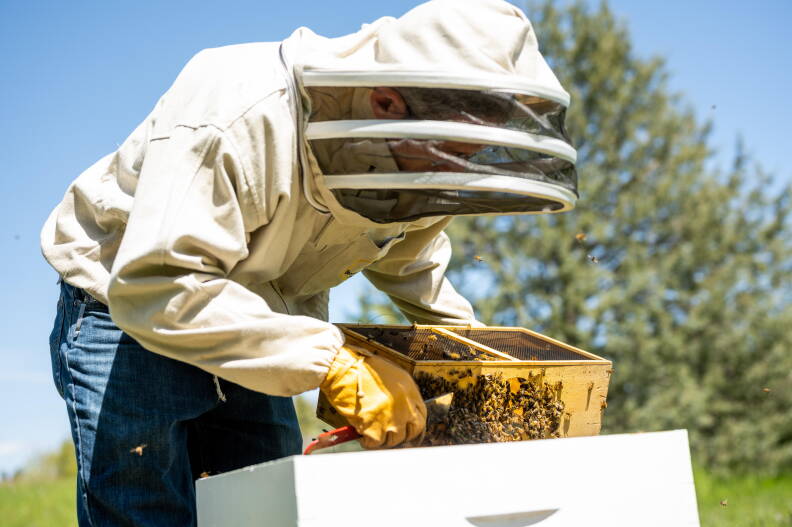
Show notesJames Van Leuven is a research assistant professor in University of Idaho’s College of Agricultural and Life Sciences.(Joseph Pallen/University of Idaho Photographic / University of Idaho Visual Productions)
If you had an apple lately, you can thank a honeybee for making it happen.
A new study says we could lose 97% of all western bumblebees in the next 30 years. A University of Idaho researcher is trying to help bees by helping them fight off a nasty disease in a brand new way.
James Van Leuven is an Assistant Professor in the school’s College of Agricultural and Life Sciences and he joined Idaho Matters to talk more about this problem.
A look at 'The Bright Side' with author Chad Otis
Feb 15, 2023
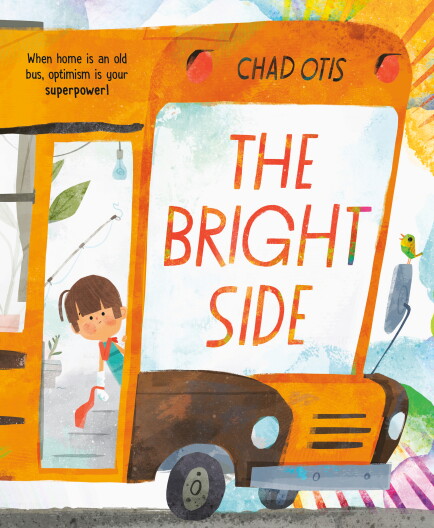
Show notes The Bright Side by Chad Otis( Rocky Pond Books)
As the cost of housing and inflation continues to rise families across the U.S. are struggling to make ends meet, especially here in Idaho.
According to The U.S. Department of Housing and Urban Development,Idaho was ranked as one of the states with the highest percentage of unsheltered families. These realities can be hard to cope with and even harder to explain to your kid.
A local author, Chad Otis, has written a new book called "The Bright Side" opening up the conversation around important topics like housing insecurity, food insecurity and socioeconomic differences, while also finding the good in things. Otis joined Idaho Matters to talk more about his upcoming book.
The cost of housing and how it's impacting Idaho residents across the state
Feb 14, 2023
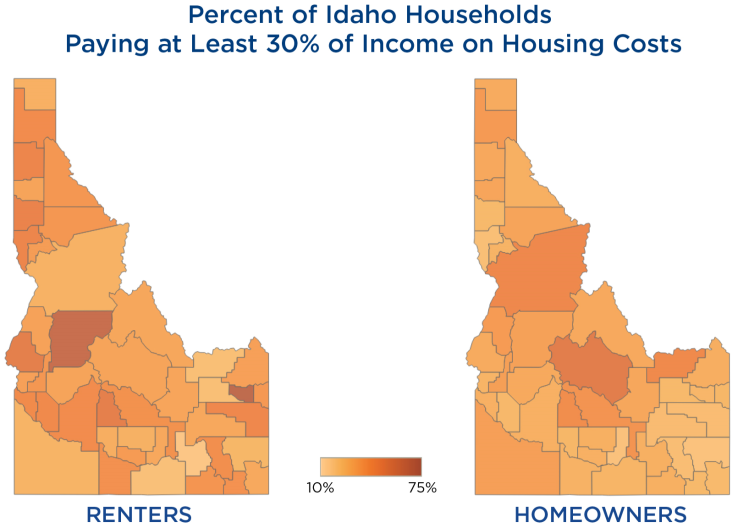
Show notes( Idaho Policy Institute/Boise State University)
Here in Idaho household income has gone up around 18% from 2015 to 2020. But Idaho’s housing values went up almost 75% in the same period of time. That means affording a home has gotten harder, a lot harder, and a lot more people are putting more of their paycheck toward housing costs, instead of food or healthcare.
According to a study from the Idaho Policy Institute that means people are more likely to face evictions, job creation slows and economic development can falter.
The Idaho Statewide Housing Analysis puts some stark numbers on the state of the housing market across the Gem State. Vanessa Fry, the Director of the Idaho Policy Institute at Boise State and Research Associate Lantz McGinnis-Brown joins Idaho Matters to talk about the report.
The legacy of Toshio Mori: The first Japanese American to publish a book of fiction
Feb 14, 2023
Show notes Toshio Mori carved out time to write every evening.( Courtesy of Steven Y. Mori)
In 1941 aspiring writer Toshio Mori sent the manuscript for his first book to Caldwell, Idaho-based Caxton Printers, hoping to get his collection of fiction stories about the problems of the Japanese people living in America, published.
Caxton’s founder James Gibson liked the book and recognized the significance of Mori's stories and why they would be interesting to a national audience.
"It is rather important as it is the first writing dealing with Americans born of Japanese parents and tells in understandable and unvarnished language the problems of the Japanese," Gibson said of Mori's book.
So, they set a date to publish. But just five days later Japan bombed Pearl Harbor and a couple of months after, Mori and his family were sent to an internment camp in Utah and Caxton delayed printing the book.
It would take another eight years after World War II ended until Caxton decided to publish the book, making Mori the first Japanese American to publish a book of fiction.
Alessandro Meregaglia is an Assistant Professor and archivist at Boise State’s Albertsons library and joins Idaho Matters to talk more about Mori’s story and how he is remembered today as the pioneer of Japanese American literature.
Read the full transcript below:
GEMMA GAUDETTE: From the studios of Boise State Public Radio News. I'm Gemma Gaudette and you're listening to Idaho Matters. In 1941, aspiring writer Toshio Mori sent the manuscript for his first book to Caldwell Bates Caxton Printers, hoping to get his collection of fiction stories about the problems of the Japanese people living in America published. Well, Caxton's founder liked the book, so they set a date to publish it. Five days later, Japan bombed Pearl Harbor, and a couple of months later, Mori and his family were sent to an internment camp in Utah, and the publishing company decided to delay printing the book. It would take another eight years after World War Two ended, but eventually Caxton decided to publish the book, making Mori the first Japanese American to publish a book of fiction. Alessandra Miraglia is an associate professor and archivist at Boise State's Albertson's Library, and he'll be talking about this story on Thursday at Boise State. We're lucky enough to have him joining us today to talk more about this. Alessandra, welcome to Idaho Matters.
ALESSANDRO MEREGAGLIA: Thank you for having me.
GAUDETTE: So first off, tell us about Toshio Mori.
MEREGAGLIA: He was an American citizen born to parents who themselves were Japanese immigrants. He was born around 1910, and he grew up in Oakland, California. And he worked starting in his teens at his family's nursery, tending flowers and growing plants. But in high school, a teacher really encouraged him to start writing and to write more, and he took to that. And he fell in love with writing fiction stories. And though he had to work full time in his family's nursery, he carved out several hours each evening from around 10 p.m. until 2 a.m. every day to write and to work on producing these stories that he eventually wanted to get published.
GAUDETTE: And what did he write about? I mean, what were his stories about? I mean, we did I did mention, you know, the Japanese experience in America. So were those kind of the themes?
MEREGAGLIA: Yeah, He wrote about his neighborhood. He fictionalized his neighbors and people he met in school or on the street or on the bus and wrote about their lives and their experiences. And and he grew up in Oakland and San Leandro, California, and he took that real city and fictionalized it as the town of Yokohama. And so he took his his neighborhood as his subject and wrote about his community.
GAUDETTE: How did you find out about him?
MEREGAGLIA: My larger research project is on Caxton Printers, which as you mentioned, is based in Caldwell, Idaho, and they've been around for over 100 years. And the company was founded by James Gibson and he had a unique publishing philosophy in that he wanted to publish writers who had been rejected by other publishing firms who couldn't get a voice anywhere else. And he wanted his publishing house to be able to showcase and to highlight those works by people that that wouldn't have been able to get published elsewhere. And in fact, Mori tried to publish his stories with several New York publishers and other publishers from around the country. And he kept getting rejected. In fact, he liked to to quip that he had enough rejection, rejection slips to paper a room. So he had little luck with some of the larger publishing houses. And so then he turned to Caxton and found a willing and excited publisher there.
GAUDETTE: Well. And what a forward thinking publisher. Right. To give voice really to more of these potentially marginalized writers. And so I'm curious, what was it that made James Gibson that made Caxton say yes to publishing Mori's book?
MEREGAGLIA: Oh, I have a quotation from Gibson and and with his team of editors who reviewed the manuscript. He called Toshio Mori's book a "good book, and it is rather important as it is the first writing dealing with Americans born of Japanese parents and tells in understandable and unvarnished language the problems of the Japanese." So he recognized the importance and significance of Toshio Mori's stories and why they would be interesting to a national audience.
GAUDETTE: Okay. So then he so so they say yes to publishing the book. Then it's December 2nd, 1941, when Caxton said it would publish the book and they're going to do this in the next year. So let's fast forward five days from December 2nd, 1941. Japan bombs Pearl Harbor, and then a few months after that, Mori is sent to an internment camp. So where did he spend the rest of the war? Was he in this internment camp in the entirety of the war?
MEREGAGLIA: Yeah. From from 1942 until the war's end, he was at the Topaz War Relocation Center, as it's officially known. And he did keep writing while he was interned in in at Topaz. And he worked for the the center's literary magazine. And he maintained a correspondence with with Caxton still expressing interest in getting his book published and saying, hey, I'm still writing and and I'm producing more stories here. And then it took until the end of World War Two for Caxton to revisit the manuscript, and then they finally published it in 1949.
GAUDETTE: So Caxton is, as we mentioned and as you just said, they did hold off on publishing the book until 1949. I am assuming some of the reasons would be that this book would not have been well received at the time.
MEREGAGLIA: Yeah, that was Gibson's thought on it. And he and his staff thought really hard about can we still publish it even after the attack on Pearl Harbor. But it was really that in February of 1942 when President Franklin Roosevelt issued Executive Order 9066, sending and mandating and forcing the relocation of over 100,000 American residents of Japanese descent into these camps, that Gibson and Caxton decided to to hold off and say, let's wait until until after the war.
GAUDETTE: So when the war ended, Mori was released from the internment camp. Where did he go after that?
MEREGAGLIA: He went right back to Oakland, the Oakland area, and in fact, he lived in Oakland the entirety of his life with the exception of those few years in Topaz.
GAUDETTE: So did Caxton get back in touch with him after the war or or did he get in touch with them? Like what happened to eventually get the book published?
MEREGAGLIA: Yeah. Gibson, Caxton's president, certainly hadn't forgotten about the manuscript. And and in a letter shortly after the end of the war, he wrote to Mori and said, Caxton is picking up the pieces and we're we're trying to get back to publishing books that we had committed to and said that it's still a book worthy of being published.
GAUDETTE: So I'm curious then. So the book gets published in 1949. First off, what was the name of the book?
MEREGAGLIA: Yokohama, California. He modeled it sort of after Sherwood Anderson's book, Winesburg, Ohio, which is also a collection of sketches of community life in a small town. And that's what Mori used as his model. So Yokohama, California is representative of this fictionalized Oakland community and tells just little vignettes of life in that community.
GAUDETTE: So how was the book received then in 1949?
MEREGAGLIA: It was really well received and it was reviewed in national publications. Mori was described as a natural born writer, a fresh voice and even spontaneous. But sadly, despite these positive reviews, the book just didn't sell very well. For whatever reason, the the sales weren't there. And so Mori sort of slid into oblivion and and wasn't really well known and had difficulty finding publishers for other works. He continued to write. He wrote several novels, more short stories. But for the next several decades, he really had difficulty finding a publisher for his work.
GAUDETTE: So Caxton only published the first book.
MEREGAGLIA: That's correct. His first collection of short stories.
GAUDETTE: And do we know why they they didn't want or decided not to publish the other works that he wrote?
MEREGAGLIA: You know, I think the timing wasn't right. And Caxton and Gibson really supported Mori and hoped he did well. But the fact that Yokohama, California just didn't sell well, I think led to them to not be as interested in some of his future works.
GAUDETTE: Well, and it's interesting, too, because even though it was well received critically, I mean, you know, there was still, I think, you know, such, you know, what's the right word, such such probably anger, such resentment towards the Japanese Americans or towards Japan. I would assume that that would have played into people not wanting to to buy the book.
MEREGAGLIA: Yeah. And Gibson and Mori himself really hoped for strong sales among the Japanese communities in California and throughout the United States. And also, for whatever reason, um, again, despite the positive reviews, the book just didn't sell, even within the Japanese American communities.
GAUDETTE: What was it like for you to research Mori's life?
MEREGAGLIA: It's been been really fascinating. And it's it's still been ongoing. I was able to get in touch with Toshio Mori's only surviving son, Steven Mori, who was very generous with his time and access to his collection of material and just being able to provide and fill in some details about his father's life. So that has been really rewarding to be in touch with Toshio Mori's son.
GAUDETTE: What stood out to you about Toshio Mori? Like, is there something that that you know you'll take with you?
MEREGAGLIA: Yeah, I think his persistence and perseverance not only in face of having to work a full time job in his family's nursery and only being able to write for a few hours in the evening, but then also his dedication to continue writing, even when he was incarcerated in the internment camps in the 40s, and then even for the next several decades, he kept writing. And then finally, right before he passed away in 1980, in the last few years of his life, the next generation of Japanese Americans really took an interest in Toshio Mori and lifted him up as this founder, as this pioneer of Japanese American literature. And he was invited to several conferences to speak and to read from his work. And in fact, he was able to find a publisher finally for a second collection of short stories and one of his novels. So these came out in the 1970s when there was a stronger interest in specifically Japanese American literature.
GAUDETTE: Can people still find his work? I mean, is it in bookstores? Because I know sometimes things go out of publication.
MEREGAGLIA: Yeah. Yokohama, California, did go out of print for several decades, but thankfully, University of Washington Press has released it and reprinted it. And so it's available through University of Washington Press. And then there are plans in the works to bring out those later works of Toshio Mori one. The second collection of short stories has been released just last summer by the publisher Modern Times Publishing. And then they're working on getting Toshio Mori's novel republished as well.
GAUDETTE: And I'm assuming you've read his works?
MEREGAGLIA: Yes, I have.
GAUDETTE: And what were your thoughts after reading his first book?
MEREGAGLIA: I think they're fantastic insights and snapshots of life. I felt as a reader, I felt invited into Toshio Mori's neighborhood, into his community. And it's it. The characters are local and specific to him, but the experiences and interactions are universal and that's what makes it a joy to read.
GAUDETTE: Well, I so appreciate you coming in and talking with us about this, about this and about Toshio Mori and bringing him to life for all of us.
MEREGAGLIA: Thank you so much for having me.
GAUDETTE: Absolutely. We have been speaking with Alessandro Meregaglia, who is an associate professor and archivist at Boise State's Albertson's Library. He will actually be talking about Japanese writer Toshi Mori's story this Thursday. That will be at the Osher Lifelong Learning Institute in Boise. Thanks so much for listening to Idaho Matters Boise State Public Radio and Idaho Matters or members of the NPR Network. It's an independent coalition of public media podcasters. You can find more shows on the network wherever you get your podcasts. I'm Gemma, Gaudette. We'll see you tomorrow.
MEREGAGLIA: Race might be a hot topic right now, but for so many of us, talking about race is nothing new. On the Code Switch podcast from NPR, we go beyond the headlines and we go deep. Listen now.
The 'Boise Weekly' starts a new chapter
Feb 14, 2023
Show notes
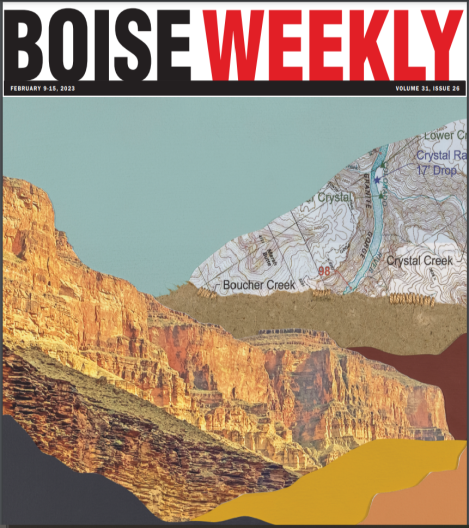
The Boise Weekly is the home of columnist Bill Cope, movie critic George Prentice, a beer guy, dating advice and a little bit of history. It’s also one of the few alternative weeklies in the state of Idaho.
The publication features local art on the cover and along with arts, culture, entertainment and politics it looks closely at issues that affect the LBGTQ+ community, people of color and women.
But COVID-19 hit the publication hard and there are some changes coming. Boise Weekly Editor Jeanne Huff joins Idaho Matters to tell us more.
How embracing your emotions can help you gain control over your life
Feb 13, 2023
Show notes(Getty Images)
At some point, most people will find themselves in a toxic situation. It may be a job, a relationship or a family dynamic, and if you don’t have the tools to deal with your emotions the situation could end up being disastrous.
Idaho-based board-certified psychiatrist and founder of Perma Mental Health, Dr. Alex Wills, says we need to embrace our emotions in order to regain control of our lives. He joins Idaho Matters to talk more about this.
As it joins the ESA we take a look at the Whitebark Pine in Idaho
Feb 13, 2023
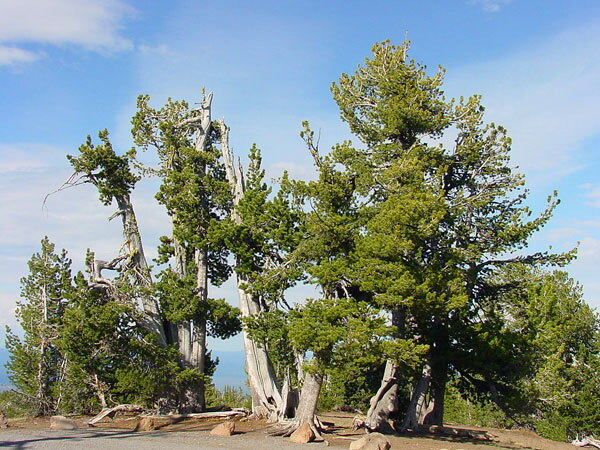
Show notes Whitebark Pine( USFWS Endangered Species – Mountain Prairie Region)
If you spent time in Idaho's forests chances are you’ve seen a Whitebark Pine. This native tree is found across the Pacific Northwest and can live to be over 1,000 years old.
Along with its beauty, the Whitebark helps stabilize the soil around it and feeds several kinds of animals. But the tree is in trouble thanks to a variety of factors and late last year it was listed as threatened under the Endangered Species Act.
Joshua Uriarte serves as Species Program Manager and Policy Advisor for the Idaho Office of Species Conservation and joins Idaho Matters to talk more about the Whitebark Pine.
Looking at freedom through a new lens
Feb 13, 2023
Show notes Freedom's Path is now playing nationwide.( Freedoms Path LLC)
The just-released film "Freedom’s Path" – telling the story of a runaway civil war soldier who encounters a secret community of freed slaves – is more than a reflection of history. It’s also making its own history and a portion of the film’s profits are going to historically black colleges and universities.
AJ Winslow went to Boise High School before he became a producer. He visited Morning Edition host George Prentice to talk about his film and its unique lens on freedom.
Find your perfect pairing with 'Idaho Winter Wine Weekends'
Feb 13, 2023
Show notes(Sindhu Hirani Blume / NPR)
Idaho is most popularly known for our potatoes but thanks to a rapidly growing wine industry, we are now being recognized for our grapes as well.
With four wine regions and over 70 wineries, Idaho has more than a few wines that you might want to try. So to help make sure everyone has a chance to taste the state's best varieties the Idaho Wine Commission is hosting a series of events called Idaho Winter Wine Weekends.
Executive Director of the Idaho Wine Commission, Moya Dolsby joins Idaho Matters to talk more.
Idaho poets share their love letters ahead of Valentine's Day
Feb 10, 2023
Show notes(iStockphoto.com)
As Valentine's day approaches many of us are thinking about love, in all its many forms, and what better way to express love than through a letter? As it happens, that is exactly what one group of artists plan to do in an upcoming event featuring an evening of "Love Letter Tributes."
Morning Edition host George Prentice sits down with the organizer of the event Rebeca Evans and poet Maggie Koger to talk about their thoughts on love.

 Our TOPPODCAST Picks
  Stay Connected