TopPodcast.com
Menu
  • Home
  • Top Charts
  • Top Networks
  • Top Apps
  • Top Independents
  • Top Podfluencers
  • Top Picks
    • Top Business Podcasts
    • Top True Crime Podcasts
    • Top Finance Podcasts
    • Top Comedy Podcasts
    • Top Music Podcasts
    • Top Womens Podcasts
    • Top Kids Podcasts
    • Top Sports Podcasts
    • Top News Podcasts
    • Top Tech Podcasts
    • Top Crypto Podcasts
    • Top Entrepreneurial Podcasts
    • Top Fantasy Sports Podcasts
    • Top Political Podcasts
    • Top Science Podcasts
    • Top Self Help Podcasts
    • Top Sports Betting Podcasts
    • Top Stocks Podcasts
  • Podcast News
  • About Us
  • Podcast Advertising
  • Contact
Not in our directory?
Add Show Here
Podcast Equipment
Center

toppodcastlogoOur TOPPODCAST Picks

  • Comedy
  • Crypto
  • Sports
  • News
  • Politics
  • True Crime
  • Business
  • Finance

Follow Us

toppodcastlogoStay Connected

    View Top 200 Chart
    Back to Rankings Page
    News

    Herding Code

    A technology podcast with Jon Galloway, Scott Allen, Kevin Dente, Scott Koon

    Advertise

    Copyright: © Creative Commons (by-nc-sa)

    • Apple Podcasts
    • Google Play
    • Spotify

    Latest Episodes:
    Herding Code 96: Eric Sink on Veracity and DVCS Nov 02, 2010
    Show notes

    Episode 96

    This week on Herding Code, the guys talk with Eric Sink, cofounder of SourceGear, about Veracity and Distributed Version Control Systems. Listen in and learn about Veracity's architecture including pluggable layers and a unique approach to data storage all built on an impressive technical stack. And get an answer to the question that everyone's asking "Why does the world need another DVCS?" All this and more, this week on Herding Code.

    • Kevin wastes no time kicking the show off with THE question - "Why Veracity? Why another DVCS?" Eric talks DVCS and the future of source control, how Git and Mercurial are just getting us started and how there's no distributed system which is good at solving problems of the enterprise.
    • So, what does Veracity offer that Git, Mercurial and Bazaar do not? Eric describes record, field and constraint-based (opposed to folder and file-based) version control and how if it fits nicely inside of Application Lifecycle Management (ALM).
    • Eric compares the Veracity data storage model with NoSQL and Berkeley DB. This prompts Jon to ask about where SQLite comes into play.
    • Eric digs into the pluggable storage layer, "Zing" and component layers for Scrum or wikis, for example.
    • Jon asks about the nightly snapshots (releases) and Eric runs us through the intentionally not-so-easy build process.
    • The conversation shifts back to differences between Veracity and a Git or Mercurial. The guys talk about branching models and rebasing.
    • Scott K asks about free source control hosting and the guys comment about the community and social networking aspect of Bitbucket and GitHub.
    • Kevin asks if there was ever thought of building ALM tools on top of Mercurial or Git. Eric talks about DVCS functionality, licensing and what the enterprise wants.
    • Eric explains Veracity's open source license, which components will and will not be open sources and speaks to community patches.
    • Jon asks if the Veracity data layer could be used to support other applications and not just version control.
    • Scott K asks about dogfooding Veracity - when did SourceGear start versioning Veracity in Veracity?
    • Eric explains his choice to write Veracity in C. The guys talk about cross platform development and Scott K asks about extensions and wrappers.
    • Jon beats Scott K to the punch and asks why Node.js isn't included in Veracity's impressive technical stack.
    • Kevin asks about plans to develop a Visual Studio plugin or a version control tools like TortoiseSVN.
    • Eric answers a Twitter question from Andrew Tobin about migration support. Kevin ask if there will be a feature like GitSVN for Veracity.
    • Kevin asks Eric to explain the need for exclusive file locks. Eric explains this need for industries like Gaming which deal with a large amount of binary files.
    • Jon and Eric talk more about the enterprise and what's important to them.
    • Jon talks more about Veracity's stack and the use of (wait for it) SVG for Veracity burn down charts.
    • Scott K asks why SourceGear went with SpiderMonkey over Script Monkey or V8.
    • Jon talks about portability and asks if Mono has a place in Veracity development.
    • Jon and Eric talk about Scrum and the enterprise's current interest in Agile. This topic rolls into talk of browsers.
    • Kevin asks if SoureGear has concern that Microsoft may someday enter the DVCS space.
    • Scott K wraps the show asking how Eric defines success for Veracity.

    Show Links:

    • Eric Sink
    • SourceGear
    • Vault
    • Veracity
    • Hanselminutes Podcast 231 - Eric Sink on Distributed Version Control Systems
    • Git
    • Mercurial
    • Bazaar
    • Berkeley DB
    • SQLite
    • Veracity Technical Overview
    • node.js
    • CMake, Kitware, KDE Project
    • Bitbucket, Atlassian
    • GitHub
    • FogCreek
    • Ben Pollack
    • Andrew Tobin
    • Perforce
    • SpiderMonkey
    • Script Monkey
    • V8
    • Mosaic

    Show notes compiled by Ben Griswold. Thanks!

    Download / Listen:

    Herding Code 96: Eric Sink on Veracity and DVCS


    Herding Code 95: MonoDroid with Miguel and the Mono gang Oct 14, 2010
    Show notes

    Episode 95

    Hey, it's a bunch of Mono guys! That's always fun. This time they're talking about MonoDroid. Joining the gang this week are Miguel de Icaza, Joseph Hill, Geoff Norton, and Mike Kestner talk about developing .NET applications for the Android platform with Mono.

    • Jon asks about where MonoDroid is at in the product lifecycle.
    • Jon asks about the install experience, which currently requires installing a few dependencies to get set up. Miguel and Joseph clarify that it's a pretty simple setup, and explain why it currently works that way.
    • We talk about the File / New Project experience, and how MonoDroid projects are structured.
    • Miguel describes the API flavor for MonoDroid, and how it follows the MonoTouch and GTK# approach of keeping pretty close to the underlying API's and pipeline - e.g. accessing images as resources. Mike talks about how API is mapped to run on the .NET primitives and collections.
    • The guys talk about how software architectures vary across iPhone, Android, and Windows Phone 7. Miguel and Geoff talk about the difficulty in building real-world applications which are can share back-end code across platforms.
    • The talk shifts to nerdy details about how .NET code is being deployed to the Java-based Android platform and a discussion of the performance impacts of crossing those boundaries.
    • Geoff and Mike talk about the challenges of integrating the different platforms.
    • Kevin asks about what MonoDroid brings to the Android platform, since the Java runtime is already kind of similar to .NET. Miguel talks about how they've seen even higher developers interest in MonoDroid than MonoTouch, and everyone speculates about why that might be.
    • Scott K asks about some of the challenges in implementing Mono on Android, and Mike digs into the differences in generics between .NET and Java.
    • K. Scott asks about the ability to wrap or extend the Mono.Android API's.
    • Kevin asks about rather underlying services are exposed as native API's or generalized API's. Miguel explains why it's necessary to expose at the native API level.
    • Kevin asks more about how code can be shared between MonoDroid and MonoTouch projects.
    • Jon asks about whether they're looking at anything for Windows Phone 7. Miguel talks about the possibility of adding unsupported API's, and Geoff talks about how this has been pretty popular on Windows XBox.
    • Greg Shackles asks a question via Twitter about how developers can get involved and contribute to both Mono and MonoDroid.
    • Geoff talks about the MonoMac project.
    • K. Scott asks if there's still support for PowerPC in Mono.
    • Sara Chipps asks whether iPhone or Androids are more difficult to support. The surprising answer: neither!
    • Everyone talks about how people will actually buy apps on their phones, and the iCircuit app comes up as an example of a great MonoTouch app that's making some money.
    • Kevin asks about the pricing for MonoDroid. The word is that it'll be pretty similar to MonoTouch.
    • Miguel mentions Manos de Mono from Jackson Harper.
    • Scott K asks about plans for other phone platforms. Joseph says the plan is to go where developers go.

    Show Links:

    • MonoDroid
    • Miguel de Icaza, @migueldeicaza
    • Geoff Norton @kangamono
    • Joseph Hill, @JosephHill
    • Mike Kestner
    • Android Development info
    • Jonathan Pobst, @jpobst
    • Greg Shackles, @gshackles
    • MonoMac
    • Sara Chipps, @sarajchipps
    • iCircuit
    • Manos de Mono from @jacksonh
    • Courage Wolf
    • Son, I am disappoint
    • Gimp Clone Tool and Gimp Perspective Clone Tool
    • Scanners Gonna Scan
    • evercookie

    Download / Listen:

    Herding Code 95: MonoDroid with Miguel and the Mono gang


    Herding Code 94: Silverlight and HTML5 Oct 01, 2010
    Show notes

    Episode 94

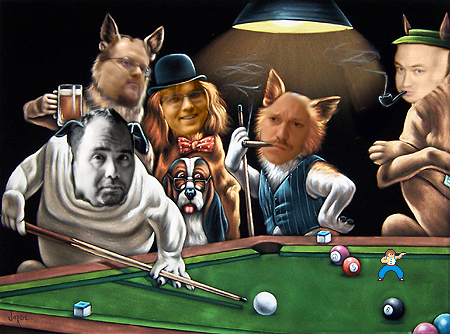
    Artwork by Adam Kinney

    This week on Herding Code, the guys talk to Adam Kinney and Rick Barraza about how Silverlight fits into a world where HTML5 is finally becoming a reality.

    • Jon asks about Adam and Rick's opinions on the recent post on the Silverlight Team Blog about the future of Silverlight
    • Adam talks about he sees consumer applications and games as great applications of Silverlight
    • Rick talks about how how some developers are resistant to change, then talks about the longterm evolution of the internet from information provider, to application provider, and finally to operating system
    • Adam and Rick talk about the Wired Article titled The Web Is Dead. Long Live The Internet.
    • The talk shifts Silverlight as an application platform, not just a web plugin
    • Jon asks how likely it is to be able to reuse Silverlight across web, phone, and out-of-browser applications
    • Rick talks about The Future of the Internet and How To Stop It
    • The talk shifts to discussion over how cross-platform HTML5 can be when it's limited by things like video codecs and browser targeting
    • Scott Koon talks about how HTML5 is a loose collection of many different technologies
    • Scott Koon asks where the live Silverlight apps are - he just doesn't see them in the wild
    • Adam and Rick talks about the advantages of developing in Silverlight vs. HTML5. Rick talks about the lack of tooling for HTML5
    • Kevin asks about the enterprise advantages of Silverlight development
    • The guys talk about the differences between canvas/bitmap graphics vs. SVG/vector graphics
    • Jon and Rick talk about the importance of having access to low level building blocks so you can build what you need
    • Scott K asks what's left that Silverlight does that HTML5 doesn't offer. Rick talks about the tooling, Adam talks about consistent cross-browser support.
    • Scott K asks about MVVM and whether Silverlight's been taken over by architecture astronauts and propellerheads rather than the designers. Adam and Jon talk about how MVVM can make life easier for designers as well.
    • K Scott talks about his experiences with an enterprise Silverlight application
    • Rick talks about being a samurai rather than a swordsman - don't be married to your tools
    • Rick says that the biggest advantage of Silverlight is that it's a programming language which was designed for applications rather than HTML which was designed for documents
    • Scott K and Kevin ask whether Silverlight makes sense in public web applications
    • Jon asks Adam and Rick about what they've been building with HTML5 and what they like about that development experience
    • Rick and Adam talks about the changing environment and how the rich vs. reach question has changed

    Show Links:

    • Adam Kinney, @adkinn
    • Rick Barraza, @RickBarraza
    • Silverlight Team Blog: The Future of Silverlight
    • The Web Is Dead. Long Live The Internet. (Wired magazine)
    • The Future of the Internet and How To Stop It
    • The Wilderness Downtown
    • Do That In HTML5 - Flash Button Challenge
    • HTML5, XAML, and Declarative User Interfaces (@ShawnWildermuth)
    • Silverlight is the Future but the Future Isn't Silverlight (Scott K's blog)
    • http://www.beautyoftheweb.com/

    Download / Listen:

    Herding Code 94: Silverlight and HTML5


    Herding Code 93: Computer Errors, Home Media, and The Fall of The Roman Empire Sep 21, 2010
    Show notes

    Episode 93

    This week on Herding Code, it’s story time. Have you ever fallen victim to a software glitch? Are you frustrated by those green screens which are still running social security, the IRS and the DMV? Ever dealt with a medical database? Or maybe you owned a Zune on December 31, 2008? If so, you’ll want to listen in on the guys sharing tales about how software has personally bitten them in the you-know-where (and by you-know-where I mean their asses.)

    Warning: Rob Conery get pulled into this show and shares a funny story of his own.

    Then stick around for an extended lightning round nerd out about home media. The guys offer their opinions on the all-new (as of the day of the recording) Apple TV and then touch upon other home streaming options including Amazon, Netflix and Windows Media Center (whatever that is.) Jon entertains the idea of having computers on your TV and then the guys dig into this space’s complex business model. The show wraps with a quick review of the Windows Phone 7 RTM and Silverlight support.

    Show Links:

    • Sara Chipps, @SaraJChipps
    • Rob Conery, @robconery
    • Zune Leap Year Failures
    • Apple TV
    • Amazon Video On Demand
    • Netflix
    • Windows Media Center
    • Roku
    • Google TV
    • Extreme Chickfights
    • Clay Shirky – The Collapse of Complex Business Models
    • The Collapse of Complex Societies
    • Silverlight Hack: Info on differences between Silverlight 3 and Windows Phone 7
    • Eric Hexter, @ehexter

    Show notes compiled by Ben Griswold. Thanks!

    Download / Listen:

    Herding Code 93: Computer Errors, Home Media, and The Fall of The Roman Empire


    Herding Code 92: Dru Sellers and Rob Reynolds on Nu Aug 27, 2010
    Show notes

    Episode 92

    This week on Herding Code, Kevin, Jon and Scott K speak with Dru Sellers and Rob Reynolds about Nu, a .NET package management system designed to solve your open source distribution/consumption issues. The guys discuss how package management is handled in other communities, namely Ruby, and how the .NET world can benefit from these same practiced.
    • Dru explains the concept of package management and how it is implemented in other communities. He continues by exposing package management’s absence in the .NET space and how Nu came into being.
    • Rob basically shares the typical user experience and how to add open source references with Nu.
    • Kevin asks about the decision to take on the heavy dependency on Ruby. The guys get into the similarities and differences between Ruby and .NET packaging, the use of the Ruby Gems server and standing up their own Nu server.
    • Rob and Dru speak to the Gem Spec and how can contribute their open source packages to Nu.
    • The guys talk about dependencies, versions and package upgrade paths with Nu. Rob and Dru also share the challenges around management of open source projects like MassTransit and NServiceBus which include many cascading dependencies and the practicality of hosting packages for contrib projects which are being updated at breakneck speeds.
    • Kevin asks about Bundler and the use of the local gem cache. Dru digs a little more into the differences between Ruby and .NET package management and introduces concepts like freezing references.
    • Rob basically speaks to Semantic Versioning – a formalized policy on bumping version numbers.
    • Rob and Dru talk about ownership and how to get one’s packages added to the Gem server. Scott K speaks of security, evil-doers, and lawyers.
    • The group entertains the idea of hosting their own Gem Servers.
    • Rob basically walks through another Nu usage with a RoundhousE example.
    • Kevin notes that Nu installs are focused on the release of assemblies only. Rob and Dru talk to the distribution of documentation, samples and even executables as well.
    • Dru provides the rundown of other .NET package management systems, their approaches and how they differ from Nu.
    • Jon talks about open source naming, Google Juice and asks about the origins of the Nu (Nubular) name.
    • Scott K asks what happens if Microsoft ever releases a package manager. The guys respond with talk of “bringing the awesome” and Jon shares that having more than one of something is rarely a bad thing.
    • Kevin asks about the Nu roadmap. Rob and Dru talk to stabilization, issue/request tracking, and building up their own Gem Server.
    • Jon asks about project contributors. Dru gives props to Bil Silmer for his contributions to the project. He also talks about the development of Nu for Visual Studio and the integrated add reference experience it will offer devs. Dru also thanks Nick Quaranto and the Ruby Community for the temporary use of their Gem Server. Jon asks how “our” use of the Gem has been received by the Ruby Community.
    • K Scott basically dies.
    • Dru further pimps Nu and requests that all open source projects submit their packages. Dru teases us with talk of TopShelf, UppercuT and Rob basically pimps database versioning with RoundhousE.
    Show Links:
    • Dru Sellers, @drusellers
    • Rob Reynolds, @ferventcoder
    • Nu - Gems for .NET
    • MassTransit
    • Nu for Visual Studio
    • Michael Carter, @kiliman
    • Bundler
    • Semantic Versioning
    • IronRuby
    • Tom Preston-Werner
    • universal-.net
    • Will Green, @hotgazpacho
    • Nu Google Group
    • Bil Simser @bsimser
    • RoundhousE
    • hornget
    • Bricks
    • NGems
    • OpenWrap
    • Sebastien Lambla, @serialseb
    • OpenRasta
    • Nu YouTrack
    • GemCutter
    • Nick Quaranto, @qrush
    • Topshelf
    • UppercuT
    Show notes compiled by Ben Griswold. Thanks! Download / Listen: Herding Code 92: Dru Sellers and Rob Reynolds on Nu

    Herding Code 91: Listener-Powered Lightning Round Aug 19, 2010
    Show notes

    Episode 91

    This week on Herding Code, K Scott, Jon, Kevin, and Scott K field your questions. That's right – it’s a Listener-Powered Lightning Round! Whether you were interested in their opinions on Microsoft LightSwitch, energy drinks or how the current economic downturn affects quality and craftsmanship, this week’s conversation is being directed by you!

    Thanks, listeners, for all of the great questions:

    • @mattcasto - What does the herding code crew think of LightSwitch
    • @detroitpro - What do you know of orchard? w/ @loudej on board it could be something. #HerdingCode
    • @detroitpro - Thoughts on Nu (gems in .NET) #HerdingCode
    • @MachaHack - If you were going to learn to program all over again, what would you do differently?
    • @mattcasto - What's your favorite energy drink? #herdingCode #lightninground
    • @JimHolmes - Cake or Pie? (In honor of @stevehorn )
    • Ross Jempson - Why all the fuss about Microsoft.Data?
    • Ross Jempson - How did you get banned from chat.meta.stackoverflow?
    • Ross Jempson - I have a friend, here in Australia that queued up from 11:30pm one night for 11 hours to get an iphone4. Is an intervention required?
    • @JimHolmes - Failing cake or pie, do y'all think this downturn gives companies pause to rethink approaches to quality and craftsmanship?

    And the show wraps with the prospect of turning urine to gold…

    Show Links:

    • LightSwitch
    • Orchard
    • Nu – Gems for .NET
    • Microsoft.Data
    • David Fowler
    • WebMatrix
    • Razor
    • chat.meta.stackoverflow
    • @ehexter
    • MvcConf
    • @shanselman
    • James Senior
    • F5

    Show notes compiled by Ben Griswold. Thanks!

    Download / Listen:

    Herding Code 91: Listener-Powered Lightning Round


    Herding Code 90: Sara Chipps on Girl Develop IT and Girls Developing Software Aug 12, 2010
    Show notes

    Episode 90

    This week on Herding Code, the boys talk with Sara Chipps about Girl Develop IT, a comfortable place where women can learn at their own pace and not be afraid to ask "stupid questions." Listen in as Sara talks about repairing the wide gender gap in development through her series of classes which help women gain knowledge and get involved in software development.

    Note: Since we recorded this, Sara was named one of the Top 15 Developer/Hacker Women to Follow on Twitter by Mashable. Congrats!

    • Sara kicks off the show by introducing us to Girl Develop IT and its target audience – female entrepreneurs who needs to higher and work with developers and professional women who wish to switch careers and become coders.
    • Kevin asks the focus on building projects/products. Chipps speaks to the series’ curriculum – HTML/CSS, JavaScript, design patterns, data structures and Ruby on Rails.
    • Jon asks why Ruby and Rails over ASP.NET MVC and C#? Good question since Sara is an ASP.NET and C# developer after all.
    • The guys and gal talk about the early success of the program.
    • Kevin shares that most of the Herding Code hosts are fathers of daughters and asks a twitter question about providing classes and turning girls to coding. Sara expresses the overarching strategy of Girl Develop IT which is to develop rock star programmers which girls can look up to.
    • This sparks a conversation about media not telling the real story about developers. Are they any sexy cool female (or male) coders on TV? Is there any way to be a normal girl and a coder?
    • Jon asks about dereferencing a pointer in high school.
    • Scott K asks about the differences in teaching women compared to men? Do the gender have different learning styles? Sara talks about getting the women in the group feeling comfortable to answer questions.
    • The group talks about conferences and open source projects and the percentages of women there within.
    • Sara talks about extending the Girl Develop IT course materials to other chapters.
    • Jon asks why this sort of thing (teaching focused on women) isn’t already being done. Sara speaks to what’s happening in the community and the typical women’s group.
    • The guys ask “if you can’t get to Girl Develop IT, how can women get involved and learn?” How about online learning?
    • The cast considers pretending to be women on Stackoverflow?
    • Scott K asks what’s next for the Girl Develop IT? Will the course begin to venture outside of the web space? Lisp development for women perhaps?
    • Chipps offers the bundl.it elevator pitch, answers a Twitter question about Mono and the conversation quickly digresses to challenges in international domain registration.
    • Sara shares her excitement about last year’s Concept Camp and announces this year’s return. Be on the lookout for CONCEPT CAMP 2010: A DEV ODYSSEY, puns and steak sponsorship!
    • Sara talks about the success of the Devs for Wendy fundraiser held of software developer and loving mom, Wendy Friedlander.
    • The show wraps with the boys asking Sara for advice on raising daughters around computers and software and code. And then Chipps pimps the October release of Computer Engineer Barbie.

    Show Links:

    • Sara Chipps, @SaraJChipps
    • Girl, Develop It!
    • Catherina Fake
    • Kodu
    • Small Basic
    • NYC Ruby Women’s Group
    • Seattle Mind Camp
    • Stackoverflow
    • CONCEPT CAMP 2010: A DEV ODYSSEY
    • Infragistics, Infamous Steak Sponsor
    • Matt Podwysocki
    • bundl.it
    • Jeff Norton
    • Simone Chiaretta
    • Devs for Wendy
    • Charles Petzold
    • Miguel Castro
    • Peter Laudati
    • Steve Bohlen
    • Rachel Appel

    Show notes compiled by Ben Griswold. Thanks!

    Download / Listen:

    Herding Code 90: Sara Chipps on GirlDevelopIT and Girls Developing Software


    Herding Code 89: Vaidy Gopalakrishnan on IIS Developer Express Aug 05, 2010
    Show notes

    Episode 89

    This week on Herding Code, the guys talk with Vaidy Gopalakrishnan about IIS Developer Express.

    • The show kicks off by explaining the IIS Developer Express name. Why not just IIS Express?
    • Vaidy provides an overview of IIS Developer Express and explains it is a lightweight, self-contained version of IIS for web developers.
    • Vaidy speaks about the WebMatrix which includes IIS Developer Express along with the Razor ViewEngine and SQL 4 Compact Edition.
    • K Scott asks about IIS Developer Express and its relationship to ASP.NET Development Server (which you may still be calling Cassini). Vaidy notes that Express will likely integrate with Visual Studio in the future and responds to a Twitter question asking why wasn’t Cassini further developed rather than building out the new product.
    • Vaidy notes that IIS Developer Express is based off of IIS 7 which triggers a conversation about Hostable Web Core.
    • K Scott and Jon pepper Vaidy which a number of questions including whether or not MSDeploy will work with IIS Developer Express.
    • The guys review the environments for which IIS Developer Express and WebMetrix are supported.
    • Vaidy talks about IIS.Net.
    • Vaidy walks Jon and K Scott through debugging your .NET web applications with IIS Express.
    • Jon asks about running IIS Express from the command line. Vaidy talks about the configuration mode vs the application mode.
    • Vaidy talks about SSL support, self-signed certificates and custom certificates.
    • Jon asks about IIS Express user interface and how it’s implemented. Guess what. It’s WPF.
    • Vaidy speaks to IIS Developer Express logging and how it differs from the full version of IIS.
    • K Scott asks if there are IIS Express extensions like FastCGI or UrlRewriting. Vaidy explains that all IIS7 extensions should be compatible except when the extensions were not designed to run on XP.
    • Jon wants more. What’s next for Vaidy and IIS Developer Express?
    • The show wraps with talk about distribution and redistribution of WebMatrix and IIS Developer Express.

    Show Links:

    • Vaidy Gopalakrishnan
    • Introducing IIS Developer Express
    • Introducing IIS Express
    • IIS Developer Express FAQ
    • Debug Your .NET Web Project with IIS Express
    • Fun With C# and HP Laserjets, K Scott
    • WebMatrix
    • Razor
    • SQL 4 Compact Edition
    • Hostable WebCore
    • NetShell
    • www.iis.net
    • Thomas Deml

    Show notes compiled by Ben Griswold. Thanks!

    Download / Listen:

    Herding Code 89: Vaidy Gopalakrishnan on IIS Developer Express


    Herding Code 88: Julie Lerman on Entity Framework 4 Jul 21, 2010
    Show notes

    Episode 88

    This week on Herding Code, the guys talk with Microsoft MVP, MSDN Magazine columnist and Programming Entity Framework author Julie Lerman about what’s new in Entity Framework 4.

    • The show begins with Julie providing a broad look at the new features and improvements around the EF designer, the run-time, POCO support and disconnected entities.
    • Julie talks about her world of database-first development and learning about persistence ignorance, repositories and domain driven development.
    • The group talks about the history of Entity Framework and how it is more than a typical ORM.
    • K Scott and Julie dive into the designer support for database-generated entities and starting with a blank slate for POCOs. Julie notes that one can create the DDL in the Visual Studio designer and then generate the database from what is modeled.
    • The group talks about green field vs legacy database development and Jon comments on migrations and updating models.
    • Scott K asks about hurdles such as generated code being overwritten when using the designer. Julie speaks to updating the model from the database and using views rather than tables to generate the model. Julie shares complications around foreign keys and RIA services and managing large models in the designer.
    • K Scott brings the talk back to POCOs and Julie discusses code generation templates customization with T4 templates.
    • Jon mentions the Visual Studio Extension Manager and how adding template items from the online gallery is just so easy.
    • K Scott asks Julie about Code First development with EF 4 CTP4 and compares Code First to Fluent NHibernate.
    • The conversation jumps between versioning, plain old PHP objects, ALT.NET kerfuffle and the Vote of No Confidence.
    • Julie and K Scott speak to the two types of POCO support, virtual properties, dynamic proxies, lazy loading and select n + 1.
    • Jon asks about EF’s context lifecycle management for ASP.NET and the complexity around disconnected entities. Julie shares her recommendations on change tracking, entity state properties, self-tracking entities and persisting to the database.
    • Julie talks about her book, Programming Entity Framework, the rewrite for EF 4, her Data Points column in MSDN Magazine and the MSDN Development videos.
    • The show wraps with comments about Domain-Driven Design and the Norwegian Developers Conference talks.
    • Postscript – Jon calls Julie back to talk about the new CTP 4 release.
    • Julie talks about how some of the changes are specific to code-first, and others enhance to the core API in CTP 4 to facilitate use of code-first.
    • Julie describes the DbContext and DbSet, how they relate to ObjectContext and ObjectSet, and how they’re so much simpler to work with.
    • Julie then talks about how the code-first changes make it possible to remove a lot of code because the model is inferred, but you can override things using model builder code or attributes.
    • Jon and Julie talk about the Ugly Buddy class, which allow adding attributes to an EF model.
    • Julie talks about how the conventions have gotten a lot smarter.
    • We talk about Scott Guthrie’s post, and how he’s demonstrating how to take maximum use of the EF / Code First approach.
    • We wrap up by talking about improvements in how updates are handled. There’s support for a few workflows – manually keeping them in sync, having EF drop and create, and have EF drop / create / populate. However, as far as we can tell, this drop doesn’t include a migration system.

    Show Links:

    • Julie Lerman’s Blog
    • Programming Entity Framework
    • Vermont .NET User Group
    • Testability and Entity Framework 4.0
    • LLBLGen Pro
    • Frans Bouma
    • EF Feature CTP4 Walkthrough: Code First
    • Fluent NHiberate
    • T4 Templates
    • Node
    • MongoDB
    • Raven DB
    • Entity Framework Vote of No Confidence
    • Scott Bellware
    • PluralSight
    • MSDN Development Videos
    • Julie’s MSDN Data Points Column
    • Rob Conery
    • Greg Young
    • Norwegian Developers Conference
    • Eric Evans
    • Entity Framework 4 CTP 4
    • ScottGu’s post on Entity Framework 4 Code-First with CTP 4
    • Julie’s post: What I’m Loving in Entity Framework 4 CTP 4
    • List of slang terms for police officers

    Show notes compiled by Ben Griswold. Thanks!

    Download / Listen:

    Herding Code 88: Julie Lerman on Entity Framework 4


    Herding Code 87: Jeff Atwood on Area 51 and Stack Overflow Jul 08, 2010
    Show notes

    Episode 87

    This week on Herding Code, the guys talk with Jeff Atwood about his new Area 51 venture, the running of Stack Overflow, the community of Q & A sites, and memories of the glockenspiel.

    • Jeff walks us through the genesis of Stack Overflow and how it begot Server Fault, Super User, Stack Exchange and now Area 51.
    • Jeff explains Area 51 and the democratic process around establishing a knowledge-based site. The guys talk about the old Stack Exchange pricing model and how Area 51’s approach is entirely different.
    • Kevin asks if there’s a concern that Area 51 will have a geek skew – especially since there’s likely a draw from the existing geek ghetto.
    • Scott K asks about bringing experts involvement into communities. For example, including Alton Brown in a cooking site.
    • Jon and Jeff talk about the model of selling software and the magical wonderland that is Coding Horror.
    • Jeff talks about the Stack Overflow API and the Stack Exchange API Contest. There are PRIZES! The guys consider when an API is necessary and what APIs can provide. Did somebody say community-built iPhone application for Stack Overflow?
    • Jon asks if the Stack Overflow API will support OData. Jeff answers “yes”, and then the conversation turns to talk of data analysis and the economics of Q & A sites. Jeff gets back to the OData, “the Sharepoint of sharing data on the web”, and points us to the OData web UI which queries current SO data dump.
    • Scott K notes that Stack Overflow is optimized for answerers and asks Jeff for his comments on the Stack Overflow Fatigue article. Jeff talks about site popularity, community/user issues which don’t occur on smaller sites, and moderation tools.
    • Jon asks about expertise and tag-based badges and comments that reputation is self-correcting. Jeff stresses that the site is really optimized for those who are the best communicators and not necessarily those who are most knowledgeable.
    • Kevin asks how Jeff responds to folks who have no chance of gaining enough critical mass to have their interests manifest into a Area 51 site. Jeff shares his thoughts on community growth and launching and supporting sites with love.
    • Jeff talks about open source, driving forward and evolving his sites and the problem with trying to be all things to all people.
    • Jeff fields Twitter questions about Stack Overflow SQL scalability, Stack Overflow’s testing and deployment story and how Jeff’s role has changed with the introduction of many new faces working on the app. This triggers conversations about hosting on the Microsoft platform, the good and bad of Bizspark, the benefits of servers/hardware being cheap and general happiness with the stack. Jeff also speaks to continuous integration and argues against unit testing all features. Jeff speaks of the pointy-haired boss, Metcalfe’s Law, the quite guy problem and how to work with distributed teams.
    • The show wraps with Jeff sharing his dependence on human unit tests, cheating, optimizing for the “mistake fixing” and Stack Overflow’s loose web development process.

    Show Links:

    • Jeff Atwood
    • Joel Spolsky
    • Jarrod Dixon
    • Geoff Dalgas
    • Area 51
    • Stack Overflow
    • Server Fault
    • Super User
    • Stack Exchange
    • Alton Brown
    • Creative Commons
    • Anthony Bourdain
    • Daniel Pink
    • Clay Shirky
    • Stack Overflow API, Stack Exchange API Contest
    • Kevin Montrose
    • Code Better
    • Stackprinter
    • Scott Hanselman
    • OData
    • ClearBits
    • Stack Exchange OData Web UI
    • Azure
    • Stack Overflow Fatigue, Robert Elwell
    • Steve Yegge
    • Berkeley Parents Network
    • @strickland
    • @alexangas
    • Bizspark
    • Bigtable
    • Dustin Campbell
    • Michael Stum
    • CruiseControl
    • Metcalfe's Law
    • Miguel de Icaza
    • On Working Remotely, Coding Horror
    • Ben Dumke
    • Web Camps
    • Is Arrogance a Factor of Success?, Phil Haack

    Show notes compiled by Ben Griswold. Thanks!

    Download / Listen:

    Herding Code 87: Jeff Atwood on Area 51 and Stack Overflow


    Previous 1 14 15 16 17 18 25 Next

    Related Podcasts

    Inside Strategic Coach: Connecting Entrepreneurs With What Really Matters

    1

    Inside Strategic Coach: Connecting Entrepreneurs With What Really Matters Business
    WSJ Your Money Briefing

    2

    WSJ Your Money Briefing Business
    FORTUNE Unfiltered with Aaron Task

    3

    FORTUNE Unfiltered with Aaron Task Business
    FORTUNE OnStage Presents: The Most Powerful Women

    4

    FORTUNE OnStage Presents: The Most Powerful Women Business
    Slate Money

    5

    Slate Money Business
    In The Dark – The New Yorker

    6

    In The Dark – The New Yorker Business News
    footer-logo

    Contact Us

    Toll Free: 844-670-7747

    Links

    • Home
    • Top Charts
    • Networks
    • Apps
    • Independents Podcasts
    • Podcast Advertising
    • Podcast News
    • Contact Us
    • About Us
    • Analytics & Insights

    Stay Connected

      Privacy, Terms of Use & Our Code of Ethics Protecting Content Creators Copyrights