TopPodcast.com
Menu
  • Home
  • Top Charts
  • Top Networks
  • Top Apps
  • Top Independents
  • Top Podfluencers
  • Top Picks
    • Top Business Podcasts
    • Top True Crime Podcasts
    • Top Finance Podcasts
    • Top Comedy Podcasts
    • Top Music Podcasts
    • Top Womens Podcasts
    • Top Kids Podcasts
    • Top Sports Podcasts
    • Top News Podcasts
    • Top Tech Podcasts
    • Top Crypto Podcasts
    • Top Entrepreneurial Podcasts
    • Top Fantasy Sports Podcasts
    • Top Political Podcasts
    • Top Science Podcasts
    • Top Self Help Podcasts
    • Top Sports Betting Podcasts
    • Top Stocks Podcasts
  • Podcast News
  • About Us
  • Podcast Advertising
  • Contact
Not in our directory?
Add Show Here
Podcast Equipment
Center

toppodcastlogoOur TOPPODCAST Picks

  • Comedy
  • Crypto
  • Sports
  • News
  • Politics
  • True Crime
  • Business
  • Finance

Follow Us

toppodcastlogoStay Connected

    View Top 200 Chart
    Back to Rankings Page
    Education

    French Voices Podcast | Learn French | Interviews with Native French Speakers | French Culture

    Learn French: Listen to native French speakers share their story and passion. Discover a bit of French culture

    Advertise

    Copyright: Copyright © 2018 French Voices Podcast by French Your Way

    • Apple Podcasts
    • Google Play
    • Spotify

    Latest Episodes:
    FV 087 : (Part 1) How to tell a good quality vanilla? With Maryse Mounier from plantation Vanilla Bourbon May 01, 2018
    Show notes

    Buy Full Notes

    Today’s guest Maryse Mounier is a very energetic woman who is passionate about vanilla. She is working, on her own, in the forest where she grows Bourbon vanilla, a type of vanilla which is famous worldwide for its high quality and strong flavour.

    Bourbon was actually the former name of La Réunion island and we call “vanille bourbon” the vanilla beans coming from the vanilla planifolia plant. You can also find vanilla planifolia in other areas such as Madagascar or the Comoros but they are grown differently. For example, Maryse Mounier’s plantation is located on a very old lava track Réunion, which means her vanilla grows on very little soil but on a volcanic land.

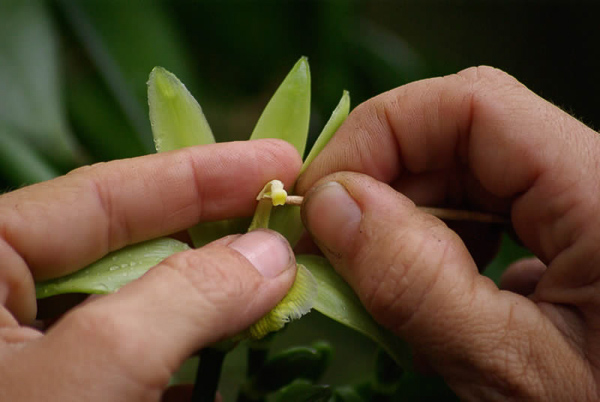
    Vanilla is a climbing vine which is quite fragile and growing it takes a lot of care and patience: you’ll need to wait several years before getting your first vanilla flowers! In addition, growing vanilla also requires hard physical work, is entirely done by hand – which explains why vanilla is the second most expensive spice after saffron. Although vanilla has become an emblem of the area, this plant is actually not native from La Réunion and there are no insect pollinating the flower on the island. Fecundation must therefore be done by hand in order to get the vanilla pods!

    In this episode, you’ll also learn that Maryse is comes from Métropole (= Mainland France) and fell in love with vanilla when she moved in La Réunion. After growing it in her garden for her own consumption, Maryse got the opportunity to get a long-term lease of land in a primal forest which she had to clear out herself. Being a woman and a “Zoreille” were initially a challenge for her. What’s a “zoreille”? Listen to find out!

    Vocab List

    agriculteur, -trice = farmer
    bail (nm) (plural = baux) = lease, lease agreement
    bail emphytéotique = long-term lease
    bouture (nf) = cutting
    défricher = to clear the land (from weeds, etc)
    détourer = to cut (sth) out
    élaguer = to prune
    floraison (nf) = flowering, blossoming
    gousse de vanille (nf) = vanilla pod
    grande surface (nf) = supermarket, superstore
    liane (nf) = liana, creeper, climber
    pied de vanille (nm) = vanilla plant
    pollinisation (nf) = pollination
    polliniser = pollinate
    polliniser = to pollinate
    sécateur (nm) = secateurs, pruner
    sève (nf) = sap
    terre (nf) = land ; soil
    tronçonner = to fell; to saw
    tuteur (nm) = prop, support, stake
    vanille (nf) = vanilla

    Questions:

    1. How fast does a vanilla vine grow when the weather is hot and humid?
    2. When do the vanilla flowers bloom?
    3. What year did Maryse start working in the forest?

    Answers:

    1. 1 meter per month!
    2. Once a year, between October and December (and each flower only lives for a very short time)
    3. In 2006

    Links & Resources

    • www.vanille-reunion.fr
    • https://www.facebook.com/PlantationVanilla-Bourbon

    Did you like this podcast? You can support my work by leaving a review on iTunes. Your kind words warm my heart and also help me be found by more passionate learners of French. Merci beaucoup!

    Subscribe to the podcast on iTunes and never miss a new episode!

    The post FV 087 : (Part 1) How to tell a good quality vanilla? With Maryse Mounier from plantation Vanilla Bourbon appeared first on French Your Way.


    FV 086 : “Brainious” – How to help children reach their full potential? Apr 15, 2018
    Show notes

    Buy Full Notes

    Frenchwoman Stéphanie Brillant is the director (= réalisatrice) of documentary film “Brainious” – “Le cerveau des enfants” in French.

    I first watched the documentary because as a parent, I want to be the best possible guide for my daughter, develop and maintain a strong bond with her based on trust so she can become a confident and independent person.

    Although the film gives food for thought about how to best help children to reach their full potential, it is not only aimed at parents or caregivers: it is also an invitation to understand oneself, to explore how our present behaviours have been shaped by your own upbringing. The approach is never dogmatic and doesn’t tell you how you should raise your child – each way of doing being unique, just as every human being is. It is however fascinating to shed light on how the brain is naturally wired – because what seems like pure psychology is actually related to how the brain works and develops.

    The very culture in which you grow up plays a role in how you respond to events. Stephanie will give examples illustrating how and why French pupils are afraid of making mistakes whereas in the US – where she now lives- she observed these mistakes were being embraced as fully part of the learning process.

    Relationships are key to an individual’s psychological development. Words are powerful and can make or break a sensitive person. Stephanie will share her very own example of how she sabotaged her school years because of the way influential people were seeing her.

    You’ll also understand why you are actually NOT doing children a favour by praising how smart they are; you’ll find other alternatives to help stimulate their resilience and problem-solving skills.

    We’ll discuss why traditional classroom settings are in total contradiction with the way children learn – through movement. Why is it then that they’re asked to stay still for hours at a desk? What does research say and how can we address this paradox?

    Stéphanie interviewed many experts (neuroscientists, researchers, psychologists, specialists in behavioural science, in parenting, etc.); she went to visit and film schools in which the children are learning to be mindful and emotionally healthy. There are very simple tricks that can be taught to children so that they learn to identify and handle their emotions – these should be taught in every classroom!

    “Brainious” explores so many concepts we didn’t have the time to touch on all of them in the interview. I simply encourage you to watch this one of a kind documentary!

    Vocab List

    acquis (nm, adj) = learned knowledge; acquired, learned
    apprentissage (nm) = learning process
    câbler = to wire
    cancre (nm) = dunce
    cerveau (nm) = brain
    conseiller d’orientation (nm) = careers advisor; education edvisor
    croissance (nf) = growth
    démarche (nf) = approach, process
    doué, e (adj) = gifted, talented
    élève (n) = school student, pupil
    élever (un enfant) = to raise, bring up (a child)
    état d’esprit (nm) = mindset
    féliciter = to congratulate
    gérer (une émotion) = to deal with, to handle (an emotion)
    guérison (nf) = recovery, healing
    inné (nm, adj) = innate, inborn, natural
    louer = to praise
    paillette (nf) = glitter
    pleine conscience (nf) = mindfulness
    rature (nf) = crossing out
    réalisateur, _trice = movie director
    réaliser (un film) = to direct (a movie)
    rendre service (à qn) = to so (sb) a favour
    respirer = to breathe
    se dégourdir les jambes = to stretch one’s legs
    se mettre au travail = to start, to begin, to get to work
    tapis roulant (nm) = treadmill
    vexation (nf) = offense

    Questions:

    1. Which 2 types of mindset has psychologist Carol Dweck identified?
    2. How old is Stéphanie’s son?
    3. Why are glitter balls / snowballs used to regulate your emotions?

    Answers:

    1. The fixed mindset and the growth mindset
    2. 7 y.o
    3. They’re a metaphor of what happens in your brain. They help you wait until everything falls back down (= you calm down)

    Links & Resources

    • brainiousfilm.com
    • www.innertainmentforkids.com

    Did you like this podcast? You can support my work by leaving a review on iTunes. Your kind words warm my heart and also help me be found by more passionate learners of French. Merci beaucoup!

    Subscribe to the podcast on iTunes and never miss a new episode!

    The post FV 086 : “Brainious” – How to help children reach their full potential? appeared first on French Your Way.


    FV 085 : In the heat of volcanoes with volcanologist Aline Peltier Apr 01, 2018
    Show notes

    Buy Full Notes

    For the first time in French Voices, I’m interviewing a guest from La Réunion! Réunion Island is a tropical French department (un département d’Outre-Mer = overseas region) located in the Indian Ocean. It is known for its beautiful landscapes, with volcanoes, rainforest, coral reefs and beaches.

    Guest Aline Peltier is a volcanologist (=volcanologue) working at the Observatoire Volcanologique du Piton de la Fournaise. Aline specialises in geodesy, the science of measuring and understanding the earth’s geometric shape. What does that mean, in the context of volcanoes? It means that by using very precise sensors (= capteurs) and GPS devices, the volcanologist is able to notice the distortion, the swelling of the earth –indicators that magma and gas are gathering under the volcano and that an eruption may be imminent. This data is very important to ensure the safety of the population and decide on a potential evacuation of the area.

    What are volcanoes? Why are there even volcanoes? You’ll find that there’s a surprisingly high number of them on the planet, usually located along the tectonic plates although that is not the case at La Réunion. Le Piton de la Fournaise, an icon of the island, is an active volcano with about 2 to 3 eruptions a year and it is well monitored, which makes it a great volcano for study according to Aline.

    Listen to understand what makes some volcanoes more dangerous than others, what magma is made of or when we can consider that a volcano is extinct.

    Of course, as a teacher passionate about etymology, I also got interested in the meaning of the name “Piton de la Fournaise” (you’ll get to learn a bit of Creole there!)

    Aline Peltier will also share with us how she first become interested in volcanoes and what the work at l’Observatoire Volcanologique du Piton de la Fournaise consists of. It is very varied, with some analysis and research work, communication and education of the public but also the impressive and dangerous task of getting as close as possible to a 1200°C lava flow (= une coulée de lave) to collect samples.

    We’ll end the discussion talking about the geology of the island…and why La Réunion is actually growing!

    Vocab List

    anomalie (nf) = anomaly, irregularity
    avant-coureur = precursory
    avorter = to abort, to stop
    barrière de corail (nf) = coral reef
    capteur (nm) = sensor
    cendre (nf) = ash
    colonie de vacances (nf) = summer camp
    coulée (nf) = slide, lava flow ; run, track
    croûte (nf) = crust (Earth)
    déformation (nf) = deformation, distortion
    doctorat (nm) = PhD, doctorate
    évent (nm) = vent, outlet
    féérique (adj) = magical, enchanting; otherworldly
    fusion (en fusion) (nf) = molten
    gaz (nm) = gas
    géodésie (nf) = geodesy
    ignifugé,e (adj) = fire resistant, fire retardant
    manteau (nm) = mantle (Earth)
    menace (nf) = threat
    métropole (nf) = mainland France
    outil (nm) = tool
    plaque tectonique (nf) = tectonic plate
    visqueux (adj) = slimy; viscous
    volcan (nm) = volcano
    volcanologue (n) = volcanologist

    Questions:

    1. Which 3 tools are used by Aline to analyse data and predict eruptions?
    2. How dangerous are the eruptions of Le Piton de la Fournaise?
    3. What’s the difference between magma and lava?

    Answers:

    1. GPS/sensors -> to analyse the swelling/distortion of the volcano
      inclinometers -> to analyse the angle of inclination (of the slopes of the volcano)
      extensometers -> to analyse the cracks / the openings on the earth
    2. Not very dangerous: they’re usually not threatening the population. The eruptions are effusive, not explosive
    3. They refer to the same fluid/material. It is called magma when the molten rocks are still inside the earth’s mantle and it’s called lava once it’s out of the volcano.

    Links & Resources

    • Aline Peltier’s profile page
    • L’Observatoire Volcanologique du Piton de la Fournaise

    Did you like this podcast? You can support my work by leaving a review on iTunes. Your kind words warm my heart and also help me be found by more passionate learners of French. Merci beaucoup!

    Subscribe to the podcast on iTunes and never miss a new episode!

    The post FV 085 : In the heat of volcanoes with volcanologist Aline Peltier appeared first on French Your Way.


    FV 084 : (Part 2) Re-enacting Battles from the Napoleonic era…and why Napoleon is so famous! Mar 15, 2018
    Show notes

    Buy Full Notes

    This is the second part of my conversation with Frenchman Alain Collas, passionate about the Napoleonic Era and a cuirassier during the historical reenactments of the battles of the Napoleonic army.

    What’s exactly happening during the reenactments? I was curious to find out whether they were above all a show for the audience to see action and costumes or whether they were precise and based upon actual facts and details. Historical reenactments really are a passion for which many enthusiasts from all countries gather together, meeting on the very sites where Napoleon fought his battles. They are also a way for them to share their findings and reads on their favourite topics!

    During these events, and during the Journées du Patrimoine (a yearly event in September), the audience gets to see how war surgery was performed before the invention of anaesthetic – we’ll talk about this a bit too!

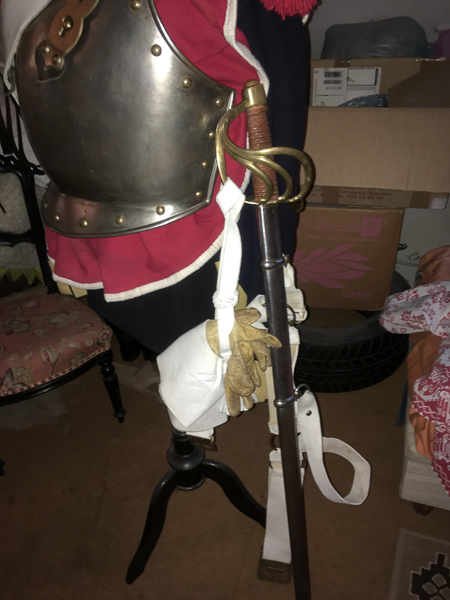
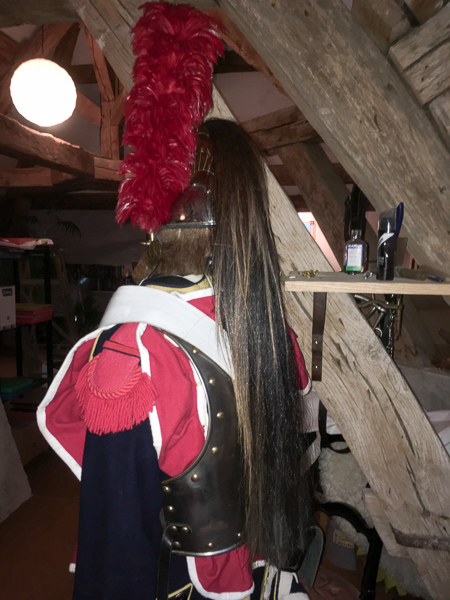
    Alain will also describe his impressive cuirassier uniform (see photos in the shownotes of the episode). You’ll learn that each feature has a specific function going way past ornamental purposes; indeed they can add extra protection to the soldier. For instance, the long ponytail falling at the back of the helmet protects the neck of the cuirassier from sabre blows.

    We’ll end the conversation with a quote from Englishman General Wilson and discuss why French soldiers are said to be particularly brave and determined – they defend the hard-won values and principles inherited from the French Revolution.

    Vocab List

    à blanc = blank (blank bullet, shoot blanks)
    adroit,e = dexterous, deft
    balle (nf) = bullet
    boulet de canon (nm) = cannonball
    campement (nm) = camp, encampment
    charge (nf) = charge (attack); load (weight)
    clairon (nm) = bugle
    dragonne (nf) = strap
    écurie (nf) = stable
    empaler = to empale; to put on a spit
    fonte (nf) = cast iron
    fusil (nm) = rifle; gun, shotgun
    fusillade (nf) = shootout, exchange of gunfire
    jugulaire (nf) = chinstrap
    laiton (nm) = brass
    pistolet (nm) = pistol, gun
    plastron (nm) = breast plate (armour); plastron (fencing)
    poitrail (nm) = breast, chest (horse)
    portée (nf) = range
    rêne (nm) = rein (horse)
    selle (nf) = saddle
    tresser = to braid, to plait, to weave

    Questions:

    1. What kind of food did the Napoleonic soldiers eat in the camps?
    2. How thick is the breast plate protecting the chest of the cuirassier?
    3. What is the difference between the sabre of the cuirassier and the sabre of the hussar?

    Answers:

    1. Simple food, like a modern pot-au-feu / stew: a big pot in which soldiers would boil whatever food they could find (meat, veggies, potatoes, etc.)
    2. 3mm
    3. The cuirassier’s had a straight blade whereas the hussar’s sabre had a curved blade

    Links & Resources

    • Hussards de Lasalle-Montmirail 1814 et Chirurgie au temps de Napoléon 1er (Page Facebook)

    Did you like this podcast? You can support my work by leaving a review on iTunes. Your kind words warm my heart and also help me be found by more passionate learners of French. Merci beaucoup!

    Subscribe to the podcast on iTunes and never miss a new episode!

    The post FV 084 : (Part 2) Re-enacting Battles from the Napoleonic era…and why Napoleon is so famous! appeared first on French Your Way.


    FV 083 : (Part 1) Re-enacting Battles from the Napoleonic era…and why Napoleon is so famous! Mar 01, 2018
    Show notes

    Buy Full Notes

    Today (as well as in the next episode of French Voices), Frenchman Alain Collas will tell you about his passion for the Consulate and Napoleonic eras.

    In the early 19th century, Napoleon led some important battles in my hometown (Montmirail) and its vicinity. When I last went to France to visit my family, I set up to find a passionate person to take you back in time. When I was a child, I loved to go see the historical reenactments of the hussars during the “Journées du Patrimoine”, a yearly event in France held in September. I therefore contacted Alain Collas as he is part of the local association “Les Hussards de Lasale” to learn more about them.

    Originally Hungarian, the word “hussar” (“hussard” in French) also describes soldiers in light cavalry regiments in Napoleon army. I’ll actually let Alain Collas explain to you in more details what hussars were and the different components of a Napoleonic army, but I can already tell you it was fascinating to get to understand the different types of soldiers! Depending on their roles and position on the field, their mobility, speed and equipment would differ. They would ride horses meeting these needs, for instance quick thoroughbreds for the light cavalry and scouts, robust horses for the heavy cavalry. During the historical reenactments, Alain Collas actually plays the role of a cuirassier, one of the components of the heavy cavalry – the equivalent of modern war tanks. Because of the weight of his breast plate and equipment, his horse is stocky and short so that he can mount it more easily. However, because of their outfit and reduced mobility, a cuirassier fallen from his horse would for sure lose his life.

    In this first episode, we’ll also discuss what makes Napoleon so famous worldwide. We’ll talk about his legacy, both on the civil and military points of view. Did you know that the very prestigious order of merit called “la Légion d’Honneur” (= Legion of Honour) was established by Napoleon himself?

    Vocab List

    armure (nf) = armour
    ascenseur social (nm) = social mobility
    baïonnette (nf) = bayonet
    briquet (nm) = lighter; cigaret lighter
    carabine (nf) = rifle
    casque (nm) = helmet
    cuirassier (nm) = cuirassier
    étrier (nm) = stirrup
    fantassin (nm) = infantryman, foot soldier
    garrot (nm) = withers
    gilet pare-balle (nm) = billetproof vest
    hussard (nm) = hussar
    infanterie (nf) = infantry, foot soldiers
    légion d’honneur (nf) = Legion of Honour
    pur-sang (nm) = thoroughbred
    reconstitution (nf) = historical reenactment
    sabre (nm) = sabre, saber
    trapu,e = stocky, thickset; squat, low-built

    Questions:

    1. What makes Alain Collas particularly interested in the Napoleonic era?
    2. What is the 3rd most visited monument in France?
    3. What year did Napoleon become Emperor?

    Answers:

    1. It’s a very important transition time in history, with big changes in society, social mobility and also at a military level.
    2. The tomb of Napoleon in the Invalides (Paris)
    3. December 2nd, 1804

    Links & Resources

    • Hussards de Lasalle-Montmirail 1814 et Chirurgie au temps de Napoléon 1er (Page Facebook)

    Did you like this podcast? You can support my work by leaving a review on iTunes. Your kind words warm my heart and also help me be found by more passionate learners of French. Merci beaucoup!

    Subscribe to the podcast on iTunes and never miss a new episode!

    The post FV 083 : (Part 1) Re-enacting Battles from the Napoleonic era…and why Napoleon is so famous! appeared first on French Your Way.


    FV 082 : Being a mayor in France Feb 15, 2018
    Show notes

    Buy Full Notes

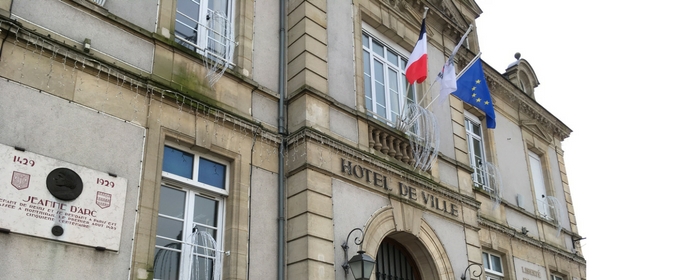
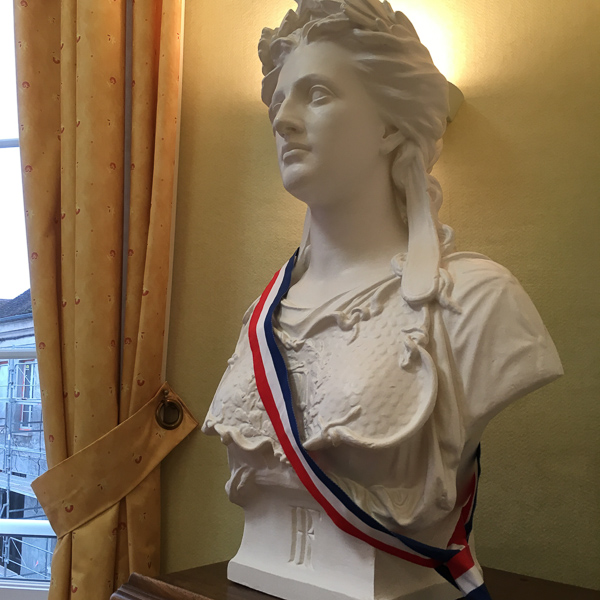
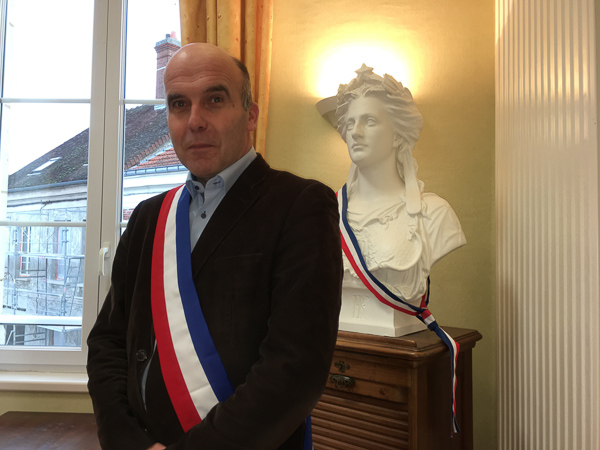
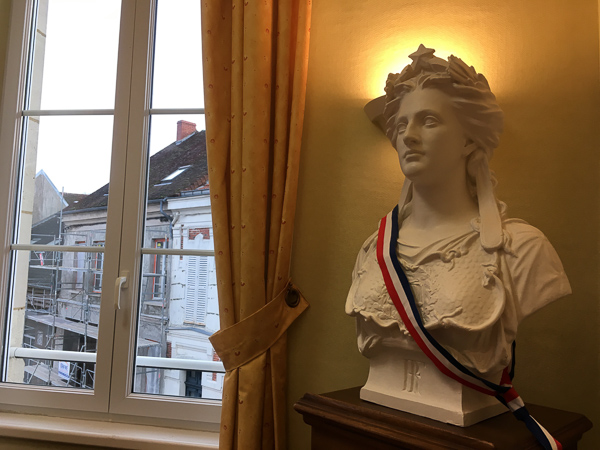
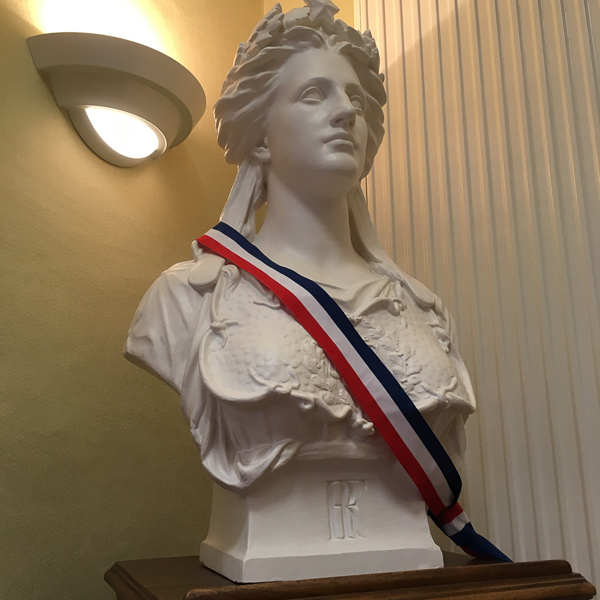
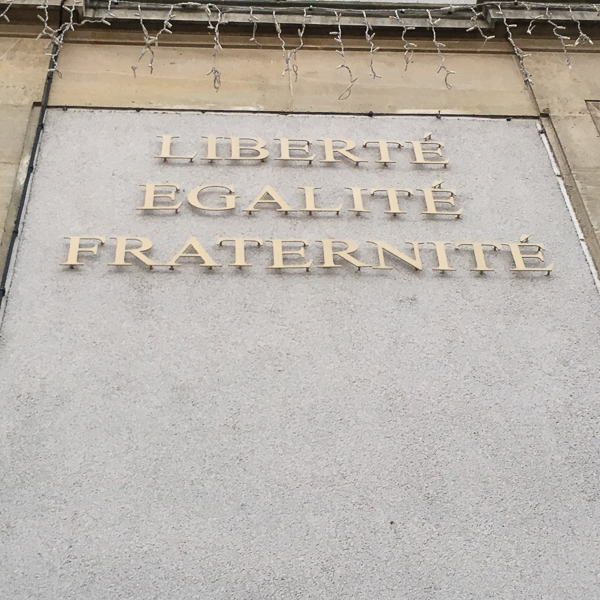
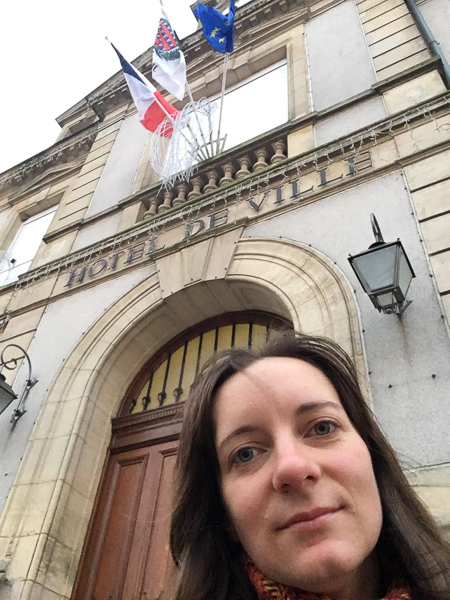
    On my last trip to France, I was welcomed by the mayor of my hometown for an interview at the town hall – in the meeting room, which is also the official room where marriages are celebrated. Find out how a French mayor is elected, what his roles are, facts about getting married in France and much more!

    Episode Timeline

    Part 1
    A mayor and another occupation
    What made E.Dhuicq run for mayor?
    The ballot and office staff list

    Part 2
    How and for how long a French mayor is elected
    The prerequisites to run for mayor
    The roles of a mayor

    Part 3
    Funding / Money
    Projects and initiatives
    What do French citizens go to the town hall for?

    Part 4
    Getting married in France
    Something unique in Montmirail

    Vocab List

    adjoint, e (n) = deputy, second-in-command, assistant
    agriculteur, -trice = farmer
    brie (nm) = brie cheese
    colza (nm) = rape, canola
    commune (nf) = town, municipality, village
    conseil général (nm) = departmental council
    conseiller général (nm) = regional concillor
    cultiver = to cultivate, to grow, to farm
    écharpe (nf) = scarf
    état civil (nm) = register of births, marriages and deaths
    gendarmerie (nf) = police force
    hôtel de ville (nm) = town hall, city hall
    impôt (nm) = tax, levy
    impôt foncier (nm) = property tax
    mairie (nf) = town hall, city hall
    mandat (nm) = mandate
    nommer = to appoint, to nominate
    orge (n) = barley
    parcelle (nf) = plot, parcel
    passer devant le maire = to get married
    préfecture (nf) = prefecture, administrative center
    régalien,ne = sovereign (power)
    remparts (nm.pl) = city walls, rempart, fortification
    salubrité = hygiene, salubrity
    scrutin (nm) = poll, ballot, vote
    se fâcher avec = to get angry with
    taxe d’habitation (nf) = council tax

    Questions:

    1. (Part 1) Does E.Dhuicq make a living from being the mayor of Montmirail?
    2. (Part 1) Which crops does E.Dhuicq grow?
    3. (Part 2) Why was there a new election in Montmirail in 1992?
    4. (Part 3) Where do you register a birth in France?
    5. (Part 4) What are the 3 mandatory elements for a marriage to be valid in France?

    Answers:

    1. Mayor is only a function and he is a farmer.
    2. He grows wheat, barley, canola, cereals, beetroot
    3. The mayor had been killed in a car accident.
    4. At the town hall of the place of birth.
    5. It is in a dedicated room (it’s not possible to change room), in front of the bust of Marianne and the mayor (or one deputy) must be wearing the tricolour scarf

    Links & Resources

    • FV 068: (Part 1) Discover the history of my hometown with greeter Marie-Christine Poisson: frenchyourway.com.au/podcast68
    • FV 069: (Part 2) Discover the history of my hometown with greeter Marie-Christine: frenchyourway.com.au/podcast69
    • My article: “French presidential election: 12 facts about the election process in France”: http://frenchyourway.com.au/french-presidential-election-process

    Did you like this podcast? You can support my work by leaving a review on iTunes. Your kind words warm my heart and also help me be found by more passionate learners of French. Merci beaucoup!

    Subscribe to the podcast on iTunes and never miss a new episode!

    The post FV 082 : Being a mayor in France appeared first on French Your Way.


    FV 081 : (Part 2) About The Smurfs! With Jean Auquier, manager of the Centre Belge de la Bande Dessinée Feb 01, 2018
    Show notes

    Buy Full Notes

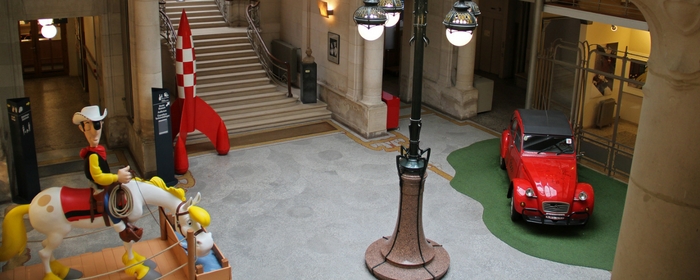
    This is the second part of my conversation with Jean Auquier, the manager of the Centre Belge de la Bande Dessinée in Brussels, Belgium – home to many famous cartoonists and characters. This episode focuses on the cutest and tiniest characters of Belgian comic art, the Smurfs (Les Schtroumpfs). How were they born? Why are the Smurfs blue? What makes the Smurfs so popular? Why is the Smurf language so interesting, linguistically and socially? Here are only a handful of the many aspects we’ll discuss in this interview!

    Episode Timeline

    Part 1
    How the Smurfs were born
    Why are the Smurfs blue?

    Part 2
    A linguistic and social look at the Smurf language
    La Schtroumpfette, the only female Smurf
    Gender of Smurfs

    Part 3
    What makes the Smurfs so popular
    TV and cinema
    Cultural variation between countries
    The Smurfs after their creator’s death

    Part 4
    Jean Auquier’s Smurf reading recommendations!
    Jean Auquier’s favourite Smurf

    Vocab List

    agrafer = to staple
    album (nm) = comic book
    avoir la répartie facile = to be quick-witted, to be quick to respond
    barrage (nm) = dam (water)
    diminutif (nm) = dimuntive, nickname
    en avoir marre = to have enough,to be fed up
    être friand,e de = gourmand, fond of
    faible = weak
    fainéantise (nf) = laziness, idleness, apathy
    flamand,e = Flemish
    foule (nf) = crowd
    long métrage = feature film, full-length film
    lutin (nm) = elf, leprechaun; imp
    marmite (nf) = caldron
    mettre les pieds dans le plat = to put your foot in it/in your mouth
    peluche (nf) = plush toy
    rameuter = to round up; to mobilize for new activity
    récit (nm) = story, tale; account
    salsepareille = rough bindweed, common smilax, sarsaparilla
    sorcier (nm) = wizard, sorcerer
    superpouvoir (nm) = superpower
    tire-bouchon (nm) = corkscrew

    Questions:

    1. (Part 1) Why are the Smurfs blue?
    2. (part 2) What do cartoonists often listen to while they’re drawing?
    3. (Part 2) When was La Schtroumpfette born?
    4. (Part 3) What year did Peyo die? (You’ll have to do a bit of maths here!)
    5. (Part 4) What’s Jean Auquier’s favourite Smurf? What’s mine?

    Answers:

    1. This colour has not already been associated with people…or aliens!
    2. They listen to the radio
    3. In the early 60’s
    4. 1992 (Jean Auquier met him in 1989 and Peyo died 3 years later)
    5. Le Schtroumpf Paresseux. Le Schtroumpf à lunettes

    Links & Resources

    • Website: cbbd.be
    • My article and worksheet “Schtroumpfez-vous français?”: http://frenchyourway.com.au/schtroumpfez-vous-francais
    • French Your Way Podcast, episode 71: “Position of adjectives (PART 1): “voiture rouge” or “rouge voiture”?” – frenchyourway.com.au/podcast71
    • French Your Way Podcast, episode 72 : “Position of Adjectives (PART 2): un homme pauvre, un pauvre homme” – frenchyourway.com.au/podcast72

    Did you like this podcast? You can support my work by leaving a review on iTunes. Your kind words warm my heart and also help me be found by more passionate learners of French. Merci beaucoup!

    Subscribe to the podcast on iTunes and never miss a new episode!

    The post FV 081 : (Part 2) About The Smurfs! With Jean Auquier, manager of the Centre Belge de la Bande Dessinée appeared first on French Your Way.


    FV 080 : (Part 1) The world of Comic Strips and cartooning with Jean Auquier, manager of the Centre Belge de la Bande Dessinée Jan 15, 2018
    Show notes

    Buy Full Notes

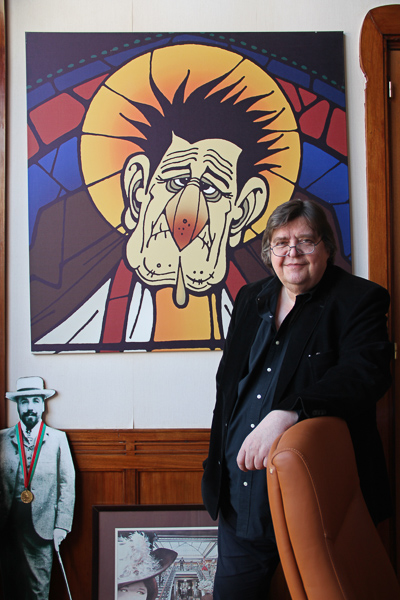
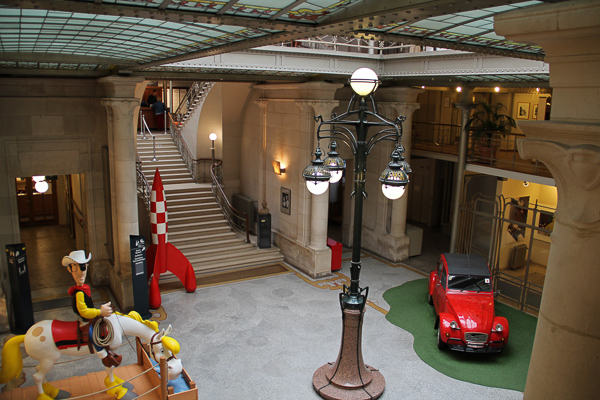
    Jean Auquier is the manager of the Centre Belge de la Bande Dessinée in Brussels, Belgium. Belgium is home of many famous cartoonist and characters such as Tintin, the Smurfs (Les Schtroumpfs), etc. Why is it that comic strip became a specialty, a symbol of this small country? Learn about the history and the evolution of this popular form of art and culture and about the Centre Belge de la Bande Dessinée itself in the first part of this fascinating conversation with Jean Auquier!

    Episode Timeline

    Part 1
    How is Belgium associated to comic books?
    How the first comic strips were published
    The art of creating suspense and hooking the reader

    Part 2
    The art of being funny
    Gaston Lagaffe, a famous anti-hero
    The first comic books

    Part 3
    What is direct colour?
    The price of comic books

    Part 4
    Le Centre Belge de la Bande Dessinée – a heritage building
    Why the expression « Centre de la BD Belge » doesn’t work
    What you can see in the museum, projects and involvements

    Vocab List

    accrocher = to hook on
    bande (nf) = strip
    BD, bande dessinée (nf) = comic strips, comic books
    bulle (nf) = speech bubble
    cartonné,e = hardcover
    case (nf) = box, square [comic book]
    dessinateur, -trice = cartoonist
    en huis clos = behind closed doors; [legal] closed hearing
    encre de Chine (nf) = Indian ink
    exposition (nf) = exhibition
    feuilleton (nm) = saga; serial, series
    gag (nm) = joke, gag
    lettrage (nm) = lettering
    libraire = bookseller, bookshop owner
    mise en page (nf) = layout
    phylactère (nm) = speech bubble
    planche (nf) = [picture] plate; board
    rebondir = to bounce back and forth
    rebondissement (nm) = unforeseen/unexpected/sudden development
    rédaction [de journal] (nf) = editorial board; writing room, news room
    relier = to bind
    reliure (nf) = binding
    souple = paperback

    Questions:

    1. (Part 1) When did the art of comic books start in Belgium?
    2. (Part 2) Why was the character Achille Talon originally created?
    3. (Part 3) Why are Belgian comic books so expensive compared to other countries’s books?
    4. (Part 4) What’s the exact date of the opening of the Centre Belge de la BD ?

    Answers:

    1. In the 1920’s
    2. To fill gaps: if an author/cartoonist was missing a deadline, if there was a spot in the magazine that wasn’t filled with advertising, etc.
    3. You buy them because you love the author/cartoonist or the topic/story. You put them on a shelf, not in a box. They’re a cultural item, part of a collection.
    4. October 6th, 1989

    Links & Resources

    • Website: www.cbbd.be

    Did you like this podcast? You can support my work by leaving a review on iTunes. Your kind words warm my heart and also help me be found by more passionate learners of French. Merci beaucoup!

    Subscribe to the podcast on iTunes and never miss a new episode!

    The post FV 080 : (Part 1) The world of Comic Strips and cartooning with Jean Auquier, manager of the Centre Belge de la Bande Dessinée appeared first on French Your Way.


    FV 079 : (Part 2) Boots to Bliss: The pilgrimage to Santiago de Compostela by Claude Tranchant Jan 01, 2018
    Show notes

    Buy Full Notes

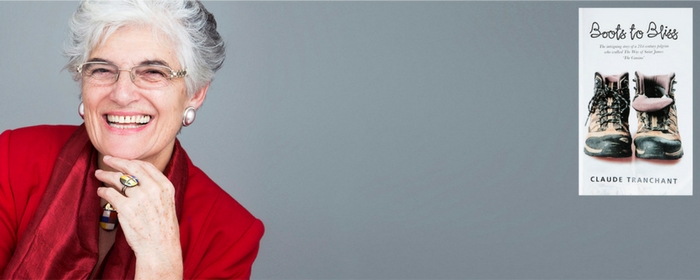
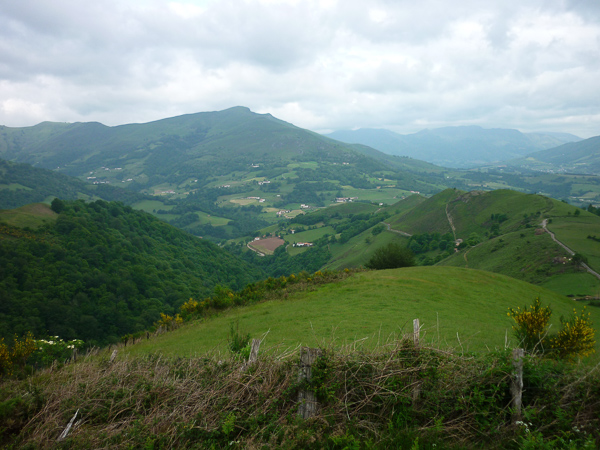
    Claude Tranchant is a French lady now living in Brisbane, Australia. On her 64th birthday, she set off to walk the way of Saint James (le pélerinage de St Jacques de Compostelle), covering over 2,500 km through France and Spain, crossing the Pyrenees to reach Santiago de Compostela. All alone. Oh, and she had never hiked before! Her physical journey soon became a spiritual and a humane one too. Find out more about the St James’s Way pilgrimage, the fears Claude had to overcome and how she changed forever along the way.

    Part 1 of this interview located in episode 78.

    Episode Timeline

    Part 1
    Claude’s backpack: content
    Why Claude wrote a daily diary
    Water supply on the walk

    Part 2
    Very basic comfort!
    The pilgrims’ radio?
    Claude’s injury

    Part 3
    Encounters on the road
    Mixed feelings at the end of the road

    Part 4
    Writing Boots to Bliss
    Inspiring people…and walking some more!

    Vocab List

    ampoule (nf) = blister
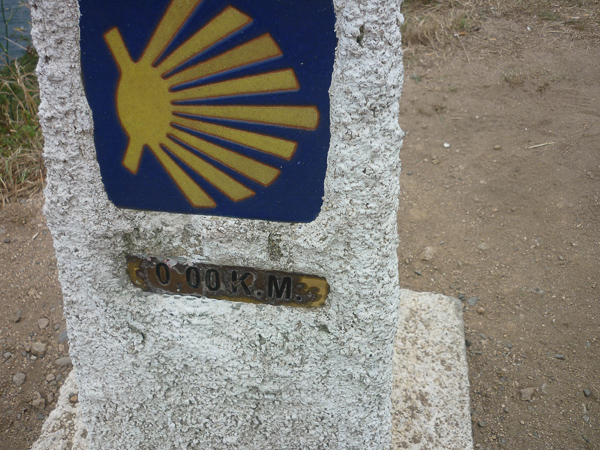
    borne (nf) = distance marker, kilometer marker
    bouche à oreille (nm) = word of mouth
    calepin (nm) = notepad, small notebook
    faciliter les choses = to make things easy/easier
    genou (nm) = knee
    journal (nm) = diary
    orteil (nm) = toe
    sac de couchage (nm) = sleeping bag
    se faire mal = to hurt oneself
    semelles orthopédiques (nf) = orthotic inserts, arch supports, orthopedic soles/insoles
    tapis de sol (nm) = floor mat
    têtu,e = stubborn

    Questions:

    1. (Part 1) Why did Claude write a diary?
    2. (part 2) Where was Claude when she injured herself? Which body part was that?
    3. (Part 3) Give 2 reasons why Claude was scared at the end of her pilgrimage.

    Answers:

    1. For her children to have written notes of her in case anything happened to her.
    2. She was going down a slope in the Massif Central and hurt her knee.
    3. After 100 days connecting with herself and nature, she was scared of going back to a materialistic/consumerist world. Also, she had changed so much that she feared there would be a big gap and misunderstanding between herself and those she knew.

    Links & Resources

    • Website: facebook.com/BootsToBliss
    • Get “Boots to Bliss” on Amazon

    Did you like this podcast? You can support my work by leaving a review on iTunes. Your kind words warm my heart and also help me be found by more passionate learners of French. Merci beaucoup!

    Subscribe to the podcast on iTunes and never miss a new episode!

    The post FV 079 : (Part 2) Boots to Bliss: The pilgrimage to Santiago de Compostela by Claude Tranchant appeared first on French Your Way.


    FV 078 : (Part 1) Boots to Bliss: The pilgrimage to Santiago de Compostela by Claude Tranchant Dec 15, 2017
    Show notes

    Buy Full Notes

    Claude Tranchant is a French lady now living in Brisbane, Australia. On her 64th birthday, she set off to walk the way of Saint James (le pélerinage de St Jacques de Compostelle), covering over 2,500 km through France and Spain, crossing the Pyrenees to reach Santiago de Compostela. All alone. Oh, and she had never hiked before! Her physical journey soon became a spiritual and a humane one too. Find out more about the St James’s Way pilgrimage, the fears Claude had to overcome and how she changed forever along the way.

    Vocab List

    pélerin,e = pilgrim
    pélerinage (nm) = pilgrimage
    bâton de randonnée = walking pole
    logement (nm) = accomodation
    hébergement (nm) = accomodation
    coquille saint Jacques (nf) = scallop shell
    balise (nf) = beacon, marker
    baliser = to mark out
    randonnée (nf) = hike
    sac à dos (nm) = backpack

    Links & Resources

    • Website: facebook.com/BootsToBliss
    • Get “Boots to Bliss” on Amazon

    Did you like this podcast? You can support my work by leaving a review on iTunes. Your kind words warm my heart and also help me be found by more passionate learners of French. Merci beaucoup!

    Subscribe to the podcast on iTunes and never miss a new episode!

    The post FV 078 : (Part 1) Boots to Bliss: The pilgrimage to Santiago de Compostela by Claude Tranchant appeared first on French Your Way.


    Previous 1 6 7 8 9 10 15 Next

    Related Podcasts

    Making Sense with Sam Harris

    1

    Making Sense with Sam Harris Education
    Grammar Girl

    2

    Grammar Girl Education
    Good Life Project

    3

    Good Life Project Education
    Explain It to Me

    4

    Explain It to Me Education
    Team Never Quit

    5

    Team Never Quit Comedy
    Optimal Living Daily – Personal Development and Self-Improvement

    6

    Optimal Living Daily – Personal Development and Self-Improvement Alternative Health
    footer-logo

    Contact Us

    Toll Free: 844-670-7747

    Links

    • Home
    • Top Charts
    • Networks
    • Apps
    • Independents Podcasts
    • Podcast Advertising
    • Podcast News
    • Contact Us
    • About Us
    • Analytics & Insights

    Stay Connected
      Privacy, Terms of Use & Our Code of Ethics Protecting Content Creators Copyrights