Show notes
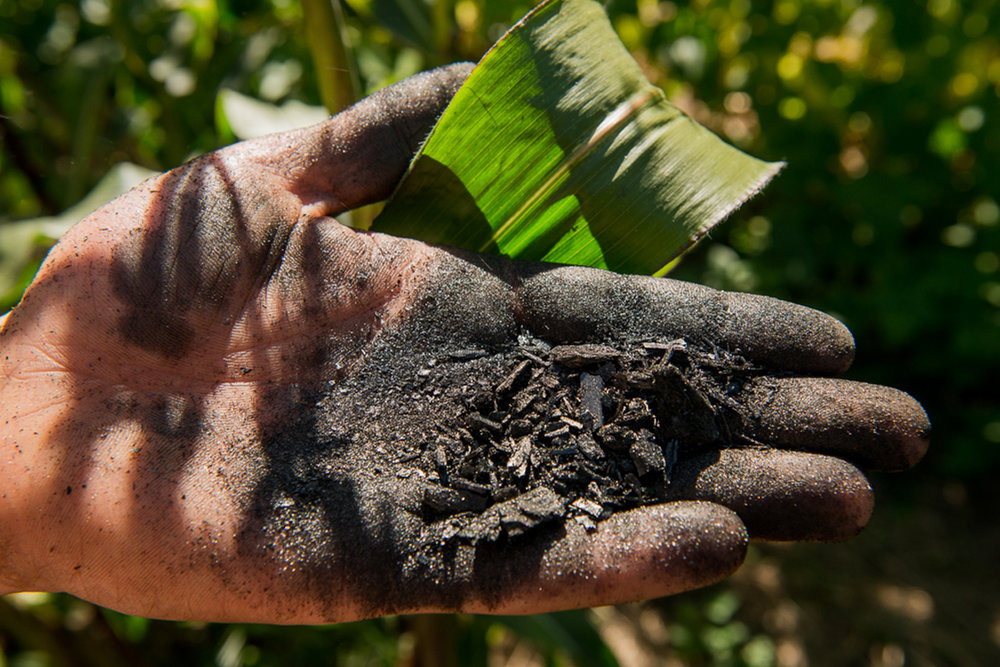
Backed Up Like An Alabama Shit TrainIn early 2018 in a small town called Parrish Alabama, just northwest of Birmingham, the smell was everywhere. Ten million pounds of sewage sludge in rail cars were on a routine trip to a landfill when the town of West Jefferson- the next town on the rail route- said no more sludge was allowed to pass through. Parrish had no such laws on the books; so while the sludge’s owners worked on another way to get it to its landfill just 25 minutes away, Parrish got stuck with the railcars on a section of track in a residential area, and they didn’t move. For days. And then weeks. The train cars finally left- two months later.The burning question is in a town of this size, where did all this shit come from? The answer: one thousand miles away in New York City.New York City makes almost half a million tons of sewage sludge per year. They used to just throw it in the ocean until 1988. That’s frowned upon now, so it needs to go somewhere else. Because there’s so much of it and the city has a lot of resources to move it, New York City sludge goes unusually far for sewage: it’s loaded into trucks and train cars and hauled to farms in upstate, Pennsylvania, Virginia, even Colorado and Alabama. That’s a lot of expense, a lot of carbon to move it around, and a lot of gross smells all over the country. And for a lot of folks, it’s the only part of New York City that they will ever see. It’s that one place. You know, the one with the shit.A constant feature of big cities throughout history is a big poop problem. The local food movement’s made us very aware of how much food is imported into cities. Less talked about, but just as true, is that for every ton of food brought in, about a ton of sewage sludge is born- and it has to go somewhere. How we handle that massive flow of sewage drives all kinds of environmental trends—water pollution, whether or not we can eat seafood, soil damage, and climate change. Poop is serious business and to understand how it affects us, we have to go all around the world. We’re going to talk sewage history, and what that has to do with agriculture and climate change. And we’re going to talk about a way to deal with some of our ongoing poop problems with a really old technology: biochar.Historically, a lot of societies handled human waste by collecting it and putting it on crop fields—maybe most famously, East Asia. Western cultures tended to see this practice as horrific and disgusting; and there are obviously big health risks at play any time you’re using raw sewage for agriculture. But I want to highlight something we’ll come back to: when we’re talking sewage, especially in modern times, there’s so much volume that there are really only two places to put it. The land or the ocean. That’s it. We’ll get to that later.• England handled sewage by dumping it into the ocean, via the nearest local river. It seems like a quick & easy way to dispose of waste- the river carries everything away. The East Asia strategy took a lot of painstaking and smelly collecting and hauling; the English method was very straightforward. But as one can imagine, especially as English cities started to grow in the 1800s, their rivers died. But that wasn’t the only problem.This approach to sewage destroyed England’s soils. And because the US’s core cultural practices like sewage management mostly came from England, the US experienced a lot of these problems as well. But nowhere was it more extreme than England itself.As England’s rural population was forced into cities starting in the 1830s, they kept eating crops grown in the countryside. But instead of pooping it back out into the countryside because that’s where they lived, now the nutrients were washing out to sea via the Thames and other local rivers. This one-way flow of nutrients wrecked England’s farmland. It was like they were mining the soil for nutrients—nitrogen and phosphorus and calcium left the soil and went into the crops, were harvested and departed for the cities, flushed down the river, and never returned. By the 1850s, crop yields were clearly going down and people were starting to panic. England found creative ways to fill its hunger. Some traditional brick-making areas found layers of soil and rock that, when ground up and mixed with water or acid, made plants grow really well. These geological layers were fossilized poop and other debris that built up in the shallow oceans that once covered southeast England, or coprolite. Coprolite mining became a huge industry in England. But it still wasn’t enough. Fertilizer rustlers started fanning out through Europe. They raided catacombs in the Mediterranean to steal bones. People dug through old battlefields like Waterloo for the remains of dead soldiers, ground them up, and shipped them to England as fertilizer. A German crop scientist of the time, Justus von Liebig, described England as “a vampire hang[ing] upon the breast of Europe, and even the world, sucking the lifeblood.”• Like most vampires, England couldn’t be satisfied by petty graverobbing. Its farms remained threadbare. The British Empire started its most ambitious agricultural project yet: mining tons and tons of mummified bird shit, called guano, from small desert islands on the other side of the globe, off the coast of Peru. Seabirds raised their chicks here, gorging on rich shoals of fish. Then they and their chicks pooped a lot of those fish nutrients back out on land. It’s a desert, so instead of decomposing or washing away in rain, the bird feces just dried out into hills of chalky, concentrated plant nutrients. The Inka and other peoples living in the Andes used guano by the llama-load to give their crops a boost, but England and other colonial powers hauled it out by the ton; ran brutal mining camps to dig it away; and fought wars over who got to control big piles of dried-up bird shit. Because you could also use guano to make gunpowder.There’s a whole history to tell about the wars colonial powers fought over guano. But the tragic part is this whole mess could have been avoided by decent sewage handling back in London and the other imperial capitals of the West. China had been making both fertilizer and gunpowder from human waste for centuries. There wasn’t any law saying “we must throw all of our sewage out to sea”—that’s just how England rolled.In the centuries since, English and American-style sewage handling’s seen a lot of improvements. And with synthetic fertilizers, the one-way flow of nutrients from fertilizer to farm to city to waste became doable, at least for a while. The short-term emergency went away and we kind of forgot about it.But there’s still a big problem. There’s still a limited amount of phosphorus. It’s a major plant nutrient that we can’t just make, we have to mine it. There’s a lot of controversy about how much phosphorus is left- estimates range from about 100 to 200 years. But bottom line, the phosphorus we eat mostly goes into the sewage-- so just throwing it away is a big mistake. We need to find a clean, safe way to close that loop and bring used phosphorus back into crop fields. There’s no other way to sustain human life.• But, using sewage as fertilizer has some obvious problems. There’s disease, odors, bugs. and as a food safety professional, “no raw sewage allowed” is like our Prime Directive. Heavy metals can be an issue in some areas, but they’re not the hazard they used to be. Most heavy metals in city wastewater come from industrial discharge and as the US manufacturing sector has waned, so have our heavy metal discharges. But other pollutant challenges remain: there are other issues: drug residues, and in winter there can be some salt from the streets. So anything we do to close that nutrient loop has to take care of these extra goodies in the sewage.The other big problem with closing that loop is that sewage sludge is heavy and bulky. It’s got nutrients, but most of it is not nutrients- it’s just stuff. You have to use a LOT of it for a crop to get nutrients it needs. Trucking that much to the farm is prohibitive. It costs so much to move that there’s no way farms can pay for it, it’s a huge financial burden on cities, and it takes enormous amounts of fossil fuels. And as Parrish knows, trucking makes a string of towns that have to deal with the smell.So: to recap. We need a way to spruce up sewage. We’ve got to make it clean—remove pathogens, drug residues, smells, and sometimes heavy metals. And we need to distill it down, making it light and a lot more concentrated so that we don’t have to choose between saving nutrients and saving on greenhouse gases.The approach getting the most early traction right now is anaerobic sludge digestion—where you stew the goods and make biomethane, or natural gas. But there’s another approach that I think works better at all the things we need to do for sewage reuse. And that’s biochar. • How do I love biochar. Let me count the ways. It does roughly the same things that anaerobic digestion does, it’s just better at it in every possible way. In my humble opinion. Anaerobic digestion’s big selling point is twofold: it cuts down sludge volume by turning a lot of it into a combustible gas that you can use for energy. But biochar also does both those things, and it’s better at it. The way you make biochar is by heating up stuff to temperatures where it would normally burn but you do it in a closed vessel so there’s no oxygen. So instead of burning it just gives up gases that you can burn on-site or truck and pipe around just like with natural gas. That heating process, by the way, is called gasification or pyrolysis—and biochar, which is just short for charcoal made from biological materials, is the solid, blackened leftovers after all the stuff that can turn into gas has left.Anaerobic digestion concentrates sludge down to something lighter and richer in nutrients— somewhat. Anaerobic digesters can reduce sludge by half, at the absolute max. Biochar easily reduces mass by more like 50-70%, offering huge savings in fossil fuel use and trucking costs over anaerobic digestion.Let’s talk about after processing. Leftovers from anaerobic digestion are still mostly water; they still have to be dried, which takes a lot of energy, before they can be sent to their final destination. And dried anaerobic sludge isn’t good for much: it’s less nasty than raw sewage, but still has pathogens, drug residues, and a lot of smell. You can’t use them on food crops. So even after going through all that fuss with anaerobic digestion, a lot of municipal treatment districts find they still have to pay to dry and haul away tons and tons of stinky sludge that nobody wants. With biochar, on the other hand, smells, pathogens and drug residues don’t survive the charring process; and for places that do have problematic levels of heavy metals in their waste, biochar concentrates the sludge down enough that extracting the heavy metals from the char, or just landfilling it, is way more doable than it is with anaerobic digestion. Another thing, anaerobic digestion only works with liquid waste that breaks down quickly. Sewage and wet slurries from certain types of livestock operations are pretty much the only thing it’s good for. But a well-made biochar gasifier can take on anything made of carbon. ANYTHING.Sewage sludge? Naturally. Manure: Yes.Wet or dry food waste: Yes.Wood? Yes.Other cellulosic biomass like crop wastes and switchgrass: Yes.Plastic that recyclers don’t accept anymore because there’s no market for the breakdown products: Yes. You can turn plastic in biochar. It’s made of carbon, it’ll work.Plywood, veneer, and other construction materials that aren’t safe to compost or burn because they’re part wood and part plastics and glue: Yes.Old clothes that can’t be recycled or composted because they’re mixed natural and synthetic fibers: Yes.Tires: YES.Dead bodies: like everything else on this list that’s kind of juicy, would probably have to be dried first. But technically doable.And once you’ve taken whatever your raw material is through that charring process, biochar is unique biological fertilizers. Charcoal breaks down very, very slowly. Like, “it takes centuries” slowly. It is a great way to sequester carbon. • Most people who know biochar know it as something you put in soil to help plants grow. Some biochars, like those made of wood, are less a fertilizer and more fertilizer-adjacent. They don’t have nutrients, but they give soil better texture and absorbency. It holds on to water and nutrients better. As a crop scientist, it’s funny— when the popular press talks about agriculture, it talks a lot about nutrients. It doesn’t mention that a lot of soils won’t hold those nutrients— when it rains, nutrients and water just run out like a sieve. Sandy soils and tropical red clay soils are both really prone to this. Which is why folks in Brazil, when they’re clearing forest for farms, have always been on the lookout for something called- and I’m gonna butcher this- terra preta do indio. It means Indian dark earth and it’s not a natural occurrence. It’s remnants of communities who lived in the Amazon. They made lots of biochar-- charcoal from wood, human and animal waste, pottery shards, bones, and other kitchen trash, and added it to the soil. It created patches of rich, dark soil that are still in the Amazon today, covering an area twice the size of Great Britain, because charcoal doesn’t break down. And we need to talk someday about pre-contact civilizations in the Amazon—there were cities in there. Archaeology in the Amazon is very difficult—it’s a big floodplain with no stone to make buildings or tools with, so everything was made of wood and textiles which decay almost immediately. But charcoal and biochar don’t. They last in a soil for hundreds or thousands of years. It’s one of the best witnesses we have at this time to a way of life that was taken down by European contact. There’s still a lot of debate in the modern West on whether biochar was just a way to get rid of garbage or a deliberate strategy for enriching the Amazon’s poor red clay soils. To be honest, I find that debate kind of silly. I’m interested in biochar because it’s really good at both. And Brazilian peasants didn’t need someone with a PhD in chemistry to tell them charcoal-enriched soils farm better—they’re the ones who told the PhDs. Making more terra preta is a popular topic in the permaculture community. As well it should be. It improves your soil, makes plants happy, and sequesters carbon for hundreds or thousands of years. One thing that keeps popping up in modern restoration attempts, though, is a preoccupation with making it out of wood. Wood is easy to char because it’s relatively dry, but there’s also this mindset that carbon equals trees. Even though everything alive is made of carbon. So it can be kind of a mental glitch that can blind us to non-tree carbon opportunities sometimes.Charcoal is like Velcro for nutrients. It’s got all these little pores and single-atom cation exchange sites—they’re like thirsty for potassium, calcium, ammonium, and other nutrients. So if you make a biochar out of something like wood, that doesn’t already have a lot of those things in it, well now the biochar wants to suck it out of something else. If you just put raw wood biochar on your soil, the biochar’s actually better at soaking up nutrients than plants are and so the plants wind up stunted. That’s why the permaculture forums also talk a lot about needing to “charge” biochar up with nutrients. And since this is permaculture forums we’re talking about, often what they mean by that is peeing in it. Now if you’re just DIYing tomatoes for personal use, that’s fine, whatever, have a blast. But if we’re talking city-scale waste handling, there’s a lot of folks out there with drug-resistant gonorrhea. So by all means, look me in the eye and say “don’t worry, urine is sterile”…
Full show notes at the publisher 
 Our TOPPODCAST Picks
  Stay Connected