TopPodcast.com
Menu
  • Home
  • Top Charts
  • Top Networks
  • Top Apps
  • Top Independents
  • Top Podfluencers
  • Top Picks
    • Top Business Podcasts
    • Top True Crime Podcasts
    • Top Finance Podcasts
    • Top Comedy Podcasts
    • Top Music Podcasts
    • Top Womens Podcasts
    • Top Kids Podcasts
    • Top Sports Podcasts
    • Top News Podcasts
    • Top Tech Podcasts
    • Top Crypto Podcasts
    • Top Entrepreneurial Podcasts
    • Top Fantasy Sports Podcasts
    • Top Political Podcasts
    • Top Science Podcasts
    • Top Self Help Podcasts
    • Top Sports Betting Podcasts
    • Top Stocks Podcasts
  • Podcast News
  • About Us
  • Podcast Advertising
  • Contact
Not in our directory?
Add Show Here
Podcast Equipment
Center

toppodcastlogoOur TOPPODCAST Picks

  • Comedy
  • Crypto
  • Sports
  • News
  • Politics
  • True Crime
  • Business
  • Finance

Follow Us

toppodcastlogoStay Connected

    View Top 200 Chart
    Back to Rankings Page
    Government

    Development Drums

    A podcast about development

    Advertise

    Copyright: © Owen Barder

    • Apple Podcasts
    • Google Play
    • Spotify

    Latest Episodes:
    Episode 38: Bob Geldof (edited) Mar 22, 2013
    Show notes

    This podcast presents the edited version (about half an hour) of a longer interview with Bob Geldof; if you prefer you can listen to the full interview (1 hr 15 minutes) in episode 39 of Development Drums instead.

    Bob Geldof and Owen Barder

    Bob Geldof is a singer, songwriter, author, actor and part-time political activist. As lead singer of the Boomtown Rats, Geldof had chart success with Rat Trap and I Don’t Like Mondays. In 1984, Bob Geldof and Midge Ure brought together a group of musicians under the name Band Aid to record a single they wrote together, Do They Know Its Christmas?, which became one of the best-selling singles of all time. They went on to organise the Live Aid charity concert in 1985, and the Live 8 concert in 2005.

    I met Bob Geldof in London to talk about his work fighting poverty in Africa. He talks in this podcast about 8 Miles, a new private equity company which he helped to establish to channel investment into Africa. We also talk about Band Aid, Live Aid, Live 8 and the Gleneagles Summit. He is characteristically robust about suggestions that Band Aid may have helped portray Africa in an negative light, and about allegations that money intended for famine relief was diverted to opposing sides in Ethiopia’s civil war.

    In the longer version of the interview, also available as a Development Drums podcast, Bob reflects on how his own upbringing may have led to him responding as he did to news reports of famine in Ethiopia, and on the planning of Live Aid, Live 8 and Gleneagles. (Everything in the highlights is also in the longer version.)

    Read the transcript of the full interview with Bob Geldof


    Episode 37: From Poverty to Power Mar 01, 2013
    Show notes

    Duncan Green, Senior Strategic Adviser at Oxfam, talks about his book From Poverty to Power.

    Duncan Green

    From Poverty to Power argues that it requires a radical redistribution of power, opportunities, and assets to break the cycle of poverty and inequality and to give poor people power over their own destinies. According to Duncan Green, the forces driving this transformation are active citizens and effective states. Active citizens are important because people living in poverty must have a voice in deciding their own destiny, fighting for rights and justice in their own society, and holding states and the private sector to account. Effective states are important because history shows that no country has prospered without a state structure than can actively manage the development process.

    In this podcast Duncan Green talks about what he means by an effective state and by active citizens; whether there is a tension between them, and the scope and limitations for outsiders to try to accelerate and shape the change process.

    Download the transcript.


    Episode 36: Accountability and Openness Feb 24, 2013
    Show notes

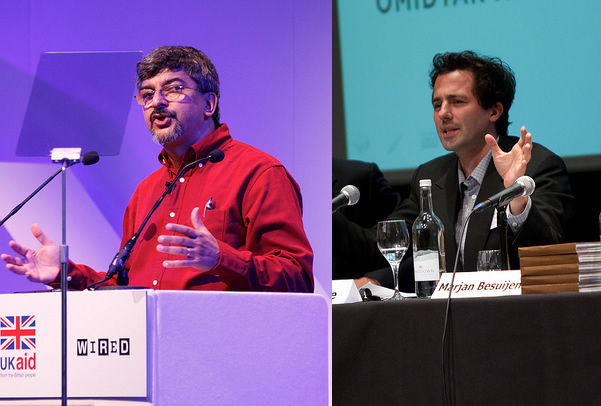
    In this episode, Rakesh Rajani and Martin Tisné discuss accountability and openness.

    Rakesh Rajani and Martin Tisne

    Rakesh Rajani is a Tanzanian civil society leader who currently leads Twaweza (meaning ‘we can make it happen’ in Swahili), a 10-year initiative to enhance access to information, citizen agency, and public accountability in East Africa. Until the end of 2007 he served as the founding Executive Director of HakiElimu, an independent organization that promotes citizen engagement in education in Tanzania. He advises/serves on several boards, including Revenue Watch International, Aidspan (a watchdog of the Global Fund), the International Budget Partnership (IBP), ONE, the Foundation for Civil Society in Tanzania (FCS), and theHewlett/Gates Foundations initiative on Quality Education in Developing Countries (QEDC).

    Martin Tisné is As director of policy at Omidyar Network. Before that, he director of the Transparency and Accountability Initiative where he helped found the Open Government Partnership. Previously, Martin founded the aid transparency campaign Publish What You Fund, helped launch Integrity Watch Afghanistan, and was a founding staff member at Tiri.

    This is the first of three episodes of Development Drums which look at the relationship between effective and accountable states, active citizenship and development.

    Download the transcript.


    Episode 35: Migration and Development Dec 01, 2012
    Show notes

    In this episode, Owen talks to fellow CGD Senior Fellow Michael Clemens about the relationship between migration and development.

    In the first section Michael talks about the impact of migration on migrants themselves, and how micro-data has been used to expose a significant inequality of opportunity based on location, explaining more about a person’s income than everything else put together. Michael discusses the role of movement of people in within the development process, highlighting the limitations of using place as the main indicator of poverty reduction, given the wider global system and international labour market in which migrants participate. In the second part Michael responds to various criticisms of migration from a receiving country perspective, focusing on the costs and benefits of the economic, communal and cultural effects of migration, and the need for a managed transition to minimise costs and maximise benefits. In the third part Michael talks about the impact of migration from the perspective of the migrants’ countries of origin. Michael emphasises that while the reasons behind migration may be harmful, migration itself is not, and argues that fostering educational flexibility works better to maximise benefits from migration, than preventing educated migrants from leaving their countries. The final part of the episode Michael explains incorporating migration into development policy can be politically viable, citing his part in a change to US migration policy to allow Haitians to move to America, and offers his thoughts on why policy must and will adapt to foster inevitable global movement rather than inhibit it.

    Download transcript (pdf)

    Running time 1 hour and 14 minutes; size 53.7 Mb

    Episode 34: The Economics Of Enough Oct 10, 2012
    Show notes

    In this episode, Owen talks with author and economist Diane Coyle about her latest book ‘The Economics Of Enough, How To Run The Economy As If The Future Matters’.

    In the first section, Diane shares her thoughts on economic growth as a satisfactory goal for economic and social policy, and discusses the measure of Gross Domestic Product in relation to indicators of happiness and welfare.

    Diane Coyle

    In addressing the challenges of economic growth, Diane highlights the need for a measure of wealth that transcends money and natural infrastructure to factor in human capital, environmental capital and natural resources. Diane argues for going ‘back to basics’ on GDP, and introducing systematic asset measurement to monitor and control long-term change and assess how much is taken from future generations.

    Diane explains the implications of, and offers solutions to, the ‘crisis of capitalism’: the financial crisis; the underlying problem of public debt and the structure of the welfare system; inequality and the loss of trust and social capital; and the lack of customer-focused financial innovation. Diane explains these challenges in relation to the related ‘crisis of governance’ that enables them to persist.

    In the last section Diane discusses her ‘manifesto for enough’ in relation to how it addresses the challenges discussed earlier, along with how much it leaves unresolved.

    Running time 1 hour and 7 minutes; size 44.5 Mb.

    Download transcript (pdf)


    Episode 33: Complexity and Development Aug 20, 2012
    Show notes

    This is a special edition of Development Drums. Instead of interviewing a guest, as normal, we bring you a presentation on Complexity and Development by Owen Barder.

    This is the audio-only version of an online presentation with slides, which is available from the Center for Global Development.

    You can also download the slides and full transcript.

    In this presentation, adapted from his Kapuściński Lecture of May 2012, Owen Barder explores the implications of complexity theory for development policy. He explains how traditional economic models have tried and failed to understand why some countries have managed to improve living standards while other countries have not. Drawing on ideas about complex adaptive systems developed in in physics and biology, he argues that development is a property of a system, not the sum of what happen s to the people within it.

    This view of development has important policy implications for policy-makers who want to bring about faster development in their own country, or to help other countries to make faster progress. The presentation finishes with seven implications for development policy.

    This Development Drums podcast is just the audio, for those who want to listen to the presentation in the gym or during their commute. If you would rather see the full presentation including slides, you can do so on the CGD website.

    Size: 41.5 Mb


    Episode 32: Gender and Development Aug 10, 2012
    Show notes

    Gender permeates all development issues, and there is growing debate surrounding how best to implement and promote gender balance and equality throughout the development agenda.

    This episode broadly focuses on two different views of why we might be interested in women in development: the first based on instrumental reasons (what can women and girls do for development) and the second on more structural and contextual reasons (what development can do for women and girls).

    Our guests are Andrea Cornwall of the Institute of Development Studies and Prue Clarke of New Narratives.

    Andrea Cornwall talks of ’empowerment-lite’: the view that small-scale interventions often provide a palliative without addressing the structural causes of inequitable power relations; that they often tackle symptoms but not underlying causes of power imbalance. She argues that a focus on ‘results’ tends to emphasize instrumental interventions and does not give
    enough priority to interventions which help bring about changes in power dynamics.

    Prue draws on her experience in working with women journalists in Africa to give examples of how the right small-scale instrumental interventions can change the political context and tackle causes of imbalance, focusing on stories that relate to women and children such as high teen pregnancy, unsafe abortion and female genital cutting.

    Download transcript (pdf)

    Running time 1 hour and 1 minute; size 39.9 Mb


    Episode 31: David Roodman on Microfinance May 28, 2012
    Show notes

    Center for Global Development Senior Fellow David Roodman talks about his latest book ‘Due Diligence, An Impertinent Inquiry into Microfinance’.

    David discusses the evidence surrounding the effects of microfinance on the lives of the world’s poor and its implications on aid donors, within the context of his book’s key findings. David then goes on to speak about what he himself has learned about the roles of different kinds of evidence, along with the unusual way in which he used open blogs to guide and inform the writing of his book. Running time 44 minutes; size 34.5 Mb Download transcript (pdf)

    Episode 30: Interviews with EBRD Candidates May 14, 2012
    Show notes

    On Friday the Governors of the European Bank for Reconstruction and Development (EBRD) will decide who will be the Bank’s next President.

    Today we are publishing interviews with four of the candidates. In September 2009, the leaders of the G-20 meeting in Pittsburgh called for the “the heads and senior leadership of all international institutions [to] be appointed through an open, transparent and merit-based process.” Despite this commitment, over last few months European Ministers have been horse-trading behind closed doors to try to get one of their nationals into a number of jobs which are up for grabs: as well as the Presidency of the EBRD, Ministers have to find a new Chair of the Eurogroup, someone to head the Eurozone’s permanent bail-out fund, and a new member of the board of the European Central Bank. But European Ministers have not been able to reach agreement, so for the first time ever the EBRD Governors have not been presented with a fait accompli. Five candidates will be in London this Thursday to be interviewed for the role, and the Governors are expected to make a decision by the end of the week. At the Center for Global Development we believe this appointment should not be based on nationality, in some gigantic trade-off between unrelated institutions, but on the basis of merit and substance. We hope to make our own modest contribution to this by offering a public forum for the candidates to discuss their vision for the future of the EBRD. Over the last couple of days I interviewed the four candidates who accepted our offer. We’ve put the interviews together in a Development Drums podcast. You can listen to this online, or download the podcast to your MP3 player, either from the Development Drums website or free in iTunes. We will also be publishing a transcript of the interviews.

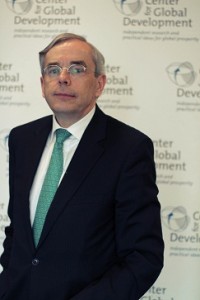
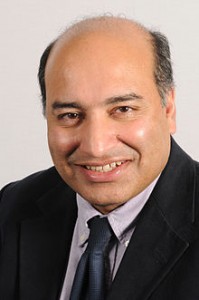
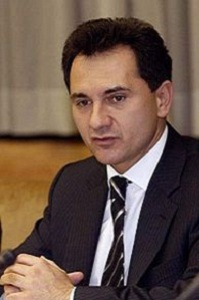
    The four candidates who agreed to be interviewed are: Thomas Mirow (at 03:58), the incumbent who has completed one four year term as President and is seeking re-election for the second term; Jan Krzysztof Bielecki (at 17:40), former prime minister of Poland; Suma Chakrabarti (35:45), a senior British civil servant; and Bozidar Djelic (at 47:43), the former deputy Prime Minister of Serbia. The fifth candidate, Philippe de Fontaine Vive Curtaz, is vice president of the European Investment Bank and did not choose to participate in this process. In the interviews, the candidates talk about the implications for the EBRD of the planned expansion to the Southern and Eastern Mediterranean. They respond to criticisms of the EBRD for not doing enough on gender. And they talk about how their own professional background equips them to be an effective leader of the institution. The interviews reveal some striking differences of view between the candidates. For example, the candidates offer quite different opinions about the extent of change that will be needed in the organisation to fulfil its new mandate in North Africa and the Eastern Mediterranean. Candidates also had quite different views about how they would respond to the criticism of the EBRD’s approach to women. Given the differences in substance between the candidates revealed by these interviews, nobody should be in any doubt that the choice of the next president of the EBRD will have important real world consequences. Running time 56 minutes; size: 33.2 Mb.

    Download transcript (pdf)


    Episode 29: Toby Ord on Giving What We Can Apr 19, 2012
    Show notes

    Toby Ord is a moral philosopher at Balliol College, Oxford and the president of Giving What We Can, an international society dedicated to eliminating poverty in the developing world.

    In this interview, Toby firstly talks about consequentialism and the implications for development, with particular focus on cost-effectiveness. Secondly, Toby explains his personal decision to donate a substantial proportion of his income to the developing world, and shares with us the factors that guide his choice of recipients.

    Development Drums is hosted by Owen Barder and produced by Anna Scott at the Center for Global Development.

    Running time 1 hour and 8 minutes; size 25.8Mb.

    Download transcript (pdf)


    Previous 1 2 3 4 Next

    Related Podcasts

    Inside Strategic Coach: Connecting Entrepreneurs With What Really Matters

    1

    Inside Strategic Coach: Connecting Entrepreneurs With What Really Matters Business
    WSJ Your Money Briefing

    2

    WSJ Your Money Briefing Business
    FORTUNE Unfiltered with Aaron Task

    3

    FORTUNE Unfiltered with Aaron Task Business
    FORTUNE OnStage Presents: The Most Powerful Women

    4

    FORTUNE OnStage Presents: The Most Powerful Women Business
    Slate Money

    5

    Slate Money Business
    In The Dark – The New Yorker

    6

    In The Dark – The New Yorker Business News
    footer-logo

    Contact Us

    Toll Free: 844-670-7747

    Links

    • Home
    • Top Charts
    • Networks
    • Apps
    • Independents Podcasts
    • Podcast Advertising
    • Podcast News
    • Contact Us
    • About Us
    • Analytics & Insights

    Stay Connected

      Privacy, Terms of Use & Our Code of Ethics Protecting Content Creators Copyrights