TopPodcast.com
Menu
  • Home
  • Top Charts
  • Top Networks
  • Top Apps
  • Top Independents
  • Top Podfluencers
  • Top Picks
    • Top Business Podcasts
    • Top True Crime Podcasts
    • Top Finance Podcasts
    • Top Comedy Podcasts
    • Top Music Podcasts
    • Top Womens Podcasts
    • Top Kids Podcasts
    • Top Sports Podcasts
    • Top News Podcasts
    • Top Tech Podcasts
    • Top Crypto Podcasts
    • Top Entrepreneurial Podcasts
    • Top Fantasy Sports Podcasts
    • Top Political Podcasts
    • Top Science Podcasts
    • Top Self Help Podcasts
    • Top Sports Betting Podcasts
    • Top Stocks Podcasts
  • Podcast News
  • About Us
  • Podcast Advertising
  • Contact
Not in our directory?
Add Show Here
Podcast Equipment
Center

toppodcastlogoOur TOPPODCAST Picks

  • Comedy
  • Crypto
  • Sports
  • News
  • Politics
  • True Crime
  • Business
  • Finance

Follow Us

toppodcastlogoStay Connected

    View Top 200 Chart
    Back to Rankings Page
    Natural Sciences

    Data Skeptic

    The Data Skeptic Podcast features interviews and discussion of topics related to data science, statistics, machine learning, artificial intelligence and the like, all from the perspective of applying critical thinking and the scientific method to evaluate the veracity of claims and efficacy of approaches.

    Advertise

    Copyright: © Creative Commons Attribution License 3.0

    • Apple Podcasts
    • Google Play
    • Spotify

    Latest Episodes:
    [MINI] Logistic Regression on Audio Data Jan 27, 2017
    Show notes

    Logistic Regression is a popular classification algorithm. In this episode, we discuss how it can be used to determine if an audio clip represents one of two given speakers. It assumes an output variable (isLinhda) is a linear combination of available features, which are spectral bands in the discussion on this episode.

    Keep an eye on the dataskeptic.com blog this week as we post more details about this project.

    Thanks to our sponsor this week, the Data Science Association. Please check out their upcoming conference in Dallas on Saturday, February 18th, 2017 via the link below.

    dallasdatascience.eventbrite.com


    Studying Competition and Gender Through Chess Jan 20, 2017
    Show notes

    Prior work has shown that people's response to competition is in part predicted by their gender. Understanding why and when this occurs is important in areas such as labor market outcomes. A well structured study is challenging due to numerous confounding factors. Peter Backus and his colleagues have identified competitive chess as an ideal arena to study the topic. Find out why and what conclusions they reached.

    Our discussion centers around Gender, Competition and Performance: Evidence from Real Tournaments from Backus, Cubel, Guid, Sanchez-Pages, and Mañas. A summary of their paper can also be found here.


    [MINI] Dropout Jan 13, 2017
    Show notes

    Deep learning can be prone to overfit a given problem. This is especially frustrating given how much time and computational resources are often required to converge. One technique for fighting overfitting is to use dropout. Dropout is the method of randomly selecting some neurons in one's network to set to zero during iterations of learning. The core idea is that each particular input in a given layer is not always available and therefore not a signal that can be relied on too heavily.


    The Police Data and the Data Driven Justice Initiatives Jan 06, 2017
    Show notes

    In this episode I speak with Clarence Wardell and Kelly Jin about their mutual service as part of the White House's Police Data Initiative and Data Driven Justice Initiative respectively.

    The Police Data Initiative was organized to use open data to increase transparency and community trust as well as to help police agencies use data for internal accountability. The PDI emerged from recommendations made by the Task Force on 21st Century Policing.

    The Data Driven Justice Initiative was organized to help city, county, and state governments use data-driven strategies to help low-level offenders with mental illness get directed to the right services rather than into the criminal justice system.


    The Library Problem Dec 30, 2016
    Show notes

    We close out 2016 with a discussion of a basic interview question which might get asked when applying for a data science job. Specifically, how a library might build a model to predict if a book will be returned late or not.


    2016 Holiday Special Dec 23, 2016
    Show notes

    Today's episode is a reading of Isaac Asimov's Franchise. As mentioned on the show, this is just a work of fiction to be enjoyed and not in any way some obfuscated political statement. Enjoy, and happy holidays!


    [MINI] Entropy Dec 16, 2016
    Show notes

    Classically, entropy is a measure of disorder in a system. From a statistical perspective, it is more useful to say it's a measure of the unpredictability of the system. In this episode we discuss how information reduces the entropy in deciding whether or not Yoshi the parrot will like a new chew toy. A few other everyday examples help us examine why entropy is a nice metric for constructing a decision tree.


    MS Connect Conference Dec 09, 2016
    Show notes

    Cloud services are now ubiquitous in data science and more broadly in technology as well. This week, I speak to Mark Souza, Tobias Ternström, and Corey Sanders about various aspects of data at scale. We discuss the embedding of R into SQLServer, SQLServer on linux, open source, and a few other cloud topics.


    Causal Impact Dec 02, 2016
    Show notes

    Today's episode is all about Causal Impact, a technique for estimating the impact of a particular event on a time series. We talk to William Martin about his research into the impact releases have on app and we also chat with Karen Blakemore about a project she helped us build to explore the impact of a Saturday Night Live appearance on a musician's career.

    Martin's work culminated in a paper Causal Impact for App Store Analysis. A shorter summary version can be found here. His company helping app developers do this sort of analysis can be found at crestweb.cs.ucl.ac.uk/appredict/.


    [MINI] The Bootstrap Nov 25, 2016
    Show notes

    The Bootstrap is a method of resampling a dataset to possibly refine it's accuracy and produce useful metrics on the result. The bootstrap is a useful statistical technique and is leveraged in Bagging (bootstrap aggregation) algorithms such as Random Forest. We discuss this technique related to polling and surveys.


    Previous 1 46 47 48 49 50 62 Next

    Related Podcasts

    Science Friday

    1

    Science Friday Astronomy
    Radiolab

    2

    Radiolab Documentary
    BrainStuff

    3

    BrainStuff Natural Sciences
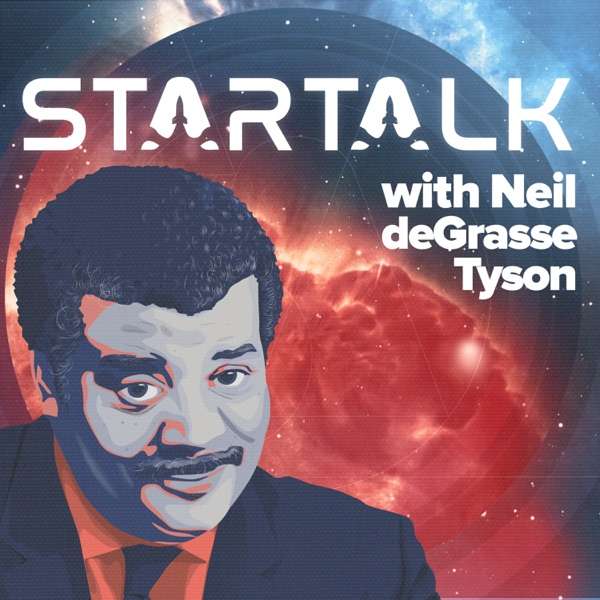
    StarTalk with Neil deGrasse Tyson

    4

    StarTalk with Neil deGrasse Tyson Games & Hobbies
    Radiolab

    5

    Radiolab Documentary
    Stuff To Blow Your Mind

    6

    Stuff To Blow Your Mind Life Sciences
    footer-logo

    Contact Us

    Toll Free: 844-670-7747

    Links

    • Home
    • Top Charts
    • Networks
    • Apps
    • Independents Podcasts
    • Podcast Advertising
    • Podcast News
    • Contact Us
    • About Us
    • Analytics & Insights

    Stay Connected

      Privacy, Terms of Use & Our Code of Ethics Protecting Content Creators Copyrights