Beyond Prototypes: How Caracol Is Scaling Robotic Composite 3D Printing for Complex Parts
Sep 17, 2026
Show notes
Joining the show this week is Francesco De Stefano, co-founder and CEO of Caracol, a company using robotics and large-format additive manufacturing to help manufacturers rethink how they build large, complex parts.
Founded in Milan in 2017, Caracol is a leading industrial 3D printer manufacturer and large-format additive manufacturing technology provider. Since 2015, their founders have pursued the idea of overcoming the limits of existing manufacturing technologies, combining technological innovation with an industrial vision to respond to their clients’ production needs.
On this episode, we’ll explore where this technology is delivering practical value, what’s holding back broader adoption, and how more localized manufacturing could reshape composite production. You can learn more about Caracol by visiting https://www.caracol-am.com.
Life Critical. Mission Critical. Composites: The Future of Norplex-Micarta with CEO Mike Gromacki
Sep 11, 2026
Show notes
On this episode, Mike Gromacki revisits the show to discuss some of the latest news at Norplex-Micarta. Now 10 months into his role as CEO there, Mike is helping shape the company’s next chapter around a clear focus: “Life Critical. Mission Critical. Composites.”
We’ll discuss what that means for their capabilities, the markets they serve, and growth opportunities and projects that help point the way forward.
For more than a century, Norplex-Micarta has engineered thermoset composite solutions that protect people, enable critical systems, and withstand demanding environments across infrastructure, transportation, defense, and industry.
We’ll also look ahead to CAMX, discussing the CEO Forum, featured programming on the show floor, and the General Session. You can learn more about Norplex-Micarta at https://www.norplex-micarta.com. They’ll be exhibiting at CAMX at Booth M18.
SoundBounce and The Future of Acoustic Materials: Interview with Rhona Togher of Lios
Sep 08, 2026
Show notes
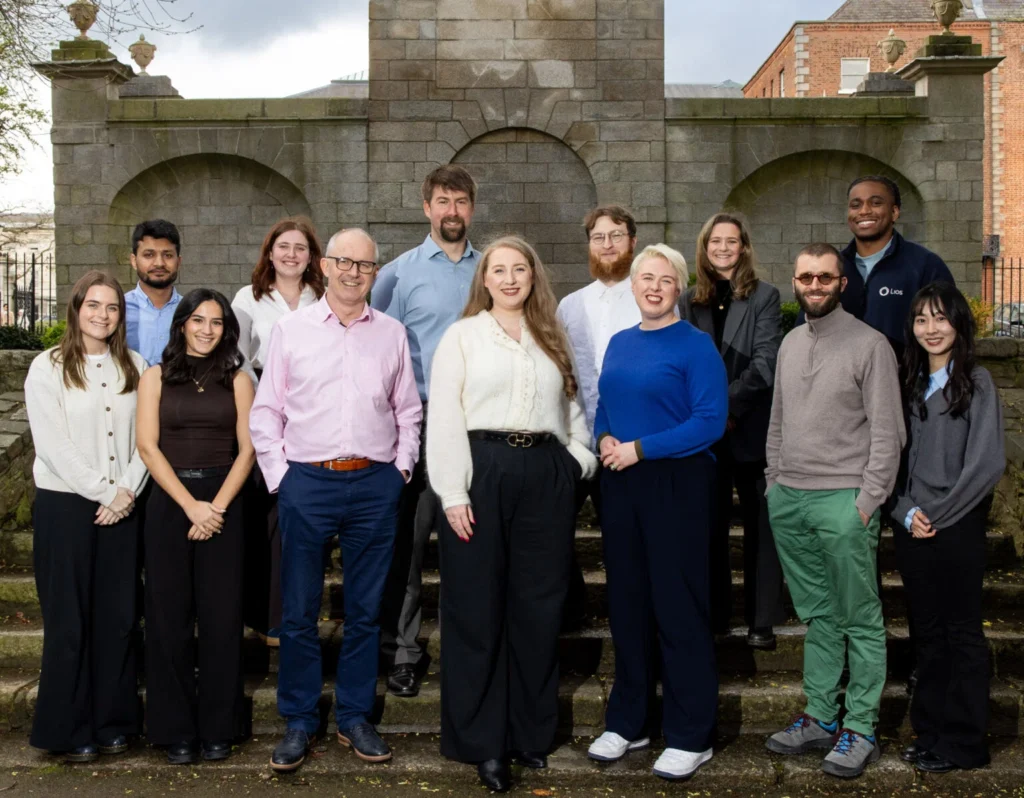
On this episode, Rhona Togher, CEO and co-founder of Lios, joins the show. Lios is an Irish company developing advanced materials to tackle unwanted noise and vibration.
Its flagship technology, SoundBounce, takes a different approach to acoustic insulation—combining a responsive material with a cellular structure to address difficult low-frequency noise without the weight and bulk of conventional solutions.
On this episode, we’ll explore the science behind SoundBounce, its potential applications in automotive, aerospace, and construction, and Lios’ work with the European Space Agency. You can learn more at https://lios-group.com/soundbounce.
How Former SpaceX Engineers Are Turning Grass into Carbon-Negative Structural Panels
Sep 03, 2026
Show notes
On this episode, Nathan Silvernail joins the show. He is the co-founder and CEO of Plantd—a company reimagining how structural building materials are manufactured. Before launching Plantd, Nathan spent nearly a decade at SpaceX, where he helped develop advanced manufacturing systems for the Crew Dragon spacecraft. He is now applying that same engineering mindset to one of the world’s oldest and most resource-intensive industries: construction.
Plantd has developed a process that transforms fast-growing perennial grass into high-performance structural panels designed to compete directly with conventional wood-based products such as OSB. Using an automated, modular, all-electric manufacturing system, the company aims to produce building materials that are stronger, more moisture-resistant, and better for the environment.
We’ll talk with Nathan about the technology behind these grass-based panels and Plantd’s vision for creating a new generation of sustainable composite materials. You can learn more by visiting https://www.plantdmaterials.com.
CAMX Is Coming: Here’s A Smarter Strategy for Trade Show ROI
Sep 01, 2026
Show notes
With CAMX just a few weeks away, it’s a perfect time to revisit one of our previous conversations with Daniel Murphy of Alcove Media on a topic that every exhibitor should be thinking about: how do you actually generate business from a trade show?
Many companies invest tens of thousands of dollars exhibiting at events, but simply showing up with a great-looking booth doesn’t guarantee a return. On this episode, we’ll discuss how companies can be much more strategic about their trade show investment.
Catalyzing the Future of Composites: From Innovation to Investment- Interview with Yannick Willemin
Aug 20, 2026
Show notes
Joining the podcast this week is Yannick Willemin. Yannick is the founder of Catalysium, a deep-tech consultancy supporting startups, SMEs, and investors across the composites and advanced materials ecosystem.
He brings nearly two decades of experience spanning materials engineering, manufacturing, business development, corporate strategy, startups, and investment. His work touches nearly every part of the composites value chain—from materials and manufacturing technologies to recycling and end-use markets including aerospace, automotive, sports, luxury, and energy.
Through Catalysium, Yannick helps technology companies identify markets, build strategic partnerships, acquire customers, and turn promising innovations into sustainable businesses. On the investment side, he works with business angels, venture capital, private equity, and other investors, conducting due diligence, helping them better understand the opportunities—and risks—behind deep-tech companies.
LTDF Graphene at Scale: How Avadain is Turning This Wonder Material Into Industrial Reality
Aug 12, 2026
Show notes
Graphene has been called one of the most extraordinary materials ever discovered. It’s exceptionally strong, lightweight, electrically conductive, and thermally conductive. But more than a decade after capturing the world’s attention, one major question remains: why hasn’t it transformed manufacturing the way so many people predicted?
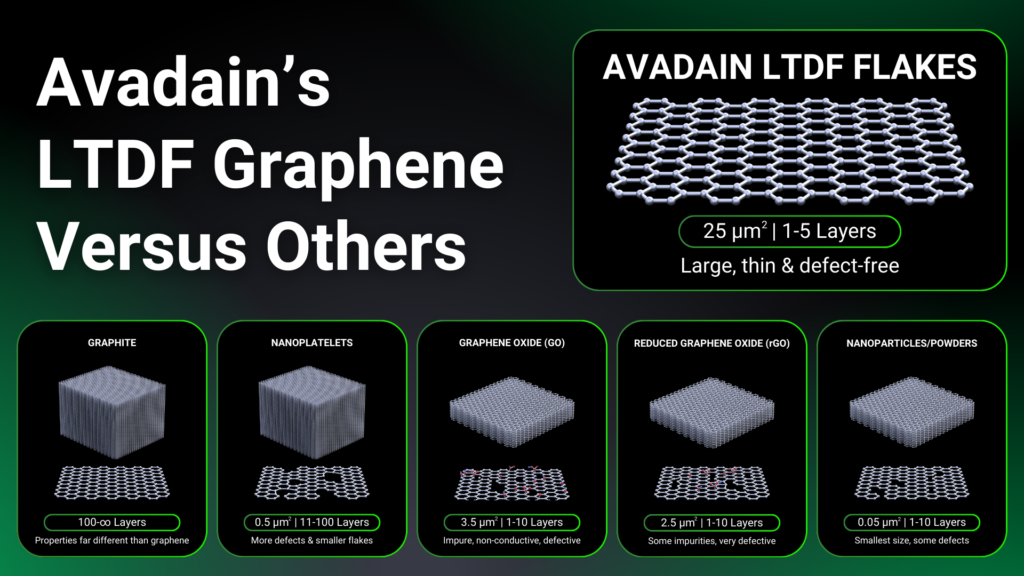
On this episode, Brad Larschan and Kevin Wyss of Avadain join the show to discuss the past bottlenecks with graphene production and what their company is doing to change this. Avadain is an advanced-materials company commercializing patented technology for producing what it calls Large, Thin, Defect-Free, or LTDF, graphene flakes.
Avadain’s process is designed to produce flakes that preserve the properties that make graphene so remarkable while also being scalable enough for industrial applications. The company has received a $3.77 million NIST-supported federal grant for scale-up, and recently announced that its full-scale graphene reactor is operational.
On this episode, we’ll talk about why all graphene isn’t created equal, what Avadain believes it has solved on the manufacturing side, and, especially for our audience, what large-scale availability of high-quality graphene could mean for composites and advanced materials.
The Chemistry That Could Transform Thermoset Composites – Interview with Yasmeen S. Alfaraj, PhD
Aug 06, 2026
Show notes
On this episode, Dr. Yasmeen S. Alfaraj discusses the next generation of thermoset composites. She is the founder and CEO of NextSet Materials, a company developing a new generation of reprocessable thermoset materials.
Yasmeen earned her bachelor’s degree in chemistry from the University of California, Berkeley, before completing her Ph.D. in chemistry at MIT, specializing in polymers and soft matter. She is also an Activate and Department of Energy Cyclotron Road Fellow and was named to the 2026 Forbes 30 Under 30 list in the Manufacturing and Industry category.
Through NextSet Materials, Yasmeen is addressing one of the composites industry’s most persistent challenges: how to recover valuable fibers and other materials from durable thermoset structures that were never designed to be taken apart. The company’s technology incorporates cleavable additives into existing resin formulations, creating a controlled pathway for deconstructing the cured polymer and recovering materials for reuse—without requiring manufacturers to completely replace their established processes.
We’ll be discussing the chemistry behind this technology, its potential applications in aerospace, wind energy, automotive manufacturing and electronics, and what it could mean for the future of truly circular composite materials. You can learn more about the company at https://nextset.net.
From Stealth Aircraft to Space Transportation: The Evolution of Aerospace Composites
Jul 30, 2026
Show notes
On this episode, Martin McLaughlin joins the show to discuss his 39-year career at Northrop Grumman during the development of the B-2 bomber, the F-20 and F/A-18 fighters, and the YF-23 fighter. Martin also managed the DARPA experimental spaceplane XS-1 program and numerous internal Northrop Grumman studies for air-launched to orbit rocketplanes.
The Hidden Science Behind Surface Readiness: Interview with Lucas Dillingham
Jul 23, 2026
Show notes
On this episode, Lucas Dillingham of Brighton Science joins the podcast to discuss the science behind surface readiness. Brighton Science helps manufacturers understand and control one of the most important, and often overlooked parts of composite production: the surface.
Lucas works at the intersection of surface science, manufacturing, and quality control, helping companies replace subjective tests and operator guesswork with measurable data that can improve bonding, coating, cleaning, and mold-release performance.
In our conversation, Lucas will explain how technologies such as water contact-angle measurement allow manufacturers to evaluate surface conditions at the molecular level. We’ll also discuss how surface intelligence can help reduce scrap, prevent adhesion and mold-release failures, and turn surface preparation from what has traditionally been considered an art into a repeatable and controlled science.

 Our TOPPODCAST Picks
  Stay Connected