TopPodcast.com
Menu
  • Home
  • Top Charts
  • Top Networks
  • Top Apps
  • Top Independents
  • Top Podfluencers
  • Top Picks
    • Top Business Podcasts
    • Top True Crime Podcasts
    • Top Finance Podcasts
    • Top Comedy Podcasts
    • Top Music Podcasts
    • Top Womens Podcasts
    • Top Kids Podcasts
    • Top Sports Podcasts
    • Top News Podcasts
    • Top Tech Podcasts
    • Top Crypto Podcasts
    • Top Entrepreneurial Podcasts
    • Top Fantasy Sports Podcasts
    • Top Political Podcasts
    • Top Science Podcasts
    • Top Self Help Podcasts
    • Top Sports Betting Podcasts
    • Top Stocks Podcasts
  • Podcast News
  • About Us
  • Podcast Advertising
  • Contact
Not in our directory?
Add Show Here
Podcast Equipment
Center

toppodcastlogoOur TOPPODCAST Picks

  • Comedy
  • Crypto
  • Sports
  • News
  • Politics
  • True Crime
  • Business
  • Finance

Follow Us

toppodcastlogoStay Connected

    View Top 200 Chart
    Back to Rankings Page
    Music

    Composers Datebook

    Composers Datebook™ is a daily two-minute program designed to inform, engage, and entertain listeners with timely information about composers of the past and present. Each program notes significant or intriguing musical events involving composers of the past and present, with appropriate and accessible music related to each.

    Advertise

    Copyright: © Copyright 2024 Minnesota Public Radio

    • Apple Podcasts
    • Google Play
    • Spotify

    Latest Episodes:
    Davis? Davies? Or Mavis? Sep 08, 2026
    Show notes

    Synopsis


    Today's date in 1934 marked the birthday of British composer Peter Maxwell Davies. His name is spelled D-A-V-I-E-S, so most Americans tend to pronounce it “Day-VEES,” even though “Davis” is the common British pronunciation.


    Once, when he was in the U.S., a British journalist called a Las Vegas hotel where the composer was staying and asked to speak to Peter Maxwell Davis. The receptionist said there was no one there by that name. Asked to spell the name, the British journalist did. “Oh, Day-vees!” said the receptionist. “Sorry, there is no one registered by that name either.” It turned out the hotel computer had compressed Maxwell Davis into “Mavis” and that was how he was registered. He found the whole incident so amusing that he wrote an orchestral tone-poem, Mavis in Las Vegas, fantasizing that somehow he had a female alter-ego in that city, perhaps earning her living as a high-kicking Vegas showgirl.


    In addition to the whimsical Mavis in Las Vegas, Davies often composed music often inspired by the bleak Northern land — and seascape of the Orkney Islands — an atmosphere as far removed from the Vegas Strip as you can imagine.


    Music Played in Today's Program


    Peter Maxwell Davies (1934-2016): Mavis in Las Vegas; BBC Symphony; Peter Maxwell Davies, conductor; Collins 1524


    A 40-voice birthday greeting from Tallis? Sep 07, 2026
    Show notes

    Synopsis


    On today’s date in 1573, Queen Elizabeth the First celebrated her 40th birthday.


    According to some musicologists, the music-loving monarch received as a birthday gift a Latin motet for 40 voices by Thomas Tallis, Spem in Alium, which translates as Hope in All Things. Elisabeth was certainly fond of Tallis, awarding him special gifts and privileges —despite his remaining a steadfast Roman Catholic throughout her reign, when being a Catholic in Protestant England was very risky business, indeed!


    In fact, other musicologists contend that this famous motet was actually written for the coronation of Elizabeth’s predecessor, Catholic queen Mary Tudor. Still others say: “No, no — the motet was commissioned by a patriotic British nobleman, who challenged Tallis to write a work as good as — or better — than a contemporary Italian composer’s 40-voice motet.”


    The truth is we just don’t know for sure why Tallis composed this intricate and glorious music. We do know that in a dangerous time for anyone with strong religious convictions, Tallis lived to the ripe old age of 80. His epitaph reads: “As he did live, so he did die — in mild and quiet sort (O happy Man!)”


    Music Played in Today's Program


    Thomas Tallis (1505-1585): Spem in Alium; Huelgas Ensemble; Paul Van Nevel, conductor; Sony 60992


    A 'well-Krafted' concerto? Sep 06, 2026
    Show notes

    Synopsis


    Consider, if you will, the poor timpanist. At most symphony concerts, they sit quietly — waiting for the moment when a dramatic exclamation point is required from the kettledrums. While the violinists rarely get a break, the timpanist must sit patiently for most of the evening, biding their time, waiting for the precise moments to strike.


    On rare occasions, however, the timpanist is the center of attention as soloist in a timpani concerto. One such concerto was written by American composer and timpanist William Kraft, who was born on this day in 1923. He served as a percussionist and timpanist with the Los Angeles Philharmonic for 26 years, from 1955-1981. He was that orchestra’s first composer-in-residence, and founded the L.A. Philharmonic’s first New Music Group.


    His timpani concerto was written in 1983 for timpanist Thomas Akins of the Indianapolis Symphony, who premiered the work with that orchestra in 1984.


    Kraft’s description of his timpani concerto is as follows: “The first movement is very jazzy … the second movement is very beautiful, with two string orchestras and a lot of glissandi, and the third is hell-bent for leather.”


    Music Played in Today's Program


    William Kraft (1923-2022): Timpani Concerto; Thomas Akins, timpani; Alabama Symphony; Paul Polivnick, conductor; Albany 302


    Prokofiev's String Quartet No. 2 Sep 05, 2026
    Show notes

    Synopsis


    In 1941, as the German army was overrunning Russia, the Soviet government evacuated important artists to remote places of safety. Composer Sergei Prokofiev, for example, found himself in the little town of Nalchik, nestled in the foothills of the northern Caucasus Mountains about 1000 miles away from the front.


    He was intrigued by the region’s folk music, and, taking a break from a big project to turn Tolstoy’s novel War and Peace into an opera, composed his String Quartet No. 2, based on local tunes. The new work was, as he put it, “a combination of virtually untouched folk material and the most classical of classical forms, the string quartet.”


    Its three movements are all based on local songs and dances, and he took care not to smooth out any roughness in the original material.


    His new string quartet received its premiere performance back in Moscow in April of 1942, at a concert given by The Beethoven Quartet. A later performance on today’s date that same year was delayed due to a German air raid. The new music was well received, and Prokofiev, perhaps with the air raid in mind, supposedly called the premiere “an extremely turbulent success.”


    Music Played in Today's Program


    Sergei Prokofiev (1891-1953): String Quartet No. 2


    Tchaikovsky and Glass at the movies Sep 04, 2026
    Show notes

    Synopsis


    For ballet lovers, the opening of Tchaikovsky’s ballet Swan Lake conjures up tutus, but for old-time movie buffs, this same music triggers memories of many black-and-white films of the 1930s. Back then, the eerie opening measures of Swan Lake served as the “main title” music for dozens of old Universal Studios thrillers, including the famous 1931 film of Bram Stoker’s novel, Dracula, starring Bela Lugosi.


    “Ah, the children of the night—what music THEY make…”


    But on today’s date in 1999 at the Telluride Film Festival in Colorado, Tchaikovsky got some competition from Philip Glass. For a special showing of the Bela Lugosi Dracula, Glass wrote a brand-new score. Now, beyond the opening Tchaikovsky, the original 1931 soundtrack had included very little music, and, despite the creepy charisma of Bela Lugosi, the film moved at a ponderous pace. The new Philip Glass score, performed live by the Kronos Quartet, added fresh atmosphere to the familiar old film. In fact, it proved so effective that Glass and the Kronos Quartet took it on a tour, accompanying live showings of the old film in Europe and the U.S.


    Music Played in Today's Program


    Peter Tchaikovsky (1840 - 1893) Swan Lake Ballet Montréal Symphony; Charles Dutoit, cond. London 436 212


    Philip Glass (b. 1937) Dracula filmscore excerpt Kronos Quartet Nonesuch 79542


    Beethoven's 'Razumovsky' Quartets Sep 03, 2026
    Show notes

    Synopsis


    On today’s date in 1806, Ludwig van Beethoven offered his publisher Breitkopf and Härtel three new string quartets — works we know today as the three Razumovsky Quartets, that were eventually issued as Beethoven’s Opus 59.


    In Beethoven’s day, Vienna was swarming with Russian, Polish and Hungarian aristocrats with a taste for music. Among them was Count Andreas Kyrilovich Razumovsky, the Russian ambassador to Vienna. The count was an amateur violinist who occasionally played in a string quartet he maintained at his own expense.


    The count commissioned Beethoven to write three string quartets, stipulating that they should incorporate Russian melodies, real or imitated. The most recognizable of the Russian tunes, Beethoven employed occurs in the scherzo of the second quartet: It’s the same theme that was later quoted by Mussorgsky in the coronation scene of his opera, Boris Godunov.


    When the Razumovsky Quartets were premiered in Vienna in 1807, one contemporary review noted, “These very long and difficult quartets … are profoundly thought-through and composed with enormous skill, but will not be intelligible to everyone.”


    When one Italian violinist confessed to Beethoven that he found them incomprehensible, Beethoven retorted: “Oh, they are not for you, but for a later age.”


    Music Played in Today's Program


    Ludwig van Beethoven (1770-1827): Razumovsky Quartet No. 2; Emerson String Quartet; DG 479 1432


    E.J. Moeran Sep 02, 2026
    Show notes

    Synopsis


    On today’s date in 1948, at a Proms concert at the Royal Albert Hall, the London Symphony gave the premiere performance of the Serenade in G Major by British composer Ernest John Moeran. He was born in 1894 in London, but Ireland became his adopted home and musical inspiration during the last decades of his life.


    Moeran was fascinated by folksongs, and his method of collecting them was to sit in a country pub and wait until an old man started singing. He would note down the song and ask for more. In the 1920s, he became drinking companion of another British composer, music critic, and fellow folk song aficionado Peter Warlock, a talented but rather notorious character who was the model for the outrageously Bohemian composer depicted in Anthony Powell’s string of novels, A Dance to the Music of Time.


    Warlock’s most famous work was his Capriol Suite, an affectionate reworking of Renaissance tunes, and Moeran’s serenade, similar in tone, was perhaps a tribute to his old boon companion. This proved to be his last major work, as he died suddenly two years later, at 55, in his beloved Ireland.


    Music Played in Today's Program


    E.J. Moeran (1894-1950): Serenade in G; Northern Sinfonietta of England; Richard Hickox, conductor; EMI 74991-2


    Mozart 'dissed' by Dittersdorf? Sep 01, 2026
    Show notes

    Synopsis


    On today’s date in 1785, Wolfgang Amadeus Mozart dedicated six of his string quartets to his friend and older colleague, Joseph Haydn. Earlier that year, Haydn heard some of them performed in Vienna. Leopold Mozart, Wolfgang’s father, was also present, and must have been elated when Haydn said, “Before God and as an honest man I tell you that your son is the greatest composer known to me either in person or by name.”


    Mozart’s quartets were published by Viennese firm Artaria and generated some much-needed income for Wolfgang. Whether they made money for their publisher as well is another matter. Three years later, one of Mozart’s lesser contemporaries, Karl Ditters von Dittersdorf, offered Artaria six of his string quartets at the same price they paid Mozart, with a note that read, “I am certain you will do better with my quartets than you did with Mozart’s, which deserve the highest praise, but which, because of their overwhelming and unrelenting artfulness, are not to everyone’s taste.”


    Apparently Mozart’s quartets were deemed too “brainy” for public taste. Well, Dittersdorf may have sold better in the 1780’s, but these days performers and audiences find Mozart’s “unrelenting artfulness” more to their taste than Dittersdorf’s sugary confections.


    Music Played in Today's Program


    Wolfgang Amadeus Mozart (1756-1791): String Quartet; Emerson String Quartet; DG 439 861


    Carl Ditters von Dittersdorf (1739-1799): String Quartet No. 4; Gewandhaus Quartet; Berlin Classics 9261


    Barber's 'scandalous' overture Aug 30, 2026
    Show notes

    Synopsis


    On today’s date in 1933, the Philadelphia Orchestra was performing at its summer home at Robin Hood Dell. Conductor Alexander Smallens led the world premiere performance of a new work by 23-year-old composer Samuel Barber. It was his first orchestral composition to have a major public hearing, but oddly enough, young Mr. Barber himself was not in attendance.


    He was in Europe that summer, and so missed the premiere of his overture to The School for Scandal, a musical romp inspired by the 18th century English Restoration comedy of the same name by Richard Sheridan.


    Even before he had left the Curtis Institute of Music, where he pursued a triple major in piano, composition, and voice, Barber had begun winning prizes that enabled him to study abroad. Until the outbreak of World War II, Barber’s musical career was quite Eurocentric.


    His School for Scandal overture, in fact, was written in Italy in 1931. Barber’s Symphony No. 1 premiered in Rome in 1936, and the following year was played by the Vienna Philharmonic at the 1937 Salzburg Music Festival. That led to stateside performances and commissions from conductors like Bruno Walter and Arturo Toscanini.


    Music Played in Today's Program


    Samuel Barber (1910-1981): School for Scandal overture; Baltimore Symphony; David Zinman, conductor; Argo 436 288


    Saariaho at the Proms Aug 29, 2026
    Show notes

    Synopsis


    Say the phrase “BBC Proms” to most music lovers, and they’ll conjure up a mental image of the rowdy “Last Night of the Proms” at which normally staid and reserved Britons don funny hats and make rude noises during Henry Wood’s arrangement of British sailor songs. But the raucous “Last Night of the Proms” is only the festive finale of several weeks of fairly serious music making: dozens of concerts covering a wide range of old and new music


    From the very beginning of the Proms in 1895, Wood, who started the whole thing, had this specific agenda: “I am going to run nightly concerts to train the public in easy stages,” he explained. “Popular at first, gradually raising the standard until I have created a public for classical and modern music.”


    On today’s date in 1996, for example, violinist Gidon Kremer premiered a violin concerto by Finnish composer Kaija Saariaho at a Proms concert. The work had an unusual title — Grail Theater. “I like the unusual combination of these two words because it represents two such different things. One is the search for the Grail, and the other the theatrical aspect,” she explained.


    Music Played in Today's Program


    J.S. Bach (1685-1750) arr. Henry Wood: Toccata and Fugue in D minor; BBC Symphony; Andrew Davis, conductor; Teldec 97868


    Kaija Saariaho (1952-2023): Grail Theatre; Gidon Kremer, violin; BBC Symphony; Esa-Pekka Salonen, conductor; Sony Classical 60817


    Previous 1 2 3 4

    Related Podcasts

    Twenty Thousand Hertz

    1

    Twenty Thousand Hertz Arts
    NPR Music

    2

    NPR Music Music
    Here’s The Thing with Alec Baldwin

    3

    Here’s The Thing with Alec Baldwin Arts
    Drink Champs

    4

    Drink Champs Music
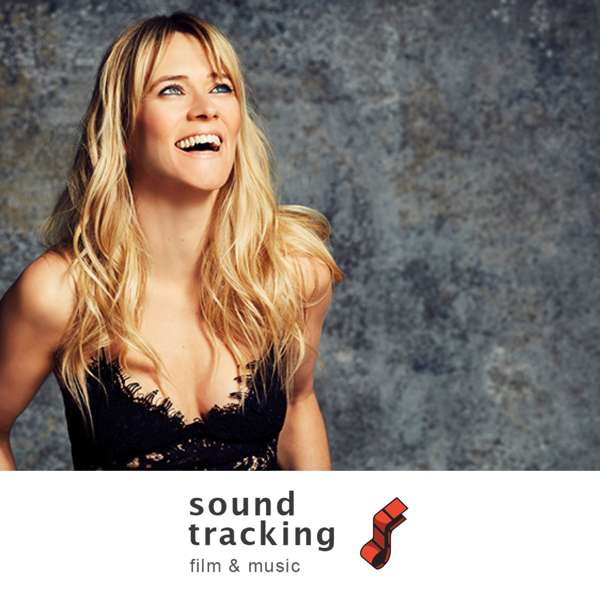
    Soundtracking with Edith Bowman

    5

    Soundtracking with Edith Bowman Music
    Red FM Bauaa

    6

    Red FM Bauaa Music
    footer-logo

    Contact Us

    Toll Free: 844-670-7747

    Links

    • Home
    • Top Charts
    • Networks
    • Apps
    • Independents Podcasts
    • Podcast Advertising
    • Podcast News
    • Contact Us
    • About Us
    • Analytics & Insights

    Stay Connected

      Privacy, Terms of Use & Our Code of Ethics Protecting Content Creators Copyrights