TopPodcast.com
Menu
  • Home
  • Top Charts
  • Top Networks
  • Top Apps
  • Top Independents
  • Top Podfluencers
  • Top Picks
    • Top Business Podcasts
    • Top True Crime Podcasts
    • Top Finance Podcasts
    • Top Comedy Podcasts
    • Top Music Podcasts
    • Top Womens Podcasts
    • Top Kids Podcasts
    • Top Sports Podcasts
    • Top News Podcasts
    • Top Tech Podcasts
    • Top Crypto Podcasts
    • Top Entrepreneurial Podcasts
    • Top Fantasy Sports Podcasts
    • Top Political Podcasts
    • Top Science Podcasts
    • Top Self Help Podcasts
    • Top Sports Betting Podcasts
    • Top Stocks Podcasts
  • Podcast News
  • About Us
  • Podcast Advertising
  • Contact
Not in our directory?
Add Show Here
Podcast Equipment
Center

toppodcastlogoOur TOPPODCAST Picks

  • Comedy
  • Crypto
  • Sports
  • News
  • Politics
  • True Crime
  • Business
  • Finance

Follow Us

toppodcastlogoStay Connected

    View Top 200 Chart
    Back to Rankings Page
    Arts

    BULAQ | بولاق

    BULAQ is a book-centric podcast co-hosted by Ursula Lindsey (in Amman, Jordan) and M Lynx Qualey (in Rabat, Morocco). It focuses on Arabic literature in translation and is named after the first printing press established in Egypt in 1820. Produced by Sowt. Hosted on Acast. See acast.com/privacy for more information.

    Advertise
    • Apple Podcasts
    • Google Play
    • Spotify

    Latest Episodes:
    Our Women on the Ground Jun 10, 2019
    Show notes

    We spend most of today’s episode talking about a forthcoming collection of essays by female journalists from the region. Guilt, anger, recklessness, determination. There are many different and movingly honest takes on reporting while Arab and female.

    SHOW NOTES

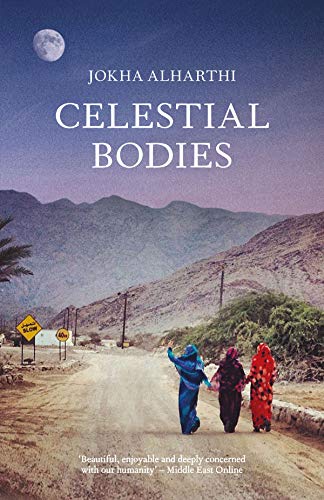
    • Omani novelist Jokha al-Harthi and translator Marilyn Hacker won the 2019 Man Booker International with Celestial Bodies (Sayyidat al-Qamr). We talked about the book on Episode 29 and MLQ spoke to al-Harthi and Booth the morning after their win, and an edited Q&A was published on Qantara. Also: more on the Omani writers al-Harthi recommends you read.

    • Ursula’s piece about Sa’adallah Wannous, “Coup de Théâtre,” is in the NYRB. The great playwright’s daughter, Dima Wannous, is also an acclaimed novelist and will be appearing at this year’s Shubbak Festival. Her novel The Frightened is expected in 2020 in Elisabeth Jaquette’s English translation.

    • Our Women on the Ground: Essays by Arab Women Reporting from the Arab World, ed. Zahra Hankir, will be published August 6, 2019, when an audiobook version, read by Soneela Nankani, will also be available. Among the many brilliant contributors is Lina Attallah, who both MLQ and Ursula have worked with variously at Al-Masry al-Youm, the Egypt Independent, and her current iconic, fearless, and relentlessly experimental project, Mada Masr.

    Permalink

    Hosted on Acast. See acast.com/privacy for more information.


    Hosted by Simplecast, an AdsWizz company. See pcm.adswizz.com for information about our collection and use of personal data for advertising.


    32: Work-lit Balance May 19, 2019
    Show notes

    This week we talk about how MLQ’s latest passion project, the Arab Lit Quarterly, and the ups and downs of making a living (sort of) writing about books.


    Work-lit Balance May 19, 2019
    Show notes

    This week we talk about how MLQ’s latest passion project, the Arab Lit Quarterly, and the ups and downs of making a living (sort of) writing about books.

    Hosted on Acast. See acast.com/privacy for more information.


    Hosted by Simplecast, an AdsWizz company. See pcm.adswizz.com for information about our collection and use of personal data for advertising.


    31: This Takes the Prize May 06, 2019
    Show notes

    MLQ is back from Abu Dhabi, and we talk about the recently awarded International Prize for Arabic Fiction — and an unfortunate controversy this year, involving leaks, no-shows, and calls for prosecution — and the book fair. We also share excerpts from the winning book and from several of the short-listed ones.


    This Takes the Prize May 06, 2019
    Show notes

    MLQ is back from Abu Dhabi, and we talk about the recently awarded International Prize for Arabic Fiction — and an unfortunate controversy this year, involving leaks, no-shows, and calls for prosecution — and the book fair. We also share excerpts from the winning book and from several of the short-listed ones.

    Show Notes

    • The International Prize for Arabic Fiction announced the prize’s 2019 winner, Hoda Barakat’s The Night Post, on April 23. The name of the winner, and a few apparent details about the judging process, was leaked by former IPAF judge Abdo Wazen in Independent Arabiaa few hours before the official announcement.

    • The prize’s official statement about the leakcan be found on their website. Also notable are Arab Writers Union head Habib al-Sayegh’s comments about the leak, Hoda Barakat’s acceptance speech, and shortlisted writer Kafa Al-Zou’bi’s social-media habits.

    Hosted on Acast. See acast.com/privacy for more information.


    Hosted by Simplecast, an AdsWizz company. See pcm.adswizz.com for information about our collection and use of personal data for advertising.


    30: The Case of Alaa al-Aswany Apr 07, 2019
    Show notes

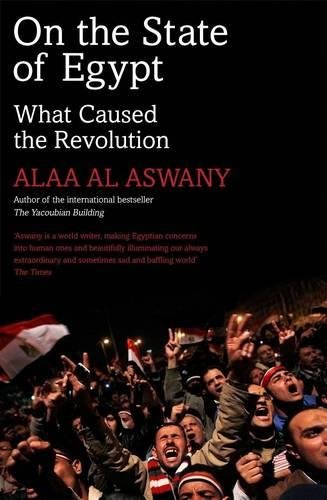
    We talk about the career of the best-selling Egyptian novelist Alaa al-Aswany – who like many other artists is on the outs with the country’s military regime now. Also, about Shakespeare productions and censorship in Gulf countries; and book reviews in the age of online algorithms and the culture of positivity.

    Show notes

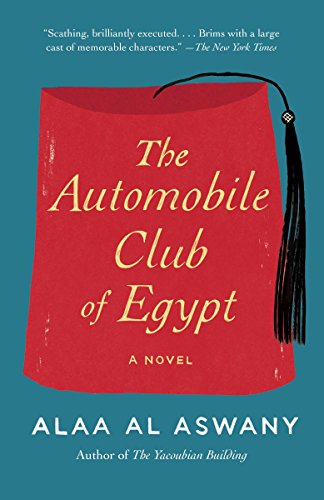
    • At the end of February, Youm7 reported that a lawyer submitted a complaint to the Prosecutor-General (No. 2697 of 2019) against Egyptian novelist Alaa al-Aswany, in which he accused the author of The Yacoubian Building and The So-Called Republic of spreading false news, as well as cynicism and ridicule of the state’s leaders on social media. This story spread and, in mid-March, Mesreyoun reported that a lawyer had filed a complaint with the military prosecutor. It’s still unclear what’s happening; the NGO ANHRI has asked whether political “hesba” lawsuits can now be filed in military courts; there has not yet been an official answer. Thanks to TIMEP for assistance in sorting all this out. (Back in 2013, Al Aswany, like the vast majority of Egyptian artist and intellectuals, justified violence against members of the Muslim Brotherhood and supported their overthrow.)

    • The actors Amr Waked and Khaled Abol Naga have been prosecuted and smeared recently for speaking out against Egyptian government repression.

    • Ursula’s “heart-breaking” interview with Sonallah Ibrahim was published in Mada Masr in 2013.

    • Palgrave Macmillan published Katharine Hennessey’s Shakespeare on the Arabian Peninsulain 2018.

    • And in the last issue Harper’s Christian Lorentzen writes about the art of criticism in the age of algorithms, in “Like This or Die.”

    Buy on Amazon Buy on Amazon Buy on Amazon

    The case of Alaa al-Aswany Apr 07, 2019
    Show notes

    We talk about the career of the best-selling Egyptian novelist Alaa al-Aswany – who like many other artists is on the outs with the country’s military regime now. Also, about Shakespeare productions and censorship in Gulf countries; and book reviews in the age of online algorithms and the culture of positivity.

    Show notes

    • At the end of February, Youm7 reported that a lawyer submitted a complaint to the Prosecutor-General (No. 2697 of 2019) against Egyptian novelist Alaa al-Aswany, in which he accused the author of The Yacoubian Building and The So-Called Republic of spreading false news, as well as cynicism and ridicule of the state’s leaders on social media. This story spread and, in mid-March, Mesreyoun reported that a lawyer had filed a complaint with the military prosecutor. It’s still unclear what’s happening; the NGO ANHRI has asked whether political “hesba” lawsuits can now be filed in military courts; there has not yet been an official answer. Thanks to TIMEP for assistance in sorting all this out. (Back in 2013, Al Aswany, like the vast majority of Egyptian artist and intellectuals, justified violence against members of the Muslim Brotherhood and supported their overthrow.)

    • The actors Amr Waked and Khaled Abol Naga have been prosecuted and smeared recently for speaking out against Egyptian government repression.

    • Ursula’s “heart-breaking” interview with Sonallah Ibrahim was published in Mada Masr in 2013.

    • Palgrave Macmillan published Katharine Hennessey’s Shakespeare on the Arabian Peninsulain 2018.

    • And in the last issue Harper’s Christian Lorentzen writes about the art of criticism in the age of algorithms, in “Like This or Die.”

    Hosted on Acast. See acast.com/privacy for more information.


    Hosted by Simplecast, an AdsWizz company. See pcm.adswizz.com for information about our collection and use of personal data for advertising.


    29: Not Quite On The Same Page Mar 17, 2019
    Show notes

    In this episode we rave about an Omani novel – a multi-generational saga that is “anti-romantic and anti-nationalistic.” We also discuss a dark family road trip through Syria, and works from Lebanon and Morocco. And we delve into the larger question of how much a writer’s identity and experience gives him or her the right, or the ability, to tell certain stories.

    Show notes:

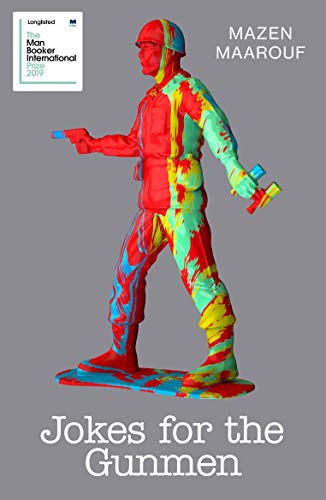
    • The Man Booker International announced their 2019 longlist last Wednesday, and there were two Arabic novels: Jokha al-Harthi’s Celestial Bodies, translated by Marilyn Booth, and Mazen Maarouf’s Jokes for the Gunmen, translated by Jonathan Wright.

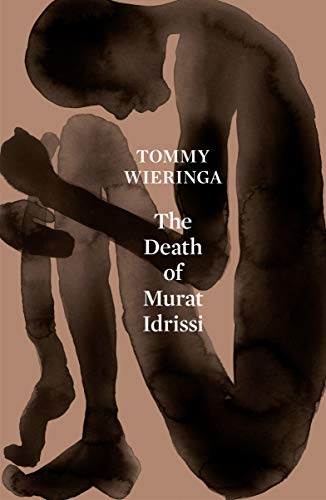
    • There was also an MBI-longlisted novel set in Morocco that was originally written in Dutch: Tommy Wieringa’s The Death of Murat Idrissi, translated by Sam Garrett. The translation was reviewed in The Guardian.

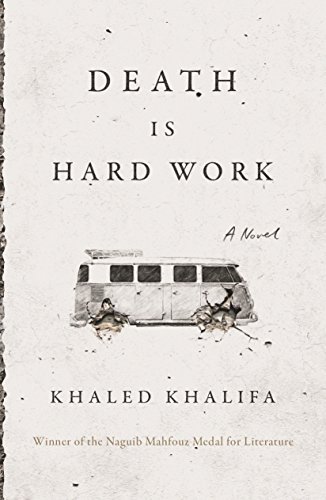
    • Khaled Khalifa’s Death is Hard Work, translated by Leri Price,was released in February.

    Buy on Amazon Buy on Amazon Buy on Amazon Buy on Amazon

    Not Quite On The Same Page Mar 17, 2019
    Show notes

    In this episode we rave about an Omani novel – a multi-generational saga that is “anti-romantic and anti-nationalistic.” We also discuss a dark family road trip through Syria, and works from Lebanon and Morocco. And we delve into the larger question of how much a writer’s identity and experience gives him or her the right, or the ability, to tell certain stories.

    Show notes:

    • The Man Booker International announced their 2019 longlist last Wednesday, and there were two Arabic novels: Jokha al-Harthi’s Celestial Bodies, translated by Marilyn Booth, and Mazen Maarouf’s Jokes for the Gunmen, translated by Jonathan Wright.

    • There was also an MBI-longlisted novel set in Morocco that was originally written in Dutch: Tommy Wieringa’s The Death of Murat Idrissi, translated by Sam Garrett. The translation was reviewed in The Guardian.

    • Khaled Khalifa’s Death is Hard Work, translated by Leri Price,was released in February.

    Hosted on Acast. See acast.com/privacy for more information.


    Hosted by Simplecast, an AdsWizz company. See pcm.adswizz.com for information about our collection and use of personal data for advertising.


    28: Sentenced To Hope Mar 01, 2019
    Show notes

    We spend most of this episode discussing the work and life of the Syrian playwright Sa’dallah Wannous, and how strongly it relates to repression, resistance and art in the Arab region today.

    SHOW NOTES:

    Buy on Amazon
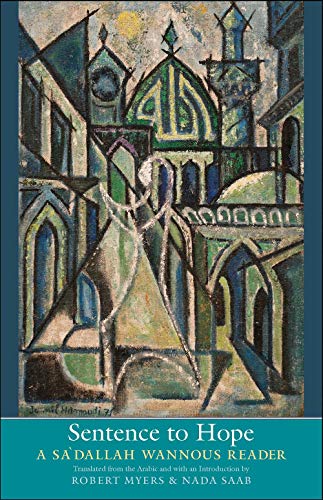
    • A new Sa’dallah Wannous reader,Sentence to Hope(ed. and trans. Robert Myers and Nada Saab) brings together four translations of plays as well as essays by and interviews with the great Syrian playwright (1941-1996).

    • Read more about reading Wannous in Syria in Matthew McNaught’s essay “Yarmouk Miniatures” and about Arwa Salih and the Arab left to which he belonged in Ursula’s “Lessons of Defeat: Testimonies of the Arab left.”

    • The founder of Egypt’s Dar Tanmia Bookshop and Publishing, Khaled Lutfi, was sentenced to five years in a military trial at the beginning of February. A statement of support for Lutfi has been circulating online, in Arabic and English.

    • The Egyptian novelist Ahmed Naji currently lives in the US after serving two years in jail on indecency charges.

    • The photographer we mention is Mohamed Abu Zeid – Shawkan – who should never have been jailed in the first place and is currently being held unlawfully beyond his release date.


    Previous 1 12 13 14 15 16 20 Next

    Related Podcasts

    Fresh Air

    1

    Fresh Air Arts
    Twenty Thousand Hertz

    2

    Twenty Thousand Hertz Arts
    The Black Tapes

    3

    The Black Tapes Arts
    Snap Judgment

    4

    Snap Judgment Arts
    Here’s The Thing with Alec Baldwin

    5

    Here’s The Thing with Alec Baldwin Arts
    The NoSleep Podcast – Creative Reason Media Inc.

    6

    The NoSleep Podcast – Creative Reason Media Inc. Arts
    footer-logo

    Contact Us

    Toll Free: 844-670-7747

    Links

    • Home
    • Top Charts
    • Networks
    • Apps
    • Independents Podcasts
    • Podcast Advertising
    • Podcast News
    • Contact Us
    • About Us
    • Analytics & Insights

    Stay Connected

      Privacy, Terms of Use & Our Code of Ethics Protecting Content Creators Copyrights