TopPodcast.com
Menu
  • Home
  • Top Charts
  • Top Networks
  • Top Apps
  • Top Independents
  • Top Podfluencers
  • Top Picks
    • Top Business Podcasts
    • Top True Crime Podcasts
    • Top Finance Podcasts
    • Top Comedy Podcasts
    • Top Music Podcasts
    • Top Womens Podcasts
    • Top Kids Podcasts
    • Top Sports Podcasts
    • Top News Podcasts
    • Top Tech Podcasts
    • Top Crypto Podcasts
    • Top Entrepreneurial Podcasts
    • Top Fantasy Sports Podcasts
    • Top Political Podcasts
    • Top Science Podcasts
    • Top Self Help Podcasts
    • Top Sports Betting Podcasts
    • Top Stocks Podcasts
  • Podcast News
  • About Us
  • Podcast Advertising
  • Contact
Not in our directory?
Add Show Here
Podcast Equipment
Center

toppodcastlogoOur TOPPODCAST Picks

  • Comedy
  • Crypto
  • Sports
  • News
  • Politics
  • True Crime
  • Business
  • Finance

Follow Us

toppodcastlogoStay Connected

    View Top 200 Chart
    Back to Rankings Page
    Mathematics

    Breaking Math Podcast

    Breaking Math is a deep-dive science, technology, engineering, AI, and mathematics podcast that explores the world through the lens of logic, patterns, and critical thinking. Hosted by Autumn Phaneuf, an expert in industrial engineering, operations research, and applied mathematics, and Noah Giansiracusa, a mathematician and leading voice in algorithmic literacy and technology ethics, the show is dedicated to uncovering the mathematical structures behind science, technology, and the systems shaping our future.

    What began as a conversation about math as a pure and elegant discipline has evolved into a platform for bold, interdisciplinary dialogue. Each episode of Breaking Math takes listeners on an intellectual journey—into the strange beauty of chaos theory, the ethical dilemmas of AI and algorithms, the hidden math of biology and evolution, or the physics governing black holes and the cosmos. Along the way, Autumn and Noah speak with working scientists, researchers, and thinkers across fields: computer scientists, physicists, chemists, engineers, economists, philosophers, and more.

    But this isn’t just a podcast about equations. It’s a show about how mathematics shapes the way we think, decide, build, and understand the world. Breaking Math pushes back against the idea that STEM belongs behind a paywall or an academic podium. It’s for the curious, the critical, and the creative—for anyone who believes that ideas should be rigorous, accessible, and infused with wonder.

    If you’ve ever wondered:

    • What’s the math behind machine learning and modern algorithms?
    • How do we quantify uncertainty in climate and economic models?
    • Can intelligence or consciousness be meaningfully described in AI?
    • Why does beauty matter in an equation?

    You’re in the right place.

    At its heart, Breaking Math is about building bridges—between disciplines, between experts and the public, and between abstract mathematics and the messy, magnificent reality we live in. With humor, clarity, and deep respect for complexity, Autumn and Noah invite you to rethink what math can be—and how it can help us shape a better future.

    Listen wherever you get your podcasts.

    Website: https://breakingmath.io

    Linktree: https://linktr.ee/breakingmathmedia

    Email: breakingmathpodcast@gmail.com

    Advertise

    Copyright: © Copyright Breaking Math

    • Apple Podcasts
    • Google Play
    • Spotify

    Latest Episodes:
    Can Math Save Journalism?: Julia Angwin on Proof, Power, and Amazon's Algorithm Jul 02, 2026
    Show notes

    In this conversation we chat with Julia Angwin — Pulitzer Prize-winning journalist, founder of Proof News, and former Wall Street Journal and ProPublica reporter — to make the case that journalism should function more like mathematical proof than anecdote.

    We cover how Angwin's team at The Markup used a decision-tree model to prove Amazon was favoring its own products in search results by an 8-to-1 margin — a finding the House Antitrust Committee later cited when referring Amazon to the DOJ for possible perjury. We dig into her "ingredients label" approach to reporting at Proof News (hypothesis, sample size, techniques, limitations), the difference between mathematical proof and the scientific method, and why she thinks control over algorithmic media is now the central battleground for authoritarian power. She also unpacks her new book on resisting authoritarianism, built from interviews with dissidents worldwide, including the "Swiss cheese" model of personal security and why perfectionism is dangerous in a crisis.

    Chapters

    09:50 Proof News: A New Era in Journalism

    19:56 Data-Driven Investigations: A Case Study

    30:02 The Future of Journalism and AI

    32:53 The Evolution of Search Rankings

    35:06 The Role of Algorithms in Information Access

    36:41 Fighting Authoritarianism Through Journalism

    44:52 Community Resistance Against Authoritarianism

    48:33 The Dangers of Perfectionism in Resistance

    51:26 Declaring a Position in Journalism

    56:25 The Importance of Math in Modern Society

    Julia Angwin's book, “On Courage” (https://amzn.to/448G8kY)

    Follow Julia Angwin on

    X (https://x.com/JuliaAngwin/)

    Bluesky (https://bsky.app/profile/juliaangwin.com)

    Proof News (https://www.proofnews.org/)

    Follow Breaking Math on

    Substack (https://breakingmath.substack.com/)

    X (https://x.com/breakingmathpod)

    Instagram (https://www.instagram.com/breakingmathmedia/)

    Bluesky (https://bsky.app/profile/breakingmath.bsky.social)

    Website (https://www.breakingmath.io/)

    YouTube (https://www.youtube.com/@BreakingMathPod)

    Follow Noah on

    Instagram (https://www.instagram.com/profnoahgian/)

    X (https://x.com/ProfNoahGian)

    Follow Autumn on

    X (https://x.com/1autumn_leaf)

    Instagram (https://www.instagram.com/1autumnleaf/)

    email: breakingmathpodcast@gmail.com

    The Proof in the Code: How Lean Is Quietly Rewriting Trust in Math (w/ Kevin Hartnett) Jun 24, 2026
    Show notes

    In this episode, Autumn and Noah talk with Kevin Hartnett about why mathematicians are willing to spend years reducing an idea to a level of detail a machine can check, whether formal verification can catch an AI that's technically correct but fundamentally misaligned, the cold-start problem that kept earlier theorem-provers niche, and what it means for the future of mathematical trust once AI can generate proofs faster than any human community can read them.

    Timeline:

    00:00 Introduction to Lean and Its Significance

    03:18 The Journey of Writing the Book

    05:13 Human Element in Mathematical Formalization

    06:57 Understanding Formal Proofs in Mathematics

    11:21 The Origins of Lean and Its Purpose

    13:03 Misalignment in Software Specifications

    14:39 Building Mathematical Libraries in Lean

    17:23 Ensuring Accuracy in Mathematical Foundations

    22:00 Overcoming the Cold Start Problem in Lean Adoption

    24:36 The Future of Mathematical Proofs

    30:26 AI's Role in Mathematics

    38:29 Expanding Beyond Mathematics

    41:40 The Long-Term Impact of Lean

    The Proof in the Code is out now from Quanta Books. (https://amzn.to/3SuNlJm)

    Follow Kevin Hartnett on

    X (https://x.com/KSHartnett)

    Bluesky (https://bsky.app/profile/kevinhartnett.bsky.social)

    Follow Breaking Math on

    Substack (https://breakingmath.substack.com/)

    X (https://x.com/breakingmathpod)

    Instagram (https://www.instagram.com/breakingmathmedia/)

    Bluesky (https://bsky.app/profile/breakingmath.bsky.social)

    Website (https://www.breakingmath.io/)

    YouTube (https://www.youtube.com/@BreakingMathPod)

    Follow Noah on

    Instagram (https://www.instagram.com/profnoahgian/)

    X (https://x.com/ProfNoahGian)

    Bluesky (https://bsky.app/profile/profnoahgian.bsky.social)

    Follow Autumn on

    X (https://x.com/1autumn_leaf)

    Bluesky (https://bsky.app/profile/1autumnleaf.bsky.social)

    Instagram (https://www.instagram.com/1autumnleaf/)

    Substack (https://substack.com/@1autumnleaf)

    email: breakingmathpodcast@gmail.com

    How Data Science Exposes Injustice: Chad Topaz on Unlocking Justice Jun 10, 2026
    Show notes

    What happens when the evidence of injustice is buried in messy, redacted, or inaccessible data? Mathematician and data scientist Chad Topaz joins Breaking Math to discuss his book Unlocking Justice. Together, we explore policing, sentencing, public records, Rikers Island, algorithmic risk, and the limits of quantifying human lives. This is a conversation about math, power, transparency, and the small acts of hope that can change systems.

    Chapters

    00:00 Introduction and Context of the Conversation

    01:11 Chad's Journey from Mathematics to Social Justice

    03:50 The Personal Nature of Chad's Book

    04:40 Challenges in Data Collection and Access

    08:03 The Impact of Data on Policing and Surveillance

    09:51 Humorous Yet Tragic Data Collection Experiences

    12:55 The Importance of Data Preparation and Cleaning

    14:40 Navigating Imperfect Data and Its Consequences

    17:48 The Balance Between Quantification and Human Stories

    22:25 Incarceration and Public Health: The Rikers Island Case Study

    31:36 Mathematics and Social Justice: Secrets of the Elite

    39:03 Hope and Action: A Personal Journey in Data for Justice

    Follow Chad Topaz on

    Bluesky(https://bsky.app/profile/chadtopaz.bsky.social) Book (https://amzn.to/3S21pKb)

    Follow Breaking Math on

    Substack (https://breakingmath.substack.com/)

    X (https://x.com/breakingmathpod)

    Instagram (https://www.instagram.com/breakingmathmedia/)

    Bluesky (https://bsky.app/profile/breakingmath.bsky.social)

    Website (https://www.breakingmath.io/)

    YouTube (https://www.youtube.com/@BreakingMathPod)

    Follow Noah on

    Instagram (https://www.instagram.com/profnoahgian/)

    X (https://x.com/ProfNoahGian)

    Bluesky (https://bsky.app/profile/profnoahgian.bsky.social)

    Follow Autumn on

    X (https://x.com/1autumn_leaf)

    Bluesky (https://bsky.app/profile/1autumnleaf.bsky.social)

    Instagram (https://www.instagram.com/1autumnleaf/)

    Substack (https://substack.com/@1autumnleaf)

    email: breakingmathpodcast@gmail.com

    Rise of the Robots: Is AI Coming for Your Job? Jun 02, 2026
    Show notes

    This conversation explores the profound impact of AI and automation on the future of work, economy, and society. Featuring Martin Ford, author of 'Rise of the Robots,' the discussion covers technological progress, economic implications, policy ideas like universal basic income, and the evolving nature of jobs in an AI-driven world.

    Key Topics

    Impact of AI on employment and economy

    Potential of universal basic income as a solution

    Differences between past technological revolutions and AI

    The evolution from physical robots to AI software agents

    Jobs most vulnerable to automation and AI

    Chapters

    04:14 The Impact of Technological Revolutions on Employment

    10:40 The Shift from Physical to Intellectual Automation

    12:16 The Debate: Replacement vs. Augmentation of Jobs

    18:01 Economic Implications of Job Displacement

    21:00 Exploring Solutions: Universal Basic Income and Beyond

    24:08 The Awakening of Economists

    25:12 Historical Perspectives on Automation

    28:27 Navigating the Future Job Market

    32:57 The Role of Skilled Trades in an AI World

    38:13 The Alien Thought Experiment

    42:17 The Future of AI and Its Implications

    44:14 The Rise of Automation and Its Impact

    45:14 AI as a Digital Workforce

    45:38 The Shifting Landscape of Work

    46:08 Questioning the Future of Automation and AI

    Follow Martin Ford on

    X (https://x.com/MFordFuture)

    Book (https://amzn.to/4vluX3N)

    Follow Breaking Math on

    Substack (https://breakingmath.substack.com/)

    X (https://x.com/breakingmathpod)

    Instagram (https://www.instagram.com/breakingmathmedia/)

    Bluesky (https://bsky.app/profile/breakingmath.bsky.social)

    Website (https://www.breakingmath.io/)

    YouTube (https://www.youtube.com/@BreakingMathPod)

    Follow Noah on

    Instagram (https://www.instagram.com/profnoahgian/)

    X (https://x.com/ProfNoahGian)

    Bluesky (https://bsky.app/profile/profnoahgian.bsky.social)

    Follow Autumn on

    X (https://x.com/1autumn_leaf)

    Bluesky (https://bsky.app/profile/1autumnleaf.bsky.social)

    Instagram (https://www.instagram.com/1autumnleaf/)

    Substack (https://substack.com/@1autumnleaf)

    email: breakingmathpodcast@gmail.com

    The Echoing Universe: How Radio Waves, AI, and Math Could Help Us Find Aliens with Emma Chapman May 29, 2026
    Show notes

    Dr. Emma Chapman explains radio astronomy using the fruit bowl metaphor, explores the emotional and scientific aspects of space exploration, and discusses future technologies like the Square Kilometre Array and lunar radio telescopes. The conversation highlights the poetic beauty of the universe, the importance of connection, and the role of math and AI in understanding the cosmos with her book the Echoing Universe.

    Chapters

    03:17 Understanding Radio Astronomy

    08:12 The Intimacy of the Solar System

    09:10 Tidal Locking and the Moon

    13:36 The Emotional Lives of Astronauts' Families

    17:53 The Shared Experience of Space Exploration

    21:58 The Emotional Resonance of Celestial Events

    26:41 Facing the Universe: Overcoming Fear through Cosmology

    28:16 Cultural Perspectives: How Civilizations Understand the Cosmos

    30:52 Astronomy's Historical Impact: Control and Awe in Civilizations

    31:05 The Unlikely Scientist: James Stanley Hay's Discovery

    40:31 AI in Astronomy: Harnessing Data for Discovery

    45:14 The Next Frontier: Radio Telescopes on the Moon

    47:38 A New Perspective: The Space Between Stars

    Follow Dr. Emma Chapman

    Bluesky (https://bsky.app/profile/dreochapman.bsky.social)

    Instagram (https://www.instagram.com/dremmachapman/)

    Book (https://amzn.to/4u0GCnC)

    Follow Breaking Math on

    Substack (https://breakingmath.substack.com/)

    X (https://x.com/breakingmathpod)

    Instagram (https://www.instagram.com/breakingmathmedia/)

    Bluesky (https://bsky.app/profile/breakingmath.bsky.social)

    Website (https://www.breakingmath.io/)

    YouTube (https://www.youtube.com/@BreakingMathPod)

    Follow Noah on

    Instagram (https://www.instagram.com/profnoahgian/)

    X (https://x.com/ProfNoahGian)

    Bluesky (https://bsky.app/profile/profnoahgian.bsky.social)

    Follow Autumn on

    X (https://x.com/1autumn_leaf)

    Bluesky (https://bsky.app/profile/1autumnleaf.bsky.social)

    Instagram (https://www.instagram.com/1autumnleaf/)

    Substack (https://substack.com/@1autumnleaf)

    email: breakingmathpodcast@gmail.com

    AI Solves 80-Year-Old Math Conjecture: What It Means for the Future of Mathematics May 23, 2026
    Show notes

    This episode explores how AI, specifically OpenAI's recent breakthrough in solving an 80-year-old math conjecture, is transforming the field of mathematics. Featuring insights from Professor Daniel Litt, the discussion covers the implications of AI in mathematical research, the value of human verification, and the future of mathematical practice.

    Key topics

    AI solving long-standing mathematical problems

    The role of human verification in AI-generated proofs

    Implications of AI breakthroughs in discrete geometry

    The future of mathematical research with AI

    Number theory and algebraic constructions in AI discoveries

    Chapters

    00:00 Introduction to the Conjecture and Its Significance

    01:15 Understanding the Erdős Problem

    04:34 The Role of AI in Solving Mathematical Problems

    09:17 The Implications of AI in Mathematics

    10:32 AI vs Human Mathematicians: A Comparative Analysis

    17:20 Standards for AI-Generated Proofs

    21:10 Corporate Interests in Mathematical Research

    24:42 The Future of Mathematics and AI

    27:50 Final Thoughts on AI and Mathematics

    31:37 Revolutionizing Mathematics: AI's Breakthrough in Discrete Geometry

    37:37 Exploring the Implications: AI and the Future of Mathematics

    38:03 The Role of AI in Mathematics

    39:23 Human Value in the Age of AI

    Follow Daniel Litt on

    X (https://x.com/maiasz) Website (https://daniellitt.com)

    Follow Breaking Math on

    Substack (https://breakingmath.substack.com/)

    X (https://x.com/breakingmathpod)

    Instagram (https://www.instagram.com/breakingmathmedia/)

    Bluesky (https://bsky.app/profile/breakingmath.bsky.social)

    Website (https://www.breakingmath.io/)

    YouTube (https://www.youtube.com/@BreakingMathPod)

    Follow Noah on

    Instagram (https://www.instagram.com/profnoahgian/)

    X (https://x.com/ProfNoahGian)

    Bluesky (https://bsky.app/profile/profnoahgian.bsky.social)

    Follow Autumn on

    X (https://x.com/1autumn_leaf)

    Bluesky (https://bsky.app/profile/1autumnleaf.bsky.social)

    Instagram (https://www.instagram.com/1autumnleaf/)

    Substack (https://substack.com/@1autumnleaf)

    email: breakingmathpodcast@gmail.com


    The Science of Addiction: Dopamine, Social Media, and the Myth of Willpower with Maia Szalavitz May 21, 2026
    Show notes

    In this episode with award-winning journalist and author Maia Szalavitz challenges the idea that addiction is simply about pleasure or willpower. Instead, she explains addiction as compulsive behavior that continues despite negative consequences — and shows why withdrawal, dependence, and addiction are not the same thing.

    The conversation explores “wanting” versus “liking,” why dopamine is misunderstood, how social media and AI can exploit reward systems, and why punishment often fails. Ultimately, Szalavitz argues that recovery depends less on tough love and more on connection, purpose, safety, and care.

    Chapters

    00:00 Understanding Addiction: Definitions and Mechanisms

    10:43 The Role of Dopamine in Addiction

    14:18 Addiction as a Learning Disorder

    16:22 Substance vs. Experience: The Nature of Addiction

    20:13 Evidence-Based Methods for Overcoming Addiction

    25:20 Finding Meaning and Purpose Beyond Addiction

    33:30 The Pursuit of Meaningful Experiences

    34:15 Understanding Dopamine and Pleasure

    39:10 The Complexity of Addiction

    43:00 Social Media and Addiction Dynamics

    50:42 Generational Perspectives on Technology and Addiction

    57:53 Lessons Learned in Addiction Science

    01:02:03 Rethinking Addiction: A New Perspective

    01:03:54 The Compulsive Nature of Addiction

    01:04:14 Understanding Addiction Beyond Pleasure

    01:05:27 The Importance of Connection and Compassion

    Follow Maia Szalavitz on

    X (https://x.com/maiasz)

    Follow Breaking Math on

    Substack (https://breakingmath.substack.com/)

    X (https://x.com/breakingmathpod)

    Instagram (https://www.instagram.com/breakingmathmedia/)

    Bluesky (https://bsky.app/profile/breakingmath.bsky.social)

    Website (https://www.breakingmath.io/)

    YouTube (https://www.youtube.com/@BreakingMathPod)

    Follow Noah on

    Instagram (https://www.instagram.com/profnoahgian/)

    X (https://x.com/ProfNoahGian)

    Bluesky (https://bsky.app/profile/profnoahgian.bsky.social)

    Follow Autumn on

    X (https://x.com/1autumn_leaf)

    Bluesky (https://bsky.app/profile/1autumnleaf.bsky.social)

    Instagram (https://www.instagram.com/1autumnleaf/)

    Substack (https://substack.com/@1autumnleaf)

    email: breakingmathpodcast@gmail.com


    Are We Being Misled by Data? Ron Wasserstein on AI, Bias, and Statistical Truth May 14, 2026
    Show notes

    In this episode of Breaking Math, Autumn and Noah speak with Ron Wasserstein, Executive Director of the American Statistical Association, about what statistics means in a world increasingly shaped by AI, misinformation, and fragile public trust. Wasserstein argues that statistics is not merely a “bag of tools,” but a way of thinking: asking where data comes from, what it leaves out, how uncertainty should be communicated, and when numbers are being used to illuminate rather than manipulate.

    Chapters

    00:00 The Golden Age of Statistics

    02:36 AI's Impact on Statistics

    08:16 Data as Fuel for AI

    10:55 Bias in AI and Statistics

    14:01 Preparing Future Statisticians

    16:58 Bridging the Gap: Academia and Industry

    22:58 The Misconception of Statistics

    23:08 The Role of Statistics in Public Discourse

    26:20 The American Statistical Association's Mission

    32:18 Statistics and Politics: A Historical Perspective

    36:02 Addressing Misinformation and Misuse of Data

    39:51 The Importance of Statistical Literacy

    44:01 Misconceptions About Statistics and Expertise

    46:57 The Essence of Statistics

    47:22 Statistics as a Way of Thinking

    Follow Ron Wasserstein

    LinkedIn (https://www.linkedin.com/in/ron-wasserstein/)

    Follow Breaking Math on

    Substack (https://breakingmath.substack.com/)

    Twitter (https://x.com/breakingmathpod)

    Instagram (https://www.instagram.com/breakingmathmedia/)

    Bluesky (https://bsky.app/profile/breakingmath.bsky.social)

    Website (https://www.breakingmath.io/)

    YouTube (https://www.youtube.com/@BreakingMathPod)

    Follow Noah on

    Instagram (https://www.instagram.com/profnoahgian/)

    Twitter (https://x.com/ProfNoahGian)

    Bluesky (https://bsky.app/profile/profnoahgian.bsky.social)

    Follow Autumn on

    Twitter (https://x.com/1autumn_leaf)

    Bluesky (https://bsky.app/profile/1autumnleaf.bsky.social)

    Instagram (https://www.instagram.com/1autumnleaf/)

    Substack (https://substack.com/@1autumnleaf)

    email: breakingmathpodcast@gmail.com


    How Ransomware Became a Global Industry with Anja Shortland on Dark Screens May 05, 2026
    Show notes

    What if ransomware did not begin with criminals, but with curiosity? In this episode of Breaking Math, Autumn and Noah talk with Anja Shortland, professor of political economy at King’s College London and author of Dark Screens.

    This conversation explores how playful hacking evolved into professionalized cybercrime, why ransomware gangs operate like morally questionable internet startups, how cryptocurrency made ransomware scalable, and why hospitals, governments, universities, and critical infrastructure remain especially vulnerable. We also dig into the mathematics behind encryption, asymmetric cryptography, game theory, negotiation, cyber insurance, and the uncomfortable trade-offs between freedom, privacy, and regulation.

    Chapters

    00:00 The origins of ransomware and early hacker culture

    02:13 The evolution of ransomware attacks since 2013

    03:14 The paradox of cybercriminals as entrepreneurs

    06:19 Early hackers: Steve Jobs and Wozniak as pioneers

    12:34 The moral and legal landscape of hacking and cybercrime

    13:39 The importance of cybersecurity awareness for individuals

    15:03 The arms race: attackers vs defenders and the role of math

    16:02 The technological innovations behind ransomware

    19:21 Asymmetric encryption and cryptocurrency in ransomware

    20:53 Bitcoin and the dark web: enabling cybercrime

    22:45 The impact of AI on future cyber threats and defenses

    34:07 The future of ransomware and cybersecurity challenges

    Follow Anja Shortland on

    LinkedIn (https://uk.linkedin.com/in/anja-shortland-53133b231)

    Book (https://amzn.to/4d6pB4X)

    Follow Breaking Math on

    Substack (https://breakingmath.substack.com/)

    Twitter (https://x.com/breakingmathpod)

    X (https://www.instagram.com/breakingmathmedia/)

    Bluesky (https://bsky.app/profile/breakingmath.bsky.social)

    Website (https://www.breakingmath.io/)

    Follow Noah on

    Instagram (https://www.instagram.com/profnoahgian/)

    Twitter (https://x.com/ProfNoahGian)

    Bluesky (https://bsky.app/profile/profnoahgian.bsky.social)

    Follow Autumn on X (https://x.com/1autumn_leaf)

    Bluesky (https://bsky.app/profile/1autumnleaf.bsky.social)

    Instagram (https://www.instagram.com/1autumnleaf/)

    Substack (https://substack.com/@1autumnleaf)

    email: breakingmathpodcast@gmail.com


    Explaining Huge Numbers with Richard Elwes Apr 28, 2026
    Show notes

    What does it actually mean for a number to be “big”? In this episode of Breaking Math, Autumn chats with mathematician Richard Elwes to explore how huge numbers reveal the limits of human intuition, language, and even mathematics itself. The discussion moves from exponential growth in pandemics and finance to numbers larger than the universe itself, emerging in games like chess and abstract possibility spaces. Finally, it reaches one of the most profound ideas in modern mathematics: that there are true statements about numbers that can never be proven. This episode challenges how we think about scale, complexity, and the systems we rely on to make sense of reality.

    Key Topics

    Limits of ancient numeral systems like Roman numerals

    Mathematical logic and the concept of huge numbers

    Evolution of number notation from Roman to Hindu-Arabic systems

    The significance of place value in expressing large numbers

    The Mayan long count and its implications for understanding time scales

    Chapters

    00:00 Introduction and Inspiration for the Book

    01:39 Redefining Big Numbers

    01:55 Limits of Numerical Systems

    05:33 Evolution of Number Sense

    10:02 Language and Numerical Understanding

    11:53 Cultural Influences on Numerical Systems

    14:18 Hacks in Ancient Number Systems

    16:55 Archimedes and the Concept of Infinity

    22:01 The Importance of Place Value

    25:45 Mayan Cosmology and Time Scales

    31:55 Exponential Growth and Its Dangers

    32:20 Understanding Exponential Growth

    36:14 The Dangers of Exponential Growth

    37:23 Limits of Exponential Growth in the Physical World

    39:42 Exploring Possibility Space

    45:38 Goodstein's Theorem and Mathematical Logic

    Connect with Breaking Math

    Follow Richard Elwes on

    X (https://x.com/RichardElwes/ )

    Instagram (https://www.instagram.com/richardelwes/) His Book(https://amzn.to/48rk5s9)

    Follow Breaking Math on

    Substack (https://breakingmath.substack.com/)

    Twitter (https://x.com/breakingmathpod)

    X (https://www.instagram.com/breakingmathmedia/)

    Bluesky (https://bsky.app/profile/breakingmath.bsky.social)

    Website (https://www.breakingmath.io/)

    Follow Autumn on

    X (https://x.com/1autumn_leaf)

    Bluesky (https://bsky.app/profile/1autumnleaf.bsky.social)

    Instagram (https://www.instagram.com/1autumnleaf/)

    Substack (https://substack.com/@1autumnleaf)

    email: breakingmathpodcast@gmail.com


    Previous 1 2 3 4 21 Next

    Related Podcasts

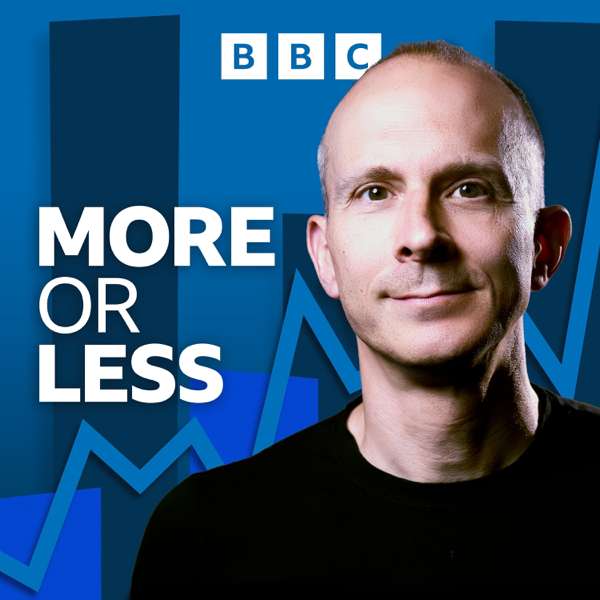
    More or Less

    1

    More or Less Business
    Relatively Prime: Stories from the Mathematical Domain

    2

    Relatively Prime: Stories from the Mathematical Domain Mathematics
    My Favorite Theorem

    3

    My Favorite Theorem Mathematics
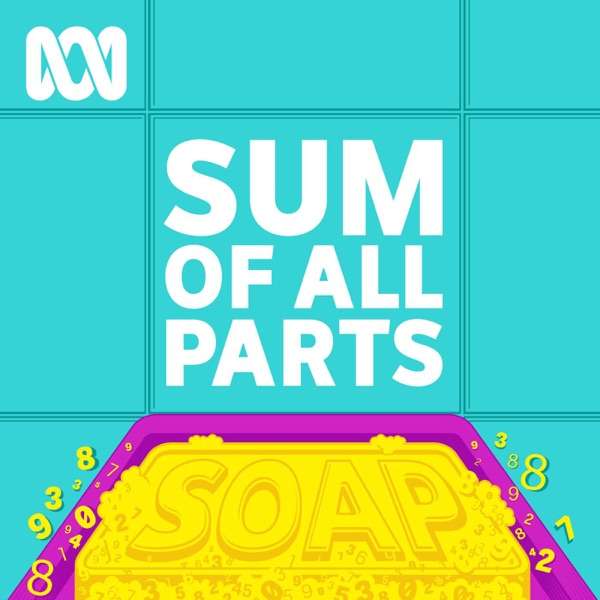
    Sum of All Parts

    4

    Sum of All Parts Mathematics
    Opinionated History of Mathematics

    5

    Opinionated History of Mathematics Mathematics
    Casual Inference

    6

    Casual Inference Mathematics
    footer-logo

    Contact Us

    Toll Free: 844-670-7747

    Links

    • Home
    • Top Charts
    • Networks
    • Apps
    • Independents Podcasts
    • Podcast Advertising
    • Podcast News
    • Contact Us
    • About Us
    • Analytics & Insights

    Stay Connected

      Privacy, Terms of Use & Our Code of Ethics Protecting Content Creators Copyrights