TopPodcast.com
Menu
  • Home
  • Top Charts
  • Top Networks
  • Top Apps
  • Top Independents
  • Top Podfluencers
  • Top Picks
    • Top Business Podcasts
    • Top True Crime Podcasts
    • Top Finance Podcasts
    • Top Comedy Podcasts
    • Top Music Podcasts
    • Top Womens Podcasts
    • Top Kids Podcasts
    • Top Sports Podcasts
    • Top News Podcasts
    • Top Tech Podcasts
    • Top Crypto Podcasts
    • Top Entrepreneurial Podcasts
    • Top Fantasy Sports Podcasts
    • Top Political Podcasts
    • Top Science Podcasts
    • Top Self Help Podcasts
    • Top Sports Betting Podcasts
    • Top Stocks Podcasts
  • Podcast News
  • About Us
  • Podcast Advertising
  • Contact
Not in our directory?
Add Show Here
Podcast Equipment
Center

toppodcastlogoOur TOPPODCAST Picks

  • Comedy
  • Crypto
  • Sports
  • News
  • Politics
  • True Crime
  • Business
  • Finance

Follow Us

toppodcastlogoStay Connected

    View Top 200 Chart
    Back to Rankings Page
    True Crime

    Beyond Fear

    Welcome to the Beyond Fear Podcast. We are your hosts, Alexa Sardina and Alissa Ackerman. This podcast is a labor of love, created by two friends and criminologists who have spent their entire careers studying everything about sex crimes. The twist? We are also both survivors of sexual violence and as “survivor scholars” we approach our work with both hats on. Join us as we take you Beyond Fear. Check out our website at www.beyondfearpodcast.com and follow us on Twitter @fearcrimes and Instagram @beyondfearpodcast

    Advertise

    Copyright: © 2021 Beyond Fear: The Sex Crimes Podcast

    • Apple Podcasts
    • Google Play
    • Spotify

    Latest Episodes:
    Episode 6: How Hasn’t it Affected Me? Jul 29, 2020
    Show notes

    In “How Hasn’t It Affected Me?” Alexa and Alissa have a candid, unscripted, and vulnerable conversation with Monishia “Moe” Miller and Guy Hamilton-Smith. We each talk about the ways that sexual violence has impacted our lives.

    As with all episodes of this podcast, we want to warn our listeners that this can be difficult to listen to. It is okay to listen with a friend, listen in short chunks, or walk away. To offer fair warning for this episode, in particular, we talk about both in the short and long-term impacts of sexual violence in our personal stories, including substance abuse, self-harm, eating disorders, workaholism and suicide attempts.

    This was a special episode for us to record. We spoke with two individuals we both admire and respect. The four of us created a safe space to talk very intimately and vulnerably about the ways that sexual violence still impacts us.

    Material like this can be hard to listen to. It may bring up triggers for you. There are resources available should you need. The Rape, Abuse and Incest National Network (www.rainn.org) has an abundance of resources, including the National Sexual Assault Hotline.

    Some of the material we referenced in this episode includes:

    Van der Kolk, Bessel (2015). The Body Keeps the Score: Brain, Mind and Body in the Healing of Trauma.

    Classen, C. C., Palesh, O. G., & Aggarwal, R. (2005). Sexual revictimization: A review of the empirical literature. Trauma, Violence & Abuse, 6(2), 102-129.

    Maker, A. H., Kemmelmeier, M., & Peterson, C. (2001). Child sexual abuse, peer sexual abuse, and sexual assault in adulthood: A multi-risk model of revictimization. Journal of Traumatic Stress, 14(2), 351-368.

    Nelson, E. C., Heath, A. C., Madden, P. A., Cooper, M. L., Dinwiddie, S. H., Bucholz, K. K. et al. (2002). Association between self-reported childhood sexual abuse and adverse psychosocial outcomes: Results from a twin study. Archives of General Psychiatry, 59(2), 139-45.

    Arata, C. M. (2002). Child sexual abuse and sexual revictimization. Clinical Psychology: Science and Practice, 9(2), 135-164.

    Fleming, J., Mullen, P. E., Sibthorpe, B., & Bammer, G. (1999). The long-term impact of childhood sexual abuse in Australian women. Child Abuse & Neglect, 23, 145-159.

    Vandiver, D., Braithwaite, J., & Stafford, M. (2017). crimes and offenders: Research and realities. NY: Routledge

    https://www.nationaleatingdisorders.org/blog/trauma-sexual-assault-and-eating-disorders

    Moe is an adjunct lecturer of criminal justice at California State University, Fullerton, where she teaches courses in Juvenile Justice and Corrections. She received her Master of Science degree from California State University, Los Angeles in Criminal Justice Administration. Her research includes trauma and delinquency, youth services, and juvenile justice reform. She has worked as a youth advocate in the juvenile justice field for over twenty years.

    Guy is a fellow at the Offense Litigation and Policy Resource Center at the Mitchell Hamline School of Law, a 2019 JustLeadershipUSA fellow, and a writer with bylines in The Appeal, Slate, and other outlets. His work focuses primarily on the ways in which legal responses to sexual violence are ineffective and harmful, particularly focusing on post-sentence registration laws and indefinite civil imprisonment. You can read his writing on his website, https://guyhamiltonsmith.com and follow him via Twitter, @G_Padraic.

    Learn more about your ad choices. Visit megaphone.fm/adchoices


    Episode 5: The Weaponization of Sexual Violence Jul 15, 2020
    Show notes

    In Episode 5 of Beyond Fear: The Crimes Podcast, Alexa and Alissa interview Dr. Nicole Fox, an assistant professor in the Criminal Justice Division at CSUS whose current research focuses on how post-genocide communities remember violence through the creation of national collective memories embodied in memorials and monuments. In “The Weaponization of Sexual Violence” we talk about rape as it is used during war and genocide.

    At the 18:00 minute mark in this episode, Dr. Fox mentions an article that has the most accurate counts of the number of rapes that occurred during the Rwandan genocide. You can access that article by clicking here.

    Dr. Fox’s forthcoming book Rising From the Ashes: Memory and Reconciliation in Rwanda After the Genocide is due out in the spring of 2021.

    We recognize that every episode of this podcast can be difficult to digest, but episode 5 in particular is quite heavy. We caution that you listen with care.

    For a transcript of this episode of Beyond Fear, click here.

    For a direct download of this episode of Beyond Fear (MP3), click here.

    Follow us on Facebook at Beyond Fear: The Crimes Podcast, on Instagram @beyondfearpodcast, and on Twitter @fearcrimes

    Learn more about your ad choices. Visit megaphone.fm/adchoices


    Episode 4: The Many Reasons Why Jul 01, 2020
    Show notes

    In Episode 4: The Many Reasons Why, Alexa and Alissa breakdown some of the various reasons why people commit acts of child sexual abuse and rape. It might come as a surprise, but there is not one reason why these kinds of offenses happen. In order to prevent future crimes from happening and to ensure that people who do sexually offend get the help they need, it is crucial that we understand the factors that lead to offending behavior in the first place.

    In this episode, we bust some myths about sexual offending and provide some insight into the complex nature of sexual offending. We discuss paraphilias, cognitive distortions, grooming behavior, opportunities, adverse childhood experiences, and rape myths, among other factors.


    This might be a difficult episode to listen to, as we talk about these factors in an open and non-judgemental way. We recognize how hard this can be and suggest listening with care. It is okay to listen in short chunks, listen with friend, or tune out completely.

    For a transcript of The Many Reasons Why, please click here.

    Follow us on Facebook at Beyond Fear: The Crimes Podcast, on Instagram @beyondfearpodcast, and on Twitter @fearcrimes

    For a direct download of Episode 4: The Many Reasons Why, click here.

    Learn more about your ad choices. Visit megaphone.fm/adchoices


    Episode 3: Understanding Sexual Abuse in the Catholic Church Jun 17, 2020
    Show notes

    In Episode 3, Alexa and Alissa interview Dr. Karen Terry about her research on sexual abuse in the Catholic Church.

    Karen J. Terry is a Professor at John Jay College of Criminal Justice in New York City. She holds a doctorate in Criminology from Cambridge University. Her primary research interest is sexual offending and victimization and offender policy. Her current research focus is on the abuse of children in an institutional setting, and she was the principal investigator for two studies on sexual abuse of minors by Catholic priests in the United States.

    The interview delves into multiple topics related to sexual abuse of minors by Catholic priests including how the two studies were designed, the major findings of both studies, and a discussion of situational crime prevention strategies that can aid in the prevention of sexual abuse.

    For the full report on the Nature and Scope of the Sexual Abuse of Minors by Catholic Priests click here.

    For the full report on the Causes and Contexts of Sexual Abuse of Minors by Catholic Priests click here.

    Australia’s Royal Commission into Institutional Responses to Sexual Abuse can be found here.

    Learn more about your ad choices. Visit megaphone.fm/adchoices


    Episode 2: Into the Weeds: Measuring Silence Jun 08, 2020
    Show notes

    “It depends…”

    This is the language that research often use when people ask them questions about sources of data.

    This is because the findings we obtain in our research depend on how we ask questions, when we ask questions, who asks the questions, etc. There are also different methods for obtaining data and just because two data sources provide different data doesn’t mean that either is incorrect. It depends…

    In episode 2, Into the Weeds: Measuring Silence, Alexa and Alissa talk about the major sources of counting sexual crimes that occur in the United States. The compare two major data sources and discuss some of the benefits and shortfalls of each.

    In this episode we utilize data from the following sources (each bullet point is hyperlinked):


    The Uniform Crime Report

    The National Crime Victimization Survey

    The National Intimate Partner and Sexual Violence Survey

    An additional resource we did not use in the episode related to child neglect, abuse and maltreatment is the National Child Abuse and Neglect Data System (NCANDS).

    Follow us on Facebook at Beyond Fear: The Crimes Podcast, on Instagram @beyondfearpodcast, and on Twitter @fearcrimes.

    Learn more about your ad choices. Visit megaphone.fm/adchoices


    Episode 1: Ride or Die May 17, 2020
    Show notes

    In episode one of Beyond Fear: The Crimes Podcast, Alexa and Alissa introduce themselves, their stories, and their commitment to understanding every aspect of sexual harm as crimes experts and as rape survivors.

    Learn more about your ad choices. Visit megaphone.fm/adchoices


    Previous 1 2 3

    Related Podcasts

    Up and Vanished

    1

    Up and Vanished News & Politics
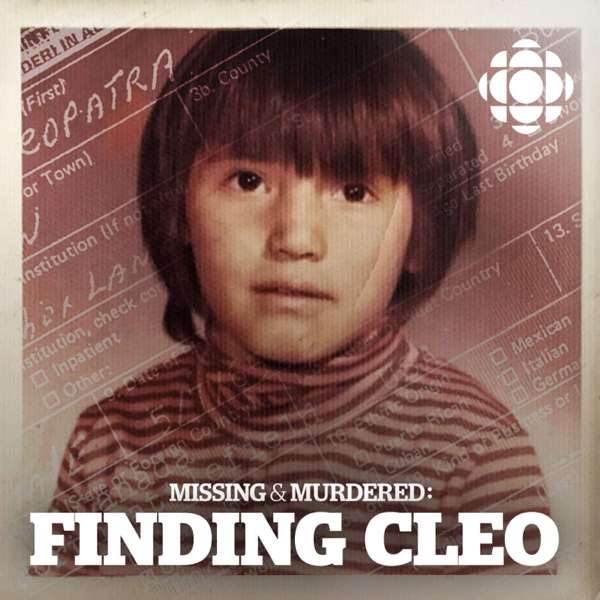
    Missing & Murdered: Finding Cleo

    2

    Missing & Murdered: Finding Cleo News & Politics
    My Favorite Murder with Karen Kilgariff and Georgia Hardstark

    3

    My Favorite Murder with Karen Kilgariff and Georgia Hardstark Comedy
    Casefile True Crime

    4

    Casefile True Crime Games & Hobbies
    True Crime Garage

    5

    True Crime Garage News
    The Black Dahlia Serial Killers

    6

    The Black Dahlia Serial Killers History
    footer-logo

    Contact Us

    Toll Free: 844-670-7747

    Links

    • Home
    • Top Charts
    • Networks
    • Apps
    • Independents Podcasts
    • Podcast Advertising
    • Podcast News
    • Contact Us
    • About Us
    • Analytics & Insights

    Stay Connected

      Privacy, Terms of Use & Our Code of Ethics Protecting Content Creators Copyrights