TopPodcast.com
Menu
  • Home
  • Top Charts
  • Top Networks
  • Top Apps
  • Top Independents
  • Top Podfluencers
  • Top Picks
    • Top Business Podcasts
    • Top True Crime Podcasts
    • Top Finance Podcasts
    • Top Comedy Podcasts
    • Top Music Podcasts
    • Top Womens Podcasts
    • Top Kids Podcasts
    • Top Sports Podcasts
    • Top News Podcasts
    • Top Tech Podcasts
    • Top Crypto Podcasts
    • Top Entrepreneurial Podcasts
    • Top Fantasy Sports Podcasts
    • Top Political Podcasts
    • Top Science Podcasts
    • Top Self Help Podcasts
    • Top Sports Betting Podcasts
    • Top Stocks Podcasts
  • Podcast News
  • About Us
  • Podcast Advertising
  • Contact
Not in our directory?
Add Show Here
Podcast Equipment
Center

toppodcastlogoOur TOPPODCAST Picks

  • Comedy
  • Crypto
  • Sports
  • News
  • Politics
  • True Crime
  • Business
  • Finance

Follow Us

toppodcastlogoStay Connected

    View Top 200 Chart
    Back to Rankings Page
    Games & Hobbies

    Best Comics Ever

    The official podcast of Comic Book Herald.

    Advertise

    Copyright: © Comic Book Herald

    • Apple Podcasts
    • Google Play
    • Spotify

    Latest Episodes:
    Creannotators #56: “Championess” with Co-Writers Kelly Zekas & Tarun Shanker! Aug 10, 2021
    Show notes

    This week on Creannotators, I talk Championess, one of my favorite comics of 2021, with the graphic novel’s co-writers Kelly Zekas and Tarun Shanker. We talk researching Elizabeth Wilkinson, the female bare knuckle boxer in 18th century London, the importance of intersectional gender, race and class in the narrative, and creating a graphic novel for Legendary Comics’ new YA line of comics.

    On Comic Book Herald’s ‘Creannotators’ I’ll be interviewing some of my favorite creators in comics about specific runs, graphic novels or series, looking for their insights on the inspirations behind the work and ideas or hidden material readers may have missed. Creannotators is an audio annotative guide to enjoying the intricacies and thinking in the art. Thanks for listening, and enjoy the comics!

    TASCHEN

    Championess Is:

    Writers: Kelly Zekas, Tarun Shanker

    Artist: Amanda Perez Puentes

    Publisher: Legendary Comics

    ——————————————————————————————————-

    Music for Best Comics Ever by Anthony Weis. Check out more music at anthonyweis.com.

    Subscribe on iTunes

    To learn how you can support Best Comics Ever and receive more exclusive content from Comic Book Herald, check out the Patreon: https://www.patreon.com/comicbookherald

    For the Comic Book Herald reading club through every year of Marvel Comics, check out mymarvelousyear.com

    The post Creannotators #56: “Championess” with Co-Writers Kelly Zekas & Tarun Shanker! appeared first on Comic Book Herald.


    Creannotators #55: “Cyclopedia Exotica” with Aminder Dhaliwal! Jul 13, 2021
    Show notes

    This week on Creannotators, I talk Cyclopedia Exotica, one of my favorite comics of 2021, with comics creator Aminder Dhaliwal. We talk the impact of the Cyclops metaphor as satire, transitioning from Instagram comic to finished graphic novel, what’s next for Woman World on TV, and much more.

    On Comic Book Herald’s ‘Creannotators’ I’ll be interviewing some of my favorite creators in comics about specific runs, graphic novels or series, looking for their insights on the inspirations behind the work and ideas or hidden material readers may have missed. Creannotators is an audio annotative guide to enjoying the intricacies and thinking in the art. Thanks for listening, and enjoy the comics!

    TASCHEN

    Cyclopedia Exotica Is:

    Writer/Artist: Aminder Dhaliwal

    Publisher: Drawn & Quarterly

    ——————————————————————————————————-

    Music for Best Comics Ever by Anthony Weis. Check out more music at anthonyweis.com.

    Subscribe on iTunes

    To learn how you can support Best Comics Ever and receive more exclusive content from Comic Book Herald, check out the Patreon: https://www.patreon.com/comicbookherald

    For the Comic Book Herald reading club through every year of Marvel Comics, check out mymarvelousyear.com

    The post Creannotators #55: “Cyclopedia Exotica” with Aminder Dhaliwal! appeared first on Comic Book Herald.


    Creannotators #54: “Wake: The Hidden History of Women-Led Slave Revolts” with Dr. Rebecca Hall Jul 06, 2021
    Show notes

    This week on Creannotators, I talk Wake: The Hidden History of Women-Led Slave Revolts with writer and historian Dr. Rebecca Hall. We talk about what it means to live in the wake of slavery, the process of converting historical research to a graphic novel, and much more.

    On Comic Book Herald’s ‘Creannotators’ I’ll be interviewing some of my favorite creators in comics about specific runs, graphic novels or series, looking for their insights on the inspirations behind the work and ideas or hidden material readers may have missed. Creannotators is an audio annotative guide to enjoying the intricacies and thinking in the art. Thanks for listening, and enjoy the comics!

    TASCHEN

    Learn more at: https://rebhallphd.org/

    Wake: The Hidden History of Women-Led Slave Revolts Is:

    Writer: Dr. Rebecca Hall

    Artist: Hugo Martinez

    Publisher: Simon and Schuster

    Selected portions of our conversation follow, and have been edited for clarity.

    CBH: Early in Wake, there’s a visual of you in in present day New York mirrored against the colonial years essentially, in the puddles in the streets. As your first time scripting a comic, or graphic novel of this length, you know, can you talk about how you collaborated on visuals and depicting these scenes with illustrator Hugo Martinez, what was that process?

    Dr. Rebecca Hall: You know, I had only ever written and published in academia before. So I’m, even though I read graphic novels and love the medium, writing for a visual medium was not something I’ve ever done before. And when I tried to find resources that could teach me how to do it, you know, like, that’s kind of my approach, like find 20 books and read them. There really is very little out there on writing for this medium if you’re not the artist as well, so the process of collaborating with an artist, we ended up having to wing it really. And it was also, you know, Hugo’s first big project. I mean, I think he had done some web comics before. So it was really kind of a learning curve for all of us.

    I got an appreciation for how much work each page was, you know, each page had multiple storyboards, multiple pencils. You know, some are harder than others. It’s not like a normal thing to turn your dissertation into a graphic novel. And so some of these concepts were pretty hard to figure out how to convey visually. So some were harder than others, but all of it was a lot of work.

    CBH: How did you know then that comics were the right medium for this story?

    Dr. Rebecca Hall: I’ve always been a fan of the genre and how powerful it can be. You know, particularly for me, two books that really resonate with me art is Art Spiegelman’s Maus, and then the graphic novel Persepolis as well. Because the documents, the primary sources on this topic were so fragmentary, it’s a little hard to just sort of, you know, kind of write it as a book. There needed to be a way to juxtapose the past and the present in order to tell the story.

    CBH: That makes a lot of sense. No, it definitely works as a graphic novel. I was curious, because I think we don’t often see historical excavation, I think in comics, and this is a very personal story in many ways. When did you know, you wanted to incorporate as much of yourself in the work sort of illustrating the historical process?

    Dr. Rebecca Hall: So the research that I’m describing, that research process that’s described in Wake, occurred almost 18 years ago, when I was doing my dissertation, and then I published a couple, like, scholarly articles on the topic. So the historical research had been complete, long before I thought to create a graphic novel. I had no idea that my story was going to be, but when I sat down to create the graphic novel, I didn’t realize that my story was going to be as prominent as it was. It became clear right away that I needed myself as a narrator in order to deal with sort of the fragmentary nature of the primary sources. And as I was writing that, I realized the people needed to understand what my investment in this was. What’s the heart of the story? What like, drew me to this work? And also, I wanted people to understand what the historical research process was like, and the obstacles that I faced. But you know, it’s kind of one of those things where you plan to write run one thing, and then you end up writing something, maybe completely, not what you were expecting, right?

    Check out the audio podcast for the full interview!

    ——————————————————————————————————-

    Music for Best Comics Ever by Anthony Weis. Check out more music at anthonyweis.com.

    Subscribe on iTunes

    To learn how you can support Best Comics Ever and receive more exclusive content from Comic Book Herald, check out the Patreon: https://www.patreon.com/comicbookherald

    For the Comic Book Herald reading club through every year of Marvel Comics, check out mymarvelousyear.com

    The post Creannotators #54: “Wake: The Hidden History of Women-Led Slave Revolts” with Dr. Rebecca Hall appeared first on Comic Book Herald.


    Creannotators #53: “I Walk With Monsters” w/ Paul Cornell, Sally Cantirino, & Dearbhla Kelly Jun 29, 2021
    Show notes

    This week on Creannotators, I talk with the I Walk With Monsters creative team about one of our favorite comics of 2021! We talk monster design, writing deeply personal horror metaphors, Sally & Dearbhla’s upcoming horror work with Peter Milligan, and much more!

    On Comic Book Herald’s ‘Creannotators’ I’ll be interviewing some of my favorite creators in comics about specific runs, graphic novels or series, looking for their insights on the inspirations behind the work and ideas or hidden material readers may have missed. Creannotators is an audio annotative guide to enjoying the intricacies and thinking in the art. Thanks for listening, and enjoy the comics!

    TASCHEN

    I Walk With Monsters Is:

    Writer: Paul Cornell

    Artist: Sally Cantirino

    Colors: Dearbhla Kelly

    Editor: Adrian Wassel

    Publisher: Vault Comics

    Selected portions of our conversation follow, and have been edited for clarity.

    CBH: Let’s start with you, Sally. One of the things that definitely hooked me first, with I walk with monsters was the monster design. It is not a traditional monster horror comic necessarily, and we’ll talk about that. But how do you determine the visuals for the designs of these monsters because they were very, very appealing and they very much pull you in?

    Sally Cantirino: Paul was very clear from the beginning that we weren’t drawing a traditional like werewolf. It’s not a werewolf. It doesn’t have that cultural baggage that comes with werewolf stories. It’s more of a shapeshifter it the monster is what David needs it to be and then later on, there has to be a similar but different monster.

    So I wanted to create something that had this staticky feel to it. Like the way that um, the way that the light looks at dusk or dawn, when your eyes are adjusting and things are sort of fuzzy, and staticky. Or, like it’s a blur in the corner of your vision. I wanted it to have this texture.

    CBH: Dearbhla there’s a looseness to the coloring of the monsters that I think helps them it makes them feel somewhat unknowable, which is always scarier. It’s like it could transform at any moment. How do you determine kind of your your palette and like your approach for these transformations, which again, like the book is very, it’s very non monster based. It’s very human centered and character focused. But then when you get these moments to explore and explode with color, like what’s what’s your approach there?

    Dearbhla Kelly: The monsters are this kind of big empty space in reality nearly so I kind of went for this very one color approach. I actually wanted to do something that’s extra where the colors bleed out from the edge of the monster and just kind of feel like the lights being sucked into them you know, like they’re pulling your eye to this darkness. This big kind of like, black holes, kind of monster.

    CBH: Paul, as far as this story goes, it’s, there’s clearly a very personal element to it. But then your writing is very understated throughout, what was the relationship like, with you in the creative team here in terms of working together to make sure that like, the story has clarity, even with less dialogue, with less exposition with those sorts of things? How was that process for you?

    Paul Cornell: Well, it’s been one of the best creative partnerships I’ve ever been involved with. With this amazing team. When one is writing something so very personal, it’s actually just the best possible luck to find people who can add so much to the material. And who seemed to have an implicit understanding of the material. So many times I find myself taking dialogue out because Sally could do it with the acting. And one of the reasons the book is so stripped down, is because the acting is so great.

    Check out the audio podcast for the full interview!

    ——————————————————————————————————-

    Music for Best Comics Ever by Anthony Weis. Check out more music at anthonyweis.com.

    Subscribe on iTunes

    To learn how you can support Best Comics Ever and receive more exclusive content from Comic Book Herald, check out the Patreon: https://www.patreon.com/comicbookherald

    For the Comic Book Herald reading club through every year of Marvel Comics, check out mymarvelousyear.com

    The post Creannotators #53: “I Walk With Monsters” w/ Paul Cornell, Sally Cantirino, & Dearbhla Kelly appeared first on Comic Book Herald.


    Creannotators #52: “Teenage Mutant Ninja Turtles” with Writer/Artist Sophie Campbell! Jun 22, 2021
    Show notes

    This week on Creannotators, I talk with Teenage Mutant Ninja Turtles writer and artist Sophie Campbell! We talk all things “Turtles Reborn,” how long Sophie’s planning to stay in the Turtle-verse, the debut of Tokka and Rahzar in the IDW Ninja Turtles comics, and creator-owned works like Shadoweyes!

    On Comic Book Herald’s ‘Creannotators’ I’ll be interviewing some of my favorite creators in comics about specific runs, graphic novels or series, looking for their insights on the inspirations behind the work and ideas or hidden material readers may have missed. Creannotators is an audio annotative guide to enjoying the intricacies and thinking in the art. Thanks for listening, and enjoy the comics!

    TASCHEN

    Teenage Mutant Ninja Turtles Is:

    Writer: Sophie Campbell

    Artists: Sophie Campbell, Ronda Pattison, Jodi Nishijima

    Story: Kevin Eastman

    Editor: Bobby Curnow

    Publisher: IDW Comics

    Selected portions of our conversation follow, and have been edited for clarity.

    CBH: First question I have for you is I was reading up on some interviews you had done in the past. And one was in the comics journal circa like 2016, you mentioned that you were offered ongoing artwork as the artists with the turtles, but that you felt like you were maybe too much of a fan. Like you’d be too invested. And I’m curious now that you’re doing it: What changed?

    Sophie Campbell: Before the northhampton Ark, back then, you know, Tom waltz was still, you know, doing his thing, but they offered me like a full run doing the art. I can’t remember what like, if it was just one story arc or what. But, yeah, I said no, because the Leonardo micro issue, which was the first one I did in like, 2011, it was just like, it was a real ordeal for me.

    Yeah, I think everybody was kind of just like, you know, walking on eggshells a little bit. And, you know, every fan has, like, their own idea of like, what the characters are going to be and what they’re going to look like. I like the turtles with tails, like in Mirage; Everybody has their own idea. And, you know, being a fan, you know, I went into it, like, Okay, I’m just gonna draw the turtles, like how I do in my fan art all the time, or whatever, without kind of any regard for what [others were doing] and that kind of stuff.

    That was no good. I drew them kind of shortened stumpy. And, you know, they’re, like, the turtles are a little too short. You know, could you make them a little bigger? This really minor stuff that like, nowadays would be like, no problem, like, sure. Taller turtles. You got it? But like, at the time, you know, it was like, my first full turtles issue that I’d ever done. So I was just like, Okay, this is it, it has to be the best. That’s the like, you know, like, this is what I’ve been waiting for since I was a child, you know?

    Mentally I was just like, losing sleep over it and stuff like that. Like, it’s too much. You know, I was too invested. And when they offered me like a bigger job, I was just like, I can’t imagine doing like, you know, say 12 issues of like, you know, like take that Leonardo experience and multiply it by 12. I don’t know if I can handle that emotionally, it’s a little too much. So I said no. And, um, you know, they managed to get me back for northampton, which was great.

    Things loosened up, everybody kind of loosened up. And, you know, there were a lot less notes that I would get back, you know, approval process was like, you know, in the old days, it was just like this hair pulling process or whatever. But nowadays, it’s like, you know, no problem, approval process, no big deal. And I think that was a lot of it, where, you know, they let me spread my wings more. And also, you know, I’m, like, 10 years older, I’m, like, more jaded, I guess, in the industry. And, you know, I like to think I’m more flexible now. You know, if my editor is like, you know, this one thing isn’t quite working. I’ll be like, sure, fine. Let’s change it. No big deal. Yeah. My editor Bobby, his best piece of advice was don’t sweat the small stuff. And at the time, I was just like, That’s insane. The small stuff is important. But like nowadays, I’m like, yeah, you know, don’t sweat the small stuff. Sure.

    I changed as a person and a creator. And, you know, it’s just yeah, it just felt it felt right. To do it. And, yeah, um, I actually had said, no, when Bobby offered me to take over writing at first. I was like, wow, that sounds like a lot of stress. I was working on another book at the time. I was like, Yeah, I kind of want to finish this, this other book. And then, you know, I slept on it, you know, for like, a day or so. And I was like, Yeah, I should really do that. That sounds great. And then, you know, luckily the position was still available. Because it was pretty early on. And, you know, it’s been great.

    CBH: And here we are. It’s been a fantastic run. So for those who are less familiar, we have post turtles #100 here. Basically, your run begins with this turtles reborn era. So we have mutant town setup where we have, like, humans who have recently been turned into mutants, like the turtles, right, whereas the turtles were kind of always turtles, these are humans who had human lives, and now have to react to life as like a giant porcupine, or, like, you know, the way we see in this universe. There’s a metaphor of one state of being to like transitioning to something else that’s evident here. And I think it runs through some of your works, too, like Shadoweyes. She turns into, like, kind of an alien superhero sort of thing. What are you most interested in about, like the setup of mutant town in this era of turtles in what it allows you to do? In story and in this kind of societal commentary that you’ve integrated into your works, you know, through the years?

    Sophie Campbell: I’ve always been really interested in, like, people being transformed against their will, you know, whether it’s like a werewolf thing, or like the fly, you know, it’s like one of my favorites. There’s something fun about people being just transformed against their will into something else like whether it’s, you know, fully transformed into like a monster or transformed into like another person or maybe their arm is like a monster arm or something. And then, you know, they have to figure out, like, what to do, and how do they adjust and, you know, whether they, you know, take drastic steps to change back or something.

    I didn’t want to turn it into like a body horror thing with like, the mutagen bomb. I didn’t want it to be like, you know, people like running around in the streets with these, like, animal instincts that they have now and stuff like that. Because it’s, you know, it’s never really been like that in turtles. But at the same time, you know, there’s like, the kind of, like, you know, societal implications where, like, obviously, if, like, all of a sudden, you’re like, you know, a mutant cow, or something, you can’t just go back to your job.

    Originally, I wanted all of Manhattan to be mutated. Why don’t we just expand it to, you know, the entire city or whatever, and have it all walled off, like Escape from New York? Would have been really cool. But, you know, we were like maybe that’s a little too big. So so we just had it, you know, this kind of specific borough or whatever, of Manhattan, which was fine.

    So there’s this area, there’s just mutants now, like, oh, the turtles they can walk around, they don’t have to, like, hide in the sewers anymore. Yeah. What does that mean? Like, what would they do? Like, what would they get to do? You know, stuff that they’ve never done before? And I thought that was really interesting.

    CBH: So the plan right now is this is an ongoing, you’re on it until you decide otherwise. Which is for…

    Sophie Campbell: The foreseeable future. I won’t be drawing as much because I have to, like, you know, I like I have to go off and have to finish my shadow eyes book. And I have some other stuff I have to do, that I can’t talk about, but, you know, I’ll still be writing it. I’m still going to draw #123 even though it’s not a final issue anymore. Um, so yeah, that’s gonna be good. I’m excited about it.

    Check out the audio podcast for the full interview!

    ——————————————————————————————————-

    Music for Best Comics Ever by Anthony Weis. Check out more music at anthonyweis.com.

    Subscribe on iTunes

    To learn how you can support Best Comics Ever and receive more exclusive content from Comic Book Herald, check out the Patreon: https://www.patreon.com/comicbookherald

    For the Comic Book Herald reading club through every year of Marvel Comics, check out mymarvelousyear.com

    The post Creannotators #52: “Teenage Mutant Ninja Turtles” with Writer/Artist Sophie Campbell! appeared first on Comic Book Herald.


    Planet-Size X-Men Post-Game Review (Live w/ Blerd Without Fear and The Cerebros)! Jun 18, 2021
    Show notes

    Krakin’ Krakoa live with Verno from the Cerebros podcast and Ernie from Blerd Without Fear! We talk all things X-Men comics, including Planet-Size X-Men #1 and tons of theories about what’s to come!

    Blerd Without Fear

    TASCHEN

    The Cerebros

    ——————————————————————————————————-

    Music for Best Comics Ever by Anthony Weis. Check out more music at anthonyweis.com.

    Subscribe on iTunes

    To learn how you can support Best Comics Ever and receive more exclusive content from Comic Book Herald, check out the Patreon: https://www.patreon.com/comicbookherald

    For the Comic Book Herald reading club through every year of Marvel Comics, check out mymarvelousyear.com

    The post Planet-Size X-Men Post-Game Review (Live w/ Blerd Without Fear and The Cerebros)! appeared first on Comic Book Herald.


    Creannotators #51: “New Mutants” with Artist Rod Reis! Jun 15, 2021
    Show notes

    This week on Creannotators, I talk with New Mutants artist Rod Reis on a special Creannotators/Krakin’ Krakoa crossover! We talk all things Krakoa, differences working with writers like Jonathan Hickman and Vita Ayala, and what’s to come from the Shadow King!

    On Comic Book Herald’s ‘Creannotators’ I’ll be interviewing some of my favorite creators in comics about specific runs, graphic novels or series, looking for their insights on the inspirations behind the work and ideas or hidden material readers may have missed. Creannotators is an audio annotative guide to enjoying the intricacies and thinking in the art. Thanks for listening, and enjoy the comics!

    TASCHEN

    New Mutants Is:

    Writer: Vita Ayala

    Illustrator: Rod Reis

    Publisher: Marvel Comics

    ——————————————————————————————————-

    Music for Best Comics Ever by Anthony Weis. Check out more music at anthonyweis.com.

    Subscribe on iTunes

    To learn how you can support Best Comics Ever and receive more exclusive content from Comic Book Herald, check out the Patreon: https://www.patreon.com/comicbookherald

    For the Comic Book Herald reading club through every year of Marvel Comics, check out mymarvelousyear.com

    The post Creannotators #51: “New Mutants” with Artist Rod Reis! appeared first on Comic Book Herald.


    Creannotators #50: “Dreadstar Returns” with Creator Jim Starlin & Inker Jaime Jameson! Jun 01, 2021
    Show notes

    This week on Creannotators, I talk with comics legend – seriously he’s one of my favorite creators of all time! – Jim Starlin and inker Jaime Jameson about the upcoming Dreadstar Returns, an all-new graphic novel from Ominous Press. We talk about the team’s approach to relaunching the Dreadstar universe, why Starlin continues to escalate cosmic stakes in work on Thanos and now Dreadstar, and whether Marvel Studios has appropriately compensated Starlin for his many Marvel Cosmic creations, including Thanos, Drax, Gamora, & Shang-Chi (among many more!).
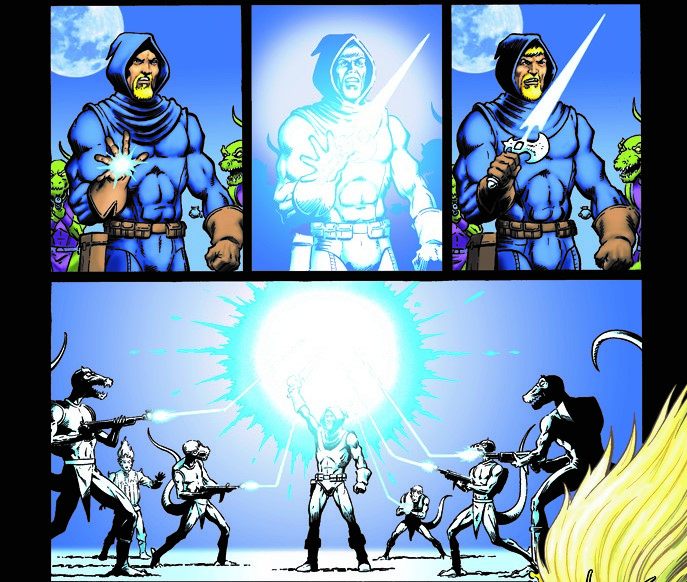
    On Comic Book Herald’s ‘Creannotators’ I’ll be interviewing some of my favorite creators in comics about specific runs, graphic novels or series, looking for their insights on the inspirations behind the work and ideas or hidden material readers may have missed. Creannotators is an audio annotative guide to enjoying the intricacies and thinking in the art. Thanks for listening, and enjoy the comics!

    TASCHEN

    Dreadstar Returns is:

    Creator: Jim Starlin

    Inker: Jaime Jameson

    Publisher: Ominous Press

    Jim Starlin's Dreadstar Returns

    Dreadstar Reading Order!

    The easiest way to collect Starlin’s complete Dreadstar in order is through the Kickstarted Omnibus editions released by Ominous Press in 2020.

    Dreadstar Omnibus Vol. 1

    Collects: Metamorphosis Odyssey, The Price, Dreadstar Graphic Novel #1, Dreadstar in Epic Illustrated #15, Dreadstar #1 to #8

    Dreadstar Omnibus Vol. 2

    Collects: Dreadstar #9 to #24

    Dreadstar Omnibus Vol. 3

    Collects: Dreadstar #25 to #40

    If you’re reading via back issues like myself, you’ll want to follow the following order!

    Metamorphosis Odyssey

    The Price

    Dreadstar Graphic Novel #1 (This doubles as Marvel Original Graphic Novel #3)

    Dreadstar in Epic Illustrated

    This is probably the hardest to track down – at least that has been my experience – as there’s a short story in the pages of Epic Illustrated #15 by Starlin including Dreadstar and Darklock that sets the stage for the ongoing to follow.

    Dreadstar #1 to #40

    After Starlin’s final issue (at the time), Peter David took over writing Dreadstar from issue #41 to #64, when the series ended in 1991. To my knowledge, these are uncollected, and only available via back issues.

    Dreadstar Returns OGN

    ——————————————————————————————————-

    Music for Best Comics Ever by Anthony Weis. Check out more music at anthonyweis.com.

    Subscribe on iTunes

    To learn how you can support Best Comics Ever and receive more exclusive content from Comic Book Herald, check out the Patreon: https://www.patreon.com/comicbookherald

    For the Comic Book Herald reading club through every year of Marvel Comics, check out mymarvelousyear.com

    The post Creannotators #50: “Dreadstar Returns” with Creator Jim Starlin & Inker Jaime Jameson! appeared first on Comic Book Herald.


    X-Men: Curse of the Man-Thing Review! | Krakin’ Krakoa #183 May 25, 2021
    Show notes

    X-Men: Curse of the Man-Thing is the finale of a three part “Curse of the Man-Thing” miniseries, spanning the worlds of Marvel’s Avengers, Spider-Man, and now X-Men. In “Curse of the Man-Thing” the adopted niece of Hordeculture – remember them? – is magically manipulating the abilities of the Man-Thing so the entire world, and possibly multiverse, always remember that whatever knows fear BURNS AT THE MAN-THING’S Touch!

    Today I’ll Answer:

    TASCHEN

    + What does the Man-Thing have to do with Krakoa and the X-Men?

    + Who is on Magik’s new X-Men team, the Dark Riders?

    + What happens to Hordeculture here that might have major ramifications for the Hickman era of X-Men?

    Writer: Steve Orlando

    Artist: Andrea Broccardo

    Colorors: Guru-eFX

    Throughout the Avengers and Spider-Man first two issues, with a full story broken into 9 chapters, we see plant-like growths effectively disrupting and exploding across the world, with Man-Thing’s fear-burning powers amplified on a worldwide scale. Overall, I enjoyed the story more than expected, not because I don’t like Orlando’s work (I do, a lot!) but because I’m not usually that into much post-Steve Gerber 70’s Man-Thing.

    Ted Sallis, the original Man-Thing, has his abilities manipulated here by Harrower, again we’ll talk about her connections to Hordeculture here shortly, and throughout the story is visited by a wide array of Marvel heroes inside his “Man-Thing-Scape” (there is no better way to say that, you’ll just have to trust me) such as Captain America, Spider-Man, and Magik.

    Meanwhile on Krakoa, “The human world burns while Krakoa suffers nothing more than a new hedge piece.” Krakoa is uniquely positioned to manage these plant-based uprisings, so Krakoa is perfectly safe. Magneto, and the Winter Council, are all satisfied to let the world burn, but Storm does the X-Men heroism thing, before we officially have our “heroic duty” X-Men officially protecting the world after the Hellfire Gala announcement, and the new ongoing of a relaunched X-Men from Gerry Duggan and Pepe Larraz.

    Now as Krakoa is deciding to, once again after King in Black, show up to save the day for humanity, Ted Sallis wrestles with the truth of his turn into the Man-Thing. He tells Captain America the Man-Thing experiments that turned him into Not-Swamp-Thing were meant to replicate the Super-Soldier formula, and reveals as the story progresses that Sallis’ science couldn’t actually crack the formula. Instead he turned to dark magics, bringing our good creepy pal, Belasco, then ruler of Limbo, later to be replaced by Illyana Rasputin into the picture.

    So Man-Thing made a deal with the devil – of sorts – which, yes, gives the Marvel Universe Man-Thing, but more dramatically unleashed the interdimensional magic that opened a portal in space-time and created the Nexus of All Realities. Ok, this is new, and kind of a big deal!

    What’s the Nexus of All Realities? Ok, from the Wiki “a cross-dimensional gateway which provides a pathway to any and all possible realities.” Man-Thing’s guardianship, and connection to the Nexus was generally a mystery up to this point.

    Who are the Dark Riders?

    1. Magik
    2. Marrow – Throws sharp bones out of her body and is extremely sarcastic w/ a devil may care attitude. For more, I recommend Si Spurrier’s run on X-Force
    3. Shark-Girl – Really fun newer character, who – get this – looks like a shark! I liked her character in the Ed Brisson written Old Man Logan believe it or not.
    4. Forearm – OG Mutant Liberation Front, and probably the best pun name Rob Liefeld ever gave a character. Intriguingly, also a part of SWORD’s security division.
    5. Mammomax – Big strong Elephant bro and former Brotherhood of Evil Mutants. Fights Juggernaut in one of the less very bad Chuck Austen written Uncanny X-Men stories!
    6. Wolf Cub – Debuted in the never-discussed early aughts Chamber mini written by Brian K. Vaughan. I’ll admit my general knowledge of Wolf Cub is “Not Wolfsbane or Feral,” but the character’s had a decent role in the Yost/kyle New X-Men days, and Young X-Men afterwards.

    The Original Dark Riders debuted in X-Factor #65 to #69, aka the Jim Lee, Whilce Portacio, and Chris Claremont issues where Apocalypse kidnaps baby Nathan Summers and Jean and Scott are forced to give him up to the future to save him from the techno-organic virus. I had read this story for My Marvelous Year podcast like days before writing this video, and I still didn’t remember any of their names, so the Dark Riders weren’t exactly primo Apocalypse horsemen material.

    The Return of Hordeculture

    Looking a bit more closely at our antagonist, Harrower has been raised and trained by Hordeculture, the ecoterrorists introduced in Hickman’s X-Men #3, and shown again in Empyre: X-Men, making this Hordeculture’s 3rd appearance. Harrower refers to her “Aunt Augusta,” but is clearly at odds with the groups mandate to protect the biome above all else, wishing they would go further in their stated goals, effectively wiping humanity from the Earth. Think Poison Ivy at her angriest, but more magicky.

    Big picture, I really refer Orlando’s take on Hordeculture, giving the elderly ladies more gravity and clearer purpose, and not trying to capture the failed comedy of Hickman in the team’s debut.

    Hordeculture’s status as antiheroic foils for the X-men continues too, as they absolutely attempt to stop Harrower. Nonetheless they’re unsuccessful, which actually results in some of the team being lost in the multiverse through the Nexus of All Realities.

    Which brings me to the most interesting development here for Hordeculture which is that they are now FLIPPING MULTIVERSAL

    Now listen, this could be the sort of thing that no one ever mentions again, but Hordeculture gaining access to the multiverse, and technology or ideas there that might help Hordeculture against the Krakoan X-Men, is very interesting! Think of all the plants across the multiverse!

    I maintain that a MULTIVERSE of mutants remains one of the largest untapped conversations, issues, and storylines to enter into the Hickman and Krakoa era of X-Men. Even a mild alliance with Man-Thing as guardian of the Nexus of Realities opens up another possible gateway for mutants, as they also explore the reality warping properties of mysterium through SWORD and the mutant space program.

    Before we move on, I’ll also note here that Orlando’s presence in the Krakoasphere feels intentional, and definitely like the Marvel offices are gearing up to include him more in future works, which I for one look forward to!

    Big picture, there’s an interesting and frankly surprising trend incorporating Man-Thing into the fringes of the Krakoan era of X-Men. This began with Weapon Plus: World War IV, a one-shot written by Ben Percy – aka writer of X-Force and Wolverine – with art by Georges Jeanty early in 2020. For the unfamiliar, Weapon Plus is the program trying to crack the super-soldier formula, or more aptly, turning humans into weapons, and are responsible for the likes of Captain America, Wolverine, Fantomex, Ultimaton, and now, Jackson Strode, aka Man-Slaughter, aka a gloriously on point comic book play on Man-Thing.

    It’s not really relevant, but also worth noting that the backup story in this issue by Ryan Cady and David Baldeon stars Brute Force, aka Paul Scheer’s dream Marvel movie, taking down an Orchis supply ship.

    Ok, so what do we make of the Man-Thing of it all? Well again, Magik and the Dark Riders aide potentially forms an alliance that could lead to easier access to the Nexus of All Realities.

    Additionally, given Krakoa’s organic nature, it doesn’t seem impossible that mutantkind could have a particularly green superteam on their side in the future

    • Krakoa
    • Man-Thing
    • Black Tom
    • Doug
    • Hordeculture
    • Arakko / Redroot

    The post X-Men: Curse of the Man-Thing Review! | Krakin’ Krakoa #183 appeared first on Comic Book Herald.


    Nightcrawler’s Religious History & Christianity in X-Men Comics | Krakin’ Krakoa #181 May 19, 2021
    Show notes

    From the unforgettable Dave Cockrum design to the swashbuckling heart of the X-Men in the pages of Chris Claremont and company’s comics, Nightcrawler has long been my favorite mutant. I remain elated by the opening sequence of Nightcrawler in X2: X-Men United, and forever lament the character’s general absence in the 90s animated series. As the character develops in comics, Kurt Wagner’s Christianity becomes a more integral part of his story, not quite as integral as say Daredevil’s Catholicism, or even Kamala Khan’s Islamic faith, but certainly notable among the X-Men. Today I’ll Answer: What has Nightcrawler’s religion looked like through comics history? Is there space for Christianity on Krakoa? What does this history tell us about what to expect in 2021’s Way of X and beyond? In the present, Nightcrawler’s role as the religious thinker among Krakoa’s Quiet Council of mutant leaders leads into the new series, Way of X, in which Kurt’s quest for a mutant religion and finding meaning in this new era of mutantkind takes the forefront. I find it interesting to contemplate how Kurt’s Christianity has progressed through the decades, where it’s lead to, and what it means now for the Hickman era of X-Men comics. The first time we really see Nightcrawler’s religion comes during the original Brood Saga, by Chris Claremont and Paul Smith, particularly in Uncanny X-Men #164. Wolverine observes Nightcrawler praying – in Latin no less – and is surprised. It’s a really beautiful moment of developing friendship, as Logan and Kurt briefly examine their diametrically opposed views on finding comfort in religion, with Kurt lamenting how alone Wolverine must feel, and Wolvy saying “I ain’t alone, bub, I got you.” Crawler’s religion resurfaces significantly during the Uncanny X-Men tie-ins with Secret Wars II (an atrocious Marvel event that disgraces the Secret Wars name, but Claremont is one of the original tie-in masters). Secret Wars II focuses on the nigh all powerful Beyonder coming to Earth, and for the X-Men this leads to events like a showdown with Rachel Summers, Phoenix, and the Beyonder unmaking the New Mutant kids basically on a whim. Following a confrontation with the Beyonder, Nightcrawler, then leader of the X-men, literally flees to church to talk to his priest: “I need to talk Michael, or I shall go mad. I fear have beheld the face of God – only to discover that he is a monster.” It’s an interesting conversation because in the Marvel Universe beholding literal gods is very much a possibility! Kurt mentions as much, but notes that in comparison to the Beyonder they are as nothing. The Beyonder’s god-like powers, the absolute omnipotence of them, really makes Kurt question his faith, and in the absence of that faith, he can’t help but sink into utter despair. I find this whole thread fascinating because growing up with religion, there are a lot of parallels and metaphors that make Nightcrawler’s relationship to God relatable. Drawing strength from prayer in moments of strife, resolving oneself to faith in a higher unknowable power for security… I get that. But when you start to work that relatable situation up against the flippin’ Beyonder, the parallels wash right out the door. In my day to day, the closest I’ve come to seeing the face of God is standing next to Patrick Ewing at an airport urinal. Not quite the same. This definitely highlights one of the challenges with traditional religions in our world as carried through to the Marvel Universe: the sheer amount of cosmic and supernatural miracles heroes encounter over decades of storytelling. It makes me think of Daredevil in War of the Realms quite literally transformed into a God, and then returning heavily to his Catholic guilt and roots in the pages of the Chip Zdarsky written Daredevil shortly thereafter. Or of Reed Richards somewhat famously espousing a version of atheism or agnosticism to his children in the Matt Fraction written Fantastic Four, in a world where the Fantastic Four literally traveled to Heaven to bring Ben Grimm back to life in the Mark Waid and Mike Wieringo run. Appropriately, The Beyonder *really* shakes up Nightcrawler. “Thanks to the Beyonder all the things that had meaning for me – that gave my existence purpose – are todt! dead! destroyed! I don’t know who I am anymore Amanda, or even why I am!” This is a recurring theme for me with Nightcrawler, and one of the things I admire most about his character, in that Nightcrawler is a Christian who questions. He’s a character with a tremendously empathetic heart, and a deep curiosity to explore and question the dogma and unwavering rigidity that can accompany the worst examples of religious manifestation. Nightcrawler *doubts*, and given everything he’s experienced, he should! Part of faith though – real faith as I understand it – is interrogating doubt, and coming out the other side with newfound perspective. This is often one of Nightcrawler’s greatest strengths. Not too long after this point in comics, Nightcrawler is knocked into a long coma during the events of the Mutant Massacre, and when he recovers he joins up with Kitty Pryde, Rachel Summers, Brian Braddock and Meggan in Excalibur. There’s less focus on Kurt’s faith during this time period, as the team travels the Marvel Multiverse, in a cross-time caper that lasts long enough to at least make *me* question if there is a God. I actually think one of the most influential moments in cementing Crawler as deeply Christian occurs in the X-Men 90’s Animated Series, in the opener to Season Four, appropriately titled “Nightcrawler.” Kurt isn’t a part of the 90s animated lineup – much to my eternal chagrin – so this episode gives us his origin. Instead of rescue by Charles Xavier and joining the All-New All-Different X-Men, Nightcrawler is rescued by a monastery after he’s abandoned by his mother (here canonically cemented as Mystique!), and raised to be a monk. Pretty religious! The episode really emphasizes faith and Christianity at the center of Nightcrawler’s world – indeed as viewers, that’s about ALL we see – and somewhat comically remixes the Kurt and Logan scene from the Brood Saga to the point that the episode ends with Wolverine praying in a Cathedral. This rendition definitely influences the most notable mainstream media debut of Nightcrawler, in X2: X-Men United. I’ll always love X2, and the opening flash of the hypnotized Nightcrawler assassin absolutely astonished me. This commitment to Christian Kurt extends as X-Men comics enter the 2000s, where writer Chris Claremont returned to the franchise to write X-Men #100, and opened with a revelation: Kurt has become a priest! Now, if you’re thinking when in the wide world of Young Popes did Nightcrawler become a priest, don’t worry, it’s a frequently overlooked period that didn’t last too long! I’ll admit this one vexed me for a long time, too, because Claremont opens with Crawler’s priesthood as if that had been alluded to in previous comics, but as far as I’m aware it’s a sudden Claremont-verse development that begins here, as part of a Hickman-esque 6 months later mysterious time gap! Nightcrawler’s serenity as a priest is quickly disturbed by Claremont’s introduction of the Neo (aka X-Men theorists favorite go-to reference – it’s not happening neo-heads!), as he and Doctor Cecilia Reyes are repeatedly pushed into violent confrontation with the evolutionary up-and-comers. We see Crawler praying, espousing the gospel, and primarily requesting and attempting to grant absolution for the violence that comes as part of being a hunted mutant. Priest-Crawler has limited appearances, and for my money, some of the most interesting come in the all but forgotten 4 issue 2001 Magik miniseries by Dan Abnett, Andy Lanning, and Liam Sharpe. The mini comes after Amanda Sefton – Kurt’s former romantic interest – takes over as the new Magik, ruler of Limbo, and brings in the new Priest into a eldritch adventure through all the splinter realms of demons and chaos, as Crawler and Amanda confront Limbo, Nightmare, Mephisto, Dormammu, and a whole lot more. The mini doesn’t dig too deeply into the question, but it’s yet another example of Nightcrawler literally bearing witness to the hordes of hell in all sorts of variety. Now, as for why we don’t hear more about Nightcrawler’s time as a priest, that’s primarily because the most notable examples of story occur during the Chuck Austen run on Uncanny X-Men, and if you’re familiar with “The Draco” (when Austen tells us Nightcrawler’s father is literally the demon Azrael), you know this run is notoriously considered some of the worst Nightcrawler storytelling of all time. I’m not willing to label myself an Austen apologist, but as I’ve discussed, since I didn’t experience this run in the moment, I definitely don’t have the same widely accepted resentment a lot of fans carry. And honestly, I’m regularly impressed, or at least surprised given the reputation, by Austen’s *attempts* to have real conversations and tackle real subject matters in the pages of X-Men. In “Holy War,” Austen opens with captions telling us more people have died in the name of religion than cancer (and we try to cure cancer), and is quite clearly wrestling with evil done in the name of religion throughout the story. Heavy topics, and not necessarily handled with kid gloves. Of course, then we come to the *plot* and the wheels fall off. Or, more accurately, the communion wafers explode. Stay with me here because we are about to go *on a ride*. In “Holy War,” aka Uncanny X-Men #423 and #424, the Church of Humanity – a violently anti-mutant religious sect – literally crucifies a number of mutants on the front lawn of the X-Mansion, including Jubilee and long-time Gen-X’er Skin, who dies here. The grotesque murders are Austen’s way of showcasing how scripture can be manipulated and interpreted to cause widespread pain, malice and hate. Shortly after Cyclops dresses him down and shouts “Are you brain dead!” Kurt mentions his priesthood, and the X-Men all wonder why they weren’t invited to the ceremony. Kurt thinks *they were*, and it’s revealed that Kurt’s journey to becoming a Priest was all an extremely elaborate hoax by the Church of Humanity, part of a plot to make Nightcrawler the Pope. I’ll pause here to provide space for you to stop laughing. Why did the Church of Humanity want Pope-Crawler, aside from the fact that those comics would have been INCREDIBLE? Well, they planned to remove his image inducer during a Pope-speech, revealing that instead of looking exactly like Jude Law in a speedo, Kurt was devilishly blue, and this would convince Catholics the world over that the mutant anti-Christ had infiltrated the church, driving mutant hatred crusades everywhere. Oh, and exploding communion wafers would explode priests all around the world to make it look like the rapture happened, and enter revelations. It’s a WILD PLAN. So yes, Priest-Crawler is actually retconned to have never happened (which is kind of hilariously ok with Kurt because he couldn’t give up temptations of the flesh anyway), and again, shortly thereafter it’s also revealed Kurt’s the son of a demon and Mystique. Plot insanity aside, I do find a lot of value in considering yet another example where Kurt placing his faith fully in God – literally to the point of an intended priesthood – is met with horror. To say Nightcrawler’s faith has been challenged is an understatement: Nightcrawler’s faith is especially interesting when you see the direct ways Christianity is twisted in X-Men alone. Religion is and will always be a sensitive topic for many readers, and I continue to find Nightcrawler’s positive, curious, and evolving relationship a benefit to the X-Men universe because it opens it up to the kinds of epistemological and cosmological questions we’re seeing tackled in Way of X. In the My Marvelous Year reading club, I’ve definitely seen religious readers bristle at the portrayal of Christianity in the Claremont-verse, most notably in God Loves, Man Kills, where evangelical preacher William Stryker manipulates his religious influence into an anti-mutant crusade. Despite his demonic appearance, despite everything he’s seen, despite so many examples of religion gone bad, despite literal temptation from the devil himself, Nightcrawler consistently provides hope in the face of all this. One of the wildest wrinkles in all of Nightcrawler’s religious exploration is that following his death in the “Second Coming” crossover, Nightcrawler literally goes to heaven, which is where we find him in the quietly underrated Amazing X-Men story “The Quest for Nightcrawler.” Which to me sure feels like one of those “take the doubt out of the equation” kind of developments. Nonetheless, because Nightcrawler ultimately sacrifices his place in heaven to keep Azrael trapped, and Kurt returns to Earth (more or less fulfilling his own mutant death and resurrection well before Krakoa), the sequence puts him on a path to what we see in the Hickman era of X-Men. If the Catholic journey was always faith rewarded with a heavenly afterlife, what happens when that afterlife is actually just a part of the journey? Given this development, and the “Death of Death” in the Krakoa era of X-Men, a new mutant religion makes a lot of sense. On one hand, I think it’s always made some sense, given human religions weren’t ever built for mutantkind, and that we see so many branches of Christianity vilify mutants. I don’t think all mutants should just instantly reject their faith, particularly as it pertains to their human culture and heritage, but it’s hard to look at a literal translation of known religions and see them fitting into the Marvel-verse, without even a mention or hint about how the teachings apply to mutants. One thing I quite like about Nightcrawler’s approach to mutant religion in Way of X #1 is he looks at all these massive questions about mutant souls and the essence of being and says “Obvious questions. Stupid questions. Because they would not change how we truly live.” Mutant religion as a path to purpose, as a foundational set of principle for living… this makes a lot of sense. And I think what we can expect Kurt to determine is that his purpose – remember, very much in question from our doubting Nightcrawler – is to provide others with purpose of their own. The post Nightcrawler’s Religious History & Christianity in X-Men Comics | Krakin’ Krakoa #181 appeared first on Comic Book Herald.

    Full show notes at the publisher

    Previous 1 17 18 19 20 21 39 Next

    Related Podcasts

    The Joe Rogan Experience

    1

    The Joe Rogan Experience Comedy
    Casefile True Crime

    2

    Casefile True Crime Games & Hobbies
    Reply All

    3

    Reply All Games & Hobbies
    You Must Remember This

    4

    You Must Remember This Games & Hobbies
    Real Time with Bill Maher

    5

    Real Time with Bill Maher Games & Hobbies
    Last Podcast On The Left

    6

    Last Podcast On The Left Comedy
    footer-logo

    Contact Us

    Toll Free: 844-670-7747

    Links

    • Home
    • Top Charts
    • Networks
    • Apps
    • Independents Podcasts
    • Podcast Advertising
    • Podcast News
    • Contact Us
    • About Us
    • Analytics & Insights

    Stay Connected

      Privacy, Terms of Use & Our Code of Ethics Protecting Content Creators Copyrights