Archiver is a tour through the most important moments in history with host, Sam Zeff. Using archival tape, our show will pull you into the world of these events while explaining how they still affect us today.
The A's (A Yankee Pipeline)
Jul 16, 2018
Show notes
In the 13 years the A’s were in Kansas City, they were simply terrible. But the A’s didn’t get this dismal without some help. It all goes back to the New York Yankees, and the unholy alliance between Yankee owners Del Webb and Dan Topping and their handpicked A’s owner Arnold Johnson.
The A's (22nd And Brooklyn Ave.)
Jun 25, 2018
Show notes
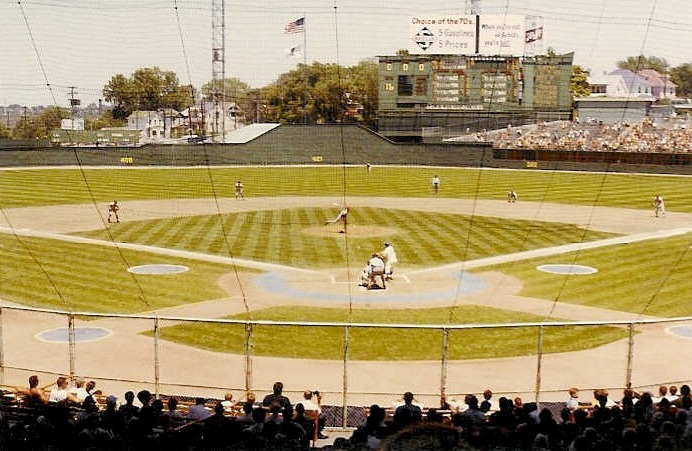
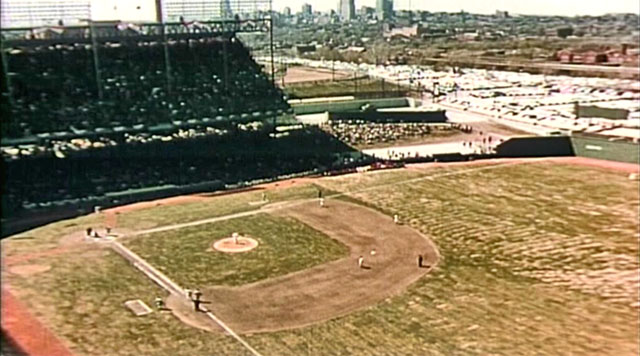
The A’s were always an awful baseball team. But Municipal Stadium, well that was special to almost anyone who ever went.
The A's (Leading The Way)
May 28, 2018
Show notes
When you think about black major league baseball players—those who led the way in breaking the color barrier—you think Jackie Robinson of course.
They even wrote a swing tune about Jakcie called “Did You See Jackie Robinson Hit that Ball” performed by Buddy Johnson and his Orchestra in 1949. It reached number 13 on the charts that year.
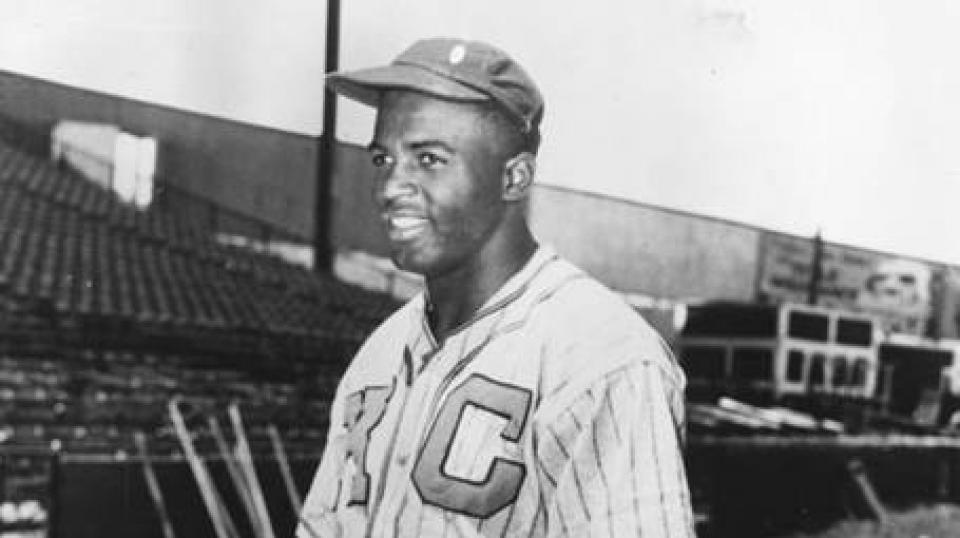
Jackie spent part of the 1945 season with the Negro League Kansas City Monarchs before moving on to the Dodger organization. And while we all know the Monarch's place in baseball history—they won ten league championships and launched the big league careers of many black players–you might not know the role the A’s played in integrating blacks into the big leagues.
“It was of the utmost importance to us as a city, we were progressive enough to have a team that included everybody,” says Jeff Logan, president of the Kansas City Baseball Historical Society. “I think that cities like Boston are still branded in that fashion, that they are a little racist and I don't think Kansas City has that tag.”
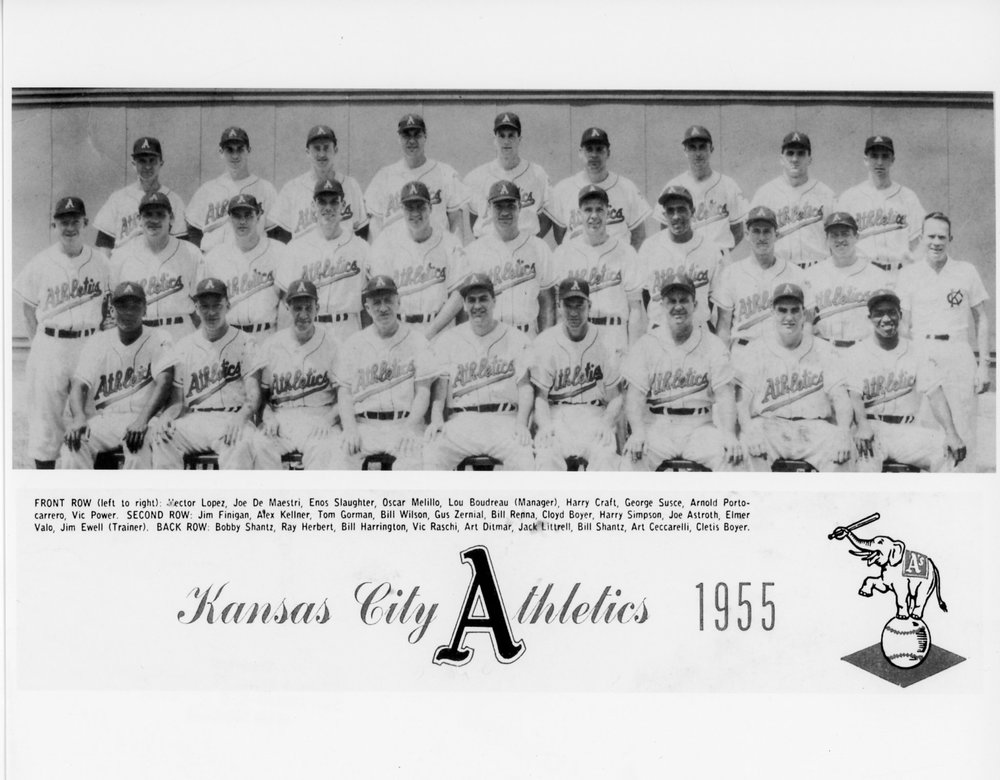
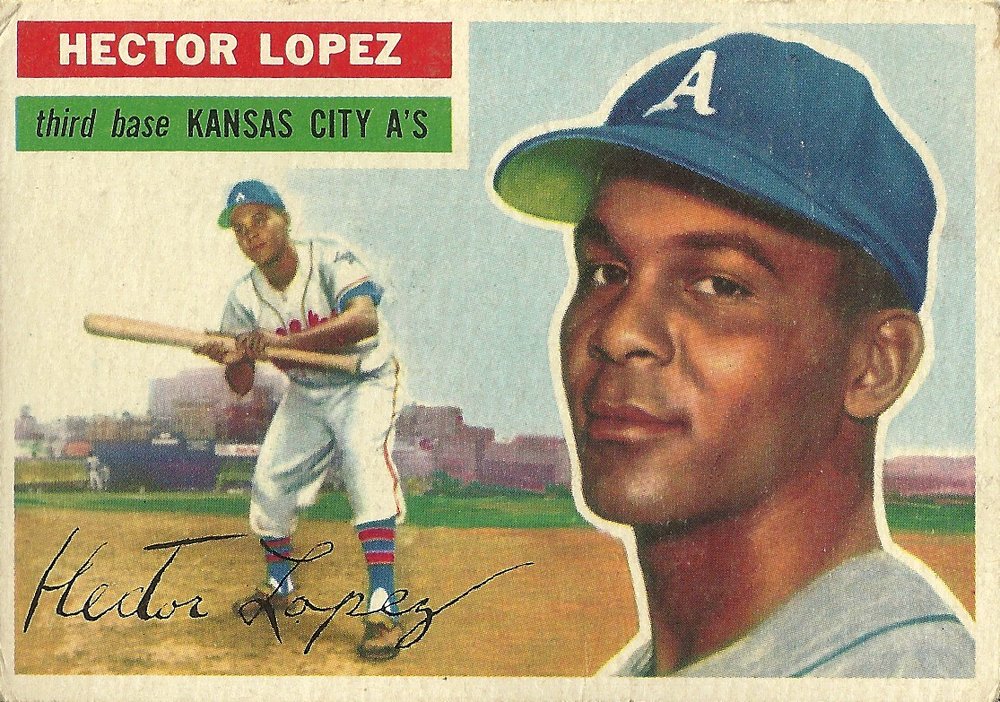
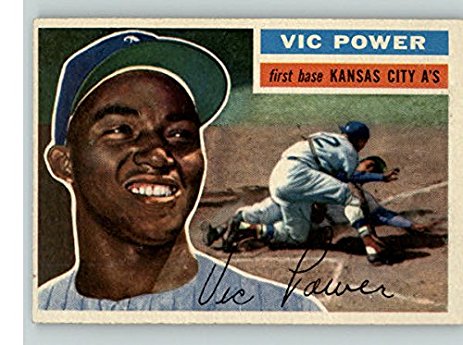
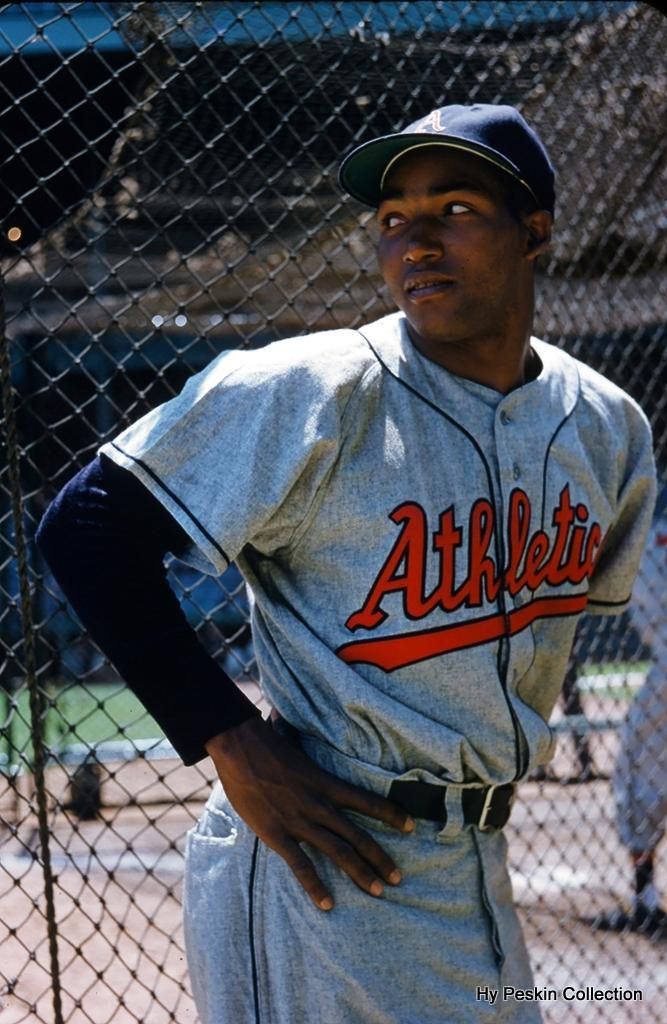
If you look at that the first team photo of the Kansas City A’s in 1955, for the most part it looks like you’d expect for the time, baggy uniforms worn by men who look more like regular guys than professional athletes. But, when you look a little closer, there’s something different from most teams at the time...there are three black players: Hector Lopez, Harry ‘Suitcase’ Simpson and the controsersial Vic Power.
“The Kansas City A's embraced these players simply because they were good enough and probably better than a lot of the other players. They (the A’s) wanted to win. Let's face it, if you are not going to integrate the best players in the sport then you're not trying to win,”
Just how good were the black players on those early A’s teams? That was obvious at the 1956 All-Star Game at Griffith Stadium in Washington D.C.
Simpson and Power were the only black players on the American League roster that year. The National League, which embraced integration much earlier than the American League, had six black players including Hank Aaron and Willie Mays.
The morning after the game, the Kansas City Times gave Simpson and Power just two paragraphs on a full page of all-star coverage—not a hint that the A’s provided the only two black players on the A.L. roster.
“Power played three innings at first base but handled only routine chances,” A’s beat reporter Joe McGuff wrote. “Harry Simpson, the only other Kansas City player on the All-Star squad, pinch hit for Billy Pierce in the third and struck out on three pitches.”
Reading the paper in 1956, that amount of coverage would probably seem right. But 60 years later, when I found that clip, it felt odd to me.
Harry Simpson played for five big league clubs but that’s not why his nickname was suitcase. He picked that up playing in the Negro Leagues because, it was said, his shoes were as big as suitcases.
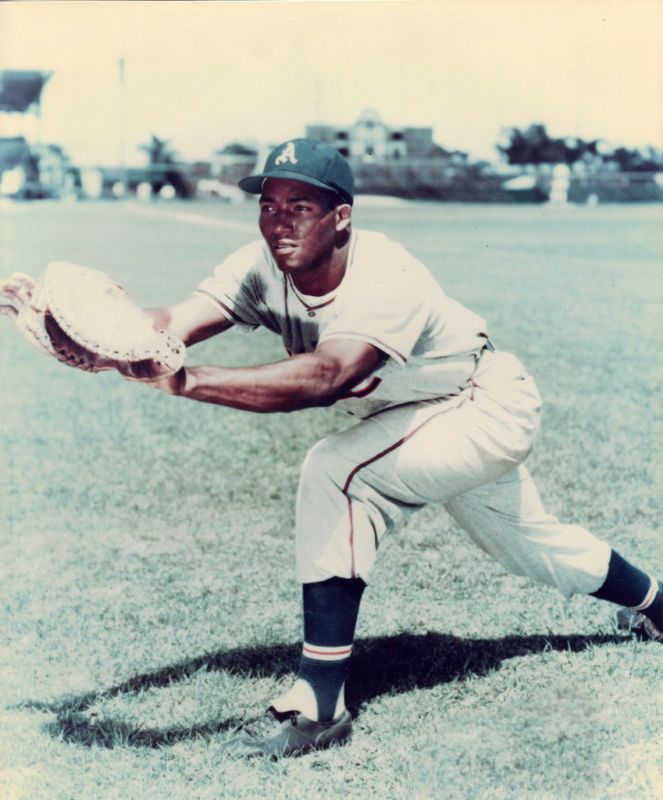
Hector Lopez was the third black player on those early Kansas City teams. He grew up in the Panama Canal Zone and played most of his career with the Yankees.
I should note that Latino players made their mark in both the major leagues and Nego Leagues. Most early Hispanic players were Cuban, many historians believe baseball spread quickly on the island when the U.S. occupied it after the Spanish American War.
Also, the number of Hispanic players in the majors began to increase in 1947, the year Jackie broke the color barrier. But back to Power and why he was controversial.
“Vic Power played here with the Blues. Power would have gone to the Yankees but Power had a girlfriend who was a mulatta and he had a red convertible and he’d ride in that convertible with this girl, and she was pretty and her hair was blowing. They thought she was a white girl,” according to Buck O’Niell the legendary Monarchs manager. “That’s one of the reasons Elston Howard was the first black Yankee instead of Vic Power.”
Power was from Puerto Rico, and when he was home he went by his real name, Victor Pellot. Being from Puerto Rico he wasn’t used to segregation, Jim Crow or the social mores blacks had to endure. Power was talented and flashy. In the 1950s, it was fine for black players to be talented but flashy could get you in trouble.
“I just loved to watch him. He made the greatest play I’ve ever seen in the history of baseball for me,” says Chuck Dobson, a Kansas City native who played ball at the University of Kansas before signing with the A’s in 1966. He watched Power play at Municipal Stadium.
“He made the greatest play I’ve ever seen right here. Jumped over a park bench, his back turned to the infield, cocked the ball like this with his back to the infield, he’s in midair over a park bench” and fired the ball back into the infield.
Dobson also says Power was an intimidating hitter. “Power would stand like this and he’d take that bat and he’d point it at the pitcher, point it right at the pitcher, and he’d swing that thing.”
There’s a story about Power in the Roberto Clemente biography by author David Maraniss. Power, Maraniss writes, walks into a segregated restaurant where he’s promptly told by the waitress that she didn’t serve Negros. That’s fine, Power told her, he didn’t eat them.
One of my favorite A’s in the early 60s was pitcher Johnny Wyatt. In 1961, Wyatt broke in with the A’s after getting his start with the Indianapolis Clowns in the Negro Leagues. There was a time, believe it or not, when people thought that African Americans weren't equipped to be starting pitchers. “That seemed to be the case with the playing quarterback too”, says Logan. “I think we found out that's probably not true since there's so many great quarterbacks.”
Jeff Logan says playing in Municipal Stadium meant a lot to black fans.
“The Kansas City A’s played at 22nd and Brooklyn in Municipal Stadium in the heart or the urban core. A lot of the people in that area were African American and those people were drawn to baseball. I think the worst thing that ever happened in sports history is when we built a stadium out in a field in the middle of nowhere. I think that's led to a lot of things. We don't have many African Americans playing baseball now. I wish the stadium was still there.”
Alas, it is not. But it’s lovingly remembered by everyone from former players to Beattles fans. 22nd and Brooklyn Avenue. That’s our next installment of Archiver, The A’s in Kansas City.
The A's (Kansas City Is A Cowtown No More)
May 04, 2018
Show notes
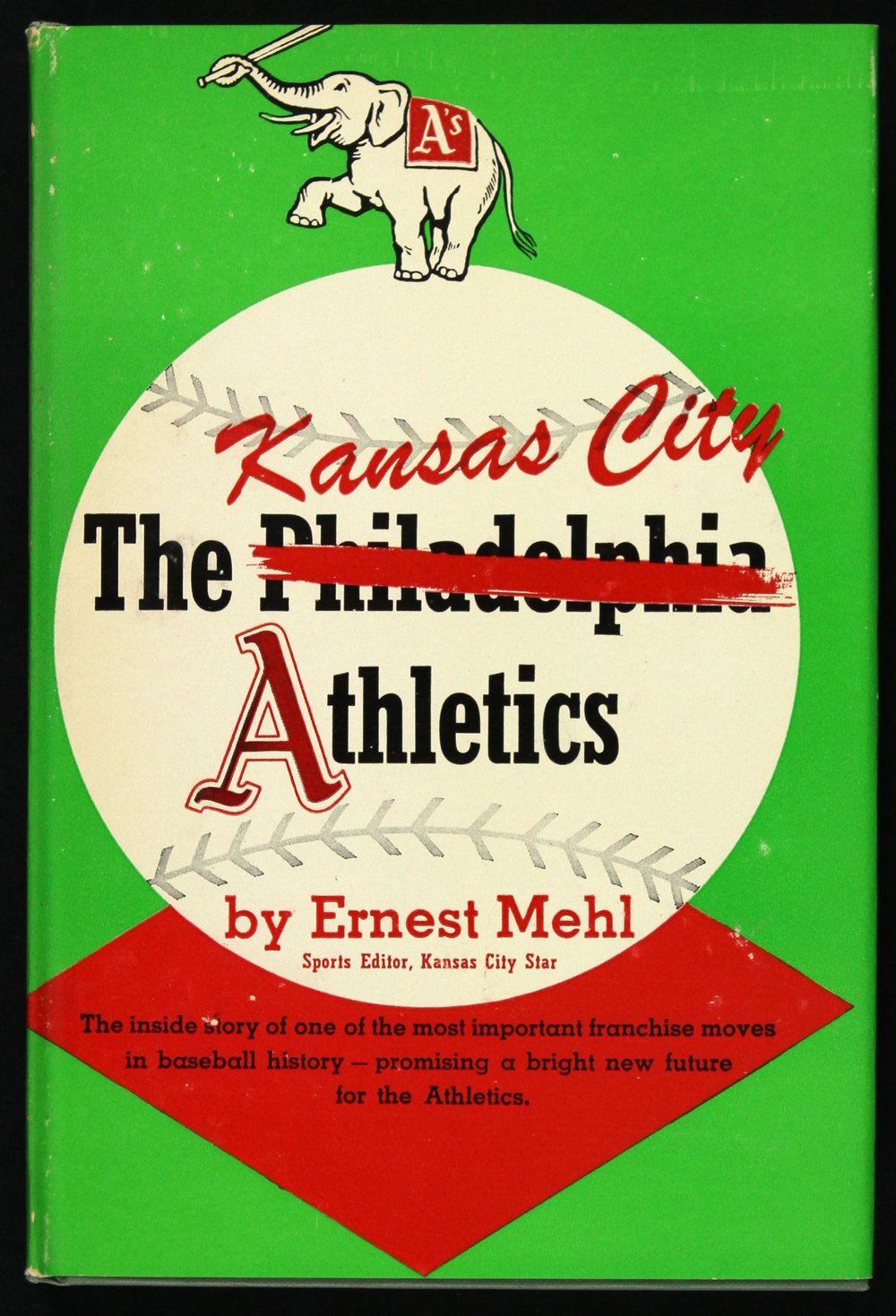
During those years, baseball fan emotions bounced from joyous to tumultuous to downright silly at times, but there’s no doubt the A’s moving to Kansas City from Philadelphia changed the city’s image from a cowtown to a metropolis.
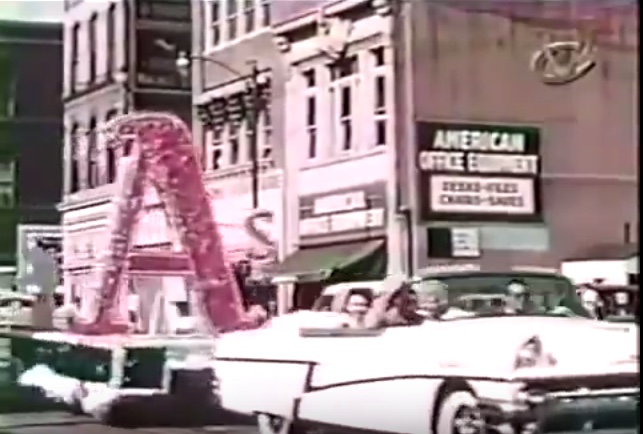
“Well, we had a big parade, had a big crowd, drew a big crowd. It was a very exciting time for us to get a major league team,” says former Mayor Charles Wheeler. “It helped get the Chiefs, it helped get the Scouts, the hockey team. And we got a basketball team. So we became a major league city with four different professional franchises. That was the beginning and it all resulted in the fact that we supported the team.”
To be honest, cowtown wasn’t the only image of K.C. before the A’s moved 1,500 miles west, the first major league team to really jump the Mississippi. It was a town known for political bossism with the Pendergast machine. A Mafia town with the growing and influential Civella family. A wide open city that was a playground for bank robbers on holiday and gave the country the Union Station Massacre. It’s image was anything but metropolitian.
That all changed when the A’s flew into town to open the 1955 season.
“When they did come into Kansas City, they were flying into the downtown airport. They see so many people celebrating that they made the, the plane circle the city several times just to see how excited the fans were in Kansas City for them to be here. And it lifted the spirits of the players,” says Jeff Logan, president of the Kansas City Baseball Historical Societ.
Sure the Kansas City fans loved the A’s move but what did the players who moved with the team from Philadelphia think?
“Well, I think the overall attitude was great,” according to Gus Zernial, a power hitter who made the transition from Philadelphia. Zernial spent three years in Kansas City, leading the team in homers two of those years. “The players wanted to move out of Philadelphia because playing before a small crowds and most of theem were booing no matter what kind of a year you had. We just couldn’t win and I don’t think we had a winning attitude. And that attitude changed greatly when we got to Kansas City with all the players.”
I should mention that these A’s interviews were done many years ago for a documentary film that has yet to be finished, so some of the folks you’ll hear from in the series have died. Zernail is one. He died in 2011 at age 87.
Clearly Kansas City had a long history with baseball. The Monarchs, of course, were the Yankees of Negro League Baseball and professional baseball stretched back to the 1880s. Fan Paul Blackman remembers how sports just felt different once the A’s were in town.
“ I can remember one of my first times at the stadium, a Saturday afternoon sitting up in the upper deck on a cold April day and the White Sox scored about 29 runs. But, they were our team and it was exciting and so that got me hooked. Going to A’s games was something that our family did, my sister, my parents. So it was um, it was a family love affair and an interest and there were some years when we would go 30 or 40 games a year. I’m a big Royals fan now. But, there’s always been a special place in my heart for the A’s because they were the, the team of my childhood.”
It was the team of my childhood too. My first big league game was at Municipal Stadium at 22nd and Brooklyn.
While the Yankees and A’s owner Arnold Johnson were sceaming to get the team out of Philadelphia, lots of people in Kansas City were, indeed, working to lure them here. The city sold bonds to add an upper deck to the ballpark. This turned out to be part of the caper to by the Yankees to get the A’s to Kansas City. The massive construction project was awarded to the constuction company controled by Yankee owner Del Webb.
Kansas City promised to put a million people in the stands, so backers had to sell a lot of season tickets. My dad knew nothing about sports, but he was a downtown business owner and as such felt obligated to buy four box seats, in the front row, right behind the hometeam dugout.
Carl barley knew the difference between a homerun and a hotdog, but he could pick out seats. And because he, and so many others on both sides of stateline, bought season tickets, the city would change its image and change big league baseball’s footprint in America.
Now when the A’s came to Kansas City the color barrier in the major leagues had only been broken nine years earlier by Jackie Robinson in Brooklyn. In fact, when the A’s played their first game in K.C. in 1955 the Tigers, Phillies and Red Sox were still all white. But the A’s would quietly lead the way in intrigrating the game.
Harry “Suitcase” Simpson and Vic Power led the way for black players not only in Kansas City but in the American League.
That’s in our next installment of Archiver: The A’s in Kansas City.
The A's (Fleeing Philadelphia)
Apr 23, 2018
Show notes
It was one of the greatest conspiracies in sports history. One that would lead to turmoil in Kansas City, a congressional hearing and, eventually, one of the craziest owners in all of professional sports.
The A's Trailer
Apr 03, 2018
Show notes
Archiver fans, get ready for a special season of the podcast. We’re leaving Kansas for now to tell a story that covers some of the most tumultuous years in baseball…but it’s more than just a sports story. This is about power, greed and corruption that went all the way to congress.
How Did We Get Here?
Jan 04, 2018
Show notes
I want to take you back to August 19th, 1991. It’s 93 degrees and humid. Hundreds of anti-abortion protestors from around the country have gathered in Wichita. There’s nothing spontaneous about it, planning went on for weeks and eventually hundreds would swell to thousands. Most people, including the city’s three abortion clinics, the police and city officials, thought the whole thing would be done in a few days with a handful of arrests. But what came to be known as the Summer of Mercy stretched on for six tense weeks, resulted in 2,600 arrests and changed politics in Kansas in ways that we feel right this minute.
The Most Important Basketball Player You've Never Heard Of
Dec 18, 2017
Show notes
The Globetrotters have always been innovators. But perhaps the greatest innovation was in 1985 when they signed a woman, the first woman to ever play professionally with men. That woman was from Kansas, and she would not only change the game but become a hero to female athletes, to be sure, and probably many other young women.
Derby Day in Kansas
Nov 28, 2017
Show notes
We’re talking horse racing on this Archiver, something not associated much with Kansas. But for an amazing two minutes and four seconds in 1938, a horse from Johnson County was the top three-year-old in the land. Owned by a man who was better known for suits than stallions, and who had an odd connection to Kansas City political boss Tom Pendergast.
Fast Food Kansas
Nov 12, 2017
Show notes
Do you know the 1946 musical “The Harvey Girls?” It stars Judy Garland and in the film she sings one of the most famous show tunes of all times “On the Atchison, Topeka and the Santa Fe.”
The movie is about Harvey House restaurants and the young women in their starched, white aprons and cuffs who went out west to feed hungry train travelers.
The train must be fed, they sang in the movie. In fact, millions of people needed to be fed and, wouldn’t you know it, we figured out how to do it fast right here in Kansas.

 Our TOPPODCAST Picks
  Stay Connected