TopPodcast.com
Menu
  • Home
  • Top Charts
  • Top Networks
  • Top Apps
  • Top Independents
  • Top Podfluencers
  • Top Picks
    • Top Business Podcasts
    • Top True Crime Podcasts
    • Top Finance Podcasts
    • Top Comedy Podcasts
    • Top Music Podcasts
    • Top Womens Podcasts
    • Top Kids Podcasts
    • Top Sports Podcasts
    • Top News Podcasts
    • Top Tech Podcasts
    • Top Crypto Podcasts
    • Top Entrepreneurial Podcasts
    • Top Fantasy Sports Podcasts
    • Top Political Podcasts
    • Top Science Podcasts
    • Top Self Help Podcasts
    • Top Sports Betting Podcasts
    • Top Stocks Podcasts
  • Podcast News
  • About Us
  • Podcast Advertising
  • Contact
Not in our directory?
Add Show Here
Podcast Equipment
Center

toppodcastlogoOur TOPPODCAST Picks

  • Comedy
  • Crypto
  • Sports
  • News
  • Politics
  • True Crime
  • Business
  • Finance

Follow Us

toppodcastlogoStay Connected

    View Top 200 Chart
    Back to Rankings Page
    Kids & Family

    All Things Breastfeeding Podcast

    The All Things Breastfeeding Podcast is for both lactation professionals and new and experienced parents. Barbara D. Robertson, MA, IBCLC, owner of professional lactation education company, LactaLearning, hosts the show. Barbara shares her thoughts and information on All Things Breastfeeding.

    Advertise
    • Apple Podcasts
    • Google Play
    • Spotify

    Latest Episodes:
    All Things Breastfeeding 50: You’re being set up for breast feeding failure Jun 12, 2019
    Show notes

    Breast feeding failure?

    Most women in the USA want to breastfeed yet many of these women don’t reach their breastfeeding goals which is often defined as “breast feeding failure”. In some states, as many as 90% or more of families initiate breastfeeding. These states tend to be on the east and west coasts of our country. The lowest number of mothers who start out breastfeeding is Mississippi which has an initiation rate of 63.2%. But still, these numbers are high! Why aren’t we seeing breastfeeding everywhere? This podcast is about all the reasons we are struggling with this “natural” process.

    breast feeding failureFirst of all, I hate the term “breast feeding failure” which is commonly used by the medical profession. However, failure implies that if you just try hard enough, you can do it! For breastfeeding, trying harder is not the answer. The odds are stacked against you. It is like if a normal person tried to ride one of those mechanical bulls and expected to stay on. Sure, some people have experience and can do it and some people have some internal natural untapped skills that make them a natural, but most of us would need practice and coaching to even have a chance.

    So ironic
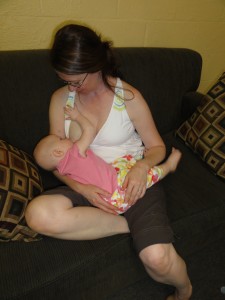
    breast feeding failurePeople talk about breastfeeding as being the easiest thing they have ever done and then you have a large group of people who say breastfeeding was the hardest thing they have ever done and then another group who didn’t beat the odds. How can this be? The easiest and the hardest? I think we all believe we are going to fall into the earth mother super easy group of breastfeeders. That it will come naturally.

    Maybe. But maybe not.
    I personally did not anticipate all the barriers I would experience while working on nursing my first baby. Please listen to my podcast if you want to hear about my struggles. I was this close to giving up. Day 6, all formula fed, would not latch, no breastmilk while pumping, but then, then I was lucky enough for someone else to reach out and arrange help for me. And it worked. Slowly, and boy, it took time, but by 12 weeks we were exclusively breastfeeding.

    The bottom line is that getting help and support is not something we are used to but with breastfeeding, and honestly everything (Who hasn’t needed some tennis lessons?), but I think we feel we should somehow be a natural at this and if not there is something wrong with us, not the system, not that we were set up for struggles.

    This podcast is about all the ways that we are being set up for “breast feeding failure”. I got off on a rant and didn’t talk about solutions. The solution is to get help. And if the first person doesn’t give you the answers you need, get more help. The point is you don’t have to do this alone and again, most people need help!

    Finally, for all those families who didn’t get the help you needed, my heart breaks for you. It was not your fault you didn’t reach your breastfeeding goals. You were set up from the start.

    The post All Things Breastfeeding 50: You’re being set up for breast feeding failure appeared first on The Breastfeeding Center of Ann Arbor.


    All Things Breastfeeding Episode 49: Nursing in Public May 21, 2019
    Show notes

    Nursing in public?

    Didn’t we all decide that nursing in public was fine? Apparently not! There are still so many people who get their panties in a bunch when they see a family breastfeeding in public!

    Nursing in publicJessica and Barbara discuss the latest study on nursing in public. This article concerns the images of women nursing in public and how they are almost always of a woman by herself, not in a social situation. This implies that woman SHOULD nurse alone, whether they are at home or out and about. Where are the images of women just living their lives and nursing out in public? Just part of the social norm?

    In the past Barbara wrote a blog about working and breastfeeding and asked the question, is nursing in public dangerous?

    The two of them also review an article, “Ten tips for breastfeeding in public” Here are their suggestions:

    Nursing in public1. Know your legal rights
    2. Practice at home in front of a mirror
    3. Choose clothes that you feel comfortable in
    4. Use a sling or a wrap
    5. Choose an easy active bra
    6. Pick your spot
    7. Turn away when you latch
    8. Consider a cover up- Our note: ONLY IF YOU WANT TO!!!
    9. Smile!!!
    10. Plan your response

    Barbara and Jessica also get real about their own experiences with nursing in public. Do people feel safe? What are the risks? Does the public have a mother’s best interests at heart.

    Barbara could not find the photo of the woman nursing her baby in the town square (she’ll keep looking for it!) but here are some other images to check out.

    The post All Things Breastfeeding Episode 49: Nursing in Public appeared first on The Breastfeeding Center of Ann Arbor.


    All Things Breastfeeding: All You Wanted to Know About Milk Banking with Kim Updegrove Apr 25, 2019
    Show notes

    Milk banking

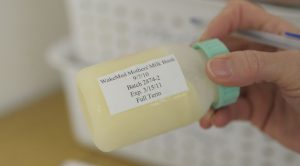
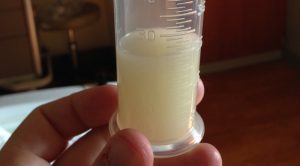
    Non-profit milk banking in the United States is rapidly growing! We have the Human Milk Banking Association of North America (HMBANA) here is the US, Mexico, and Canada. At this point we have 27 milk banks and 5 under development in North America. Milk banking was developed in 1985. These milk banks have donor screening, testing for bacteria, and pasteurize the donated breastmilk. Milk banking had a rough time in the 1980s when the HIV virus was emerging and it was not understood that the pasteurization destroyed the virus. Now, mother’s are screened for HIV and due the the Holder Pasteurization process, this virus is not found in banked human milk.

    milk banking
    USBC Photo by Sara D. Davis

    Non-profit milk banking is being used more and more in NICUs and hospitals for both preterm, fragile, or even term babies when their own mother’s milk is not available. Banked human milk is critical for helping to prevent NEC (Necrotizing Enterocolitis). This condition causes a babies gut to become infected and rot. It is incredibly expensive both monetarily and emotionally for families and hospitals. Providing banked human for little babies helps reduced NEC by 90% in many hospitals. We have a great podcast on this.

    Where is milk banking happening?

    Globally, there are 560 milk banks actively milk banking as of 2018. The largest milk bank system in in Brazil. In 1980s, the Ministry of Health supported the development of milk banks as a strategy to improve child health by avoiding the use of formula. In 2016 there were 210 milk banks and 100 milk depots. This has improved the outcome of babies all throughout this country. Europe has 224 milk banks. In 2017 India has replaced milk bank with lactation management center to help focus on parents breastfeeding their own babies and that pasteurized donor milk is available if needed. Norway and Germany use mostly using raw human milk vs. pasteurized milk for their preterm babies.

    milk sharingThe process of becoming a part of this milk banking movement involves:

    1. Oral phone screening- Explain minimum donation, how old the milk can be, and shipping and handling
    2. Paper questionnaire for donor
    3. Paper questionnaire for health care provider
    4. Serology testing for: HIV 1, 2, 0, HTLV 1 and 2, Hepatitis B and C, syphilis
    5. Microbiological testing of breastmilk before and after pasteurization

    We have written about milk sharing. Check out our podcast and blog about this. Here are some resources on milk sharing:

    Human Milk for Human Babies http://hm4hb.net/

    Milk Share http://milkshare.forumotion.com/

    Eats on Feets http://www.eatsonfeets.org/

    The post All Things Breastfeeding: All You Wanted to Know About Milk Banking with Kim Updegrove appeared first on The Breastfeeding Center of Ann Arbor.


    All Things Breastfeeding 48: D-MER Jan 31, 2019
    Show notes

    D-MER?

    What is D-MER? This is a condition that every family should be aware of, not because it is going to happen to you. It is actually quite rare. But because when it does happen to a breastfeeding family the mother can feel like she is going crazy. So please listen to this podcast so you can help other families!

    D-MERD-MER stands for Dysphoric Milk Ejection Reflex. Let us explain. When a mother starts to breastfeed (or pump or hand express) she may feel a wave of emotion that is not pleasant. These feelings can come either right before, or during, her oxytocin surge, the let down. Most mothers feel a sense of peace, calm, or relaxation when they have an oxytocin surge. However, with D-MER she may feel despondency, anxiety, and/or aggression. For despondency, these feelings can range from a surge of mild sadness to extreme depression. For anxiety, a feeling of restlessness might come up or maybe panic or dread. Anger is the least likely of the three emotions and it again, it can present in a range from irritation to rage.

    What to do about D-MER?

    Sadly, there is not much to do about this rare condition but letting families know that what they are feeling is real and this can provide relief and validation! Knowing that this is a temporary condition is also helpful. These feeling usually last for a few seconds to a minute or two. This condition also tends to go away after a few months as the hormones settle down. Only very rarely does this continue beyond 3-4 months. Again, once mothers know what is gong on they often can ride out the waves and continue to successfully breastfeed.

    If you or a family you know are experiencing such sadness, anxiety, or aggression that it seems at all out of control, please contact your health care provider right away. They may need to be educated about D-MER so be prepared to share this resource, a wonderful site created for women who suffer from this condition.

    The post All Things Breastfeeding 48: D-MER appeared first on The Breastfeeding Center of Ann Arbor.


    All Things Breastfeeding 47: Breastfeeding and Medications Jan 23, 2019
    Show notes

    Breastfeeding and Medications

    breastfeeding and medicationsBreastfeeding and medications can cause a lot of confusion! Many mothers are told they cannot breastfeed while taking certain medications but this is often not true.
    We will discuss how medications can possibly get into breastmilk, a process called diffusion, FYI, and what families can do if they have questions or concerns about medication usage.

    Most medication are safe for breastfeeding. Some things to consider are whether a baby could take it. Many medications are given to babies safely so this is something to look for. Also, how is the medication taken? If it is through an intramuscular injection, then it most likely doesn’t have much effect if orally consumed. Finally, can the medication even get into the breastmilk? If not, then the risk is greatly reduced. Please contact an IBCLC or your health care provider if you have any medication questions.

    Resources

    The great news is there is great information about breastfeeding and medications from some reliable resources.

    First of all, Kellymom.com! Kelly is always a great source of information for families and professionals about breastfeeding and medication.

    For another professional resource there is Lactmed.
    You can type in the name of a medication in the box and see what pops up. For instance, if you enter “motrin” it will give you options to clarify what you want and then you are taken to a window with all kinds of information like Summary of Use in Lactation, Effects in Breastfeeding Infants, and Alternative Drugs to Consider.

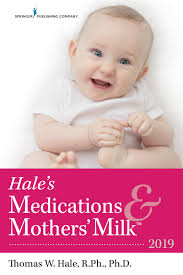
    breastfeeding and medications In our office, we use Thomas Hale’s book, Medications and Mother’s Milk. This is an invaluable resource for us to be able to help our clients get the facts about the safety of breastfeeding and medications.
    There is also the Infant Risk Center. This site has a lot of great information and you can call to ask specific questions.

    Of course, don’t forget to contact your local IBCLC! Most have access to Medications and Mother’s Milk so they can look up a medication for you and read you what the recommendations are.

    The post All Things Breastfeeding 47: Breastfeeding and Medications appeared first on The Breastfeeding Center of Ann Arbor.


    All Things Breastfeeding 46: Busting Breast Feeding Myths Dec 11, 2018
    Show notes

    Barbara and Jessica are busting breast feeding myths! What have you been told about breastfeeding? So many things! People have all kinds of thoughts and opinions.

    breast feeding mythsBreast feeding myths come from many places. Family and friends have many old wives tales or assume that what happened to they must be going to happen to you, no matter how weird. Sadly, our health care providers can also harbor miss-information from past personal experience or out dated information.
    The biggest source of breast feeding myths is, of course, the internet! So many lies out there so please be careful when surfing! Formula companies literally pay people to be voices on the internet that have just enough miss-information so something sounds reasonable but is actually the source of bits of information designed to sabotage your breastfeeding relationship.

    In this episode we talk about foods, sore nipple self-diagnoses, what to do when you are getting started with breastfeeding, and more!

    When looking for solid, reliable, information about breastfeeding go to kellymom.com or visit our pages on common problems. We have ones on pain, bottle feeding, low milk supply, when babies aren’t latching, and working and breastfeeding. Check them out.

    breast feeding mythsOf course, when battling breast feeding myths, nothing can replace getting information in person from a well trained IBCLC. If you have breastfeeding questions or concerns this is going to be the best place for you to go to make sure you are getting the accurate medical information you need to move forward. Don’t hesitate to contact us!
    Going to a local support group is also a great way to bust breast feeding myths. We offer a free weekly support group to help with this.

    Let us know your “favorite” myth! We can record another episode and bust some more!

    The post All Things Breastfeeding 46: Busting Breast Feeding Myths appeared first on The Breastfeeding Center of Ann Arbor.


    All Things Breastfeeding 45: Top 5 Breast Feeding Concerns Nov 27, 2018
    Show notes

    What are the top 5 breast feeding concerns? Well, we have been busy bees figuring this out and helping to provide information to families! I have spent a lot of time and resources on marketing this past year trying to address the needs of my clients. This means a new website! I have created new sections on the website that address specific topics that many families have concerns about.

    The top 5 breast feeding concerns we found are:

    Milk supply worries:
    This section reviews the signs of a well fed baby and talks about how much do babies actually need to eat. It also talks about how we make breastmilk and what you might do about a low supply.
    top 5 breast feeding concerns
    Pain problems:
    We discuss what is normal and what is not and what you might do. Many mothers try to figure out why they are having pain but the internet is not always the answer.

    Babies who won’t latch:
    The emotions behind having a baby who is not latching are high! Why the baby might not be latching is also covered, and then what you might need to do. This is where getting help is so important! This kind of transition is tricky but can be done! It might take time but having guidance is critical.

    Bottle feeding help:
    The traditional way of bottle feeding promotes obesity and is not recommended anymore. Paced bottle feeding is key and understanding how much babies need to actually eat is so important.

    Breastfeeding at work:
    Most of our mothers are going back to work so this is an important aspect of breastfeeding. Here is the link to the Harper’s Bazaar article on working and breastfeeding. Here is a link to my blog about the article!
    top 5 breast feeding concerns
    Kellymom.com This is the site we recommend you explore if you are having breastfeeding problems.

    Remember thought, nothing can replace the help of a well qualified IBCLC. Contact us if you are having breastfeeding problems.

    The post All Things Breastfeeding 45: Top 5 Breast Feeding Concerns appeared first on The Breastfeeding Center of Ann Arbor.


    All Things Breastfeeding 44: World Health Assembly and Breastfeeding Nov 13, 2018
    Show notes

    Why are we talking about the World Health Assembly and breastfeeding? Because world policy sets the priorities for money spent on support. And we all know we can use more breastfeeding support. The New York Times released a story about the news. Here is another story about this.

    world health assembly and breastfeeding What was the controversy? World Health Assembly and breastfeeding news was all about the USA trying to block other countries from supporting the WHO Code and really this is all about the MARKETING of formula and feeding bottles and teats. Companies making money at the expense of our health.

    Let’s explain what the WHO Code is. We let. Kellymom.com explain, “The Code is a marketing code that aims to protect breastfeeding, to protect all mothers and babies (whether breastfeeding, formula-feeding or combination feeding) and to prevent aggressive marketing practices that often prevent mothers from meeting their own breastfeeding goals. Infant formula, feeding bottles, and artificial nipples are the main products that fall within the scope of the Code. Pacifiers and breast pumps are not under the scope of the Code. Note that the Code only applies to the marketing of these items– it does not affect whether they are sold or used.”

    world health assembly and breastfeeding Here is a story about what happened in the 1970s with Nestle and their marketing tactics (This one is fascinating) and 1980s. These marketing techniques that killed are still be used today targeting valuable populations.

    Here in the USA this is going on all the time. Watch this commercial and think about what are the formula company is really trying to say about their product. Are they being truthful?

    I did have these numbers wrong in our podcast. Actually, formula companies spend $480 million per year not $360 as I said, marketing their products to families. We spend $68 million supporting breastfeeding.

    We are no opposed to formula use. On the contrary, we use it all the time as a transitional tool for breastfeeding families. Yes, fed is best. But we don’t need to spend millions of dollars to confuse families and promote a product that is inferior to breastmilk.

    The post All Things Breastfeeding 44: World Health Assembly and Breastfeeding appeared first on The Breastfeeding Center of Ann Arbor.


    All Things Breastfeeding Episode 43: Jessica’s Working and Breastfeeding Story Jun 12, 2018
    Show notes

    Jessica’s Working and Breastfeeding Story!

    We are adding a new type of podcast to our collection beginning with our new intern Jessica! We have been having mothers share their breastfeeding stories but now we want mothers to hear from other mothers about the realities of going back to work while you are breastfeeding. Jessica’s working and breastfeeding story is worth the listen as you consider what needs to happen before you return to work.

    Jessica was very lucky that she had a lot of time off, five months, compared to most families in the USA but it was still challenging. Listen to what was hard and what made it easier. Read our blog about feeling safe while breastfeeding or pumping. If you are struggling with breastfeeding, worried about returning to work, or back at work and struggling, we can help! Contact Barbara, barbara@bfcaa.com or 734-975-6534. Our clinical experience combined with great communication skills makes difference!

    working and breastfeeding
    Spectra 2!

    You can also listen to Jessica’s Breastfeeding Story to hear about how her breastfeeding journey started. Jessica struggle with low milk supply but then had some trouble with plugged ducts. With a little help and hard work, Jessica achieved her breastfeeding goals! She definitely attended our free drop in support group and asked a lot of questions and really loved the mother-to-mother support.

    Here is a place to go to get our free breastmilk or formula, as mentioned in our podcast, Infant Feeding Calculator! This free PDF allows you to feel confident that you are feeding your baby just the right amount while working and breastfeedingyou are away from your baby. There is so much miss-information on how much baby’s need to eat. Some people keep increasing how much they are feeding their babies which can lead to obesity later in life.

    The FDA has a nice page on choosing a breast pump. At the Breastfeeding Center of Ann Arbor we are LOVING the Spectra 2. If your insurance company gives you options for pumps, we say, yes!

    Finally, breastfeeding or pumping pods! Here is a site that lists locations of places to breastfeed or pump at airports and my photo of a pod at the Seattle Airport on a recent trip!

    The post All Things Breastfeeding Episode 43: Jessica’s Working and Breastfeeding Story appeared first on The Breastfeeding Center of Ann Arbor.


    All Things Breastfeeding: Episode 43 Jessica's Working and Breastfeeding Story 0 Jun 10, 2018
    Show notes

    The All Things Breastfeeding Podcast is a program for both new and experienced mothers and lactation professionals. Barbara D. Robertson, IBCLC, owner of The Breastfeeding Center of Ann Arbor and Jessica Beemsterboer, MA, intern to The Breastfeeding Center of Ann Arbor host the show. Barbara and Jessica share their thoughts and information on All Things Breastfeeding.


    Previous 1 9 10 11 12 13 15 Next

    Related Podcasts

    Tumble Science Podcast for Kids

    1

    Tumble Science Podcast for Kids Education for Kids
    The Longest Shortest Time: A Women’s Health Show for Everyone

    2

    The Longest Shortest Time: A Women’s Health Show for Everyone Government & Organizations
    Dream Big Podcast for Kids

    3

    Dream Big Podcast for Kids Education for Kids
    Brains On! Science podcast for kids

    4

    Brains On! Science podcast for kids Education for Kids
    The Purrrcast

    5

    The Purrrcast Kids & Family
    The Dog Trainer’s Quick and Dirty Tips for Teaching and Caring for Your Pet

    6

    The Dog Trainer’s Quick and Dirty Tips for Teaching and Caring for Your Pet Education
    footer-logo

    Contact Us

    Toll Free: 844-670-7747

    Links

    • Home
    • Top Charts
    • Networks
    • Apps
    • Independents Podcasts
    • Podcast Advertising
    • Podcast News
    • Contact Us
    • About Us
    • Analytics & Insights

    Stay Connected

      Privacy, Terms of Use & Our Code of Ethics Protecting Content Creators Copyrights