TopPodcast.com
Menu
  • Home
  • Top Charts
  • Top Networks
  • Top Apps
  • Top Independents
  • Top Podfluencers
  • Top Picks
    • Top Business Podcasts
    • Top True Crime Podcasts
    • Top Finance Podcasts
    • Top Comedy Podcasts
    • Top Music Podcasts
    • Top Womens Podcasts
    • Top Kids Podcasts
    • Top Sports Podcasts
    • Top News Podcasts
    • Top Tech Podcasts
    • Top Crypto Podcasts
    • Top Entrepreneurial Podcasts
    • Top Fantasy Sports Podcasts
    • Top Political Podcasts
    • Top Science Podcasts
    • Top Self Help Podcasts
    • Top Sports Betting Podcasts
    • Top Stocks Podcasts
  • Podcast News
  • About Us
  • Podcast Advertising
  • Contact
Not in our directory?
Add Show Here
Podcast Equipment
Center

toppodcastlogoOur TOPPODCAST Picks

  • Comedy
  • Crypto
  • Sports
  • News
  • Politics
  • True Crime
  • Business
  • Finance

Follow Us

toppodcastlogoStay Connected

    View Top 200 Chart
    Back to Rankings Page
    Courses

    A Delectable Education Charlotte Mason Podcast

    Through twice monthly conversations, three moms who have studied the Charlotte Mason method of education and put her ideas into practice in their homes join together to share with one another for the benefit of listeners by giving explanations of Mason’s principles and examples of those principles put into practice out of their own teaching experience. These short discussions aim at providing information, support, and encouragement for others by unfolding the myriad aspects.

    Advertise

    Copyright: © Copyright 2016 - 2023 A Delectable Education. All rights reserved.

    • Apple Podcasts
    • Google Play
    • Spotify

    Latest Episodes:
    Episode 40: Listener Q & A #6 Jul 08, 2016
    Show notes This week's Charlotte Mason podcast addresses listener questions. Nicole, Emily, and Liz combine their wisdom and experience to address some very frequently asked concerns. Listen Now: If you are seeing this message, please make sure you are using the most current version of your web browser: Internet Explorer 9, Firefox, Chrome Rascal, Sterling North Owls in the Family, Farley Mowat My Side of the Mountain, Jean Craighead George (Contains affiliate links) Charlotte Mason and Classical Education More on Charlotte Mason and Classical Education

    Episode 39: Interview with Jeannette Tulis Jun 24, 2016
    Show notes The Charlotte Mason method applies to many teaching situations beyond traditional classrooms and the homeschool. This week's podcast is an interview recorded at the CMI national conference with Jeannette Tulis of Chattanooga, TN, who has been offered a unique opportunity to open the world of one family's children using the Mason model of education. Listen Now: If you are seeing this message, please make sure you are using the most current version of your web browser: Internet Explorer 9, Firefox, Chrome The Last Child in the Woods, Richard Louv (Contains affiliate links) Grace to Build Retreat CHarlotte Mason Institute Conferences

    Episode 38: Shakespeare Jun 17, 2016
    Show notes

    In this week's podcast, we discuss why Shakespeare was always included in Charlotte Mason's curriculum. What is the value of Shakespeare as part of the study of literature, and how can we who have little experience with his works enter in and enjoy his feast? Listen Now: If you are seeing this message, please make sure you are using the most current version of your web browser: Internet Explorer 9, Firefox, Chrome "Just as we partake of that banquet which is 'Shakespeare' according to our own needs and desires, so do the children behave at the ample board set before them; there is enough to satisfy the keenest intelligence while the dullest child is sustained through his own willing effort." (Vol. 6, p. 245) "We probably read Shakespeare in the first place for his stories, afterwards for his characters, the multitude of delightful persons with whom he makes us so intimate that afterwards, in fiction or in fact, we say, 'She is another Jessica,' and 'That dear girl is a Miranda'; 'She is a Cordelia to her father,' and, such a figure in history, 'a base lago.' To become intimate with Shakespeare in this way is a great enrichment of mind and instruction of conscience. Then, by degrees, as we go on reading this world-teacher, lines of insight and beauty take possession of us, and unconsciously mould our judgments of men and things and of the great issues of life." (Vol. 4, p. 72) "This is what Shakespeare, as great a philosopher as a poet, set himself to teach us, line upon line, precept upon precept. His 'Leontes,' 'Othello,' 'Lear,' 'Prospero,' 'Brutus,' preach on the one text––that a man's reason brings certain infallible proofs of any notions he has wilfully chosen to take up. There is no escape for us, no short cut; art is long, especially the art of living." (Vol. 6, pp. 314-15) "And Shakespeare? He, indeed, is not to be classed, and timed, and treated as one amongst others,––he, who might well be the daily bread of the intellectual life; Shakespeare is not to be studied in a year; he is to be read continuously throughout life, from ten years old and onwards. But a child of ten cannot understand Shakespeare. No; but can a man of fifty? Is not our great poet rather an ample feast of which every one takes according to his needs, and leaves what he has no stomach for?" (Vol. 5, p. 224) Something Wicked This Way Comes, Ray Bradbury The Winter of Our Discontent, John Steinbeck Brave New World, Aldous Huxley Roller Skates, Ruth Sawyer The Wonderful Winter, Marchette Chute Tales from Shakespeare, Charles and Mary Lamb Beautiful Stories from Shakespeare, E. Nesbit (Contains affiliate links) Interview with Nancy Kelly Chronological List of Shakespeare's Plays American Shakespeare Center


    Episode 37: Poetry, An Interview with Bonnie Buckingham Jun 10, 2016
    Show notes Poetry was a deep love of Charlotte Mason's, and this week's podcast explores that wonder and delight as it can unfold in your school day and life. Are you nervous, intimidated, worried, or resistant to teaching poetry? Listen to this laid back interview between Liz and our good friend, Bonnie Buckingham, veteran homeschool mom who learned to love poetry by teaching it. Listen Now: If you are seeing this message, please make sure you are using the most current version of your web browser: Internet Explorer 9, Firefox, Chrome "Poetry is, perhaps, the most searching and intimate of our teachers...Poetry supplies us with tools for the modeling of our lives, and the use of these we must get at ourselves." (Vol. 4, p. 71) "Heroic Poetry Inspires to Noble Living––"To set forth, as only art can, the beauty and the joy of living, the beauty and the blessedness of death, the glory of battle and adventure, the nobility of devotion––to a cause, an ideal, a passion even––the dignity of resistance, the sacred quality of patriotism, that is my ambition here," says the editor of Lyra Heroica in his preface." (Vol. 2, p. 141) If you would like to study along with us, here are some passages from The Home Education Series and other Parent's Review articles that would be helpful for this episode's topic. You may also read the series online here, or get the free Kindle version from Fisher Academy. Parents and Children (Volume 2), Chapter 14 Ourselves (Volume 4), Book II, Section II, Chapter 12 Towards a Philosophy of Education (Volume 6), Book I, Section II (b) For the Children's Sake Favorite Poems Old and New This Singing World Luci Shaw Wendell Berry Billy Collins Now We Are Six Emily Dickinson The Iliad The Odyssey Beowulf Song of Roland Book of Heroic Verse Longfellow Tennyson Roman Poets Seamus Heaney Christina Rossetti Samuel Coleridge Richard Wilbur (Contains affiliate links) Bonnie Buckingham Charlotte Mason Institute, Western Conference Grace To Build Retreat Charlotte Mason Institute A Delectable Education: Episode 13: Discussion of Charlotte Mason's narrative poetry on the Gospels What is Poetry? from the Parents' Review On the Teaching of Poetry from the Parents' Review The Teaching of Poetry from the Parents' Review The Teaching of Poetry to Children from the Parents' Review

    Episode 36: Literature Jun 03, 2016
    Show notes This week's podcast focuses on Charlotte Mason's ideas for the study of literature. Wait, isn't every subject literature with her use of living books? How does the study of literature fit into her curriculum from the earliest age? Listen Now: If you are seeing this message, please make sure you are using the most current version of your web browser: Internet Explorer 9, Firefox, Chrome "Except in Form I the study of Literature goes pari passu with that of History." (Vol. 6, p. 180) "It is a nice question whether the history of a country makes its literature or its literature the history!" R.A. Pennethorne, Parent's Review, Volume 10, 1899, p. 549 "To adapt a phrase of Matthew Arnold's concerning religion,––education should aim at giving knowledge 'touched with emotion.'" (Vol. 3, p. 220) "I know you may bring a horse to the water, but you cannot make him drink. What I complain of is that we do not bring our horse to the water. We give him miserable little text-books, mere compendiums of facts, which he is to learn off and say and produce at an examination; or we give him various knowledge in the form of warm diluents, prepared by his teacher with perhaps some grains of living thought to the gallon. And all the time we have books, books teeming with ideas fresh from the minds of thinkers upon every subject to which we can wish to introduce children." (Vol. 3, p. 171) "The 'hundred best books for the schoolroom' may be put down on a list, but not by me. I venture to propose one or two principles in the matter of school-books, and shall leave the far more difficult part, the application of those principles, to the reader. For example, I think we owe it to children to let them dig their knowledge, of whatever subject, for themselves out of the fit book; and this for two reasons: What a child digs for is his own possession; what is poured into his ear, like the idle song of a pleasant singer, floats out as lightly as it came in, and is rarely assimilated. I do not mean to say that the lecture and the oral lesson are without their uses; but these uses are, to give impulse and to order knowledge; and not to convey knowledge, or to afford us that part of our education which comes of fit knowledge, fitly given." (Vol. 3, p. 177) If you would like to study along with us, here are some passages from The Home Education Series and other Parent's Review articles that would be helpful for this episode's topic. You may also read the series online here, or get the free Kindle version from Fisher Academy. Home Education, Part V, Chapter VIII School Education, Chapters XV and XXI Towards a Philosophy of Education, Book I, Section II (b) Beowulf The Odyssey The Iliad Ivanhoe T.S. Eliot's Essays To Kill a Mockingbird Pride and Prejudice The Red Badge of Courage English Literature for Boys and Girls Honey for a Child's Heart Read for the Heart Realms of Gold Five Years of Children's Literature (Contains affiliate links) Top 10 Books about Books

    Episode 35: Listener Q&A #5 May 27, 2016
    Show notes This podcast episode on the Charlotte Mason method of education focuses on some listener questions, notably, what to do about dawdlers, how to motivate apathetic students, and a couple of particulars about implementing history lessons. Listen Now: If you are seeing this message, please make sure you are using the most current version of your web browser: Internet Explorer 9, Firefox, Chrome "Education is a life; that life is sustained on ideas; ideas are of spiritual origin; and, 'God has made us so' that we get them chiefly as we convey them to one another. The duty of parents is to sustain a child's inner life with ideas as they sustain his body with food." (Vol. 2, p. 39) Carry On, Mr. Bowditch String, Straightedge, and Shadow The Story of Geronimo I Buy a School Young Fu of the Upper Yangtze The Boy Who Harnessed the Wind Stillwell and the American Experience in China (Contains affiliate links)

    Episode 34: Picture & Composer Study May 20, 2016
    Show notes This podcast episode's focus describes Charlotte Mason's inclusion of art and music in her essential curriculum. How has our cultural and educational background prejudiced us to favor core subjects over "fine arts" and how did Ms. Mason view these subjects. Further, how are these subjects included and implemented in the week's feast--especially if the mother is unfamiliar or even fearful of tackling this unknown territory? Listen Now: If you are seeing this message, please make sure you are using the most current version of your web browser: Internet Explorer 9, Firefox, Chrome "We cannot measure the influence that one or another artist has upon the child's sense of beauty, upon his power of seeing, as in a picture, the common sights of life; he is enriched more than we know in having really looked at even a single picture." (Vol. 1, p. 309) "They are never copied lest an attempt to copy should lessen a child's reverence for great work." (Vol. 6, p. 216) "A great promise has been given to the world––that its teachers shall not any more be removed. There are always those present with us whom God whispers in the ear, through whom He sends a direct message to the rest. Among these messengers are the great painters who interpret to us some of the meanings of life. To read their messages aright is a thing due from us. But this, like other good gifts, does not come by nature. It is the reward of humble, patient study." (Vol. 4, p. 102) "As in a worthy book we leave the author to tell his own tale, so do we trust a picture to tell its tale through the medium the artist gave it." (Vol. 6, p. 216) "[F]or though every child cannot be a great performer, all may be taught an intelligent appreciation of the beauties of music, and it is a wicked shame to clang the doors of music, and therefore of endless channels of delight and inspiration, in a child's face, because we say he has "no ear," when perhaps his ear has never been trained, or because he never will be able to "play."" (Miss Pennethorne's PR Article) "Hearing should tell us a great many interesting things, but the great and perfect joy which we owe to him is Music." (Vol. 4, Book I, pp. 30-31) "Use every chance you get of hearing music (I do not mean only tunes, though these are very nice), and ask whose music has been played, and, by degrees, you will find out that one composer has one sort of thing to say to you, and another speaks other things; these messages of the musicians cannot be put into words, so there is no way of hearing them if we do not train our ear to listen." (Vol. 4, p. 31) "Many great men have put their beautiful thoughts, not into books, or pictures, or buildings, but into musical score, to be sung with the voice or played on instruments, and so full are these musical compositions of the minds of their makers, that people who care for music can always tell who has composed the music they hear, even if they have never heard the particular movement before." (Vol. 4, p. 31) If you would like to study along with us, here are some passages from The Home Education Series and other Parent's Review articles that would be helpful for this episode's topic. You may also read the series online here, or get the free Kindle version from Fisher Academy. Home Education, Part V, Chapter XXI School Education, p. 239 Towards a Philosophy of Education, Book I, Chapter X, Section II: f Benjamin West and His Cat Grimalkin, Marguerite Henry Stories of Favorite Operas, Clyde Robert Bulla More Stories of Favorite Operas, Clyde Robert Bulla Stories of Gilbert and Sullivan Operas, Clyde Robert Bulla The Ring and the Fire, Clyde Robert Bulla I, Juan de Pareja, Elizabeth Borton de Trevino Opal Wheeler's Composer Biographies Millet Tilled the Soil, Sybil Deucher Art for Children series by Ernest Raboff Elizabeth Ripley's Artist Biographies Spiritual Lives of Great Composers, Patrick Kavanaugh I, Vivaldi, Janice Shefelman (Contains affiliate links) Emily's Picture Study Portfolios Riverbend Press Artist Prints

    Episode 33: Scheduling a Charlotte Mason Education May 13, 2016
    Show notes This Charlotte Mason podcast focuses on time management: how do we get organized to spread this feast of innumerable subjects, how do we fit everything in, and how do we manage multiple children at various levels with differing needs and subjects. Practical tips, resources, ideas, and time-tested wisdom is abundant in this conversation. Listen Now: If you are seeing this message, please make sure you are using the most current version of your web browser: Internet Explorer 9, Firefox, Chrome Our Podcast Episode that talks about the Habit of Attention Nicole's step-by-step guide to preparing your CM schedule A Form by Form breakdown of which subjects are studied when and what lessons those subjects include at each age level Liz, Emily, and Nicole can help you create your own schedule and/or custom curriculum

    Episode 32: The Perilous Privilege of Mothering May 01, 2016
    Show notes

    This week's Charlotte Mason podcast celebrates the role of mothers in their children's education. Ms. Mason had plenty to say to us as mothers and we share our own experiences as mothers in an effort to encourage you. This one's for you, Mom. Listen Now: If you are seeing this message, please make sure you are using the most current version of your web browser: Internet Explorer 9, Firefox, Chrome "The children are, in truth, to be regarded less as personal property than as public trusts, put into the hands of parents that they may make the very most of them for the good of society. And this responsibility is not equally divided between the parents: it is upon the mothers of the present that the future of the world depends, in even a greater degree than upon the fathers, because it is the mothers who have the sole direction of the children's early, most impressible years." (Vol. 1, p. 2) "We are waking up to our duties and in proportion as mothers become more highly educated and efficient, they will doubtless feel the more strongly that the education of their children during the first six years of life is an undertaking hardly to be entrusted to any hands but their own. And they will take it up as their profession––that is, with the diligence, regularity, and punctuality which men bestow on their professional labours." (Vol. 1, pp. 2-3) "We allow no separation to grow up between the intellectual and 'spiritual' life of children, but teach them that the Divine Spirit has constant access to their spirits, and is their Continual Helper in all the interests, duties and joys of life." (Charlotte Mason's 20th Principle of Education) "I venture to suggest, not what is practicable in any household, but what seems to me absolutely best for the children; and that, in the faith that mothers work wonders once they are convinced that wonders are demanded of them." (Vol. 1, p. 44) I Buy a School, Marion Berry The Story of Charlotte Mason, Essex Cholmondeley (We are in no way suggesting you buy this book for the current price! Linking solely for your information) (Contains affiliate links) Grace to Build Retreat Liz's talk on Mothers (audio download) ADE Podcast Episode that describes the Great Recognition further


    Episode 31: Listener Q&A #4 Apr 29, 2016
    Show notes This podcast episode focuses on answering more listener questions about the Charlotte Mason method on some widely varying topics including Bible, narration, and unit studies. Listen Now: If you are seeing this message, please make sure you are using the most current version of your web browser: Internet Explorer 9, Firefox, Chrome "Another point, the co-ordination of studies is carefully regulated without any reference to the clash of ideas on the threshold or their combination into apperception masses; but solely with reference to the natural and inevitable co-ordination of certain subjects. Thus, in readings on the period of the Armada, we should not devote the contemporary arithmetic lessons to calculations as to the amount of food necessary to sustain the Spanish fleet, because this is an arbitrary and not an inherent connection; but we should read such history, travels, and literature as would make the Spanish Armada live in the mind." (Vol. 3, pp. 320-21) "English History is always with us, but only in the earliest years is it studied alone. It is not, as we know, possible always to get the ideal book, so we use the best we can find and supplement with historical essays of literary value. Literature is hardly a distinct subject, so closely is it associated with history, whether general or English; and whether it be contemporary or merely illustrative; and it is astonishing how much sound learning children acquire when the thought of an age is made to synchronise with its political and social developments. A point which I should like to bring before the reader is the peculiar part which poetry plays in making us aware of this thought of the ages, including our own. Every age, every epoch, has its poetic aspect, its quintessence, as it were, and happy the people who have a Shakespeare, a Dante, a Milton, a Burns, to gather up and preserve its meaning as a world possession...Civics takes place as a separate subject, but it is so closely bound up with literature and history on the one hand and with ethics, or, what we call every-day morals, on the other, that the division of subjects is only nominal." (Vol. 6, p. 274) A Delectable Education, Episode 8: Narration, the Act of Knowing Bonnie Buckingham

    Previous 1 30 31 32 33 34 35 Next

    Related Podcasts

    Coffee Break French

    1

    Coffee Break French Courses
    EconTalk

    2

    EconTalk Courses
    TED Talks Education

    3

    TED Talks Education Courses
    The Torch: The Great Courses Podcast

    4

    The Torch: The Great Courses Podcast Courses
    LSE: Public lectures and events

    5

    LSE: Public lectures and events Courses
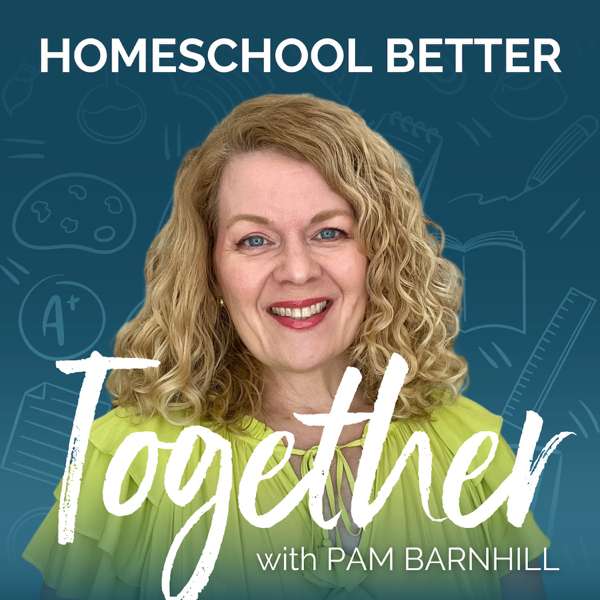
    Homeschool Better Together

    6

    Homeschool Better Together Courses
    footer-logo

    Contact Us

    Toll Free: 844-670-7747

    Links

    • Home
    • Top Charts
    • Networks
    • Apps
    • Independents Podcasts
    • Podcast Advertising
    • Podcast News
    • Contact Us
    • About Us
    • Analytics & Insights

    Stay Connected

      Privacy, Terms of Use & Our Code of Ethics Protecting Content Creators Copyrights