
The University of Chicago Urban Education Institute (UEI) serves the South Side of Chicago and is dedicated to creating knowledge to produce reliably excellent schooling for children growing up in urban America. UEI operates the four campuses of the University of Chicago Charter School; prepares outstanding urban teachers and leaders through the University of Chicago Urban Teacher Education Program; undertakes rigorous research to improve policy and practice, anchored by the University of Chicago Consortium on Chicago School Research; and provides tools, analytics and training to improve schools nationwide, primarily through UChicago Impact.
Podcast Categories: Social Sciences
Experimental Cognitive Psychology
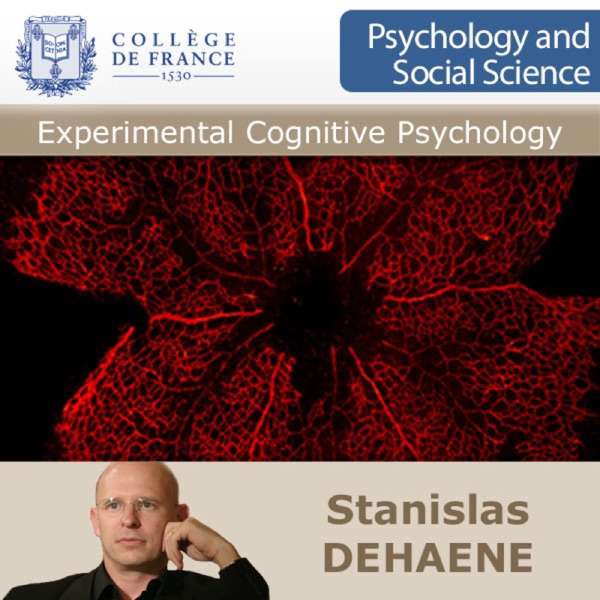
Stanislas Dehaene received his training in mathematics at the École normale supérieure in Paris, then completed a PhD in cognitive psychology with Jacques Mehler, post-doctoral studies with Michael Posner, as well as neuronal modelling studies with Jean-Pierre Changeux. He has been working since 1997 at the Orsay brain imaging center near Paris (Service Hospitalier Frédéric Joliot of the Commissariat à l’Énergie Atomique), where he directs the Cognitive Neuroimaging Unit since 2001. In September 2005 he was elected as a full professor on the newly created chair of Experimental Cognitive Psychology at the Collège de France in Paris.
Stanislas Dehaene’s interests concern the cerebral bases of specifically human cognitive functions such as language, calculation, and reasoning. The team uses a variety of experimental methods, including mental chronometry in normal subjects, cognitive analyses of brain-lesioned patients, and brain-imaging studies with positron emission tomography, functional magnetic resonance imaging, and high-density recordings of event-related potentials. Formal models of minimal neuronal networks are also devised and simulated in an attempt to throw some links between molecular, physiological, imaging, and behavioral data.
Stanislas Dehaene’s main scientific contributions include the study of the organization of the cerebral system for number processing. Using converging evidence from PET, ERPs, fMRI, and brain lesions, Stanislas Dehaene demonstrated the central role played by a region of the intraparietal sulcus in understanding quantities and arithmetic (the number sense). He was also the first to demonstrate that subliminal presentations of words can yield detectable cortical activations in fMRI, and has used these data to support an original theory of conscious and nonconscious processing in the human brain. With neurologist Laurent Cohen, he also studied the neural networks of reading and demonstrated the crucial role of the left occipito-temporal region in word recognition (the visual word form area).
Stanislas Dehaene is the author of over 100 scientific publications in major international journals. He has received several international prizes including the McDonnell Centennial Fellowship and the Louis D. prize of the French Academy of Sciences (with D. Lebihan). He has published an acclaimed book (The Number Sense), which has been translated in eight languages. He has also edited three books on brain imaging, consciousness, and brain evolution, and has authored two general-audience films on the human brain. He is the associate editor of Cognition, an international journal of Cognitive Science.
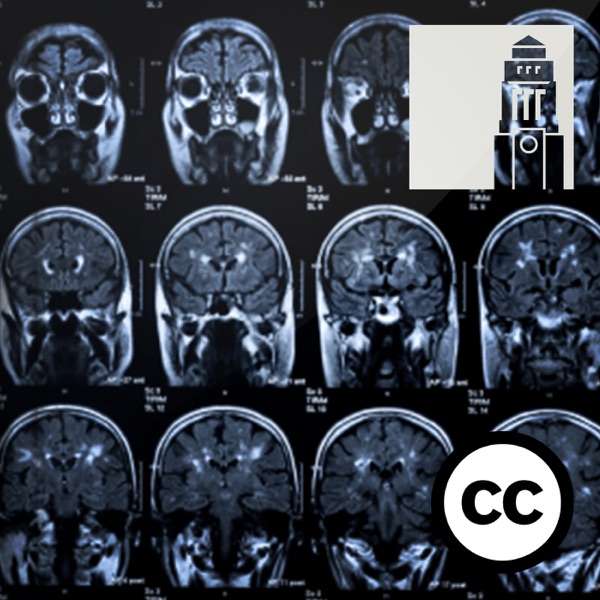
Magnetic resonance imaging and functional MRI – Ekaterini Klepousniotou
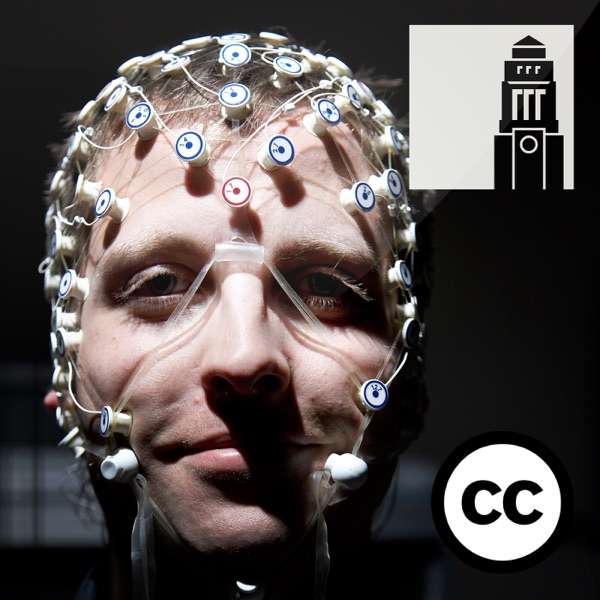
Electroencephalography EEG – Ekaterini Klepousniotou
Learning and Cognition (PSYC320) – Angie Mackewn

Psychologie cognitive expérimentale
La mission de ce laboratoire est d’analyser les bases cérébrales des fonctions cognitives, chez l’homme normal et chez certains patients neurologiques, en développant et en exploitant les méthodes modernes de la neuro-imagerie conjointement à l’utilisation de paradigmes expérimentaux issus de la psychologie cognitive.
Les enseignements sont diffusés avec le soutien de la Fondation Bettencourt Schueller
Savoirs contre pauvreté
Née en 1972, à Paris, Esther Duflo est professeur d’économie au Massachusetts Institute of Technology (MIT) et membre fondateur du Laboratoire d’Action contre la Pauvreté, Abdul Latif Jameel (J-PAL), institution spécialisée dans la méthode de l’évaluation aléatoire des programmes de lutte contre la pauvreté. Elle a fait ses études à l’Ecole Normale Supérieure et au DELTA (Paris) ainsi qu’au MIT. Ses recherches portent sur le comportement des ménages, les choix éducatifs, la scolarisation, l’évaluation des politiques, la décentralisation et la microfinance.
Elle a a reçu plusieurs prix, dont le Elaine Bennett Prize for Research (2003), le Cercle des Economistes (Le Monde, 2005), Médaille de Bronze (Centre National de la Recherche Scientifique, Département de Sciences de l’homme et de la société, 2005), et le Prix Luc Durand-Reville (Académie des Sciences Morales et Politiques, 2008).
Social and Developmental Psychology Seminar Series

This collection is of videos taken of the Social and Developmental Psychology Seminar Series. These seminars attract national and international speakers in the areas of social and developmental psychology to present research talks on their specialist topics.
Safety-Organized Practice for Child Welfare
Safety-organized practices are both practice strategies and concrete tools for “on-the-ground” child welfare workers, supervisors and managers to enhance family participation and foster equitable decision making. These videos include recordings of trainings, examples of the practice, and interviews with experts in the field.
COUN522 – Career Development and Counseling – Liberty University Online

This course provides students an understanding of career development and related life factors. Students study career development theory and decision-making models, procedures for planning and conducting effective job searches, assessment instruments and techniques relevant to career planning and decision-making, and the use of career information. Emphasis is placed on understanding the interrelationships between career development and career decision-making and such factors as God’s calling, family, socio-economic status, leisure, individual interests and abilities, and other life roles.
 Our TOPPODCAST Picks
  Stay Connected