Top Health & Fitness Podcasts
8551
Health & Fitness
Anyone can fall victim to a con. But what kind of person intentionally tries to deceive and manipulate someone? Peek behind the masks of hustlers, swindlers, and fraudsters, and explore how far someone would go to gain money, power, and respect. Con Artists is a Spotify Original from Parcast. Read More
Anyone can fall victim to a con. But what kind of person intentionally tries to Read More
8552
Health & Fitness
Welcome to Konversations (formerly known as Hey Bitches) by lifestyle influencer & entrepreneur Karly Polkosnik. Every Wednesday, sit down with Karly as she talks through navigating life at all stages and becoming the best version of yourself with a hilarious and relatable story or two along the way. If you’re looking for wellness tips, real talk girl advice, financial transparency, influencer/business tips, and everything in between then this podcast is for you. Welcome to the Konversation! IG: @konversationspod & @yourgirlkarly Read More
Welcome to Konversations (formerly known as Hey Bitches) by lifestyle influencer Read More
8553
Health & Fitness
The Human Action Podcast features in-depth interviews on current topics in economics through an Austro-libertarian lens.
The Human Action Podcast features in-depth interviews on current topics in econo Read More
8554
Health & Fitness
Tune in as the best friend duo, Iman and Sabria, talk their trash about celebrities, culture, health, dating, politics and navigating through life as black girls. Join them to find out who's in the Sunken Place each week and for their Common Sense Sis conversation, where they spit some truth on an array of subjects. So pull up a seat to the most guilt-free brunch around! Read More
Tune in as the best friend duo, Iman and Sabria, talk their trash about celebrit Read More
8555
Health & Fitness
The sign above his hospital bed called him Sixty-Six Garage. For more than 15 years, he would lay there unidentified and unconscious. Or so, everyone believed. From L.A. Times Studios and the team that brought you “Dirty John” and “Man in the Window,” comes “Room 20,” a story about the search for a man’s identity and the truth about his accident. Investigative reporter Joanne Faryon’s two-year journey is filled with twists and turns. Now, she'll finally reveal who Garage really is. But one important question remained for her upon this discovery: has Garage been conscious this entire time? This series was produced by L.A. Times Studios with support from Neon Hum Media. Read More
The sign above his hospital bed called him Sixty-Six Garage. For more than 15 ye Read More
8556
Health & Fitness
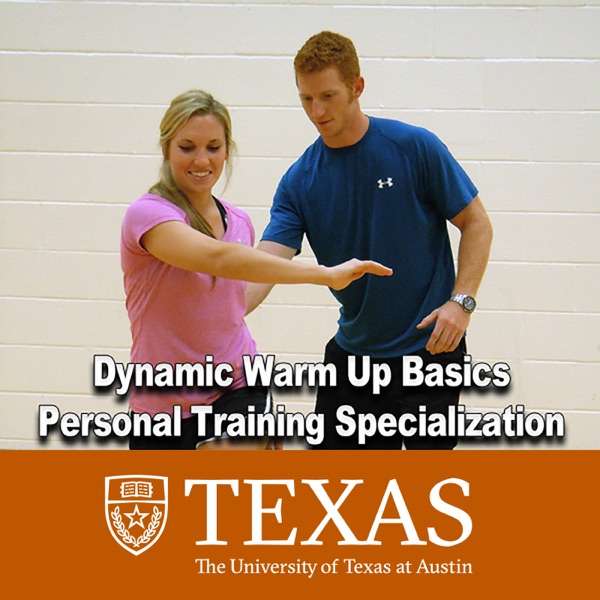
These videos teach the fundamentals of a dynamic warm up. Dynamic Warm Ups involve movement, rather than static stretching, to prepare your body for what you will actually do in the upcoming workout, utilizing activity or sport specific movements. Dynamic warm ups also target areas of the body that tend to be tight or locked down: the goal is to open them up so they are able to load and unload your body weight safely and efficiently.
Because life and sport happen in all three planes, we need to warm up and train in all three planes of motion. These dynamic warm ups use a matrix system, where we tweak different fundamental movements in all three planes. For a general dynamic warm up, we focus on getting proper motion in the foot/ankle, hips and thoracic spine. We use different body parts as what we’ll call drivers, to drive the body through movement.
We have classified the movements based on the number of points of contact, or external stability. Level 1 movements have 3 points of contact, such as two hands on the wall and one foot on the ground, while the other foot is used as a driver. Level 2 movements have just 2 points of contact: typically two feet on the ground using the upper body and arms as drivers. Level 3 movements will have one or no points of contact. These activities include some sort of locomotion, or flight phase, like lunging, running, or shuffling. The final level, four, incorporates some type of overload with these movements, such as driving a dumbbell with the arms. A well- designed Dynamic Warm Up uses a combination of different levels, while tweaking in all three planes of motion, to address movement through the foot/ankle, hips, and thoracic spine.
These Dynamic Warm Ups start by isolating each target area, using all three planes of motion. Examples of each of the levels will help you see how to warm up using three, then two and then one or no points of stability. The goal is to allow the body to “move” and work as it was intended to – with integrated and sequential movement patterns, rather than isolating individual body parts. The Dynamic Warm Up trains movement, not muscles – which should improve performance, whether you are a world class athlete or a beginning exerciser.
**Acknowledgement** Dixie Stanforth, Ph.D., directs the undergraduate Specialization in Personal Training at UT Austin. Dixie has been a fitness editor for Shape magazine and a 5-star presenter for IDEA, presenting extensively at both national and international conferences. She is a spokesperson for ACE, and serves on the Editorial Board for the ACSM Health & Fitness Journal and GSSI Speakers Bureau. She has a successful personal training business, and continues to be involved in the research of current fitness topics while emphasizing her commitment to teaching and training others.
Dixie has developed a successful curriculum for personal trainers, providing both theoretical content and practical experiences. Former students currently practice as doctors, physical therapists, physician assistant's, and other branches of allied health. Many have successful personal training careers, and now own/operate their own facilities, while others work with athletes in sports conditioning settings. Her desire to challenge her students to excel extends to this project, which features students teaching the basics of a dynamic warm up.
All students graduated from UT Austin, College of Education, Dept. of Kinesiology & Health Education.
Anthony Winn, Lead Instructor: Earned his BS (2010) and MEd (2012). Works as a Performance Coach at Driven Performance in Austin, TX.
Lauren Holt: Earned her BS (2010) and MEd (2012). Works as a Strength & Conditioning Intern at Round Rock Express and UT Basketball.
Robby Watson: Earned his BS (2012).
Sam Dowd: Providing the "voice" for the Introduction, Sam earned his BS (2010), Read More
These videos teach the fundamentals of a dynamic warm up. Dynamic Warm Ups invol Read More
8559
Health & Fitness
The Stanford Neurosciences Institute is a new, campus-wide independent institute under the Vice Provost and Dean of Research. The goal of the Stanford Neurosciences Institute is to understand how the brain gives rise to mental life and behavior. Our interdisciplinary community of scholars will draw from and transform a multiplicity of disciplines, including neuroscience, medicine, education, law and business. Our discoveries will remodel understanding of brain function, individuals, and society, enabling positive change and enhancing human potential. Read More
The Stanford Neurosciences Institute is a new, campus-wide independent institute Read More
8561
Health & Fitness
This course is a single-quarter, focused follow-up to the yearlong Mini Med School course sequence offered in 2009–10 by Stanford Continuing Studies and the Stanford Medical School. The course focuses on diseases of the heart and cardiovascular system, the leading cause of death and disability for both men and women as well as the most common cause of serious birth defects. Addressing these challenges, the Stanford Cardiovascular Institute catalyzes a unique collaboration among clinicians, translational and basic scientists, and engineers, fostering the development of novel approaches to diagnosing, treating, and ultimately preventing cardiovascular disease.
Featuring a dozen distinguished faculty from Stanford’s Cardiovascular Institute, this course offers students a dynamic introduction to the world of cardiovascular biology, health and disease, and the groundbreaking changes taking place in medical research right here at Stanford.
The course begins with an overview of how the cardiovascular system works, setting the stage for more in-depth talks by experts on topics such as: how heart disease affects men, women, and children; the role genes play in cardiovascular disease; how we can mend a broken heart through new surgical approaches, technologies, and bioengineering (including stem cells); the cardiovascular risks and benefits associated with performance athletics; new innovations in heart imaging; and more. Read More
This course is a single-quarter, focused follow-up to the yearlong Mini Med Scho Read More
8562
Health & Fitness
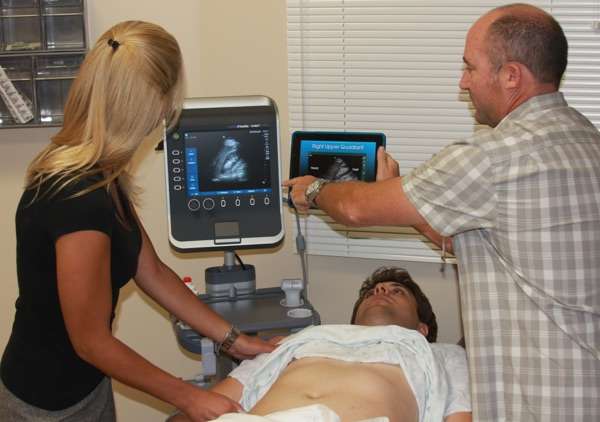
These lectures comprise the bedside ultrasound curriculum from the perspective of emergency medicine.
These lectures comprise the bedside ultrasound curriculum from the perspective o Read More
8563
Health & Fitness
This course consists of an international analysis of the impact of epidemic diseases on western society and culture from the bubonic plague to HIV/AIDS and the recent experience of SARS and swine flu. Leading themes include: infectious disease and its impact on society; the development of public health measures; the role of medical ethics; the genre of plague literature; the social reactions of mass hysteria and violence; the rise of the germ theory of disease; the development of tropical medicine; a comparison of the social, cultural, and historical impact of major infectious diseases; and the issue of emerging and re-emerging diseases. Read More
This course consists of an international analysis of the impact of epidemic dise Read More
8564
Health & Fitness
A graduate course in neuroethics, intended for neuroscience graduate
students, being developed and offered with support from the NSF. It includes a
combination of traditional classroom lectures, discussion and debates, as well as an
online component coordinated with a course at Wisconsin's Neuroscience and Public
Policy graduate program.
In brief, this is the rationale: Neuroscience is increasingly affecting all aspects of human life, from the relatively familiar medical applications in neurology and psychiatry, to new applications in education, business, law and the military. Today's neuroscience graduate students will be among the scientists, citizens and policymakers who will lead society through the maze of decisions regarding the appropriate uses of neuroscience.
This course provides a survey of the key ethical, legal and social issues at the
intersection of neuroscience and society. Read More
A graduate course in neuroethics, intended for neuroscience graduate students, b Read More
8565
Health & Fitness
This collection features interviews and talks with Yale Faculty and researchers on the topic of Immunology.
This collection features interviews and talks with Yale Faculty and researchers Read More
8566
Health & Fitness
Several Community College of Philadelphia instructors lead a Yoga classes.
Several Community College of Philadelphia instructors lead a Yoga classes. Read More
8567
Health & Fitness
Autumn 2010. An introduction to nursing, covering basic nursing science concepts and an introduction to nursing assessment. The nursing assessment focus is on data collection and nursing diagnosis. Emphasis is with adults in long-term and community setting. Read More
Autumn 2010. An introduction to nursing, covering basic nursing science concepts Read More
8568
Health & Fitness
Originally recorded in the late '70s and early '80s, these anatomy videos present timeless information about teeth, gums, and other oral anatomy. Read More
Originally recorded in the late ’70s and early ’80s, these anatomy v Read More
8569
Health & Fitness
This special “mini-course” features 7 inspiring stories about the frontiers of human health from seven of Stanford's most innovative faculty members. Borrowing from a format used at the TED Conference, each speaker delivers a highly engaging talk in just 10-20 minutes about his or her research. Learn about Stanford's newest and most exciting discoveries in neuroscience, bioengineering, brain imaging, psychology, and more. Read More
This special “mini-course” features 7 inspiring stories about the frontiers Read More
8570
Health & Fitness
A systematic study of the human body emphasizing functional gross anatomy to facilitate understanding of structure and function. Anatomical specimens, models, and charts are used in lab. Three hours lecture and lab per week. Read More
A systematic study of the human body emphasizing functional gross anatomy to fac Read More
8571
Health & Fitness
This quarter, the Stanford Mini Med School focuses on our bodies and the organ systems that comprise them, seeing how they work, what goes awry, and what scientists and physicians are learning every day about healing them. We will start with a look at imaging technology that offers a window into human anatomy and disease. We will then delve into our nervous and cardiovascular systems, seeing how our hearts develop, what heart disease is and what can be done to prevent it, what causes a stroke, and what physicians can do when one occurs. We will also explore the inner workings of other vital systems — for example, our lungs, gastrointestinal system, and kidneys. And we will look at how our eyes and ears function, and how they become impaired. Finally, we will conclude this quarter with an inquiry into the fascinating topic of mind-body interactions and discover what scientists are learning about how our thought affects how we feel. Read More
This quarter, the Stanford Mini Med School focuses on our bodies and the organ s Read More
8572
Health & Fitness
Stanford Continuing Studies is proud to present the Stanford Mini Med School, a series arranged and directed by Stanford’s School of Medicine. Featuring more than thirty distinguished faculty, scientists, and physicians from Stanford’s prestigious medical school, this series of courses will offer students a dynamic introduction to the world of human biology, health and disease, and the groundbreaking changes taking place in medical research and health care.
The fall quarter course will get started with a journey inside human biology. We will start by familiarizing ourselves with the world of very small things. We will take a close look at DNA, stem cells, and microbes, and see how these and other small players form the building blocks of the human body. This will allow us to understand how human organs develop (and can also regenerate), how our nervous and immune systems work, and how diseases can afflict us. From there, the course will move beyond the individual and take a more global view of health. How do pandemics take shape? How does the environment affect our collective health? And how can we finally implement a healthcare system that makes sense for our nation? Various experts from the Stanford School of Medicine will address these and other big picture questions during the first course in the Stanford Mini Med School.
Released with a Creative Commons BY-NC-ND license. Read More
Stanford Continuing Studies is proud to present the Stanford Mini Med School, a Read More
8573
Health & Fitness
This course will assess the relationships among sequence, structure, and function in complex biological networks as well as progress in realistic modeling of quantitative, comprehensive, functional genomics analyses. Exercises will include algorithmic, statistical, database, and simulation approaches and practical applications to medicine, biotechnology, drug discovery, and genetic engineering. Future opportunities and current limitations will be critically addressed. In addition to the regular lecture sessions, supplementary sections are scheduled to address issues related to Perl, Mathematica and biology. Read More
This course will assess the relationships among sequence, structure, and functio Read More
8574
Health & Fitness
This course consists of an international analysis of the impact of epidemic diseases on western society and culture from the bubonic plague to HIV/AIDS and the recent experience of SARS and swine flu. Leading themes include: infectious disease and its impact on society; the development of public health measures; the role of medical ethics; the genre of plague literature; the social reactions of mass hysteria and violence; the rise of the germ theory of disease; the development of tropical medicine; a comparison of the social, cultural, and historical impact of major infectious diseases; and the issue of emerging and re-emerging diseases. Read More
This course consists of an international analysis of the impact of epidemic dise Read More
8575
Health & Fitness
15 stretches that will change your posture, breathing and workout. For more infromation and videos, please visit us at www.recreation.ucla.edu/iworkout. Read More
15 stretches that will change your posture, breathing and workout. For more infr Read More

 Our TOPPODCAST Picks
  Stay Connected