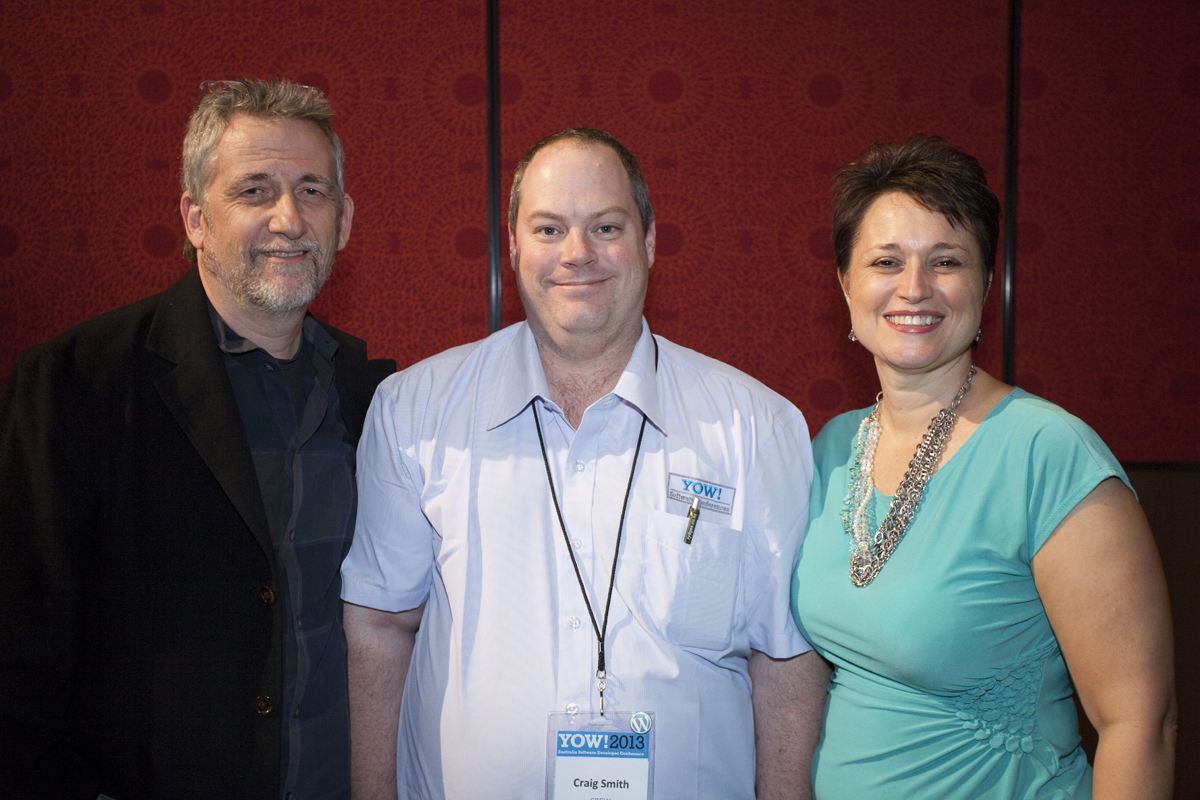
Join Craig, Tony and Renee on a journey through the world of Agile as they look at recent blogs related to Agile, investigate practices and techniques, look at tools and answer your questions. The revolutionists focus on not just Agile as it relates to software development but also how it applies to business, transition, culture, people and a whole lot more!
PMO is more oriented towards best practices process, whereas the Agile VMO is more about flow of work to a business outcome (rather than output)
Collaborate with external auditors to determine what documentation is really needed and the controls required
Basic agile transformation model – build a true end to end value stream team, implement lean discovery and dual track discovery / delivery and an Agile VMO
Agile VMO is needed when there are obstructions to the flow of value
Dynamic strategy (top down, bottom up and outside in) and decision making velocity (speed to make a decision) and ensuring leadership is not a bottleneck to decisions
We still have work to go in taking Agile to other parts of the organisation and taking it to the executive and the board room
“Only the paranoid survive” – Andy Grove
“If we are in danger of being disrupted, why don’t we disrupt ourselves” – Andy Grove
Episode 193: Agile Australia 2019 Vox Pop #2
Feb 15, 2021
Craig and Tony are once again roaming the halls at Agile Australia in Sydney and once again chat to some old friends from the Australian Agile community:
Sharon Robson from enterprising agility – enjoying the recognition that Agile adoption starts from the top down, agile at scale is about the thinking and thought processes being applied throughout the entire organisation, looking forward to Sandra Davey on “Upon retrospective: the board went Agile“
Steve Lawrence – a member of the “11 club”, agile should be a mechanism to create greater value not reduce headcount, every small step you take is a step forward
Episode 190: Talking Agile Live From The Man Cave with Serge Beaumont
Jan 08, 2021
Renee, Craig and Tony are together to chat with Serge Beaumont, Principal Agile Coach at Xebia, live from his man cave and despite showing their lack of mathematical skills in relation to dice they chat about:
In relation to culture, if the human connections are there you can handle just about anything
A foundational cultural aspect at Xebia is that they implemented Xebia Knowledge Exchange (XKE) – every second Tuesday the team has dinner and then has a mini-conference of about 20 streams
Xebia were at the foundation of the ING Agile transformation
You need leadership that truly believes in culture as a powerful thing
Renee does story maps like trees and Serge prefers to ensure that he finds his epic on the horizontal slice rather than using the activities on the vertical backbone, building towards an MVP
All backlogs should be tree structures
An epic is a user story that is too big
Deltas go in the backlog and constraints go in the definition of done
two rules for scaling – autonomy over coordination and Scrum is a fractal
Saw a lot of companies doing agile wrong and a lot of pain suffering and probably worse off than when they started – book is to try to share learning and get agile on the right track
The conditions for agile to flourish need to change, particularly beyond team level
RBS – one of the key impediments was funding, changed to funding persistent teams
Most organisations have a dissatisfaction with their financial process – need to have an honest conversation around the pain points of trust and process and seeing the promise of early return
Bosch – were not innovating as quickly as they needed to, now using Agile for product design, manufacturing process and supply change operations – use Agile wherever a change need is required
Best way to manage a transformation is in an agile way – problem is unfortunately a transformation has to be funded using the existing processes and adapt the process as you go
Where Agile works well is where it is more organic – give the teams the tools for success and get out of the way
Set the ambition to be a continuous internal learning organisation
We need good recipes – Toyota and Spotify are good examples – sharing is of benefit to each other
Persistent teams are recommended to get the best results. – there is a compelling economic argument for this as well
How Agile Is Powering Healthcare Innovation – healthcare has had to innovate at a much more rapid pace than traditionally due to the global pandemic – built around small empowered teams that are focussed on the problem
Episode 187: Domain Driven Yak Symmathesy with Jessica Kerr
Dec 28, 2020
Tony and Craig are at YOW! Conference in Brisbane and chat to Jessica Kerr, software developer, consultant and symmathecist (look it up or listen to the podcast) and apart from our first live podcast sneeze they talk about:
Managing the Finder team at Apple – hired for stellar C++ coding ability and customer empathy
Software development is a team sport – including QA, a dedicated product manager / product owner and designers
After Dark and Flying Toasters at Berkeley Systems
“Managing the Unmnageable” is 9 chapters and around 300 rules of thumb and nuggets of wisdom (the creamy centre), the tools used to manage software development teams plus the authors own insights
There were very few books (7 at the time) on managing software developers (unlike project management and agile)
Situational Leadership – opens your eyes to delegating and supporting the people on your team
The most important rule – always be recruiting
The Study of Product Team Performance – effective onboarding correlates with the highest performance teams (yet 7% consider this to be a best practice)
Self organising teams are where every single member of the team is a leader from their expertise
A team created definition of done may be one of the most important practices in Agile
The frequency of standups correlates with the performance of the team
The Daily Standup was not intended to be a status meeting but rather a replanning meeting
Teams that have stories for their entire backlog are correlated with the highest level of team performance
Ambiguities in the requirements typically popup in the middle of the programming, which is why it is so valuable to have a Product Owner nearby to address these
Software development is a team sport – what gates teams is collaboration and communication – we need to nurture and provide support for that to thrive
We have two ears and one mouth and we need to use them in that proportion
Episode 184: Agile Virtual (Pizza) Summit with Adam Weisbart
May 22, 2020
Craig, Renee and Tony catch up with old friend and “irregular” guest Adam Weisbart about Agile Virtual Summit, Recess retrospectives, Build Your Own Scrum and making your own pizza.
Renee realised Washington state is nowhere near Washington, DC
Agile Virtual Summit 1-5 June 2020 – a collection of great speakers and registration is free!
Distributed retrospectives – important that people give a voice-over to the items that they add
Tips for Remote Agile ceremonies – recreate being in the same room with technology as much as possible, avoid the asynchronous Slack bots, actually standup,
At Slack, you are not allowed to hold a meeting via Slack!
Making virtual retrospectives fun – change them up, craft retrospectives into a story (Recess does this), remember the future (where would you be if you had the most awesome sprint ever)
The next thing in Agile just sounds like Agility!
No apologies meeting rule for children, dogs or ringing the bell…
Build Your Own Scrum in a virtual world works well on Miro and Mural (and the exercise started as an accidental panic!)
Episode 183: Let’s Not Waste A Crisis – Live at Agile Brisbane April 2020 Virtual Meetup
May 11, 2020
One of the strengths of the agile approach to delivery is flexibility in responding to changing circumstances, and there is no better example of this than the current lockdown. I’m sure you have heard the political adage: “Don’t waste a good crisis.” which allows us to reflect on how ways of working are currently being impacted. The Agile Brisbane community joined Tony, Craig and Renee for this online fireside chat to explore concepts around the state of agile now, and what we can carry over to the post-COVID world.
A lot of organisations are shifting their strategy and looking to digital in a stronger way than they did before
Remote amplifies everything you do when you interact with people
Once upon it was agile teams, now all teams are agile – they just struggle to operate in an agile mode
Conversations are more asynchronous now and single disruptions amplify a level of discomfort – we are not seeing the right level of tools
Need to think about the social styles of the people you are dealing with
You can work efficiently but not effectively
Working from home now is not the same as it was before – you are working AT home
“We need to be able to do the same with less”
This is the opportunity to look at the waste and focus on the value
This has allowed us to get access to people and places we had not been able to do this before
People put pressure on themselves to work harder as we lack the ability to sense the need that our teammates need help, but we have solved the amount of distractions we get during the day
The heart of agile is people, and if we can’t help people what are we doing?
This crisis is sending us a message to slow down and focus on what matters – as businesses and human beings
Reinventing Organizations and the fact some organisations have been forced to move up a level out of necessity
Are organisations responsible for providing a good workspace that meets workplace health and safety when we work from home?
With disruption comes opportunity – look for the collaboration, lean, tooling and continuous improvement opportunities
Reminiscing about Barry’s resume that includes CitySearch (and its competitor Zip2 owned by Elon Musk), Snake, Wireless Pets on Nokia and Lilo & Stitch using J2ME and eventually onto ThoughtWorks
Lean Enterprise was written after “The Lean Startup” was released but to explain how it works if you are not a startup and increase experimentation in organisations
When people can design good disciplined experiments, you have system to break down problems and grow your system and people
Fortune 15 executives and successful startup leaders don’t sit around and ask “if we are doing the framework correctly”- they have their own system, in the same way as Toyota created their own system
If you choose an off-the-shelf framework it is just a starting point – you need to evolve your system of work to your context to have a competitive advantage
ExecCamp – take execs out of their business for up to 8 weeks with the aim to disrupt themselves in a safe environment
Unlearn – we are in an industry where we need to learn but that is not the limiting behaviour, it is our inability to unlearn our existing behaviours that holds us back from getting breakthroughs of higher performance
Mean time to discovery – how quickly can you see that an assumption is invalid so that you can then make better decisions
How often are you spending time with customers, how are you getting customer feedback and how are you feeding that information back into your system of work to improve it
Think big but start small and learn fast – safe to fail experiments
Retrospectives are great for any sort of change, not just software
There is no way of becoming Agile as a company without the CFO on board and moving from yearly budgeting – beyond budgeting assists from both the money side and the strategic side
Sociocracy looks at the organisation from the structure side – we need to build structures that allow us to make decisions more quickly through double linking and built in feedback loops
Open Space techniques are essential for facilitation and product liftoff and about using the passion of the people for innovation of your products
If you trust people maybe its cheaper than checking procedures
Need some background, come up with a hypothesis, design some experiments and measure
Experiments need to be safe to fail – either if the hypothesis is not true or the outcome is not valuable
Not “safe to fail” but “failing safely” or “safe to learn”
Publish your experiments so people can learn from each other (even if only internally)
Extreme Programming (XP) was born at Chrysler by letting go of conventional wisdom and pushing practices to eleven
Software development is a social process, not a sum of individuals process
Nobody cares about certificates, we care about competence
It’s time for a renaissance and reboot of XP – this time it needs to be inclusive and no barriers to entry
We know how to make a difference – it starts with execution and continues to empathy
Big tent agility can become an excuse not to tackle hard problems
“Not thinking about all the legs on the stool leaves you sitting on the ground” – some of the legs of agility require a fundamental change in belief
As a programmer am I responsible for my code running – once you have that belief, unit testing falls out of that
TDD is a set of feedback loops and an incentive system to encourage confidence and certainty
Test, Commit, Revert takes TDD further – run the tests, if they pass you commit and if they fail you revert the changes – incentive to take small steps
“Silence is the sound of risk” – you need feedback (unless you are perfect)
XP was a better product, but it lost (round one)
Electric or blade?
If XP starts with the premise that we want a process that anyone with talent and skill can contribute and grow at maximum velocity, the rest will take care of itself
Agile as a name is so attractive, nobody doesn’t want to be agile – the brand of Extreme Programming means if you are not extreme you are not going to say that you are
The fundamental question to ask first is “what do we have to lose” – if you have nothing to lose you need to try short and crazy experiments to find things nobody else is doing
3X model (explore, expand, extract) – YOW! keynote “3x Explore, Expand, Extract” – depends which part of the curve you are on as to which tools in your bag you should use, rules of the game change depend on whether you are looking for a new source of value (explore), growing fast and trying to keep up (expand) or continue growing to pay for new explorations (extract)
Scrum training had turned into training wheels and consistency – wanted to get back to the essence of Agile
Progression from shu (follow techniques), ha (collect techniques) and ri (fluency) – wanted to move to a fourth stage – kokoro (heart or essence of being a samurai – master the basics)
Collaborate, Deliver, Reflect, Improve – simple and direct, just do this and you will get all the benefits out of Agile
Normally you start with collaborate (because it’s the easiest and most obvious place to start) but there is no real starting point
Deliver is misunderstood – forget software and product, we are delivering decisions, it is the molecule of our work, every decision needs to see the harsh light of day so we can find the bad decisions early
What is the smallest that we could expose to review to try and correct decisions early before we build too much (directional decisions)
Brendan Cleary and Pete Manion from Tabcorp – got value from Jessica Kerr’s keynote and talk, Brendan’s Gregg’s keynote and the aspirational bar that has been set
Michele Playfair – 2 step journey in Agile (those playing catchup and those that are faster moving looking into newer things like sociocracy and holocracy), enjoyed Jessica’s keynote and Avdi Grimm’s “#nocode” talk suggesting that you are still a developer if you are gluing things together
The practices really don’t matter and there aren’t really equivalents outside of software
We are obsessed with the how in Agile (the implementation), Lean has always been about principles
We have crossed the chasm of Agile at team level but not at scale – or have we? Nail it before you scale it!
Ceremonies mean people turn up and go through the motions (The Scrum Guide says events), use workflow instead of process (which means I do work and send it in for approval), work item or task instead of user story (Scrum calls them backlog items)
The common denominator between software and the rest of the organisation is the principles
If you don’t think differently, doing differently won’t matter
Renee recommends “The Human Side of Agile” as well as “Coaching Agile Teams” for new Scrum Masters
Heart of Agile (Gil is not familiar with it so Renee and Craig channel their inner Tony to explain it!)
Episode 176: The Lost Tapes – Kanban For One with Sandy Mamoli
Dec 21, 2019
In this previously lost and unreleased podcast from 2012 (we found it on a SD card that was thought to be lost forever), Craig catches up with Sandy Mamoli at Agile 2012 in Dallas, Texas and chat about Personal Kanban and how everything is bigger in Texas. It’s amazing how much hasn’t changed in this time!
“Creating Great Teams” book with David Mole – based on the journey at Trade Me, if people can organise themselves for a Ship It day it should work for everyday work
You do not need to change reporting structures to make self selection work nor does the size of the organisation matter
If you are a consulting company and don’t have your hands dirty building a product, you are missing out – try it out on yourselves before you try it out on your customers
Modern Agile recognises that there are other people who are not building software who also want to be agile and want to leverage the agile and lean concepts
Modern Agile principles – Make People Awesome, Make Safety a Prerequisite, Experiment and Learn Rapidly and Deliver Value Continuously
Lightweight methods movement came out of minimalism, but now we are in the Agile Industrial Complex – Agile has lost its simplicity and lightweight qualities
People need recipes to get started but we often get stuck on these
Forrest Gumping – stupid is as stupid does!
A lot of methodologists don’t pay attend to economics – be too idealistic and you won’t make money
We are in the business of helping individuals be agile, not organisations
Make people awesome is about being obsessed with our customers and making each other awesome in our organisations
Companies struggle to get the metrics to know if their agile transformations are making a difference, hence the creation of Agility Health Radar
Business Agility pillars – customer seat at the table, lean portfolio management, organisation structure and design, agile framework, leadership and culture, make it stick, technology agility and agility metrics
DevOps pillars – faster value delivery, higher quality, culture of improvement and building the right product
The real value of Agile is in the technical practices so we can build iteratively, but still very few people practice them
The future is already here, but it is not very well evenly distributed – the same applies to Agile
Companies are being consumed by their technical debt and they don’t even recognise it
What is always cheaper in the virtual domain is building quality
Continuous Integration makes the most painful thing in software development (integration) our greatest asset – this in turn gives us feedback
We don’t necessarily know there is a better way to do things – but there is a better way to do things
We traditionally think of software as a write once event, but it is write many – users want it changed
We think procedurally so object oriented code often ends up being procedural with a class statement wrapped around it
Test First Development – very few developers know how to write a good test because they haven’t been taught, it was intended to assist with refactoring
Studies show about 10% of people follow the Agile technical practices like XP, and only 10% of those are doing it correctly
The mindset of testing is different to the mindset of coding and they are mutually exclusive (in the same way we need editors when writing a book)
Refactoring is at two levels because we learn in chunks – we need to do while doing test first as well as in the large
Leadership through seeding rather than driving by changing language, building mindset and removing impediments
Open the kimono and leaders do Agile by example and muddle through it publicly
Story telling to move through the change
Eliminating the PMO – don’t need a middle man to get in between the IT and business to slow you down and sort out the projects if the team is cross skilled and cross facilitating
Disrupted finance through asking for a five year envelope of money and working and modelling the work that is ready to be done
Heart of Agile takes the complexity out of Agile – deliver, trust, reflect and improve
The CIO needs to fix the chaos of systems and make them more simple so we can get closer to the customer and work on their innovations
Craig and Renee are in Washington, DC at Agile 2019 and ahead of day one have some fun and decide to open up the swag bag after collecting their badges and see what is inside:
Episode 167: Unlearning and the Improv Effect with Jessie Shternshus
Jul 07, 2019
Craig and Tony are at Agile Australia in Melbourne and with guest revolutionist Toby Thompson (who was sitting at the table and initially didn’t want to speak on the podcast but then we couldn’t keep him quiet!) catch up with Jessie Shternshus, CEO at The Improv Effect and author of “CTRLShift“:
When you are facilitating you need to know your audience and believe in what you are doing – to get people involved, do things in small groups in partners so nobody has the attention on them initially and then build them up to group activities
Make people safe and get them to laugh – then you have them for the ride
Tony imitates a dinosaur (which we keep telling him doesn’t work on a podcast)
Introduction Tiebacks – introduce yourself as the facilitator and then when it comes to your turn tie your introduction back to the person who came before you
Game ideas come from twists on old games or from things people say
Last Letter Conversation – use the last letter from what someone just said to be the first letter of what you say
Improv Encyclopedia and a bunch of books are good resources but are usually made for actors (so you need to amend for the workplace)
Helping people change comes back to listening and empathy
Walkshop – 4 day hike for leaders to help them unlearn and connect
Unlearning – need to find experiential learning that helps people unlearn – backwards number game or name things around the room differently
Mayor of Weirdsville – dealing with pushback, pretend you are the mayor, make a proclamation and then the rest of the town has to poke holes in your idea
Australian Agile journey took him from Telstra, to a small startup and then to Suncorp, and later IBM and World Fuel Services
Scale of thought is more important than scale of people
The Suncorp Agile Academy was born out of the fact that learning matters, but the idea was for other companies to create content that could be shared in the Agile community which did not happen
Thinking from a team point of view is important – at World Fuel for example, the MTR dropped 80% due to this approach
Don’t waste time on people who don’t want to follow what you want to do
Most companies surround themselves with the companies being disrupted, not the disruptors – need to work with people and companies who want to change the game
You learn a lot from being around better people
For ANZ, the key to their Agile journey has been that CEO Shayne Elliott was willing to spend time outside the organisation and learn
You need to be structured to support end to end cross functional teams formed around the work – the structure of the team matters
The next disruption is the physical versus virtual world, in particular what happens to things like networking appliances
It’s easy when something is new to find ways to shut it down, its harder to keep it going
Episode 165: Two Years and Two Out Of Three Ain’t Bad
Jun 22, 2019
Craig and Tony sit down for a personal chat with the microphone turned on for the first time in 2 years (that is not an interview) (wow, time files…), unfortunately without Renee who was out sick:
State of the nation is a lot of dark / fake Agile and lack of collaborative connective tissues
Fail Agility – Craig and Tony’s keynote talk (Episode 150)
The word Agile is done, we are trying to harness agility
Heart of Agile – a reflective improvement framework that helps you find your way forward
The Agile Manifesto tells you the what, the Heart of Agile tells you the how
Rachel Slattery from Slatterys (organiser of Agile Australia) – 1,200 attendees (a sellout) at the conference, such a good level of goodwill in the Agile community, half of the conference are new people and 60% hear about it through word of mouth, all flavours of ice cream (even coconut apparently…), AgileAus hub for all things Agile in Australia
Melissa Perri keynote “The Build Trap“, teal organisations tend to form like that at inception, other organisations have the people but the process to get there is still hard
Adam Boas and Andy Kelk from Marketplacer – enjoying the deep dive sessions as a way to talk to speakers you normally don’t get the opportunity to talk to, outcomes over output is a key theme at the conference
Episode 163: Agile Australia 2017 Vox Pop #1
Jun 10, 2019
Tony and Craig are at Agile Australia 2017 in Sydney and wander the very busy hallways catching up with attendees and with old friends:
Sieger de Vries – enjoyed Matt Pancino talk “The future of Agile in the enterprise: has the war been lost?”, distributed Agile and use of partnering is here to stay
Sally Greenwood – enjoyed Matt Pancino talk, the advocates at CommBank already existed they just needed to make it happen, “it’s not about scaling agile up, it about descaling the organisation”
Leadership is the ability to adapt the environment so that everyone is empowered to contribute creatively to solving the problem
Need to develop the people we are leading as well as the environment
Need a bigger overlap of the knowledge in organisations so that we can make better decisions
Systemic failure that we assume because you are good at something (like software development) you will be good at management / leadership – they are very different skills
Three C’s – clarity (people know what to work on and how it fits into the big picture), conditions (the means to do the work and access to resources required) and constraints (guidelines to know to act and decide) – things you need to consider if you want to move a complex, adaptive system and build empowered teams
Need to focus on the work that needs to be done not just on the little boxes or our job description
Ask the question to leadership – what are you willing to change?
Whilst smaller organisations can focus on the team, bigger organisations have to focus on the systemic level to make any visible difference
People are interested in the allure of the Agile benefits and what to cherry pick in relation to practices, the same happened with TQM and Lean – need to ask what next shift will help you deliver value to your customers
The millenials will be a big disruptor to management practices
Sensis was a very early corporate in Australia that adopted Agile from beginning to end, moved teams out of the building so they could work uninhibited in an Agile way
The technology teams almost always aren’t the problem with product delivery – it is the product team taking an idea from the top to the bottom of the organisation and getting it in a form that is fit for customers
Not happy Jan! – Sensis had their focus on print and was not willing to disrupt
You need sponsorship and objectives right from the top if you want to make change – otherwise there are reasons why you do what you do and you won’t change
Do the things that are the hardest to do because then that gives you the freedom to do the things you want to do
Need to stop thinking about Agile as an institutional process
You can’t focus on the practices, you have to become Agile and then adopt practices that are the right thing to do
In relation to feedback, you need to value people’s effort and return something of greater value than what they put in
A real Agile digital transformation is about the shift to provide something that people want to use and then we can monetise it, which means you need to build something people need not what you think they want
Need to put teams together for a customer journey as opposed to divisional handoffs – that is an Agile digital transformation
The theory is that the twelve principles were written to be too strict to apply and too heavy to consume at the time – the manifesto was written to be flexible around those principles – now the manifesto gives people too much slack
We need to stop trading off doing the right thing because the shortcuts drag down the productivity and it becomes an anchor – do the right thing right now, pay the cost, take the ownership and don’t give in on the principles
The success of the REA technology teams today was the move into multidisciplinary teams where the influence comes from product – it was a difficult decision and chaos at the time
Love Spotify for their humility, honesty and contribution to the industry, their high impact video series, “if you had a music streaming startup that was well funded based in New York and Stockholm with 700 people, then the Spotify model is perfect… If you don’t, you need to think about that for yourself.”
Data debt is going to be a huge issue in the future
REA solved scaled prioritisation across lines of business works via a product council that meets monthly, they prioritise the work and re-allocate teams
Guilds are an internal meetup, taking a senior level interest by turning up and sponsoring a small budget ($2,000) for pizza or to bring in speakers is essential for success
Building architecture is a hot topic – open plan versus the Fog Creek “office for every engineer” – have found that you need overhear the conversations as everything moves so rapidly, had to sacrifice flexible work spaces as the number of employees grew
It’s interesting to see how some of the early Agile success stories have declined – have a change in leadership and the organisation changes
“Change the habits and change the work process and you get culture change for free” – Deming
The REA culture is likely to survive a change in leadership because the ownership of the way of working has been spread to all areas of the business and people get tech
Transformation doesn’t happen overnight – REA is 5 years in and probably 20% of the way
Reflected on why it was so hard to get meetups happening in the new REA Melbourne building and realised that no other professions have meetups, it’s a differentiator of working in tech, a healthy community of free sharing
Cruise Control started as an idea to write a cron job to check out code, compile and run tests
Without good processes and tools the individuals and interactions become much harder
Agile India conference – running since 2005, one of the earliest Agile conferences
Agile is a given way to do things, but we are still not seeing the benefits – need to build capability in user first / product thinking, need autonomy to deliver end-to-end customer value (startups within a startup), need to build a learning culture and expert people / craftsmanship and need to focus on continuous delivery
Indian Agile community – a lot of interesting work happening in the FinTech space and startup in spaces such as health and messaging, a move towards innovation centres from cost centres
Code is a liability, need to focus on the problem we are trying to solve rather than perfect code or an over-complicated safety net, allows you to throw away code more easily, frequently and willingly
Testing through dogfooding – want to be able to fix things faster rather than safeguard and guess what might break
As thought leaders it is our responsibility to challenge our own beliefs, otherwise we stagnate
Agility is how you think about the situation around you and be opportunistic about it
What is the least I can do to make some progress today – Indian word Jugaad (get away with it)
UK government had some large IT failures in the last like the NHS National Program for IT (12 billion pound failure), but now lots of successes like Spine 2
Agile techniques have been successful in the UK government not just because other approaches have failed so badly but the cost of an IT project is only a fraction of the overall cost of a system
The Government Design Principles – start with user needs – successful projects start with clearly articulated principles, did not realise how much they would resonate
Worked around a number of government process early on, support from the Minister and investing time to find allies was essential
Were never dogmatic about flavours of Agile, this presented challenges with vendors – can you make changes quickly, can you ship software faster, have you thought about quality?
The problem is not scaling frameworks, it’s that you tried to start big – need to start with a small team and seed the trust
Tackled the financials with the spending control process and an Agile business case (based around progressive funding) and align spending around Discovery, Alpha, Beta and Live stages and approval for later stages comes from what you have learnt from the previous stage
Genuine leadership requires openness – be self reflective, clearly articulate values and principles, the biggest risks you are concerned about and the outcomes you wish to achieve – then build trust with the team to achieve this
The strategy is delivery
Don’t start until somebody can express an outcome – once they do, turn something around quickly
Episode 156: LAST 2018 Brisbane Vox Pop
Jan 16, 2019
Craig and Tony are at LAST Brisbane 2018 in their home town of Brisbane and wander the lunch hall speaking with members from the local Agile community:
Episode 155: Continuous Delivery Culture at Pushpay with Ian Randall
Jan 09, 2019
Craig is at YOW! West in Perth and sits down with Ian Randall, Engineering Lead at Pushpay and co-organiser of the Codemania conference in New Zealand and they chat about:
The size of the New Zealand banking system and small number of banks makes it very easy to innovate in the payments space
The more times you the do the things that are hard and hurt, opens up the opportunities for automation
Blameless Retrospective (John Allspaw, Etsy, 2012) – promise that there will be no retribution or consequence for decisions that anybody made during an incident, they made the best decisions that they knew at the time, they were operating in a system that allowed you to make that system in the moment – therefore means that people are not afraid to make decisions because they know they are not held to blame for making a mistake
5 Whys – don’t ask why until you reach the root cause analysis, because there are often moire contributing factors and also when you ask why you end up with who (which is blame)
WOMing – ensure it works on my machine before it leaves your laptop
Episode 154: Agile Rocket Science with Dr. Anita Sengupta
Jan 07, 2019
Craig is at YOW! West in Perth and sits down with Dr. Anita Sengupta, a rocket scientist and aerospace engineer at NASA Jet Propulsion Laboratory (and since this interview was recorded now a Senior Vice President at Hyperloop One). They geek out talking about space exploration as well as the important topic of diversity:
When you are doing something for the first time, you have to come up with out of the box solutions – first you need to make it work, and then you need to make it last
The biggest issue is to get enough people into the pipeline from under-represented groups, one thing we can do is more public outreach at the school level
You come up with more interesting solutions when you work with diverse teams, and, when you intersect with other universes you learn so much
Communities of practice are about building knowledge, giving people support networks they need to give them the confidence to do their jobs well and making that practice better and as good as it can be
Most communities of practice are organic but they tend to be closed and often lack direction
Having an idea of who the community is for and why it is exists, get people together and regular diary times are essential
Distributed communities work but face to face is always best because it builds trust faster
Agile Team Onion is all about communication and thinking about the Agile team and about how you pragmatically communicate with the rest of the organisation – a modern day RACI
The word agile means a lot of things to a lot of people that frightens them – how do we take a step to making things better without shoving it down their throat
Test Driven Development is something you learn over very many difficult weeks or months, it is a hard concept to teach, it is becoming more accepted but still slowly
“Clean Code” – had to abandon a tradition in software development when writing this book and laid out rules telling people what to do
“The Clean Coder” – was a backlog from “Clean Code” about how to be a professional programmer
The ranks of programmers are doubling every 5 years, so half the people doing the work have less than five years experience, the industry is in a state of perpetual inexperience
Craftsmanship movement began as a response to the technical community feeling like they were kicked out of the “agile” house that they built as it became more about people and process – the desire is to bring the two camps back together
Kent Beck said “The goal of agile was to heal the divide between technology and business” – the focus has been mostly on the business side
We need a set of ethics and standards that define a profession for software development – the agile and software craftsmanship communities are the right ones to do this as it needs to be done by practitioner
Episode 150: FailAgility – Live from LAST Brisbane 2018
Dec 21, 2018
Craig and Tony were privileged to be asked to be the keynote speakers at LAST Brisbane 2018. This is the audio from the keynote with introductions from long time listener Dave Pryce. You can follow along with the slides below:
There are anti-patterns with doing XP at scale, continuous delivery was born from the learnings from that
Continuous delivery is just extending continuous integration to more of the software development practice (and continuous integration requires test driven development)
Continuous delivery works because it is the application of the scientific method to software development
If you work in an iterative, imperative, experimental way and you take continuous learning seriously and take cycle time as a serious measurement you will naturally drive out agile, lean, systems theory and DevOps
Most common two ways to introduce continuous delivery to your organisation – need to get cover from senior management to make change or you do it secretly at the grass roots – the fast feedback cycle is important (build feedback in about 5 minutes and ready and deployable in about an hour)
DevOps is a terrible name – we are talking about collaborative cross functional teams and it is more than just developers and operations
Continuous delivery is focused on shortening the feedback cycle from having an idea to getting the idea into the hands of users and figuring out what our users make of the idea – that’s software development, to do whatever it takes
Continuous delivery is working in a way so that my software is always in a releasable state, continuous deployment is if all my automation says my software is in a working state I can just automatically push it to production
We have data to show that continuous delivery makes high quality software faster, creates more money for the organisations that use it, reduces defect rates significantly and makes people working in that environment happier
It changes the way you design, approach databases and the way you test
Continuous Delivery tools still aren’t mature enough
The deployment pipeline is a seriously strategic resource because it is your only route to Production – need to be able to version and test it like any other Production code
It’s as much about the culture of the team than it is about the technology, it frees teams up to do experimentation
Episode 148: The Science of Human Personality with Dr. Brian Little
Dec 12, 2018
Craig is at YOW! Conference in Sydney and talks science and psychology with Dr. Brian Little, author of “Me, Myself and Us” and professor at Cambridge University and Carleton University and they analyse:
There are 5 dimensions of personality – OCEAN – openness, conscientiousness. extraversion, agreeableness and neuroticism
Biogenic features of personality – neurophysiology, sociogenic and idiogenic
We can often act out of character, we are not bound by our biochemistry
What are the core projects in your life that drive your behaviour
Skeptical of personality tests at work such as Myers-Briggs because the results are not fixed, they are good for starting a conversation but deadly if they conclude a conversation
Don’t just ask “How are you doing?” but ask “Really, how are you doing?” to show that you are taking an interest and care in your people and their projects and aspirations
We need to look at the research in this space to find exercises that we can use in the workspace to better help and understand our people
“Me, Myself and Us” is written for the person who is waiting in Starbucks for that friend that is late again
Rob, Declan, Daya, Braiden and Homad all enjoyed Dr. Brian Little’s “Personalities at Work” keynote, Andrea Burbank’s fast paced talk and the benefits of volunteering at a big tech conference
Evolutionary Architecture is the next stage on applying Agile practices to software development at the systems level and be able to respond to changes in the environment that affect the architecture
Need to determine for your system what constitutes good, fitness functions are the documentation and tests to ensure your system meets those characteristics
Need to move the needle on architecture, need to develop tools and techniques to decompose the role
CTO role is more now to set technical direction by setting up communication channels to mine insights that can be rolled out and presented to the market
ThoughtWorks Tech Radar started as a hot technology list of what ThoughtWorkers would love to work on, became a visual radar that is now released twice a year, starts with 250-300 items and they try to get it down to 100 items, something will fade after being in the adopt ring more than twice, the radar is also available as an open source tool or radar as a service
Women leave technology at double the rate as men leave technology, mostly because they are not treated well in the environment
Working Effectively with Legacy Code originally started as a book about Test First Programming but morphed into a book about the techniques for refactoring code in legacy systems
The Pinned Progress Curve – for many people there is no incentive to change so the mean gets larger between the status quo and good practices
Organisations that have technical founders have a very different character to their work internally, need to make knowledge of the quality of software more pervasive – the business need to understand more about the technical side, and the developers need to understand more about the business
Code that has excessive error handling typically has other design problems – benefit in thinking about whether certain things should be treated as errors or not
Entropy happens in all systems, including code, so technical debt is not a surprise, need to make the case for hygiene, putting a dollar amount on technical debt does not add much value
Use low impact probing to determine whether code is dead
Potsel’s Law – an implementation should be conservative in its sending behaviour, and liberal in its receiving behaviour
State of quality is improving and there is more recognition to build quality in
Property based testing is becoming more prevalent as we move from object oriented to functional languages
Holacracy was designed by a software person, Sociocracy talks about applying democratic principles to governance, these are all interesting experiments
It can be hard to recognise if something is intrinsically difficult or not something you are familiar with
We weren’t really battling waterfall, it was the lack of any process at all…
We need to work well together to get our work done
Mob Programming originated at Hunter Industries, identified we can get a lot done if we don’t have to wait for answers to questions from other people and if we are all in the same context all the time
Mob Programming – all the people on the team working at the same time, working in the same space on the same thing and using a single computer and working interactively the entire day
Work well together and turn up the good, need to pay attention on how to work well together
#noestimates – we do estimates with little validation that they are useful to us, we should question the practices we do automatically, by default or not questioning, what is the purpose for the estimates and how well are they serving us
Need to look for work that is broken down enough to something of value that we can deliver to a customer
We need to experiment more rather than trudging through mud that is getting deeper, improve small things to get a big gain
Episode 143: One Last Jam with The “Dude” David Hussman
Sep 16, 2018
The Agile community recently lost its friend and one of its most inspirational members in David Hussman. Craig and Tony were privileged to speak to him in one of his last interviews at YOW! Conference in Brisbane.
Episode 142: Agile and SSLM at cPrime with Zubin Irani
Sep 01, 2018
Craig sits down with Zubin Irani, the CEO of cPrime, at the Agile 2016 conference in Atlanta and chats about:
CPrime is the largest Atlassian implementer and platinum partner
Need to make sure that ALM products work with your process and support and enable it
One of the big gaps in the Coaching world is coaches are staying away from technology – we have to leverage technology
SSLM (Software Service Lifeycle Management) – Agile, DevOps and ALM initiatives are fragmented, they need to interact and have dependencies on each other
5 big trends – Agile beyond development, DevOps is taking centre stage, every company is a software company, digital transformation and the talent crunch
Agile Hardware – how do you build hardware in a more iterative way, how do we think about hardware and software being built together, how do we think about different about hardware design to support the software process (white paper)
The emergence of mobile is driving Agile adoption
Tools and process working together will solve problems
South America has a number of language, cultural, economic and business differences between Brazil and the Spanish speaking countries, Agile is starting to go mainstream across many of the countries, collaboration is difficult in countries that have a generation of social and dictatorial government
Coaching Canvas template – based off the Business Model Canvas to aid coaching conversations using sticky notes to help refocus and keep conversations on track
His third book “Agile Team Facilitator” which is about the skill of facilitation for Scrum Masters and other leadership roles
Martin’s other two books “Agile Projects with Scrum” (Spanish only) and “#HighPerformance Teams” which is about a formula R = R (quality of result is proportional with the quality of relationships)
First things first, the AgilityHealth discs are not a frisbee!
The AgilityHealth vision is to help Agile teams have a consistent way to measure their health and performance and see the results in a visual way and secondly for leadership to understand the cause and effect – the radar opens up a conversation
The team radar has five dimensions – leadership, performance, clarify, foundation and culture – a healthy team should have these
It is not a survey tool, it is a facilitated retrospective to promote healthy conversation and create an action plan
We should be doing tactical retrospectives every sprint, but the missing component is strategic retrospectives once every quarter
Business agility relies on having healthy teams
Many other radars including Lean Product Health, Technical Health, Scaled Agile Release Train Health and Portfolio Health and Business Agility as well as individual radars for Agile Coach Health, Scrum Master Health and Product Owner Health
Dependencies are the number one thing that kills agility
Scaling agility across a large organisation is a 5 – 10 year journey
Scrum is often disconnected from the portfolio planning layer, the scaling methods are making the program level agile and predictable
If you want business agility you have to hinge the technology into the business
Sometimes it takes a few attempts for agile transformations, like tipping over a Coke machine (and unlike tipping a cow), you need to lead with results and then work on cultural change to be successful
If the leader of an Agile transformation left the organisation, would they go back to the old way or is Agile part of their DNA – if they would go back they have not been transformed
The scaling Agile frameworks are relatively new and evolving with major changes, without these though there is a lot of chaos and you need them to do Agile at Scale in a large company
The companies that win are the ones where the technology and the business are in sync, you need some process to do that
If we do more experimentation with the scaling methods and some of the lesser frameworks get traction, the community will be better for it
SAFe is the leader in the scaling space, but LeSS is very popular in Europe
Startups are all about business agility, because long feedback cycles are deadly, we need to be able to make decisions and react quickly
Amazon is a good technology company that through business agility threatens everyone
The technology curve is only going to accelerate; physical, digital and biological is going to come together and the application is going to disrupt many businesses very quickly
We still need more data to improve the software process using machine learning to do simulations to get better quality, predictability and value
Agile Craft brings together the product strategy, the team ALM tooling and the business strategy together from the top down, and is multi-modal (it works with all levels of Agile maturity) to nudge teams across to Agile practices faste. The tool has automated coaching built in (no, they have not built a robot coach, yet…!)
Episode 138: A Responsibility Deep Dive with Christopher Avery
Oct 13, 2017
In this episode of the Agile Revolution, Renee Troughton and Peter Lightbody join Christopher Avery again as entertains and educates Australia on The Responsibility Process and The Leadership Gift.
Christopher’s talk at Scrum Australia on how Agile Leader’s improve results with The Responsibility Process. You can check out the LinkedIn article Christopher refers to here
Self leadership and self management
WL Gore and Associates core values and how it relates to The Responsibility Process.
The four minute overview of The Responsibility Process including denial, lay blame, justify, shame, obligation and responsibility.
How The Responsibility Process is a self-use tool
How to work with others (individuals or groups) using The Responsibility Process
The subtlety in the word of “responsibility” over others like “accountability”
Overcoming catastrophic events using the responsibility process
How The Responsibility Process aligns with other similar fields of thought such as Byron Katie’s “The Work” and Samuel Arthur’s vocal coaching
How responsibility is different from “being good”
Taking responsibility is about being at choice
What organisations can do to make an active practice of responsibility through “wins” using Intention and positive psychology
Walking through an example of the responsibility process in action
The difference between Quit and choosing not to act
Episode 137: The State of JIRA with Jake Brereton
Oct 03, 2017
Craig sits down with Jake Brereton from Atlassian who is the Senior Product Marketing Manager of JIRA while roaming the product halls at Agile 2016 in Atlanta.
JIRA is no longer just JIRA, now people outside of software are using it – now JIRA Software (that includes JIRA Agile), JIRA Core (lightweight version of JIRA) and JIRA Service Desk
Over 70% of users were using JIRA Agile
JIRA has over 1,000 addons in the Atlassian Marketplace, some exciting work being done around analytics and data
Many organisations are starting to question whether they need to adhere to all of the practices and overheads – find the way that is most efficient and productive that works for you
The double-edged sword of how configurable and customisable JIRA is – improved onoboarding experience, test instance with demo data and an active online presence
Episode 136: Water-Scrum.org-Falling with Dave West
Sep 08, 2017
Craig catches up with Dave West, product owner and CEO at Scrum.org, at the Agile 2016 conference in Atlanta. They talk all things Agile and Scrum including:
Water-Scrum-Fall came about because Scrum is often delivered in the context of a organisational waterfall lifecycle
Scrum implies a magical Product Owner that is empowered and understands the market to effectively create a backlog and manage it and the Scrum Guide provides very litte guidance around this
Nexus is a way of getting multiple teams working from the same backlog and provides an exoskeleton to Scrum
The Sprint Review is not a phase gate, it is the opportunity to inspect and adapt at the boundary of the sprint, try running it with continuous delivery and production results
The way mono goes through a high school is the way in which Scrum should go through an organisation (according to Dave!)
Scrum.org was created to push the focus of Scrum back to the delivery of software (rather than the world of work and LEGO) and to decouple the assessment from the classes
Scrum.org assessments include PSM I (I understand Scrum), PSM II (I practice Scrum) and PSM III (I am a coach / mentor around Scrum) to validate your learning as you grow into the role of a Scrum Master
Over a million people a day are doing a Daily Scrum!
State of Scrum – after 21 years the world is full of Scrum and software is being developed better, but the profession has not improved in the way we had wanted it to (we are not driving to value fast enough and we are not engaging the business correctly)
Software is the business now, Scrum cares about product delivery
Episode 135: DevOps & Electric Cloud with Anders Wallgren
Aug 31, 2017
Craig speaks to Anders Wallgren from Electric Cloud about Continuous Delivery and DevOps at the Agile 2016 conference in Atlanta. The topic of conversation included:
Critical to automate everything to eliminate manual process errors and loss of valuable data
DevOps is starting to push into complex and regulated environments like finance, health and aerospace with an emphasis on issues like performance and audibility
Automation is a great audit trail because it forces you to document what you do and it shows the process
Distribution tips: don’t force distributed teams, it needs to be a choice; it’s a culture shift so it is not for all organisations, take small steps; set a template for the team and expectations
Episode 132: Usability Made Easy with Steve Krug
Jun 27, 2017
Tony, Craig and Renee are at Agile Australia and catch up with Steve Krug and talk usability and along the way try to figure out whether Tony is lean, agile or just old…
Episode 131: Program Management Envato Style with Adrian Fittolani
Jun 20, 2017
Renee, Tony and Craig are at Agile Australia and sit down with Adrian Fittolani from Envato and discuss program management and monte carlo simulations. Renee also makes an estimate that is super accurate!
utilise bottom up program management at Envato, they have 4 main themes as a company and use self organising themes to meet those themes
had to evolve from co-located teams as could not find local resources, they now have any person working in any team wherever they are and make that work, they try to keep teams in close timezones and use asynchronous communication tools, have a policy to work anywhere and additionally a policy to travel and work from anywhere in the world for 3 months
the teams responsibility is to radiate program status, currently using a short document with a timeline view
launch wall for important items kicking off in the next 2 weeks – helps eliminate surprises
project is where more than one team is involved, form a circle around the project (like holacracy)
monte carlo simulation- replace subjective estimation techniques that most projects use and rather use a lean approach of takt time to model a project teams delivery
takt time – the drumbeat, the time it takes for a process to deliver to another process (e.g. how often a car comes off the production line or how often a story is delivered)
value of monte carlo is that it is non-subjective as well as allowing you to decide on the spread of risk you are prepared to take
Episode 130: Agile Australia 2016 Vox Pop #2
May 30, 2017
Craig and Tony are roaming the conference floor again at Agile Australia in Melbourne talking to more interesting people in the Australian Agile community:
Episode 128 – Elabor8-ing the Agile BA with Ryan McKergow
May 04, 2017
Craig chats with Ryan McKergow, a Business Analyst and Agile Consultant at Elabor8, at the YOW! West conference in Perth about being an Agile BA:
Business Analysts work with business people to understand the problem they want to solve and then work with developers to take those expectations and help them build the system
Writing stories and requirements is the boring part of the job – the exciting part is getting different people problem solving together
Story Kickoff – having a conversation at the start of a story (one of the three C’s), get the whole team in front of a whiteboard and drawing it out
Reduce the amount of time between analysis and development as much as possible, try not to have a lead time of more than one sprint ahead where possible
The further ahead you complete analysis, the more likelihood you will introduce waste and rework
Showcases and review sessions are a good engagement piece to replace traditional signoffs and to build trust
Document conversations as acceptance criteria within stories, but the tool or document does not replace conversations
Best way to learn new approaches is to give it a go
Episode 127 – Storming DD’s with Paul Rayner
Apr 27, 2017
Craig chats with Paul Rayner, a BDD and DDD expert who helps people bridge the gap of collaborative design between developers and business representatives, at YOW! West in Perth, and two old friends talk about the following:
* Agile Alliance Functional Testing Tool workshop (2011 in Salt Lake City) * “Domain Driven Design” (Eric Evans) and “Working Effectively with Legacy Code” (Michael Feathers) * The heart of DDD is about developing a rich model to allow you to deal with complex business domains * Domain Driven Design Europe conference * Design done well should pay off immediately, as well as in the medium to long term as well * There are lot of overlaps between DDD and BDD, particularly the use of an ubiquitous language, BDD is a test first way to drive out your domain model * YOW! West Keynote “EventStorming” * Given When Then has a close relationship to modelling your domain events – a good model is one you can make assertions against * “User Story Mapping” (Jeff Patton) is an example of how the community has started to build useful collaborative tools * Example Mapping (Matt Wynne) visualises the perspectives of the Three Amigos and puts the focus on our understandings and our ignorances and provides a technique for the conversation * Deliberate Discovery (Dan North and Liz Keogh) – where is our ignorance * “Introducing EventStorming” (Alberto Brandolini) is a way of mapping out the domain or the business process using coloured sticky notes – what are the important events to support the behaviour required in our system * You get a lot better result when you start at the end and work backwards to find insights * Can use EventStorming to support lean processes such as value stream mapping (Craig’s lightbulb moment) * “Coaching Agile Teams” (Lyssa Adkins) and how to make yourself a better coach * Resistance as a Resource (Dale Emery) – helps to have a champion that you can support * DDD continues to grow and evolve – the popularity of EventSourcing and CQRS have helped this
Renee has been busy being sick (and Tony and Craig are sick of being busy) and thus it has been a long time between cough syrup for our Revolutionists…
The Scrum Guide was updated in July 2016 to add some value(s)
Episode 125: 10 Minutes with Dan North
Jan 27, 2017
After many failed attempts to get him on the podcast, Craig finally catches up with Dan North at YOW! Conference on his way out the door to the airport and in a quick chat they cover:
BDD – developing an application by looking at its behaviour from the perspective of its stakeholders (people who’s live you touch)
Given When Then – “given” is setting up the world in a well known way, “when” is me interacting with the application as a stakeholder and “then” is what I expect to happen
Episode 124: Talking Testing with Anne-Marie Charrett
Jan 18, 2017
Craig is at YOW! Conference and catches up with Anne-Marie Charrett who is well known in the testing community as a trainer, coach and consultant but also for her support of the community:
Speak Easy – Speak Easy is a voluntary program designed to increase diversity in tech conferences through dedicated conference spots, mentoring and events
Testing challenges include microservices (the risk of bounded context and breaking things down and missing the whole) and working together as developers and testers
Episode 123: Some Principles of Lean and Product Development Flow with Don Reinertsen
Jan 11, 2017
Craig and Tony are at YOW! Conference and are privileged to spend some time with Don Reinertsen, who is considered one of the leading thinkers in the field of lean product development and author of numerous books including “Principles of Product Development Flow”
Taiichi Ohno, the father of the Toyota Production System, hated math and thus preferred to sit on the factory floor and tweak processes, hence it was not a theory driven approach but rather empirically driven
Need to understand why things work so you can transfer it to other domains, a big shortcoming in lean manufacturing is that they don’t have much of a mathematical view on what they are doing
You can use magic in manufacturing because it is highly repetitive
People understand iterations are good to do but do not understand why
“Antifragility is beyond resilience or robustness. The resilient resists shocks and stays the same; the antifragile gets better” (Nassim Nicholas Taleb)
Agile software people are doing a better job at lean product development because software people have already crossed the chasm of inspect and adapt
There are many sources of variability other than just people, such as the Internet and the fact we are constantly doing things people have not done before
To get management to listen about cost of delay you need to benchmark what you are doing today
Agile eliminated the economic gene, hence it works well bottom-up
Easiest way to introduce quantitive based decision making is to find a project manager who wants an economic model (as they will be fighting for resources and the guy with the numbers will end up winning because they can communicate their needs)
Lifecycle pretax profit is far more useful than ROI
Start with Chapter 1 in the book – describes what is wrong with what we are doing today, then look for the tree that is ready to be pushed over in your organisation as there is no one way of approaching this
The low hanging fruit is: visual control boards, economic model, batch size reduction and WIP constraints
The first knob to turn is batch size reduction
It is 175 principles in small little batches that add value, it is not the ten commandments!
Episode 122: Learning to Learn with Aino Vonge Corry
Jan 07, 2017
Craig is at YOW! Conference and catches up with Aino Vonge Corry who is one of our very few repeat guests on the Agile Revolution. She describes herself as someone who puts speakers on stage, makes developers communicate and messes with the heads of students!
Part of the YOW! conference organising committee
Important to find examples that relate to all of the students in the class (not just a subset)
Microservice lectures – no more than 15 minutes lecture and then a learning activity
If there is interactivity then there is a reason to turn up to a live lecture
Need to respect and acknowledge that other people take in knowledge at different paces, this is important in activities that we give people time to think
People need to relate ideas to the things they are doing now to take new ideas in
Working memory takes in new information and as well as decoding for long term memory
Research says that we can think about 7 +/- 2 things at a time, but newest research says we can only think about 4 things at a time!
Chunk new content or information and then allow people time to process and think
Multitasking is a huge misunderstanding, if you are doing two things at once you are only doing them at 40% rather than one thing at 100%, this is a huge problem for people working in computer science
Try to figure out your learning preferences, realise you can’t chunk a whole lot of new information at once and ensure you sleep because without sleep you cannot learn effectively
Episode 121: Diversity & Frugal Innovation in Africa with Betty Enyonam Kumahor
Jan 03, 2017
Craig and Tony sit down for a conversation at YOW! Conference with Betty Enyonam Kumahor (stands for good for me, on the way there) who is a technology leader in Africa:
Tony and Enyo are mutual members of the Alistair Cockburn fan club
Software engineering uptake in Africa is very low, need more technologists because it is is not an industry it is an enabler
Lots of diversity challenges in Africa – lees than 1% of the South African IT industry is women, but also diversity in languages, education and belief systems
Diversity is a multi-pronged issue, need to be patient but not complacent to move the needle forward, give girls the confidence to be competent and to push the boundaries
Frugal innovation in Africa – building technology in a space of constraints such as inadequate power, everything happens by mobile feature phones, needs to be built fast and cheap
Agile in Africa – need to make communities more aware of Agile practices, share what developed world has learnt but also what needs to adjust for the context of the continent
Growth of techpreneurs, expensive to do business in Africa, focus on local market rather than off-shoring to Europe
Andela program – train to be a software engineer, become a fellow and work for offshore clients
Successful conversions from tech hubs to startups is below 5%
Biggest issue is lack of access to expertise in Agile / Lean practices as well as lack of people to adapt it for the continent
Business and architecture isomorphism – if you look at your architecture you should be able to see your business represented in it and vice-versa
Disruption is causing organisations to think about organisational design as well as architectural design
Microservices is a style that is applicable for certain circumstances, it is not one size fits all – follow the 16th rule of Unix programming “distrust all claims for one true way”
For microservices, Amazon and AWS was the game-changer
If you are not building software using the Agile practices these days, you have probably gone down “the wrong trouser leg of history”
Lean Enterprise is an evolution and description of current thinking
Agile methods need to focus on flow rather than scaling and structure
ThoughtWorks Technology Radar – point in time snapshot on what is going on in current projects, throw systematic darts at the wall, vote on over 300 items to whittle down to 100 items,
Agile as a word has become meaningless, don’t follow the off-the-shelf processes, apply small corrections to move forward
Story of Stone Soup is like Agile consultancies, the hard work is done by the companies
Scrum is a good starting point due to its simplicity
Raccoon is a noun, so not a good replacement name for Agile, because you can buy a pound of it
1,000 working on one thing can never be Agile, you have to make enterprises agile before you can run an agile project
The values in the Agile Manifesto hold up well, would have been nice to have had more diversity, had no expectation they were going to create something so significant
The Agile Manifesto was a reaction to the problems in development at the time, maybe something new is required, it would be a tragic mistake to create Agile Manifesto 2.0, we need to ask what is more relevant today to express our frustrations
Agile is a fundamental way of thinking about doing stuff, that’s why it’s important to understand why we are doing it
The Pragmatic Bookshelf was accidental by saying the dreaded words “how hard could this be”, the strength is knowing nothing about publishing, everything was automated unlike traditional publishers and still runs with 2 main employees, now storyboard books like a movie as the reader is on a learning journey
Ruby has a future, but it needs to distinguish itself as a fantastic general purpose programming language, the community is still very friendly and innovative
The emphasis and dogma around testing is off-putting, the amount of effort around many tests are not moving people forward
Episode 118: YOW! 2015 Brisbane Vox Pop
Nov 20, 2016
Craig and Tony are once again roaming the lunch hall at YOW! 2015 in Brisbane, where they catch up with a number of people including:
Dave Thomas – founder of YOW! Conference discusses the success of YOW! Conference in Australia and how he didn’t go to Snowbird for the signing of the Agile Manifesto
Nigel Rausch – organiser of the Brisbane Ruby meetup tells us what’s new in the Ruby community and comments on the number of talks related to microservices
Episode 117: The Changing Role of a Tester with Mark Pedersen
Nov 12, 2016
Craig is at the YOW! Connected conference and talks to Mark Pedersen, the CTO at KJR, and they talk all things quality and testing:
the changing role of a tester in an Agile environment, it clarifies the role rather than making it blurrier
in an Agile environment it does not make sense to have a Test Manager role anymore
the number of dedicated testing roles are decreasing, but becoming more important and valuable
most organisations say that they use both waterfall and agile frequently
build your skills in either a quasi analysis / product owner / acceptance criteria role or get up to speed with sensible technical automation tools for your tech stack
TDD – good idea but not many organsations practicing it in a dedicated way, unit testing in most industries is a luxury
BDD – does not make TDD obsolete, defining acceptance criteria upfront helps understand what we need to code
pair programming – does not deliver much benefit from a test perspective, unless the tester has technical expertise, adoption is still very low
mobile testing is challenging and IoT will take it to another level – customer expectations are higher for these devices, they are thought of more like traditional mechanical devices
mobile and IoT is driving the demand for testers to become more technical – more API and distributed technology tests
Typically most organisations have separated development and design teams which results in a very linear process
Need simple design documentation as a “single source of truth” because you shouldn’t need to specify styles more than once and it helps reduce effort and obtain a consistent design
Use tools such as PaintCode to create a colour palette which serves as documentation as well as a static analysis test
Need leadership to ensure there is an agreed approach, set the standards and create discipline
When building features need to decide when to leave work that is consistent across features, in relation to design, this should be a special amendment to the definition of done
Process can get in the way of achieving good things sometimes
Small thin slices do not work well for design, UX flow is the bare minimum you need, then you can have separate threads of development for front end and back end and evolve the app over time
Management science says that the problem of business performing highly and being profitable and people having a life at work are highly at odds with each other, Agile has challenged that
Organisational Agility and self organising teams have been around since the late 80’s / early 90’s
The Responsibility Process is a naturally occurring pattern that occurs in our mind that shows how we respond to upset or frustration in ways that we either cope with it or take responsibility to learn and grow
Correlation between The Responsibility Process and the 7 stages of grief
You go through each stage, even if it is for a microsecond
The mental state of responsibility is available to you all the time
Listen for yourself saying “I have to…” then catch it and change it to a statement you are willing to own like “I am…” or “I choose…”
The Responsibility Process Game – each day score yourself for when you heard it, said it or caught it
Research started in 1984 and collected through participant observation and interaction
“The first job of a leader is to define reality” Max De Pree
First principle of leadership of The Responsibility Process – “No group in an organisation will consistently operate at higher levels of responsibility than the people to whom they report”
Craig was apparently the first client of GreenHopper that was built in a basement, now JIRA Agile is the most popular JIRA add-on with over 500,000 users, used by more than 80% of JIRA users
the idea was to have a tool that brought bugs into software management
the name GreenHopper represented the Green company branding at the time, and Hopper was for cards hopping between columns
a shout out to our friend Nick Muldoon (who is now writing Atlassian plugins at Arijea)
Tempo Folio plugin is about supporting cost management, including time sheeting, estimation, forecasting and allocation
time and dedication and about three months is all it takes to create an Atlassian plugin (and JC challenges Renee to write her own WSJF plugin)
hippies, not EP’s!
versions on frameworks are good, means feedback changes are coming
Spotify have shared a lot of the things that have worked well, but they do also have challenges as well – one is alignment across teams as the organisation gets bigger so they have been working on visualisation and prioritisation
use microservices to ensure that the organisation can work in the way they want to work – great autonomy but a challenge in keeping a consistent design language and customer journey
Agile culture is spread throughout Spotify, use what works rather than one particular approach
Craig and Renee, sitting in a shoe-box sized hotel room in Sydney eating peanut M&Ms, decided to rustle through the mailbag and answer a bunch of outstanding questions.
Note: this episode is not sponsored or endorsed by M&Ms but we certainly enjoy their product!
Crossing The Chasm
more and more organisations seem to be crossing the chasm to Agile, but too many are still just doing and not being Agile
inimal viable product (MVP) is still the trend word, the next stage is Minimal Viable Experience and then Minimal Viable Robustness to Minimal Marketable Product and finally Continuously Evolving Product
Episode 110: Every Voice Engaged via Games with Luke Hohmann
Jun 15, 2016
Craig joins guest co-host Shane Hastie to talk with Luke Hohmann, author of “Innovation Games”, founder and CEO of Conteneo, Inc. and co-founder of Every Voice Engaged at the Agile 2015 conference after his inspirational opening keynote and they chat about:
“Java Modeling in Color with UML” book mentioned Feature Driven Development (an Australian Agile method!), learnt a valuable lesson to pay attention to the financials and, no matter how much you talk to your customer, seeing is not enough (they need to use it)
“Extreme Programming Explained“, both editions are the same problem but coming from different experiences with the benefit of seven years of experience
the bulk of the “Art of Agile Development” book, particularly section 2, is mostly online, the major thing that probably needs to be updated is the section on customer testing
language hunting – there are multiple levels of language proficiency and you can be fluent at any one of them – proficiency is good, but to be really good you need fluency
the journey to SAFe included as a developer building the Indiana Jones and the Temple of Doom ride and infusion pumps and generally a mission to make quality better
epiphony around Agile was the step change around how teams perform and how they like their work when they perform better
not everything that is old is stupid, “we are discovering new ways of developing software” and we need to ask ourselves are we still discovering
Scrum is the only method that defines what a software team is (roles and size)
SAFe is not a war it is a mission to improve outcomes
need to provide leadership to agile learning, SAFe is a body of knowledge and a set of patterns that helps simplify learning
the differing viewpoints on SAFe are because the stakes have gotten higher, Agile is a big business and hence other approaches need to defend their turf because we are in a competitive market
they don’t defend SAFe – we publish case studies, talk about it and implement it, we have to take the pragmatic approach to help people succeed
SAFe is versioned because we record the best knowledge we have at the time and Dean is an author, but it has also allowed change management
SAFe will always support two versions in the market, including courseware and the big picture, the blog is kept fully up-to-date
SAFe LSE was a fork for SAFe for Lean, Software and Systems Engineering and allows for innovation, most of it has been collapsed back to the main framework
bitten by the Agile bug by demonstrating something embarrassingly small at the end of a sprint and yet he found the stakeholders were overjoyed at just seeing movement
Agile has changed many things that used to manual to be automated, such as testing and deployment, to fit in short cycles
Fred George’s talk “Agile Roots: Use JIT to Go Faster” at YOW! West (slides / video)
Marcus’ talks at YOW! West “Kanban in Action – A Practical Whirlwind Tour of Kanban” (slides / video) and “Impact Mapping: Drawing is Not the Point” (slides)
lessons we can learn from IT – simple visualisations, data that makes sense (you can’t improve what you can’t measure), be transparent on what is being worked on and meeting every day
leadership is not about telling people what to do and how to do it
all investments in human beings are long term
the approach spread from the bottom up, now the book is on the official reading list of two Navy’s (including New Zealand)
“I intend to” does not mean they get to do it – gives psychological ownership and to spark the conversation
thinking out loud is about saying what is going on in our head, this even works when teaching your children how to drive!
feed the beast – don’t respond by hiding, feed them with as much information as you can as data puts you in control
you can’t empower people, you can only unempower them
you give control while ensuring competence and clarity
whilst not telling people what to do can be good for their learning, sometimes you just need to tell people what to do (in the absence of competence and clarity)
good to have you team hold you accountable when you fall back to old habits
deal with the “frozen middle” by giving them decision making authority they previously didn’t have
when learning about a new team ask “what do you hope I will change” and “what do you hope I won’t change”, this is easy when you have not created the culture
“I imagine a world where we all find satisfaction in our work” – you need embrace your fears, on a submarine that can be fear of death
need to seek permission to proceed and embrace feedback rather than pursuing signoff
instead of saying “are you sure?”, ask “how sure are you?”
David is working on a couple of new books – a book of success stories and a colouring book
when talking to yourself, use the third person for motivation
Renee flies solo on this one and takes the opportunity to delve into the intersection of Agile and politics and interview the founders of voteflux.org, Max Kaye and Nathan Spataro and finds out:
Whar exactly Flux is – Technology , Political Party , Crowd source solution?
The outstanding vision and purpose for Flux as well as the how, what and who’s of perhaps the future of politics and voting
Episode 104: Agile Australia 2015 Vox Pop #2
Apr 19, 2016
Craig and Tony wander the lunchtime floor on day 2 of Agile Australia conference in Sydney, looking for more interesting people in the Australian Agile community. They chatted to the ones who couldn’t quite run fast enough away from the microphone including:
Robert Loomans and Shane Sendall (Suncorp) – David Marquet’s keynoyte on making change in a regulated space, James Shore’s keynote on mapping Agile to fluency and not maturity and being aware of the cargo cult plus the issues with DevOps
Episode 103: Agile Australia 2015 Vox Pop
Apr 07, 2016
Craig and Tony are once again roaming the floor, this time at the Agile Australia conference in Sydney, looking for interesting people in the Australian Agile community. While walking around the floor they run into:
Rachel Slattery (SlatteryIT) – organiser of Agile Australia talks about the record crowd, selection of speakers and the number of first timers new to Agile
Episode 102: The Essence of Microservices (and Agile) with Scott Shaw
Jan 25, 2016
Tony and Craig are at YOW! Conference and in the hallway ambush Scott Shaw, the Director of Technology (Australia) at ThoughtWorks and talk about the state of microservices and Agile:
Cloud and infrastructure as code has changed the way we look at applications and have allowed microservices
The essence of Agile is the team taking ownership of the business success of whatever it is they are building and keeping that ownership over the longer term
Microservices take advantage of Conway’s Law – the teams closest to the systems should own them or change your structure to mimic the systems you want to look after
There should be no difference between maintenance and evolution – it is all one of the thing that goes towards the success of the business
Adrian Cockcroft defines microservices as “a service-oriented architecture composed of loosely coupled elements that have bounded contexts”
Microservices should be no bigger than a concept that fits in your head
Agile approaches that are evolving include Docker and functional programming languages (especially Scala, Clojure and Go), the importance of craftsmanship and skills
Episode 101: The Lean Mindset with Mary and Tom Poppendieck
Jan 15, 2016
Craig catches up with two luminaries in the Agile and Lean space, Mary and Tom Poppendieck at YOW! Conference to talk about agile, lean, rapid feedback, culture and leadership. The discussion points include:
Making the link between lean and software development and discovering that waterfall makes no sense
Episode 100: 100th Episode Spectacular
Jan 06, 2016
Craig, Renee and Tony come together to celebrate 100 episodes of The Agile Revolution, and review the journey of both the podcast and Agile in general over the last 4 and a half years and surprise themselves on how many things have changed but how many things have remained the same.
Thank you to all of our guests and to our loyal listener(s) for helping us reach 100 episodes!
Despite not feeling well, a sick Renee, a very sick Tony and a trying not to get sick Craig, get the band back together to discuss all the latest in the Agile world, including:
Balance the appropriate batch size for communicating with your team the work you have completed versus the appropriate batch size for if you mess up you can easily go back – this is typically 2-10 lines of code to the local repository
Most teams just need a master branch that is always releasable and all work done on feature branches that are merged into master
Learning Git – not easy to learn on the job, balance of basic how to use Git versus a deeper understanding of how and why it works to avoid messing things up
CTO Summits run across the world – help people who lead engineering teams to build better software and build software better
CTO School started in New York but now runs around the world as a not-for-profit and has built a CTO network
CTO’s deal with the same high level decisions around technology that most of us do, but overlapping with how to build better product and how to build a better engineering team brand that the best technologists would want to to work for
Colombia University Graduate School of Business – teaching MBA and EMBA students how to learn about digital literacy and big data which is really how to hire and manage developers when you are not one which is the best nuggets from Agile and Lean that are accessible for a business audience
GitHub – create the repository and make your team collaborators – if you cannot understand the gist of the commit messages you have a problem
For the business, business leaders can learn a lot from basic Kanban, user stories, doing the riskiest thing first, using tools like SBE to create meaningful specifications
Episode 96: YOW! 2014 Brisbane Vox Pop
Sep 30, 2015
Clearing out the backlog, Craig and Tony roam the corridors at YOW! 2014 in Brisbane and talk to attendees and old friends and colleagues. Despite Tony’s fetish with pineapples and the fact it took 96 episodes to get a mention of ISO-9126 they talk to:
Episode 95: User Story Mapping (Something Something) with Jeff Patton
Sep 15, 2015
After chasing him across the east coast of Australia, Craig sits down with Jeff Patton at YOW! Conference in Sydney. Along the way they fail to remember the subtitle of Jeff’s “User Story Mapping” book and talk about:
Art school dropout to software developer to early Extreme Programming
There is no way to build a story map and not stand in the shoes of someone using your product
They were initially called “stories” not “user stories”, because of the way we use them – it’s not a change in the way we write documents, its a change in the way we work
As a… I want… So that… is just a conversation starter, and they need titles!
Dependencies in story mapping – the map helps you see in slices, using stories helps you build the thing you need now
Craig and Renee catch up after the last session at Agile 2015 in Washington, DC and talk about the highlights of the conference. Sitting in the atrium near a waterfall, they discuss:
Stephen Vance shares highlights from the multi-team agile framework he has put in place at his organization with Natalie and Renee.
Abby Bangser and Jason Tice continue a discussion from Lean Coffee at Agile 2015 regarding the benefits of having a full lifecycle Kanban board (product envisioning thru development thru formal testing and acceptance by the customer).
Next Jenny Tarwater gave props to John Krewson who did an awesome Improv workshop where attendees (including Jenny and Jason) acted out 3-4 minute Improv sketches of how waterfall could complicate simple activities in life like going to Starbucks, planning a trip to Disneyworld or dating and marriage (there are YouTube videos of these Improv sketches somewhere) but the session was AWESOME – thanks to John Krewson for allowing us to get our Improv on at Agile 2015
Jason Tice proposes an experiment (to the organizers of Agile 2016 – Bob Sarni) whereby there would be a video interview with presentation submitters prior to acceptance to confirm that their presentation is focused around learning vs. a sales pitch for a product and/or training. BTW, the conference chair of Agile2016 is Bob Sarni – Jason mis-spoke in the recording regarding Bob Payne – there just happen to be quite a few Bob’s involved in the planning of agile conferences.
Serge Beaumont mentions a few of the activities that provide value in addition to the conference sessions, such as the Scrum Alliance Coaches clinic and Open Jam. He suggests that the conference conclude with some type of “Open Space” in future years.
A tiny percentage of architects understand UML – do you teach them UML or teach them something simple?
Structurizr replaces drawing boxes in Visio or OmniGraffle, creates the C4 model from Java code and keeps it up to date, other implementations for C# have also been created
Suggest updating the diagrams at the end of every storycard
C4 starts at system context level, opens up to containers, zooms down to components inside containers and then down to the class level
Use the model to understand your microservices strategy versus monoliths (article by Rob Annett)
C4 is a drill down per system, does not have much to offer enterprise architects – can add an extra enterprise architecture layer if you wish
ArchiMate allows Enterprise Architects to model processes
Episode 89: Intersecting Service Management, People Development & Agile
May 15, 2015
Craig gatecrashed the Australian ITSMF / ITIL conference, LEADit in Melbourne and in the hallway chats to Korrine Jones (an Organisational Development Consultant and running late for a plane) and Ian Jones (an IT Service Management expert) about how People Development and Service Management are intersecting with Agile and each other:
LEADit is the biggest service management conference in Australia – focus on disruptive service management, Agile, Lean, DevOps, Continuous Delivery
Challenges with virtual teams – not everybody is suited to working this way, need to take time up front on shared values and getting to know each other (and this can be done virtually if need be)
Measuring good teams – satisfaction surveys, team results, engagement levels
Olanned work (continuous service improvement and BAU) and unplanned work (major incidents) and how to write story cards for service management teams
Moving from Scrum to Kanban moved the team from being reactive to proactive but they missed the cadence and planning and did not respect WIP limits, so went back to Scrum
Tracked number of points which represents delivered service improvement
Showcases are a challenge outside of an IT management team – who should come?
Problem Management Analysts use a Kanban wall to track incidents and impacts
Buy in increasing in IT Service Management community, but slow uptake
ITIL – when implemented well, it provides real benefits to the customer
ITIL has nothing about culture, rather it is just focussed on process unlike Agile and Lean, it is also often pushed from above and has a compliance way of thinking due to certifications
Adam Weisbart turns the tables hosting an anti-podcast where he interviews Craig, Renee & Tony at Scrum Australia 2014 in Sydney on their highlights from the conference. The conversation included:
* Adam Weisbart’s “Agile Antipatterns” talk and his awesome Agile Antipatterns cards * Craig Smith’s “40 Agile Methods in 40 Minutes” talk (and the methods on the cutting room floor) * Agile movements are just as important as methods * Tony mentions the original Winston W. Royce “Managing the Development of Large Software Systems” waterfall paper – why?? * Henrik Kniberg’s “Scaling Agile @ Spotify” keynote * Matthew Hodgson’s “Backlogs, Story Mapping and Star Wars” talk * Knowing one of the organisers like Star Wars helps! * Renee Troughton’s “Darth Vaderless Daily Scrums” talk * Important to know the expectations that everyone else should be having on each other to have a good Daily Scrum * Emparting to a new team how to do an effective daily scrum * Renee and her obsession with origami cranes * Own the silence… * David Bale’s “Build Your Own Scaled Scrum” talk (built on Adam’s Build Your Own Scrum) * Drop Bears * Australia has lots of blending, more common to break stories smaller as opposed to tasks, we make proper tea * Adam’s new project: Agile Adlibs * Making retrospectives fun…
Episode 87: Coffee From The Trenches with Henrik Kniberg
Mar 15, 2015
Renee and Craig catch up with Henrik Kniberg at Scrum Australia 2014 where he tries coffee for the first time in ten years at the Paramount Coffee Project (the best coffee in Sydney according to Renee). Apart from getting his verdict on the brew, they also talk about:
Spotify – 25 coaches with 25 pet approaches, the culture and the fundamentals in each cross functional team is the same, the purpose of organisations is not make life easy for the manager, it is to make it possible to deliver and learn fast
Tradeoffs – consistency vs flexibility in tools such as version control at Spotify
Spotify culture – started with Scrum, was fundamentally healthy, created by the mindset of the founders and the first few people
Spotify succeeded because the people who work there are passionate about making a great product – making a product where they also the customer – the new problem is keeping empathy for new users
Renee still buys CDs apparently!
Spotify is focussed on growth not profit – optimise for users loving the product – there will ultimately be one big player
Scaling Scrum Masters and Agile Coaches – gradual ramp up since 2010, each coach has 2-3 squads, coaches are culure workers (a good example of investing in coaches)
On coaches, Spotify has shown it is probably harder to multitask roles than teams
Crisp – balance of independence versus freedom, runtime environment for consultants
Oath of Non Allegience – come to companies with toolboxes – how they work and which one is appropriate for the environment
Need some relation to the craft of the team as a coach – need to be open to blindspots
Henrik’s verdict on the the coffee… no spoilers, you will need to listen!
Episode 85: Scrum Australia 2014 Vox Pop
Jan 31, 2015
Tony and a sometimes over-modulated Craig (with Renee popping up from time to time) roam the floor at lunchtime at Scrum Australia in Sydney and talk to some interesting Scrum folks along the way about their thoughts on the conference and the Scrum community in general:
Shane Sendall (Suncorp) – end to end delivery and design patterns for teams, minimum loveable products, looking at flow efficiency
Ben Hogan (Tabar) and Martyn Frank (CBA) – teams overcommitting, Scrum in 60 seconds, visual facilitation inspired by Lynne Cazaly, kanban in curriculum development in universities
Jason Yip (ThoughtWorks) and Sunish Chabba – learning to design problems, Spotify model is a good example because it considers scaling and distribution
Episode 84: Retrospectives in Middle Earth with Rachael Tempest Wood
Dec 18, 2014
Rachael Tempest Wood from Nomad8 in Wellington joins Tony and Craig in the Brisbane Queen Street Mall over lunch with a bonus busker on saxophone and they discuss:
PMI and Agile are completely different mindsets, PMI Project Managers are “the CIOs of their projects”
AgileWelly – strength through the struggle of doing Agile in government
Episode 81: Resetting Agile & Devops with Justin Hennessy
Nov 05, 2014
Sitting in a sometimes noisy coffee shop on a unusually cold Brisbane day, Craig sits down for a chat with Justin Hennessy, a Scrum Master, Devops and System Administrator all rolled into one!
Impact Mapping is good for mapping opportunities and assumption testing – why, who is impacted, how do we want behaviours to change and what can we do to support the impacts, Story Mapping is further down the line
Episode 79: Vomit Value with Jim Benson
Oct 08, 2014
At Agile Australia 2014 in Melbourne, Jim Benson of Personal Kanban fame takes some time to talk with Craig, Renee, Tony and (a very silent) Kim Ballestrin and along the way they talk about:
early work implementing David J. Anderson’s Agile Management which resulted in Jim focussing on the person (Personal Kanban) and David focussing on the organisation (Kanban method) – two different viewpoints on the same solution set
XP, Scrum, Kanban method and Personal Kanban exemplify the people who created them
Yes they’re at it again ! The revolutionists bring forth their innermost thoughts on the life the universe and most importantly Agile . Oh yeah and Craig and Tony ask the question repeatedly ….Renee,Renee……Renee
Episode 77: Agile Australia 2014 Vox Pop #2
Sep 02, 2014
At Agile Australia 2014 in Melbourne, Craig and Renee grab the microphone again and wander the conference foyer in one of the breaks looking for interesting people in the Australian Agile community to ask them about what they are working on and their views of the conference.
The people they harassed include:
Tyson Nutt – believes giving teams empowerment is part of the core of strong Agile teams, Rachel Botsman on disruption was a highlight
Stephanie BySouth – enjoyed seeing new speakers and attendees and that we are taking agile outside of IT, looking to bring collaborative innovation into the space, co-organiser of Agile Coaching Circles Melbourne
Dipesh Pala – IBM is realising we don’t do Agile to our clients, we do Agile with our clients, spoke on how leaders can recognise the humans in our teams
Chris Chan – holocracy and the concept of no managers is pushing the boundaries, co-organiser of Agile Coaching Circles Melbourne, stream chair of Agile Australia 2014
Neil Killick, Simon Bristow and Alexandre Barreto – Red Bubble is building their Agile development shop in Melbourne, MYOB are a large Agile shop in Melbourne, good lean startup feel running through the conference, #noestimates the book may come sometime soon (or not)
Episode 76: Agile Australia 2014 Vox Pop #1
Aug 22, 2014
At Agile Australia 2014 in Melbourne, Craig and Tony grabbed the microphone and scoured the conference foyer in one of the breaks looking for interesting people in the Australian Agile community to ask them about what they are working on and their views of the conference.
The people they harassed include:
Maxime Groenewoud – Project Manager, enjoyed hearing about new practices including microservices architecture
Nigel Dalton – CXO at REA Group, Agile Australia advisor, highlight of the conference was an Ellen DeGeneres moment getting a selfie with Brant Cooper, excited to hear about holocracy at Zappos, at REA have been disrupting through bringing virtual reality to real estate, “there is one innovative startup in real estate in Australia each week!”
Steve Lawrence – Agile Coach and Agile Australia stream chair – has been watching the scaled agile debate and the learnings allowing us to take the message into the business
Paul Detheridge – Executive Coach at Shibusa – need to set the ecosystem up well at the executive level, huge opportunity outside of software
Tom Sulston – Thoughtworker and Agile Australia stream chair – enjoyed Adel Smee talk on Nice Pairing and Martin Fowler keynote on ethics of software development
Nish Mahanty – Program Manager at RMIT University – interested in gaining new insights and reconnecting with the community
Michael Stange – Agile Coach at IOOF – always enjoys the discussions in the hallway
David Brough-Smyth – Agile Coach – enojoyed Jim Benson keynote on lean thinking and visualisation and adapting the good parts of the toolkit
Renee Troughton – Agile Revolutioner and needs no introduction!
Episode 75: Agile Expedition with Alan Bustamante
Jul 12, 2014
At Agile 2013 in Nashville on a park bench, in a garden, near a waterfall that is ever present, Craig catches up with Alan Bustamante to talk about his Agile expedition. Along the way they chat about:
Episode 73: What Made You An Agile Coach?
May 26, 2014
Tony asks a philisophical question , whilst Renee harnesses her nineties pop star – Ice Ice Baby and Craig marvels at Tony’s cool intro – probably the coolest intro he’s done since the eighties.
Craig entices us to save the environment by using Octopads instead of sticky notes – with Luke Stephenson
Renee get us game playing with the Lean Startup game”Snowflake” from TastyCupcakes.com
Episode 71: Essential Scrum with Kenny Rubin
May 02, 2014
At Agile 2013 in Nashville, TN, Craig catches up with Kenny Rubin, author of “Essential Scrum” and Scrum trainer and coach at Innolution. While sitting in the corridor, they talk about:
Essential Scrum – the success and background of the book
Visual AGILExicon® – free image library to describe Scrum and Agile in a visual way
Episode 68: Together Again Like Peas & Carrots
Mar 24, 2014
Can you believe it ! Yes it’s a real Forest Gump moment, the revolutionists are finally back together again just like peas and carrots . They are back to their best discussing :
Craig and Tony take the opportunity in Renee’s absence to talk about the year that was , conferences and workshops attended and generally cover all things Agile:
Episode 65: Becoming Agile… with Greg Smith
Nov 09, 2013
At Agile 2013 in Nashville, TN, Craig catches up with his old friend Greg Smith (no relation), co-author of “Becoming Agile… In An Imperfect World” and Agile Coach at GS Solutions Group. Greg regularly assists Fortune 500 with their adoption of Agile and the quote of the podcast has to be “discipline or good software practices are proportionally inverse to how much money you make!”. Some of the topics of conversation were:
Episode 64: Interstate 40 East with Nick Muldoon
Oct 04, 2013
On a road trip to Agile 2013 from Dallas to Nashville, Craig chats to Nick Muldoon while cruising in a Chevy Equinox eastbound on Interstate 40 between Memphis and Nashville. Nick is an Agile Coach at Twitter and formerly the Product manager for GreenHopper at Atlassian and whilst doing 65 miles an hour they chat about:
Episode 63: The Lean-Agile Project with Al Shalloway
Sep 09, 2013
At Agile 2013 in Nashville, TN, Craig talks to Al Shalloway from Net Objectives in the open space area (ironically in front of a waterfall) about his current areas of interest in the Lean Agile community. Al has been a leading voice in the Agile community for many years, is the author of many software development and Agile related books and is a SAFe Program Consultant as well as a co-founder of the Lean Software & Systems Consortium. The topics discussed include:
Craig and Renee are in Sydney and dangerously podcast after Renee’s one (1) drink and Craig’s two (2) drinks. Along the way they fumble over the following topics:
Tony, Renee and Craig meet in sunny suburban Sandgate and have an intense debate about the world of Agile while dealing with the 4:01 to Shorncliffe and beeping out Tony’s references to seagulls and respect.
Agile coaching is more about building the capacity of people and high performing teams rather than processes, the Situational Leadership Model, Shu Ha Ri and pragmatic coaching
Episode 56: Scrum Australia plus a Hint of Peas & Apples
Apr 14, 2013
Craig and Renee rendezvous in Sydney for Scrum Australia and clear the backlog for a way overdue podcast. Whilst Craig battled a cold and Renee a fit of giggles, they discussed:
Highlights from the inaugural Scrum Australia in Sydney
Episode 54: YOW 2012 DevOps with Ben Hogan and Peter Moran
Dec 30, 2012
Still getting through some of the fantastic speakers at YOW! 2012, in today’s episode Renee speaks to Ben Hogan (@agileben) and Peter Moran (@petermoran) about all things DevOps including:
Craig, Renee and Peter Sellars (from Auckland, New Zealand) talk about their first day at the YOW! 2012 Software Developer Conference, chatting about the speakers that they listened to and their thoughts on them including:
At Agile 2012 in Dallas, Texas, Craig chats with Declan Whelan, a Canadian Agile Coach at LeanIntuit, the CTO and co-founder of a new startup called Printchomp and a newly elected member of the Agile Alliance board. Amongst other things we talk about pair coaching, running a Lean Startup, the direction of the Agile Alliance and the future of Agile.
Craig chats with Peter Saddington (an Agile Coach and Consultant who is probably best known as the face behind Agile Scout) at Agile 2012 in Dallas, Texas about Agile in the US Military, the top lists on Agile Scout, his newly rewritten book “The Scrum Pocket Guide” and the state of Agile (or “Raccoon”!)
Craig chats with Joe Justice from Wikispeed at the Agile 2012 conference about extreme manufacturing and using Agile for social good to create a 100 mile per gallon car.
Joe is the founder, CEO and team leader at Wikispeed (by night) and an Agile Consultant for SolutionsIQ (by day).

 Our TOPPODCAST Picks
  Stay Connected




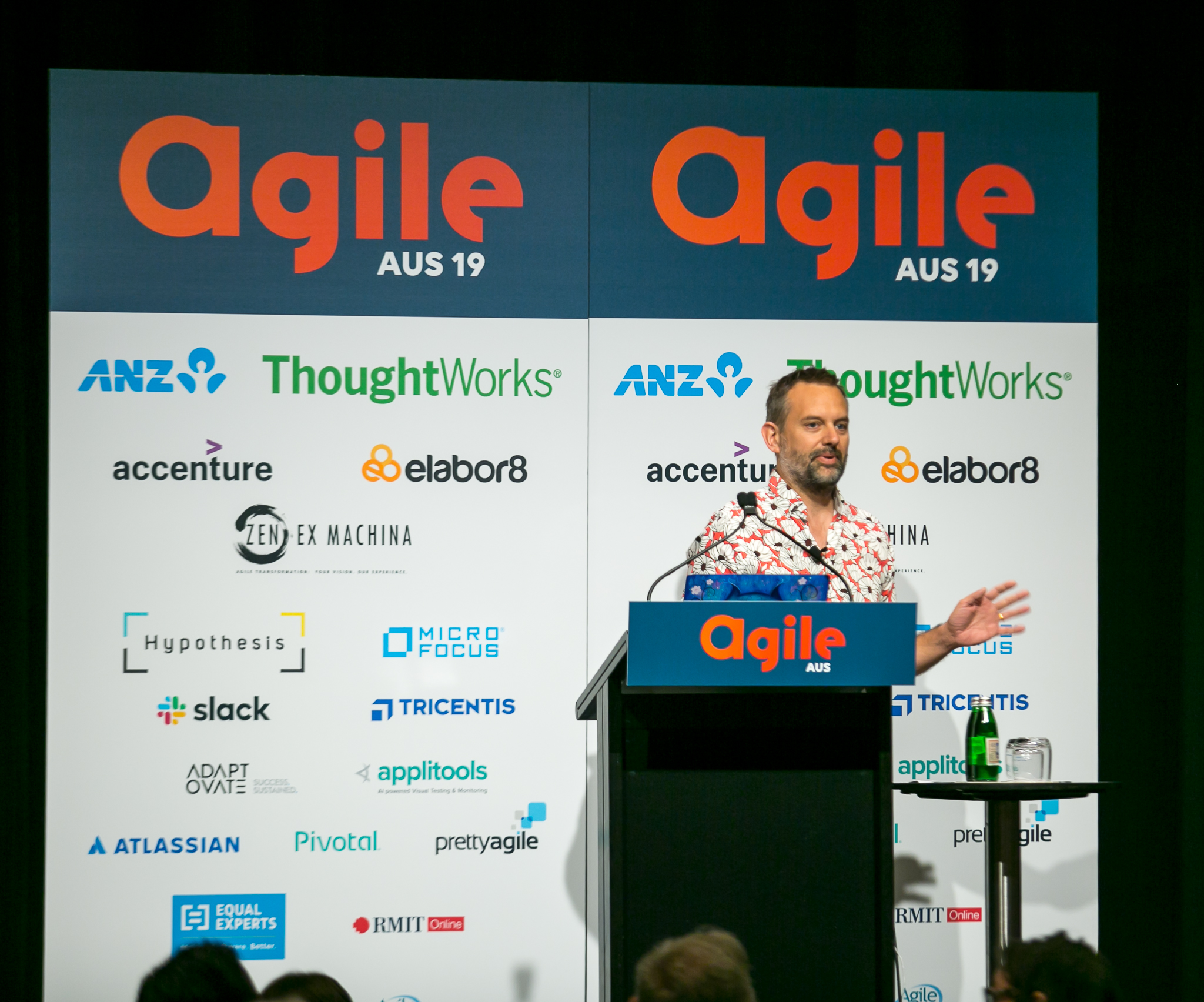
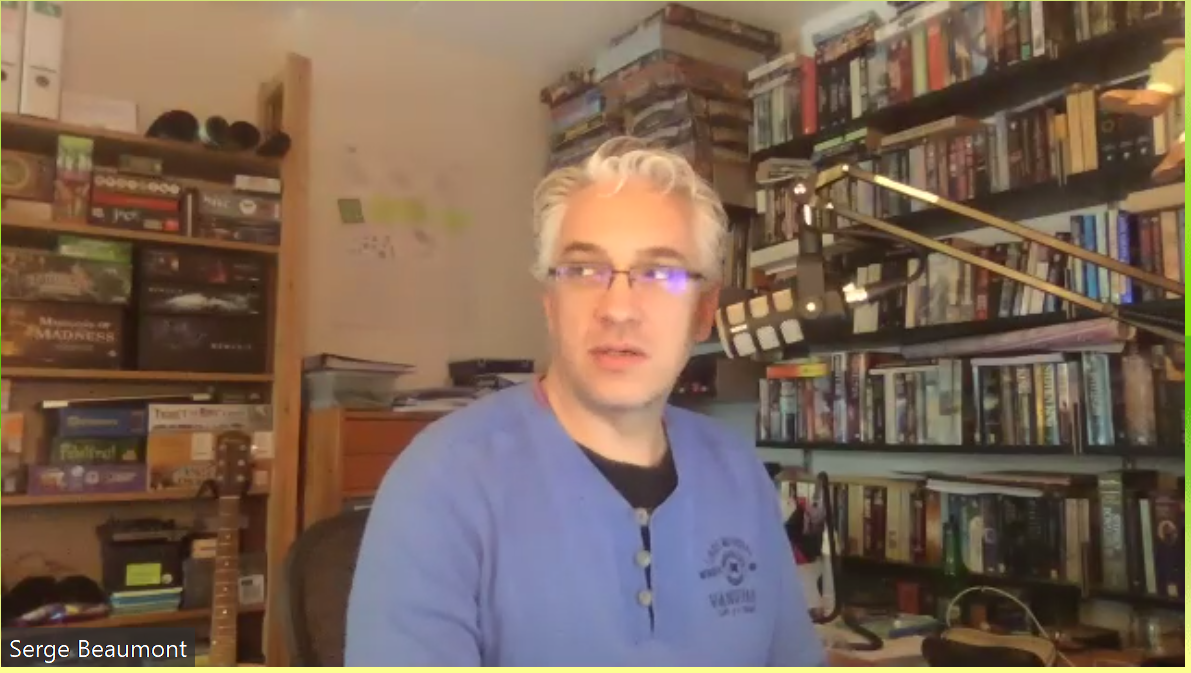








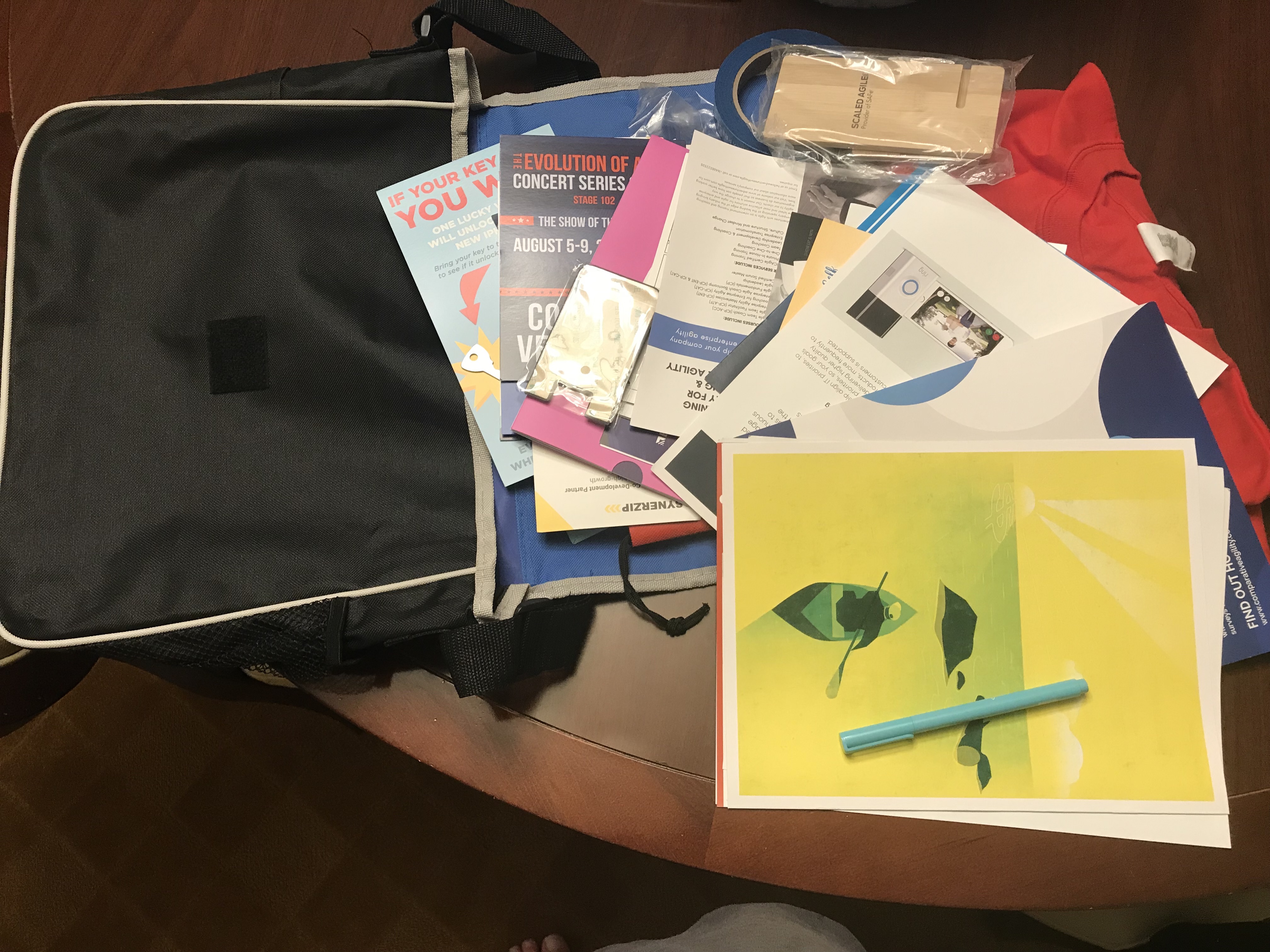
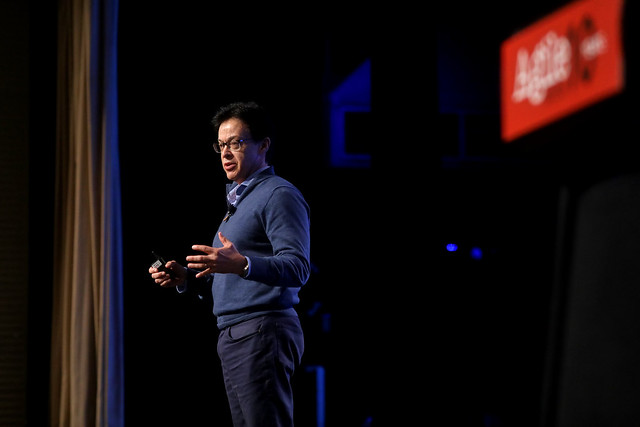
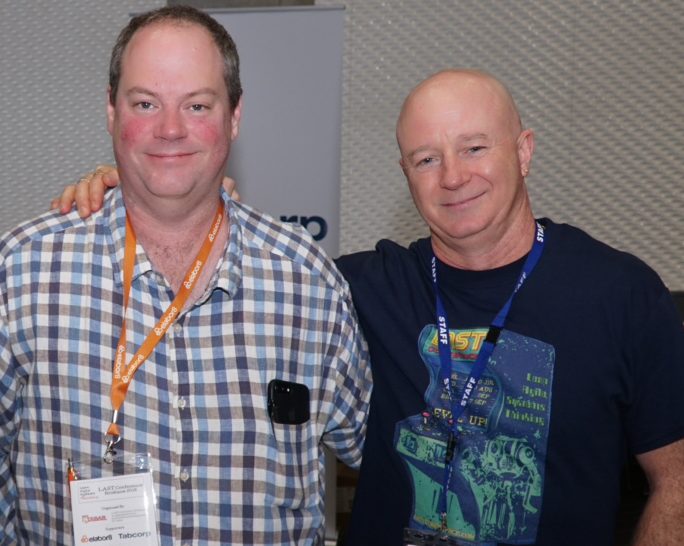
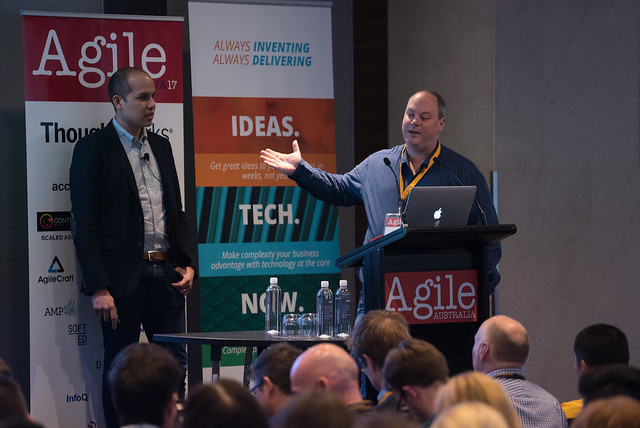
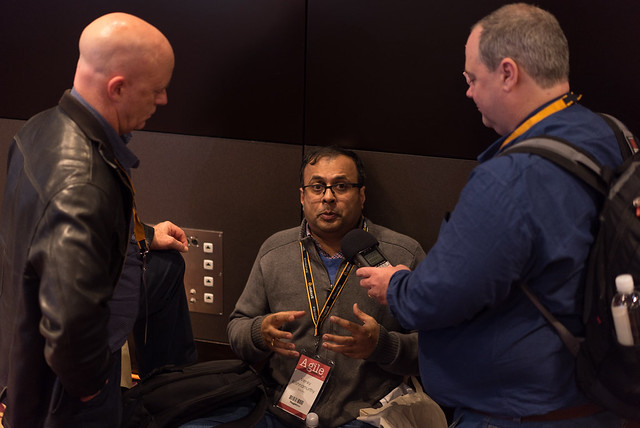




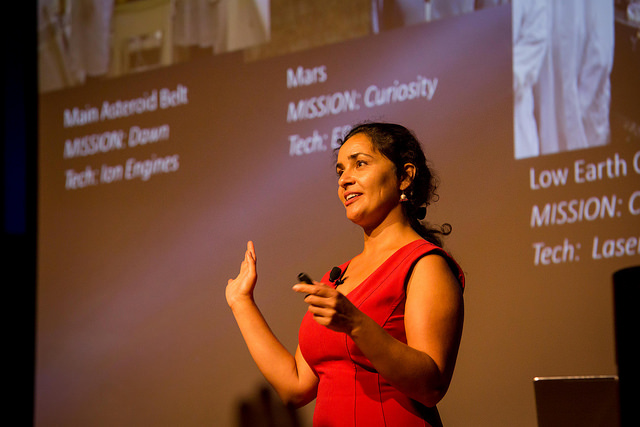

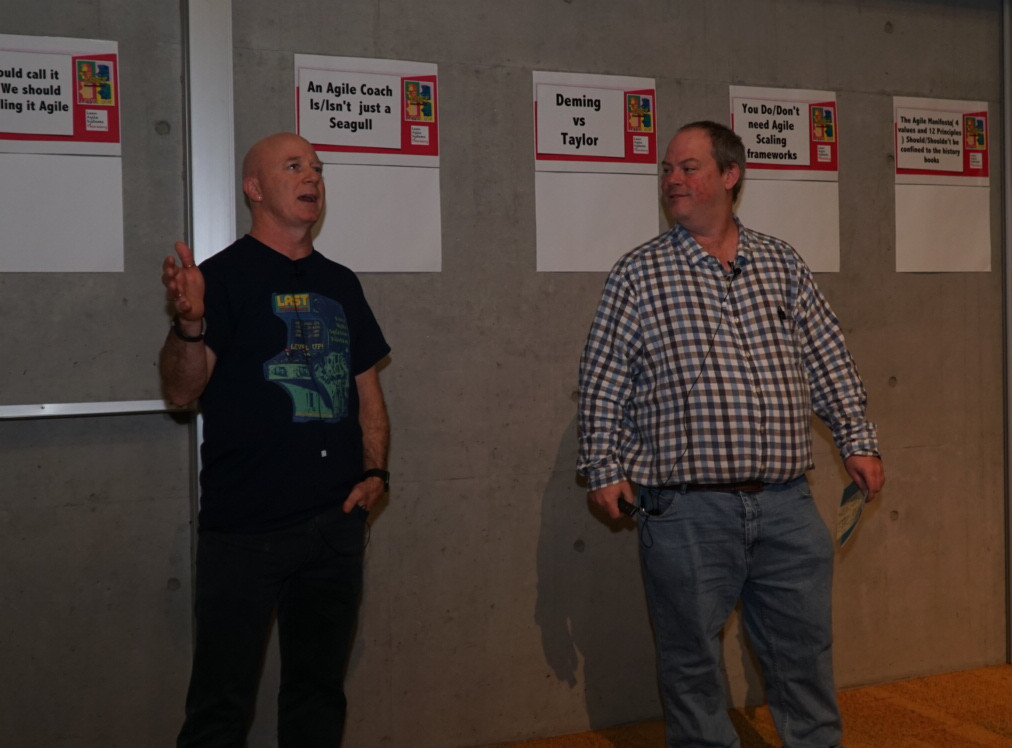





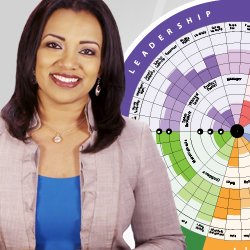









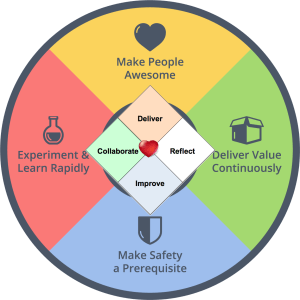



 Marcus Hammarberg



 Craig, Renee and Tony come together to celebrate 100 episodes of The Agile Revolution, and review the journey of both the podcast and Agile in general over the last 4 and a half years and surprise themselves on how many things have changed but how many things have remained the same.
 Craig joins




 Survey
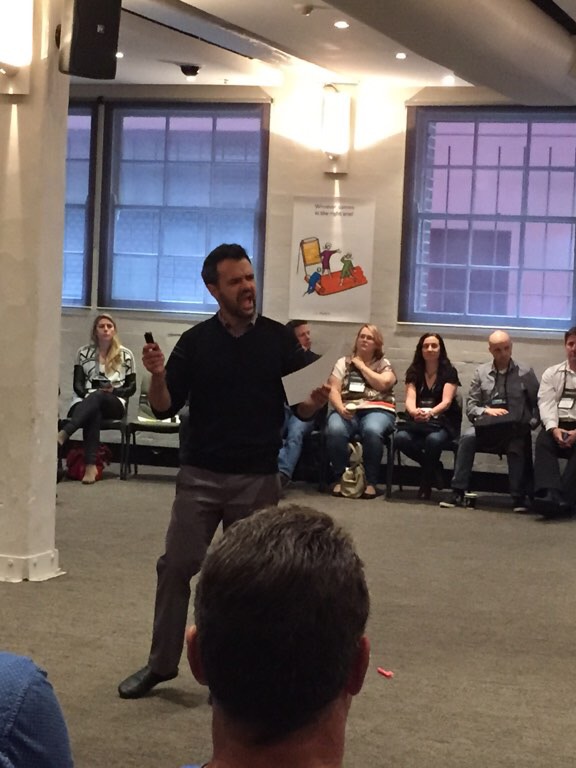

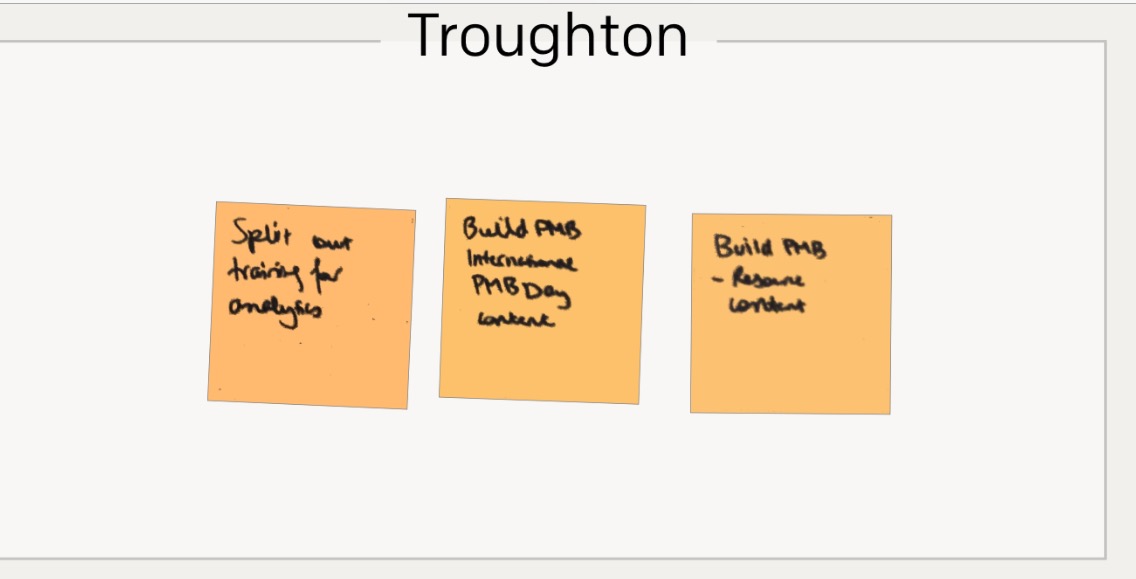



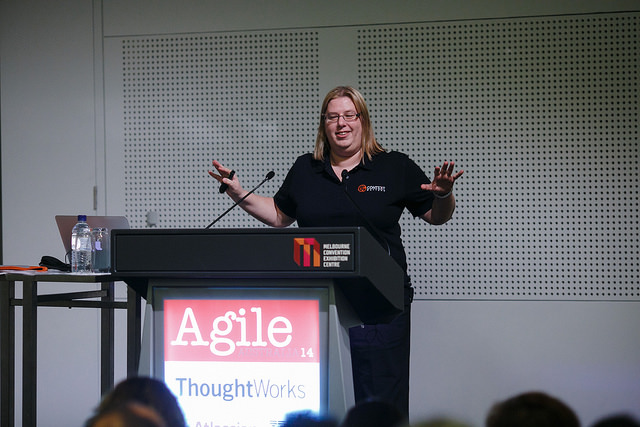





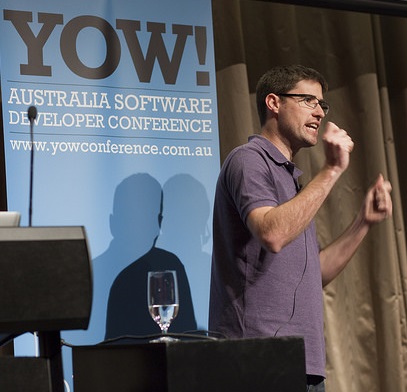

 Craig, Renee and Tony catch up again and discuss the wonderfully diverse world of Agile :